Abusir Necropolis: A Royal Cemetery of Ancient Egypt
Site at a Glance
- Popularity
- Very High
- Country
- Egypt
- Primary era
- Bronze Age
- Eras represented
- Bronze Age, Iron Age
- Civilizations
- Egyptian
- Site type
- Burial
- Remains
- Necropolis
On this page18 sections
History
The Abusir Necropolis is an ancient Egyptian cemetery on the Western Desert plateau in Egypt, between the Giza pyramids and Saqqara. It served as a major burial ground for the elite of Memphis, the ancient capital, and became a principal royal necropolis during the Fifth Dynasty of the Old Kingdom, Egypt’s centralized monarchy from the Third through the Sixth Dynasties. Its name derives from the ancient Egyptian Per Ousir, meaning “House of Osiris,” and passed through Greek Bousiris into Arabic. The pyramid complex takes its name from the neighbouring village.
Early burials and the royal necropolis
Burials at Abusir began before its royal pyramid field. Tombs from the Early Dynastic Period include First-Dynasty burials, while a separate cemetery north of the pyramid area has been associated with the Fourth Dynasty. The earliest mastabas in the wider area date to the reign of Sneferu, a Fourth-Dynasty king. These early graves show that the cemetery’s use extended beyond the period of its best-known royal monuments.
During the Fifth Dynasty, Abusir became a principal royal burial ground. With the Giza area already occupied by the pyramids and monuments of Fourth-Dynasty rulers, later kings established funerary complexes elsewhere, including here. Royal building continued into the Sixth Dynasty, and the necropolis remained in use after the royal pyramid projects ended.
Royal settlement and later use
A royal settlement and palace may have developed near Abusir from the reign of Sahure. Reliefs in his mortuary temple depict palace life, while inscriptions naming senior officials suggest that a palace remained in use under later kings. Its location has not been identified. Sakhebou, a city whose priestess is linked by the Westcar Papyrus, an ancient Egyptian literary work, to the origins of the first three Fifth-Dynasty rulers, has been proposed as a nearby location, but that identification is unverified. The suggestion that Memphis extended north to Abusir is also an interpretation rather than an established location.
Tombs continued to be made at Abusir during the Ninth and Tenth Dynasties. Use appears to have diminished in the Middle Kingdom, when the royal residence shifted elsewhere. In the New Kingdom, Sahure’s mortuary temple was used for a cult of Sekhmet, a goddess associated with royal power and warfare. Khaemwaset, a son of Ramesses II and a high priest of Ptah, restored monuments at Abusir in his father’s name. A temple from the Ramesside period, the era of the Ramesside kings, was also built at the site, perhaps under Ramesses II.
Courtiers of the Twenty-Sixth Dynasty, also known as the Saite Dynasty, again used the cemetery during Egypt’s Late Period. Its use and reputation later declined amid invasions beginning in the Twenty-Seventh Dynasty.
Excavation and modern history
The Abusir Papyri constitute the largest known find of Old Kingdom papyri, documents written on sheets made from papyrus. In the late nineteenth century, museums acquired fragments of administrative records from the funerary cult of Neferirkare Kakai. Later Czech excavations recovered papyri associated with the cults of Neferefre and his mother, Khentkaus II.
A Prussian expedition led by Karl Richard Lepsius recorded the principal monuments in 1842. Friedrich Wilhelm von Bissing and Johann Heinrich Schäfer studied Niuserre’s solar temple at nearby Abu Ghorab in 1898–1899. From 1902 to 1908, Ludwig Borchardt excavated the site, studying the pyramids of Sahure, Neferirkare Kakai and Niuserre and finding Neferirkare’s royal archives. Rainer Stadelmann studied Userkaf’s solar temple in 1955–1956.
The Czech Institute of Egyptology began work at Abusir in 1960, first excavating the mastaba of Ptahshepses under Zbyněk Žába. From 1976, its work extended to the southern royal necropolis under Miroslav Verner. Excavations there from 1976 to 1986 investigated the funerary complexes of Khentkaus II and Neferefre and uncovered temple archives and statues of the young king. Czech work expanded into Abusir South in 1991 and is directed by Miroslav Bárta. Other investigations included work at the Bonnet cemetery in 1910, excavations by Waseda University in Abusir South from 1990, and Egyptian excavations directed by Zahi Hawass from 2000 to 2004, which uncovered further reliefs from Sahure’s causeway.
Czech excavations found the tomb of Udjahorresne in 1989–1990 and began work on Ioufâa’s tomb in 1996. Work on the tombs of Menekhibnekaou and Neferanpu began in 2003 and 2006 respectively. Later discoveries included the mastaba of Chepseskaf-ânkh in 2013 and Queen Khentkaus III’s tomb in 2015. Fourteen principal monuments had been excavated and partly restored, while work continued at other monuments. In 2011, looters damaged the site during the Egyptian protests, stealing part of the false door from the tomb of the priest Rahotep and breaking into storerooms. Abusir forms part of the UNESCO World Heritage property “Memphis and its Necropolis – the Pyramid Fields from Giza to Dahshur,” inscribed in 1979.
Remains
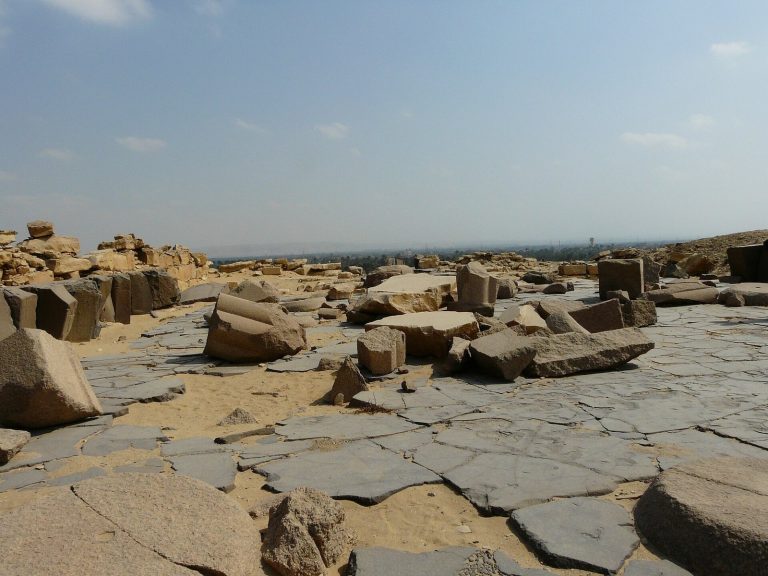
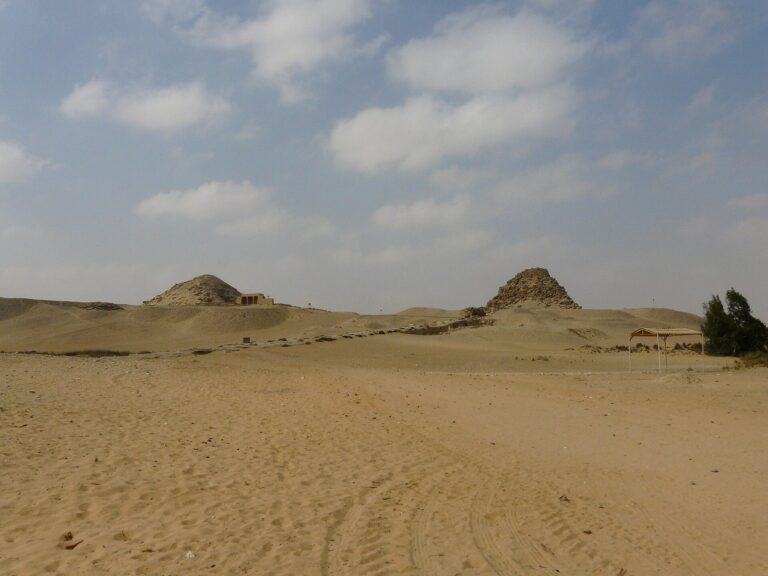
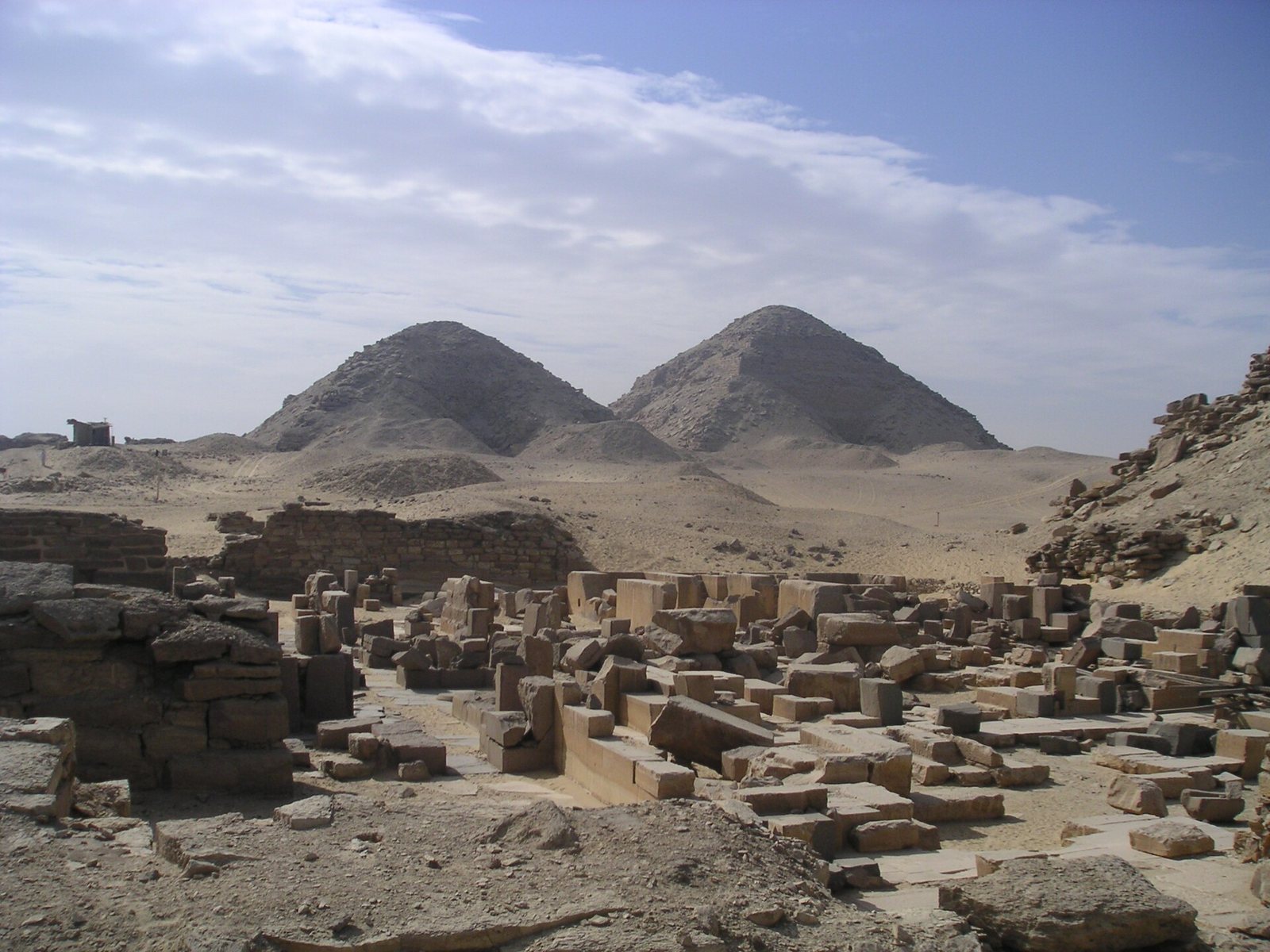
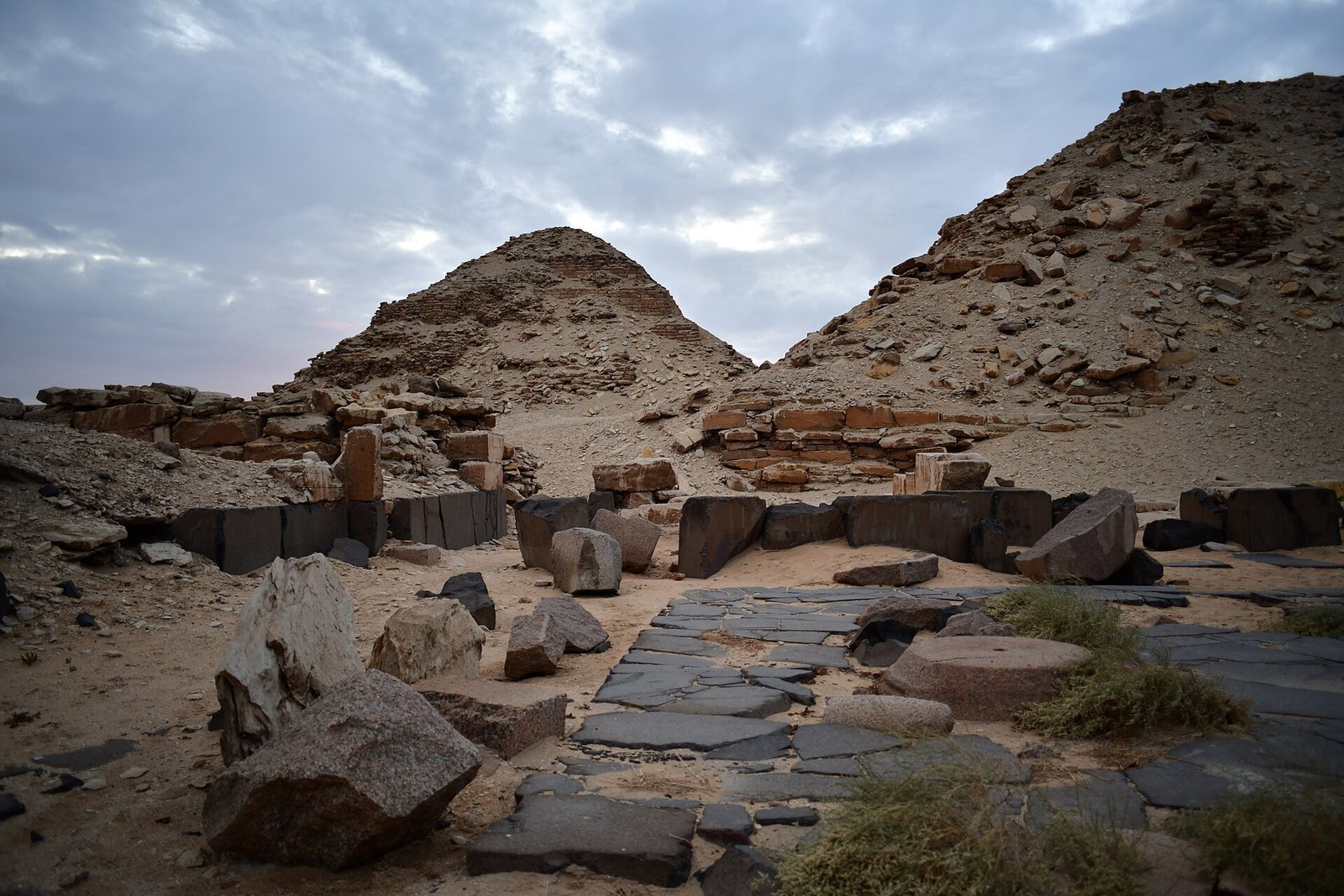
The necropolis occupies the desert plateau beside cultivated land. Its main pyramid field lies north of a cemetery from the Saite period, which occupies a small hill immediately south of Neferefre’s pyramid. Abusir South lies directly north of Saqqara, while early tombs, including stairway tombs, have been found north of the pyramid field. A basin connected to the Nile formed a lake and provided access to the surrounding area. A royal settlement, palace, workshops, ports, storehouses and administrative buildings may have stood near the desert edge; their remains are thought to lie beneath cultivated land and palm groves.
Fifth-Dynasty pyramid field
Royal pyramids
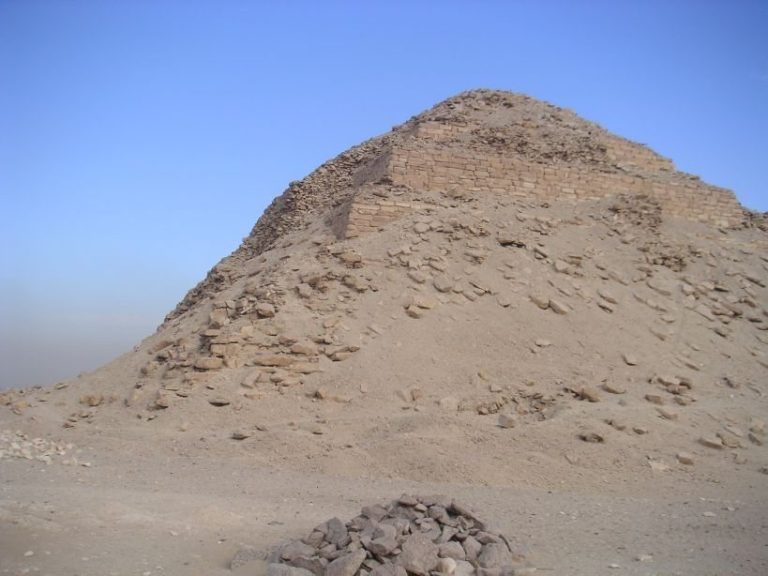
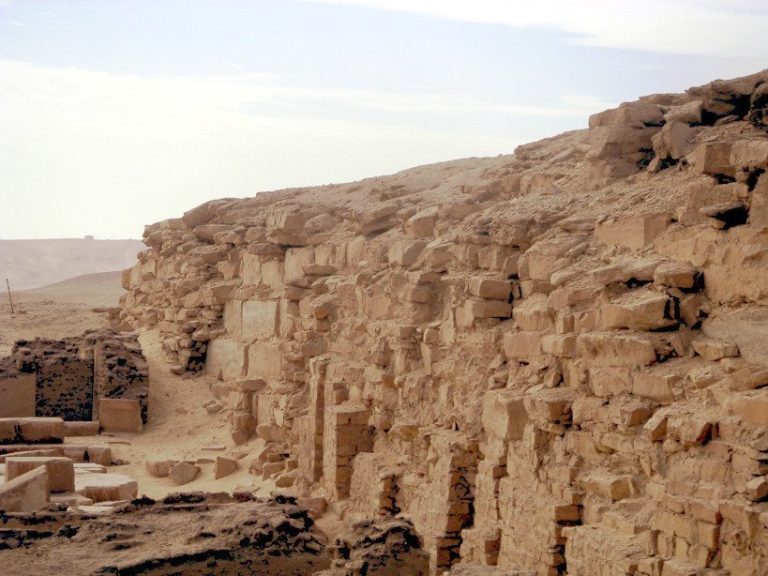
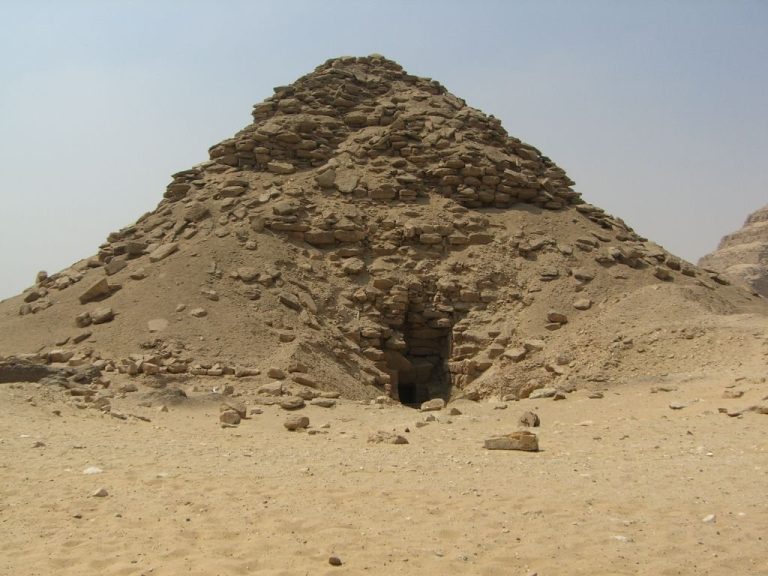
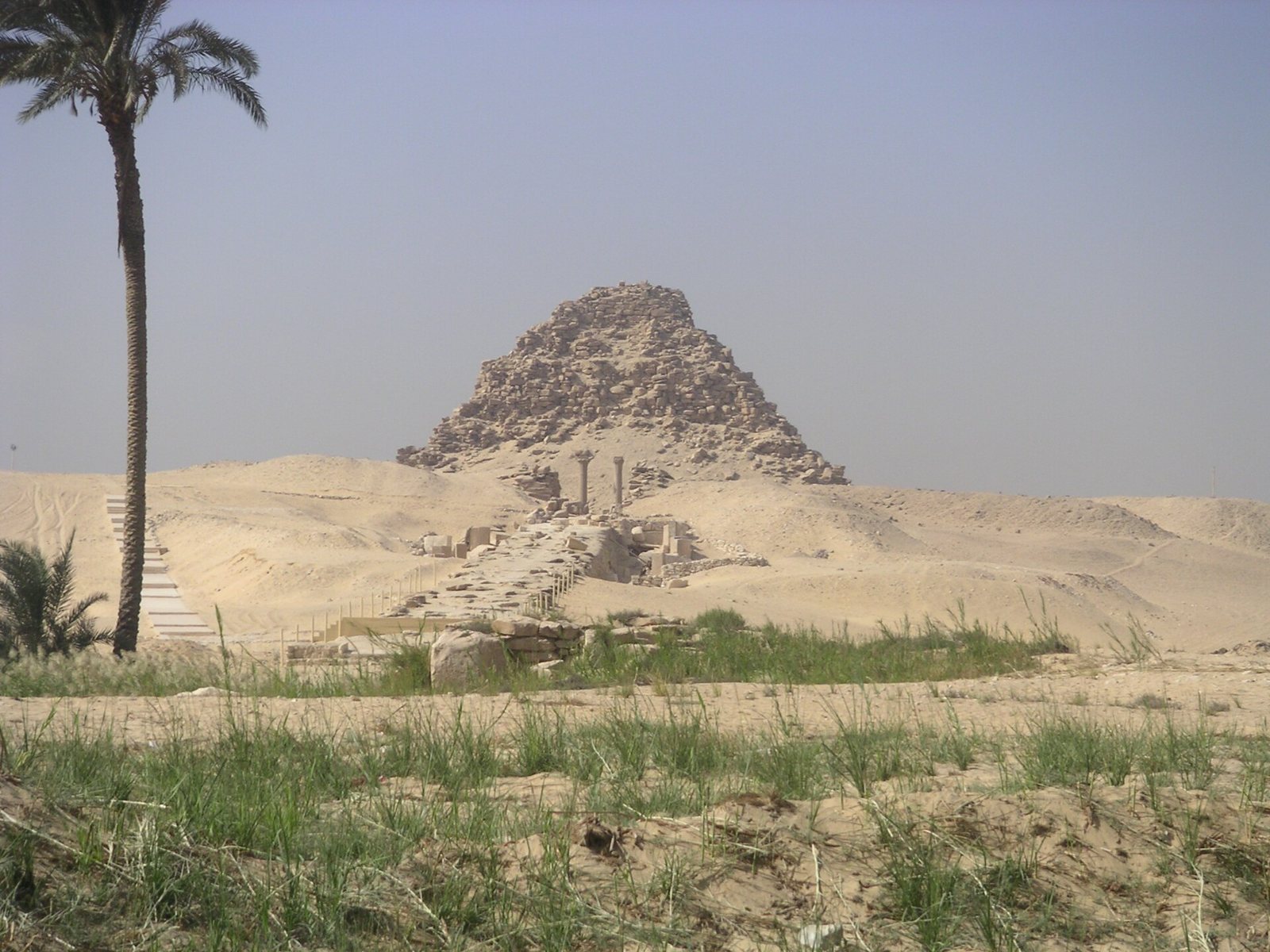
The royal field contains several Fifth-Dynasty pyramids, smaller than those of the Fourth Dynasty and built mainly from lower-quality local stone. The principal examples were constructed with stepped sides. Neferirkare’s pyramid, the tallest at Abusir, is believed to have begun as a stepped structure about 70 metres high. Its steps were later filled with loose masonry to form a smooth-sided pyramid. Sahure’s is the earliest of the principal royal pyramids and is noted for finely carved reliefs; Niuserre’s is the best preserved. Neferefre’s pyramid is unfinished. Another incomplete Fifth-Dynasty pyramid is known, but its proposed attribution to Shepseskare remains uncertain.
Pyramids of queens
The pyramid of Queen Khentkaus II belongs to the royal field. Lepsius Pyramid 24 belonged to a woman, probably a queen. Builders’ marks naming the vizier Ptahshepses place its construction in Niuserre’s reign. Lepsius Pyramid 25 is thought to be the pyramid of another Fifth-Dynasty queen.
Solar temples
The solar temples of Userkaf and Niuserre belong to the wider archaeological landscape around Abusir. Niuserre’s temple stands at neighbouring Abu Ghorab, north of the main pyramid field.
Officials’ and family tombs
Tombs near the royal pyramids
Many officials and members of royal families were buried in mastabas, flat-roofed rectangular tombs, near the pyramids of the kings they served. They include the mastaba of Ptahshepses, vizier under Niuserre, and that of his son, Ptahshepses the Younger. Near Sahure’s pyramid are the tombs of his royal wife Méretnebty and his son Netjerirenrê. The mastaba of Ouash-Ptah, vizier under Neferirkare Kakai, is also at Abusir.
The cemetery associated with Niuserre includes the mastaba of Ouserkaf-ânkh, director of the king’s works, as well as a group known as the princesses’ mastaba and the tomb of Tepemânkh, a palace administrator. The group includes Khâmerernebty, a priestess of Hathor who was ultimately buried with her husband Ptahshepses; their daughter Mérititès; their son Kahotep, a lector priest; and an unidentified woman. Other Fifth-Dynasty mastabas belong to Khekeretnebty and Tisethor, Hedjetnebou, and Néserkaouhor.
Nakhtsare cemetery
Four mastabas southeast of Neferefre’s pyramid form the cemetery known as Nakhtsare. They are probably associated with Raneferef’s circle. One belongs to Prince Nakhtsare, who may have been the son of Raneferef or Niuserre. The group also includes the mastaba of Kakaibaef, the tomb of Queen Khentkaus III, probably a wife of Raneferef, and the tomb of an unidentified person known as AS 31.
Early burials and Old Kingdom tombs at Abusir South
Abusir South includes an Early Dynastic cemetery for lower-ranking officials and the First-Dynasty Bonnet cemetery, named after the scholar Hans Bonnet, who published the site. Its Old Kingdom tombs include those of Ity, from the early Fourth Dynasty; Hetepi, a priest from the beginning of the Third Dynasty; and Nyankhseshat, a royal property custodian of the early Fourth Dynasty. Nyankhseshat’s tomb contains a stela, an upright inscribed stone, of the Fifth-Dynasty official Sekhemka and his presumed wife Henutsen. Other tombs belong to Kaaper, an architect and priest of the early Fifth Dynasty, and the late Fifth-Dynasty priests Rahotep and Fetekti. Qar, a vizier of the early Sixth Dynasty, was buried there, as were his sons later in that dynasty, during Pepi II Neferkare’s reign. The southern cemetery also includes the mastaba of Neferanpu, a Fifth-Dynasty priest, and tombs of Inti and Kaaper.
Later-period tombs and temple
Saite-period cemetery
The Saite-period cemetery occupies the hill immediately south of Neferefre’s pyramid. Its shaft tombs include those of Udjahorresne, Ioufâa and Menekhibnekaou. Ioufâa’s tomb was found intact, with its funerary equipment and sealed sarcophagus. A statue of Udjahorresne, now in the Vatican Museums, carries an autobiographical inscription recounting his career and close connection with a Persian king.
New Kingdom tomb
Abusir South also contains the rock-cut tomb of Nakhtmin, a New Kingdom charioteer.
Ramesside temple
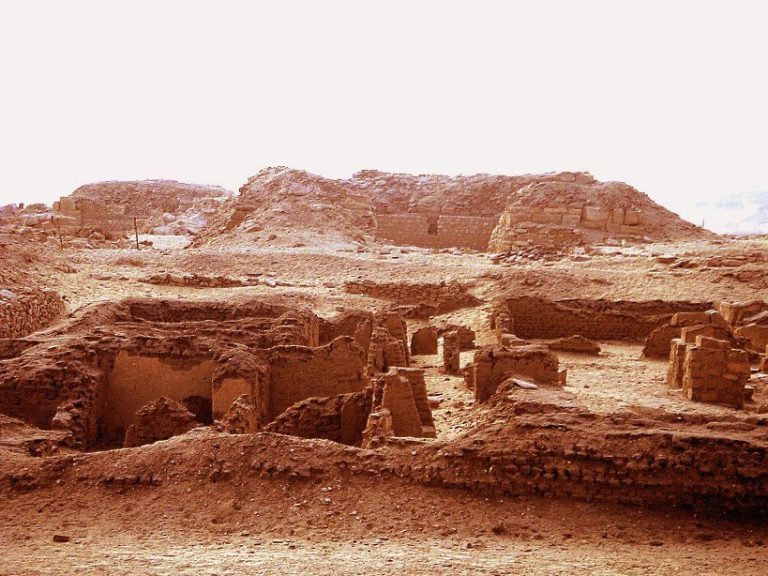
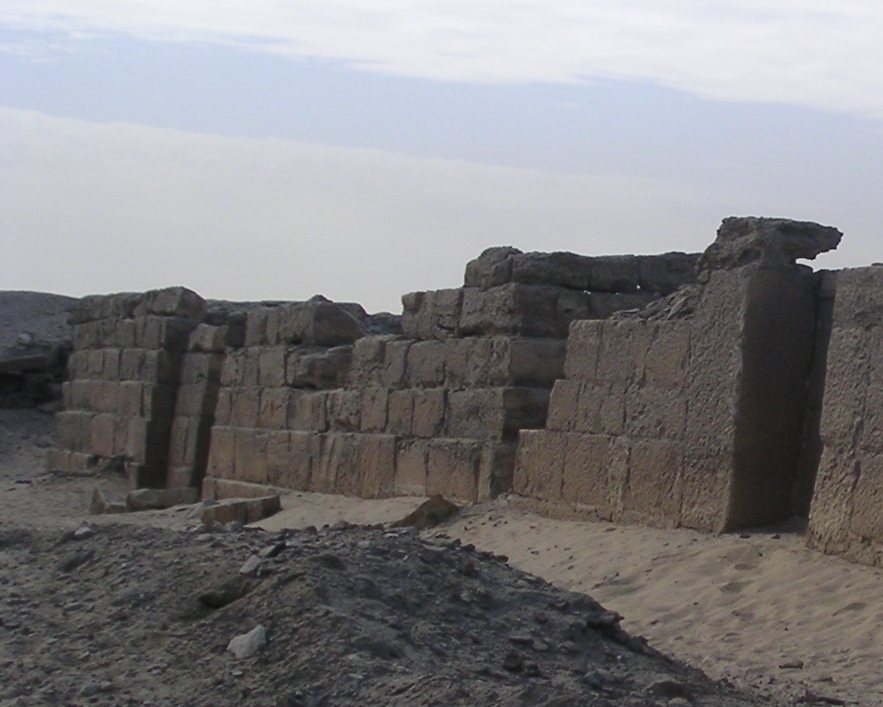
The Ramesside temple stands about 500 metres southeast of the pyramids, near the cultivated edge of the desert. It was built over mud-brick tombs dating to the Third and Fifth Dynasties. Its principal limestone building has three storage chambers and a small hall with four columns. A courtyard enclosed by mud-brick walls has ten limestone columns. This structure is set within a larger mud-brick complex with a monumental gateway, or pylon, and storerooms. The temple appears to have served a solar cult associated especially with Ra, Amun and Nekhbet. Excavations recovered fragments of painted reliefs and numerous examples of Ramesses II’s titles.
Reliefs and other finds
Reliefs from Sahure’s temple causeway, an access route within the funerary complex, show the king and his family, as well as scenes of tribute from Punt, an ancient region known through Egyptian trade and expedition records. Excavations of Neferefre’s funerary complex uncovered statues of the young king. Copper objects from Abusir, now in the collection of Leipzig University, include a vessel made from copper containing arsenic and nickel, a metal composition that may indicate importation into Egypt.