Las Lomas de Abril Rock Shelter: A Neolithic Rock Art Site in Spain
Site at a Glance
- Popularity
- Very Low
- Country
- Spain
- Primary era
- Stone Age
- Eras represented
- Stone Age
- Civilizations
- Unclassified
- Site type
- Civic
- Remains
- Rock Art
On this page6 sections
History
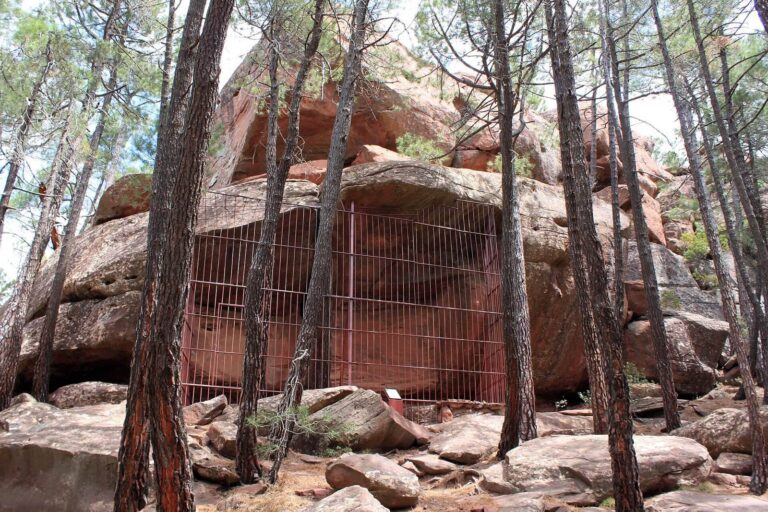
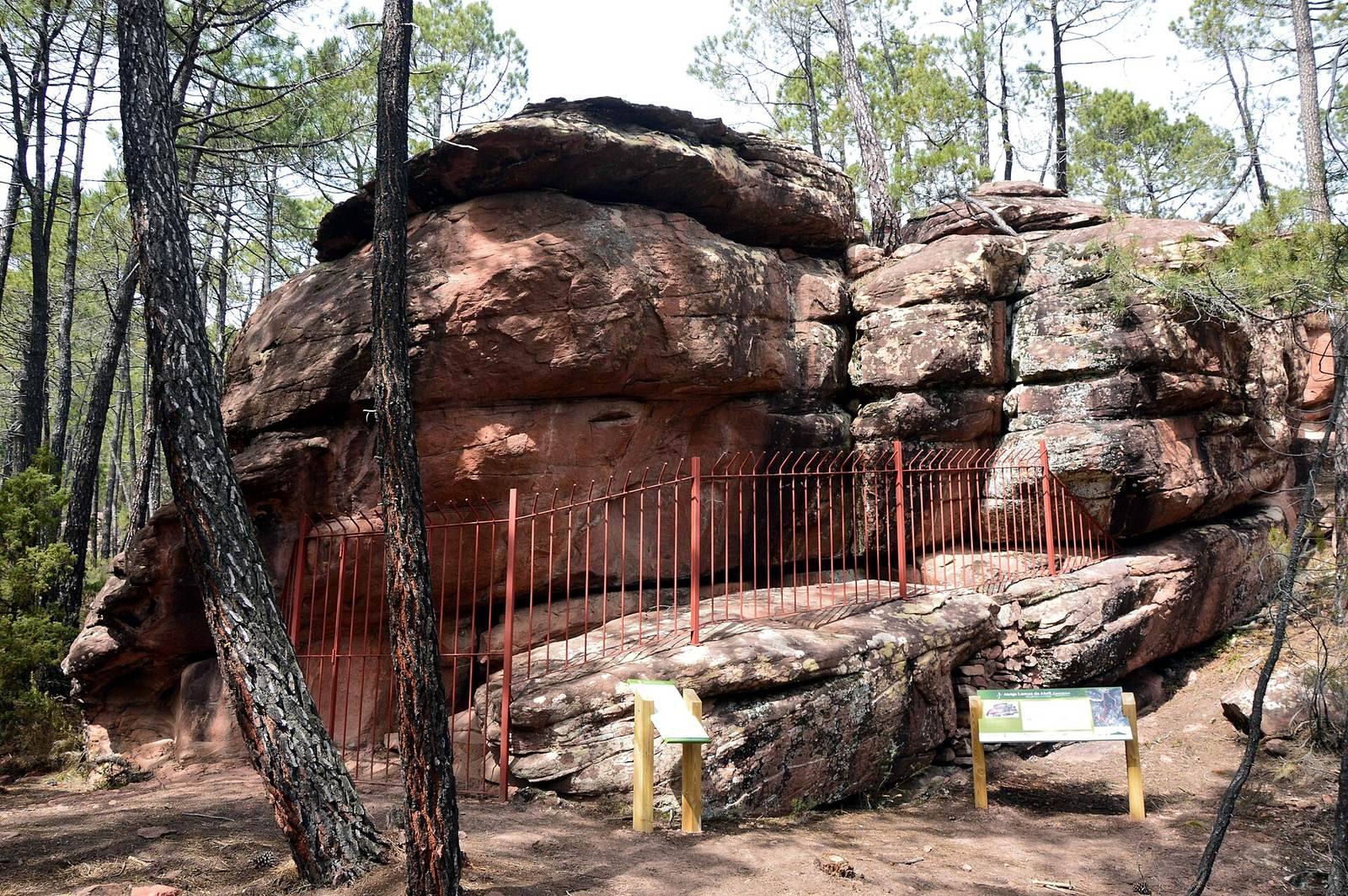
Las Lomas de Abril Rock Shelter, near Cuesta del Rato in Valencia, Spain, preserves prehistoric paintings dated to the Neolithic, the later part of the Stone Age associated in many regions with farming and settled communities. The paintings belong to the Levantine tradition, a prehistoric painting tradition of eastern Iberia, and are the only rock paintings known from the Rincón de Ademuz. Their location, style, and age connect them with paintings in the Tormón rock shelters of the Albarracín Cultural Park.
Discovery and recognition
Ricardo Canet García, a member of firefighting crew 18, discovered the paintings in March 2014. The find was connected with discoveries in the Rodeno area of Tormón made between 2008 and 2014. Canet García described the images as a narrative composition in which animals appear over human figures, with death as a shared theme.
After the discovery was reported to the Valencian regional authority responsible for education and culture, the paintings were recognized as authentic and support was provided for their study and protection. Archaeological work included mapping, conservation, recording, a survey of the nearby area, and analysis of the paintings. Photographic measurement and geometrically corrected images were used to make a digital record of the shelter’s interior for a three-dimensional model.
The paintings are protected by national and regional law and designated an Asset of Cultural Interest. They form part of the Rock Art of the Mediterranean Basin on the Iberian Peninsula, which UNESCO, the United Nations agency responsible for the World Heritage List, inscribed in 1998.
Remains
The painted panel
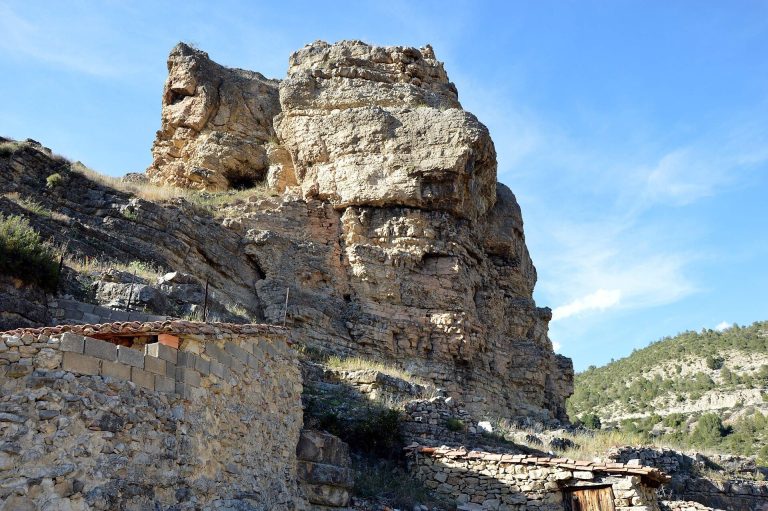
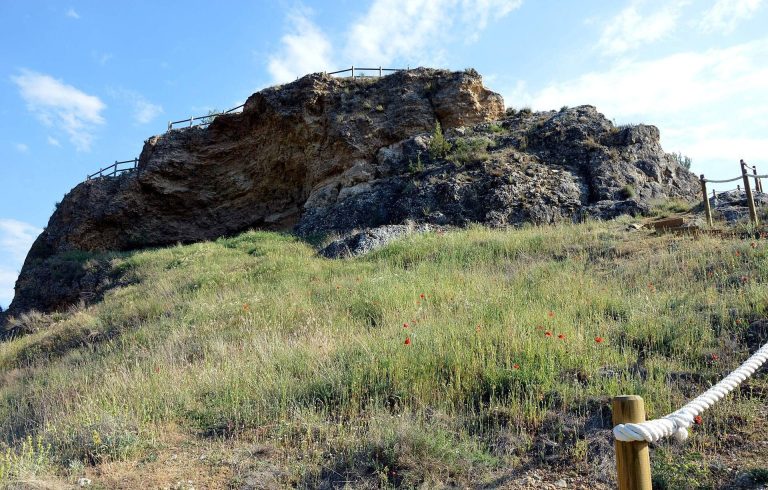
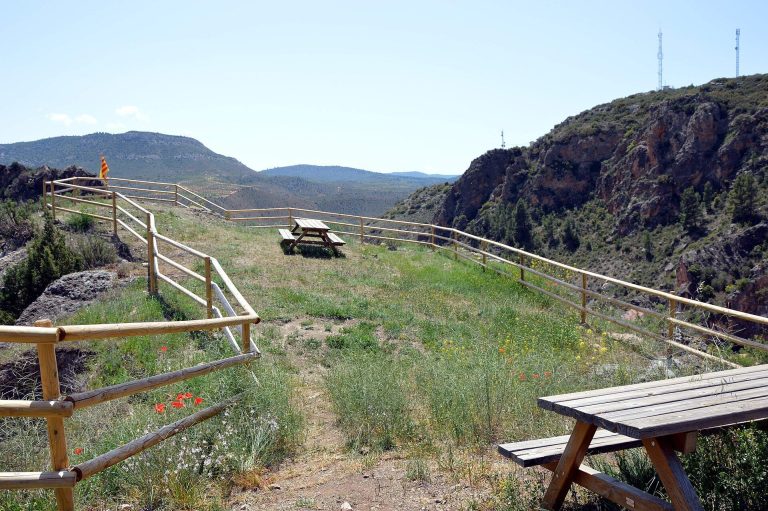
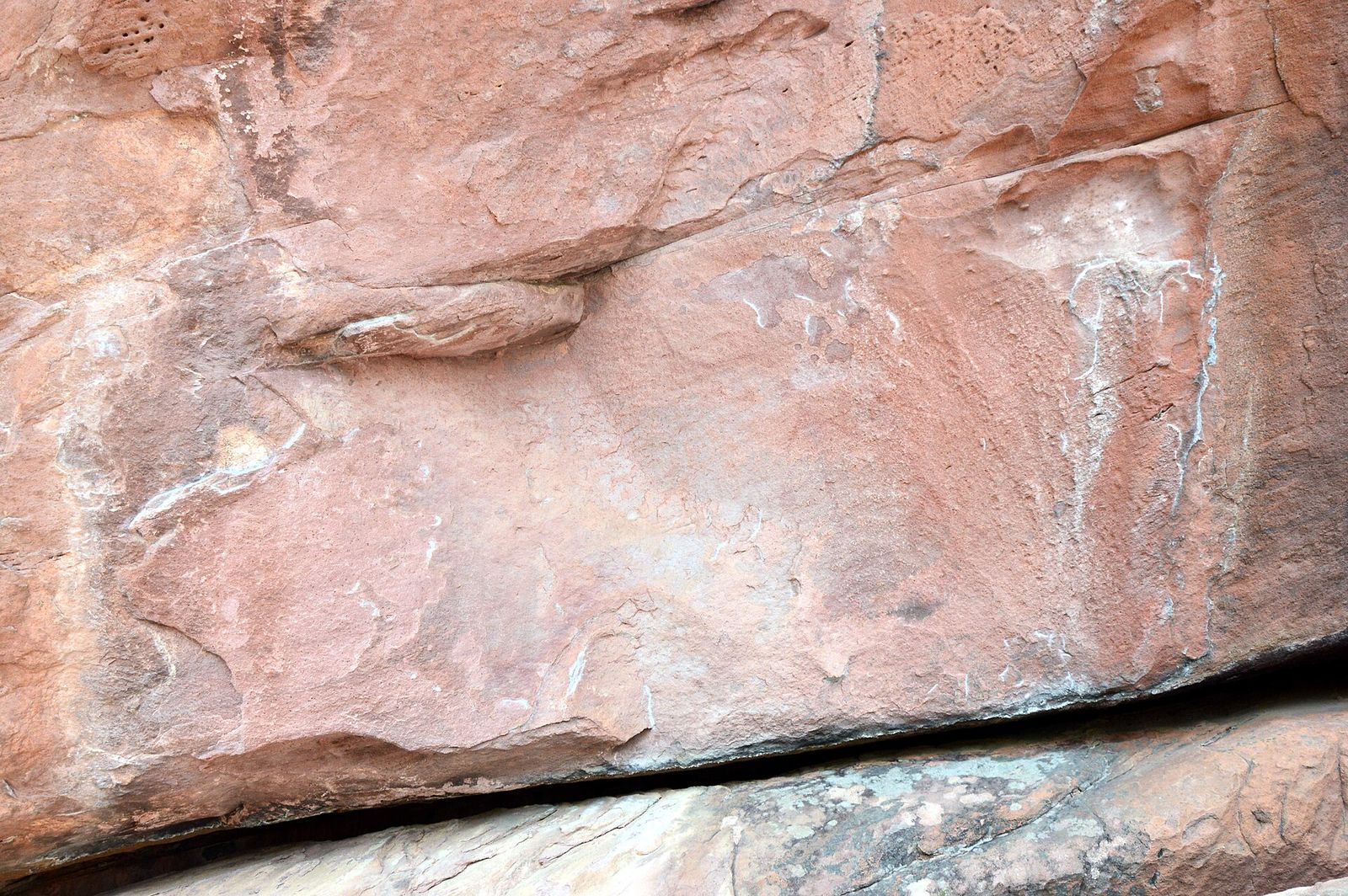
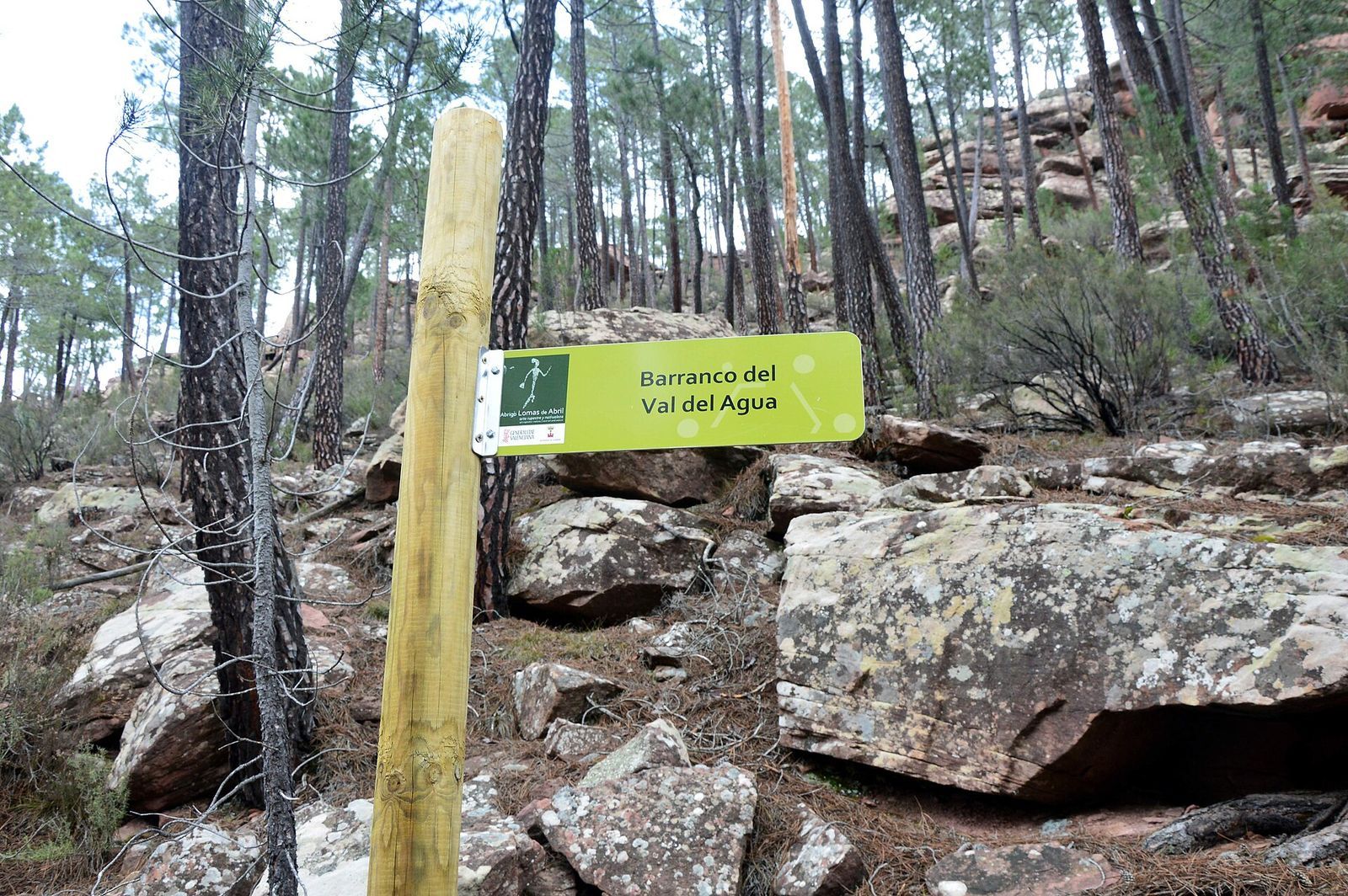
The shelter occupies a rock outcrop on the right-hand side of the Val del Agua ravine, at about 1,150 metres above sea level. The ravine joins the Turia at Mas de Jacinto. The painted panel lies in a protected recess of the shelter and measures about 120 by 120 centimetres. It holds five figures in two successive compositions: three human figures belong to the earlier group, followed by two goats. The figures are red, made with iron-oxide minerals including hematite, limonite, and goethite, and applied in solid areas. Their style combines stylized forms with naturalistic detail.
Human figures
The earlier group contains three people. At the left, one figure lies horizontally with bent legs. Its body widens at the shoulders, where the arms begin, and its large headdress has a triangular section missing. The central figure faces right, with its legs apart and one bent to suggest movement. It also has a broad-shouldered body and a large headdress, and holds a triangular object in its right hand that matches the missing area on the first figure’s headdress. The smaller figure at the right faces left with bent legs; its size in relation to the central figure creates a sense of depth beside the animal composition.
Goats
One goat appears in front of, and at the feet of, the central human figure, facing left. Its outline remains clear, although paint has flaked away in places. The animal’s lowered head suggests grazing, while its horns point backward. Its front legs form an inverted V; both hind legs are shown, with the left hock marked, and the figure has a double tail.
The second goat is painted below the first and upside down. Its preservation is poorer: the downward-pointing horns and part of the body remain visible, but part of the head is lost. Its legs are folded against its belly, a posture interpreted as showing the animal dead.