Abbey and Altenmünster of Lorsch: A Carolingian Imperial Abbey in Germany
Site at a Glance
- Rating
- 4.5
- Popularity
- Medium
- Country
- Germany
- Primary era
- Medieval
- External website
- Open
- Eras represented
- Medieval, Early Modern
- Civilizations
- Carolingian, Holy Roman Empire
- Site type
- Religious
- Remains
- Monastery
On this page20 sections
History
The Abbey and Altenmünster of Lorsch in Germany was founded around 764 by the Frankish count Cancor and his widowed mother, Williswinda, as a proprietary monastery of the Robertian family. It began on an island in the Weschnitz during the early Carolingian period, the age of the Frankish dynasty founded by Charlemagne and his successors. An earlier church dedicated to Saint Peter probably stood on the island and may have served as the founders’ family burial church.
Foundation and the relics of Saint Nazarius
Cancor and Williswinda entrusted the new monastery to Chrodegang, bishop and later archbishop of Metz. A leading organizer of the Frankish Church and a close adviser to Pippin, Chrodegang sent monks from Gorze Abbey to Lorsch. His brother Gundeland became the first abbot in 765.
The monastery’s fortunes changed rapidly when relics of Saint Nazarius arrived from Rome on 11 July 765. Chrodegang had requested them from Pope Paul I. Saint Nazarius was a Christian martyr, and his relics made Lorsch a pilgrimage shrine. The resulting flow of visitors and donations soon made the island foundation too small for the growing community.
Cancor’s brother Turincbert donated a new site on 1 November 767. It stood on an Ice Age sand dune near the island, later known as the Klosterhügel, or monastery hill. The community moved there, while the original foundation became known as Altenmünster, meaning “old monastery.”
Royal and imperial abbey
After Cancor’s death in 771, a succession dispute threatened the monastery. Gundeland secured Lorsch through the court of Charlemagne, the Frankish king and later emperor, and transferred it to the king in 772. Lorsch thereby became a royal and imperial abbey. A Reichskloster, or imperial abbey, was subject directly to the king or emperor rather than to a local lord or bishop. This status gave Lorsch royal protection, immunity, and the right to elect its own abbots. In return, the monastery performed royal service and supported Frankish internal colonization.
Charlemagne strengthened the abbey’s economic position by granting it the Heppenheim Mark and the estate of Oppenheim in 773 and 774. Lorsch also maintained a tradition of perpetual prayer, including prayer for the royal family and the empire. The new church was consecrated on 1 September 774 in Charlemagne’s presence, and the relics of Saint Nazarius were transferred into it. Lullus, bishop of Mainz and later archbishop, conducted the ceremony. This was the only documented visit by Charlemagne to Lorsch.
After Gundeland’s death in 778, Abbot Helmerich continued the church’s interior completion. His work included the ciborium over the high altar, the ceiling and floor, and the richly decorated enclosure around Saint Nazarius’s tomb. The altar in the Altenmünster church was also embellished during his abbacy.
Learning, royal service, and Carolingian power
Under the fourth abbot, Richbod, probably elected in 784, Lorsch developed an important scriptorium and monastic school. A scriptorium was a monastery’s writing and book-production workshop. At Lorsch, it supported book production, learning, and the development of a renowned medieval library. The abbey participated in the educational reforms of the Frankish kingdom. Richbod had been educated at Charlemagne’s court under the scholar and adviser Alcuin, and he later served as archbishop of Trier between 791 and 793.
Richbod also built the ecclesia triplex and strengthened the monastery with a stone wall. Lorsch became economically and politically important within the Frankish Empire. By 817 it owed royal service that included payments and the provision of soldiers. Donations from local aristocrats expanded its lands across the Wormsgau, Lobdengau, Oberrheingau, Kraichgau, Speyergau, and other regions, eventually extending across much of the Rhine plain.
During conflicts among the heirs of Louis the Pious, Louis the German occupied the abbey in 832 and granted it further lands in 834. After the Treaty of Verdun in 843 divided the Carolingian Empire, a charter of 847 allowed territories separated by the partition to be consolidated through exchanges. Lorsch’s imperial status was reaffirmed in 852.
From 876, Lorsch served as a Carolingian royal burial center. Louis the German, his son Louis the Younger, and Louis the Younger’s son Hugh were buried in the ecclesia varia, the royal burial chapel. Kunigunde, the wife of King Conrad I, was later buried there as well. A later tradition holds that Tassilo III, the last Agilolfingian duke of Bavaria and a cousin of Charlemagne, spent his final years at Lorsch as a monk and was buried there, although this tradition remains uncertain.
Territorial expansion and reform
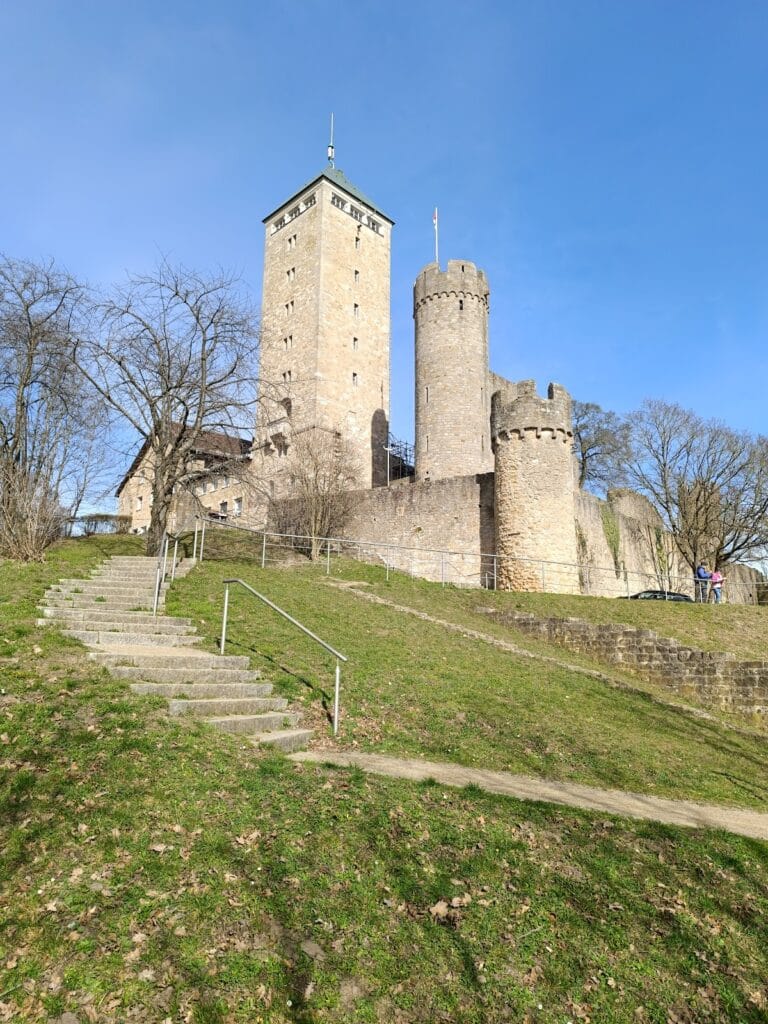
Lorsch founded or controlled several dependent institutions. Altenmünster became a provostry in 1071, and Steinbach near Michelstadt followed in 1073. The abbey also controlled Saint Michael and Saint Stephen on the Heiligenberg near Heidelberg and Neuburg Abbey. A provostry was a dependent religious house administered by a provost rather than by an independent abbot. Starkenburg, built in 1065, served as a refuge fortress for the monastery and its dependents.
Lorsch supported the reform movement of Gorze. Between 895 and 956, kings appointed its abbots instead of allowing free election, although the abbey later recovered that right. In the eleventh century it reached a height of territorial and political power. At the 1066 assembly of Trebur, Abbot Udalrich appeared with 1,200 men who owed him allegiance.
Pope Leo IX visited Lorsch in 1052 and consecrated an altar in the Carolingian burial chapel. A fire damaged the abbey in 1090, leading to extensive rebuilding during the early twelfth century. The monastery’s written heritage also took shape during this period. The Codex Laureshamensis, a medieval cartulary containing copies and records of charters, was compiled probably between 1170 and 1175. It preserved early documentary references to many places and became a major source for the history of early medieval Germany.
Transfer to Mainz and dissolution
In 1232 Lorsch was transferred to the authority of the archbishopric of Mainz and its archbishop, Siegfried III of Eppstein. Benedictines who resisted the reform were removed and initially replaced by Cistercians from Eberbach. In 1248 Premonstratensians from Allerheiligen took charge, and Lorsch became a provostry.
In 1461 the abbey was mortgaged to the Electoral Palatinate. The Palatinate introduced the Reformation in 1556 and dissolved the monastery in 1564. Its rights and revenues were thereafter administered by the Lorsch office. The contents of the library were transferred to Heidelberg and later became part of the Bibliotheca Palatina, the historic library of the Electors Palatine. Many Lorsch manuscripts eventually entered the Vatican Library.
Spanish troops burned Lorsch in 1621 during the Thirty Years’ War, the seventeenth-century conflict that devastated much of central Europe through struggles involving religion and dynastic power. Mainz regained control in 1623, but the ruined abbey was subsequently used for decades as a quarry. The monastery lost its religious function, and only the gatehouse remained intact.
Archaeology and heritage protection
Archaeological investigations began in the nineteenth century. Three major campaigns directed by Friedrich Behn between 1927 and 1937 clarified the positions and probable forms of the monastery buildings and contributed to restoring the gatehouse’s medieval appearance.
The Abbey and Altenmünster of Lorsch were inscribed together as a UNESCO World Heritage Site in 1991 under criteria (iii) and (iv), and the World Heritage area was expanded in 2011. The site is also protected cultural property under the Hague Convention. The Lorscher Arzneibuch, a late-eighth-century medical manuscript associated with the monastery, was added to the German UNESCO Memory of the World register in 2013.
Remains
The two monastery sites
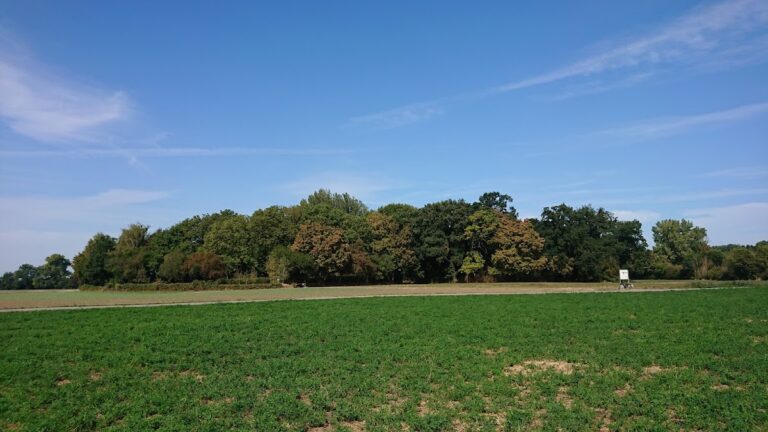
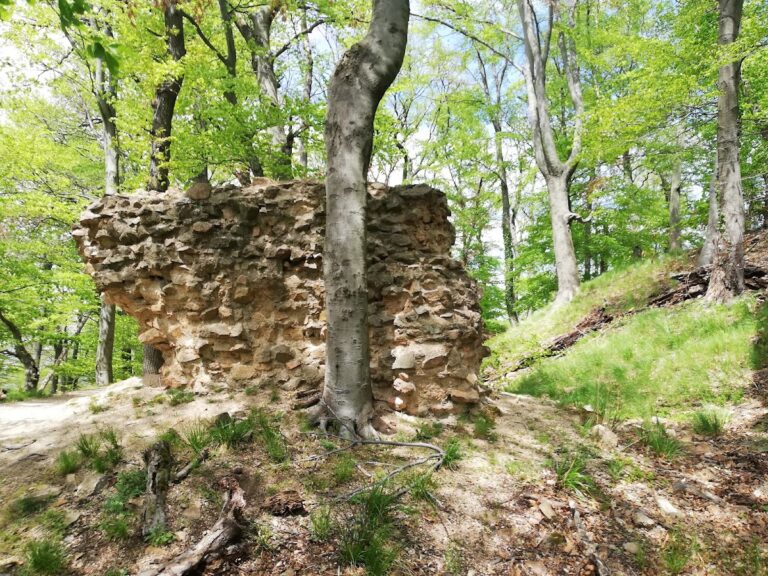
The first monastery stood on an island in the Weschnitz. Its church and earliest monastic buildings were probably made of wood. Archaeological evidence places the remains of Altenmünster at the site of this former island foundation. The outlines of the church are marked with low masonry, while earth formations indicate the cloister buildings.
The later abbey occupied the nearby Ice Age sand dune known as the Klosterhügel. The complex included a basilica, the ecclesia varia, a western entrance and atrium, cloisters, service buildings, and an enclosing monastery wall with at least three additional gates. Much of the former extent is understood through archaeological interpretation and landscape features rather than through complete standing buildings.
Churches and burial chapel
The basilica
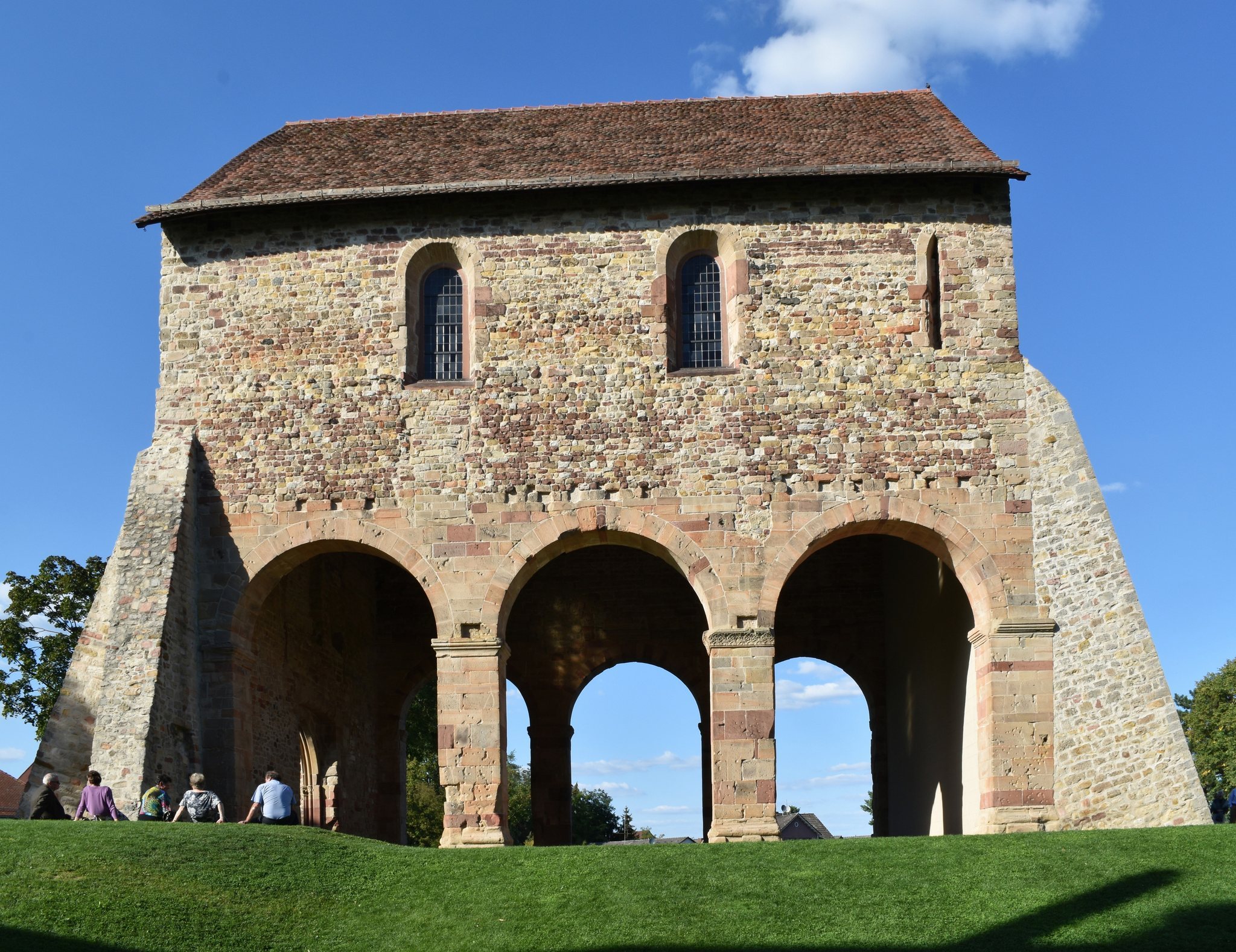
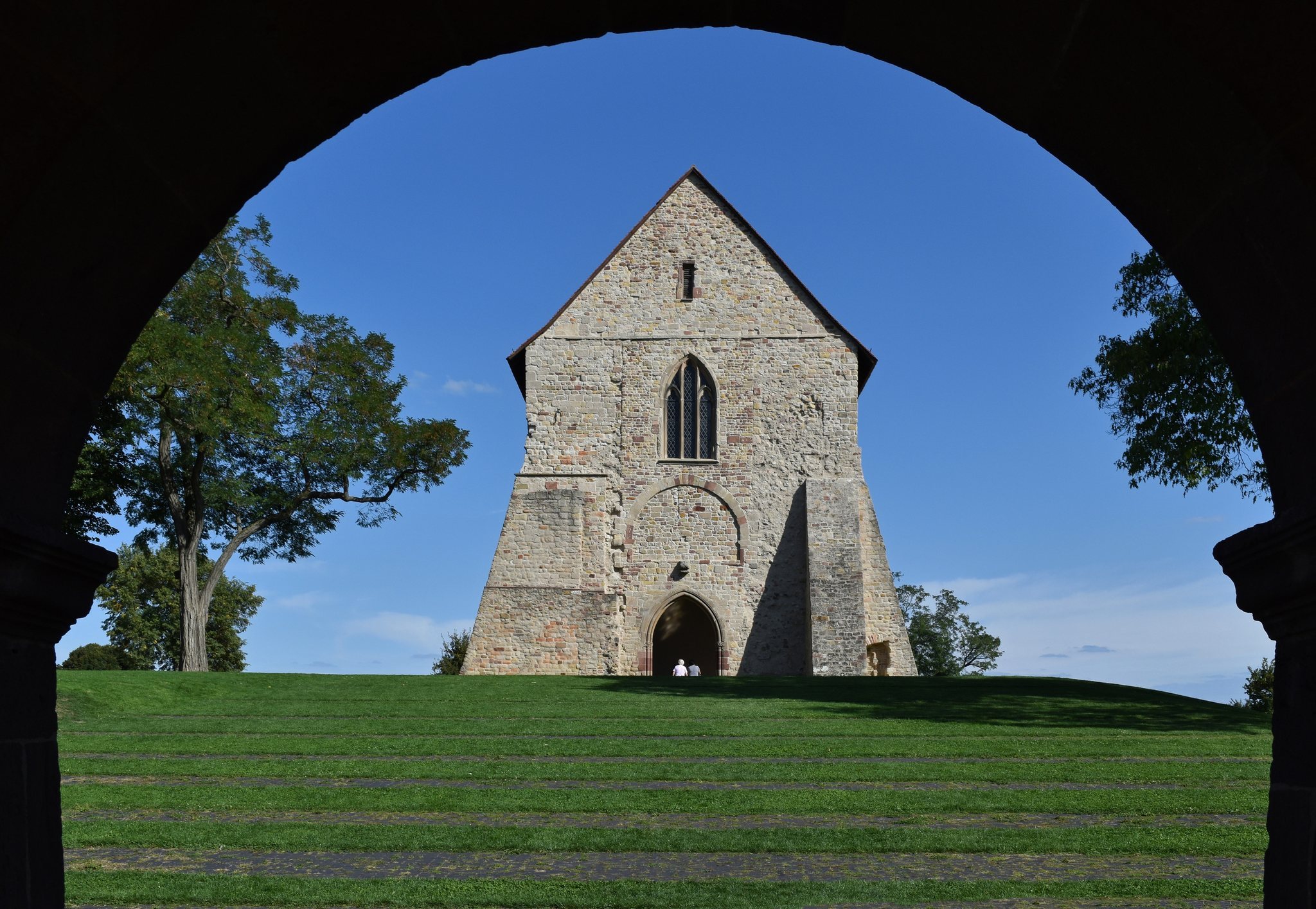
The principal church was a three-aisled basilica begun after the community moved from the island and completed by 774. The building was reconstructed or enlarged after the fire of 1090. Only the central nave of the later Romanesque enlargement and a fragment of the western church remain visible.
The ecclesia varia
The ecclesia varia was begun east of the basilica in 876 as a Carolingian royal burial chapel. It had a semicircular form, a vault, and windows. Archaeological reconstruction suggests that stairs connected it with the basilica across a difference in level of about four metres. Louis the German, Louis the Younger, Hugh, and later Kunigunde were buried in this chapel.
The western entrance complex
The Königshalle
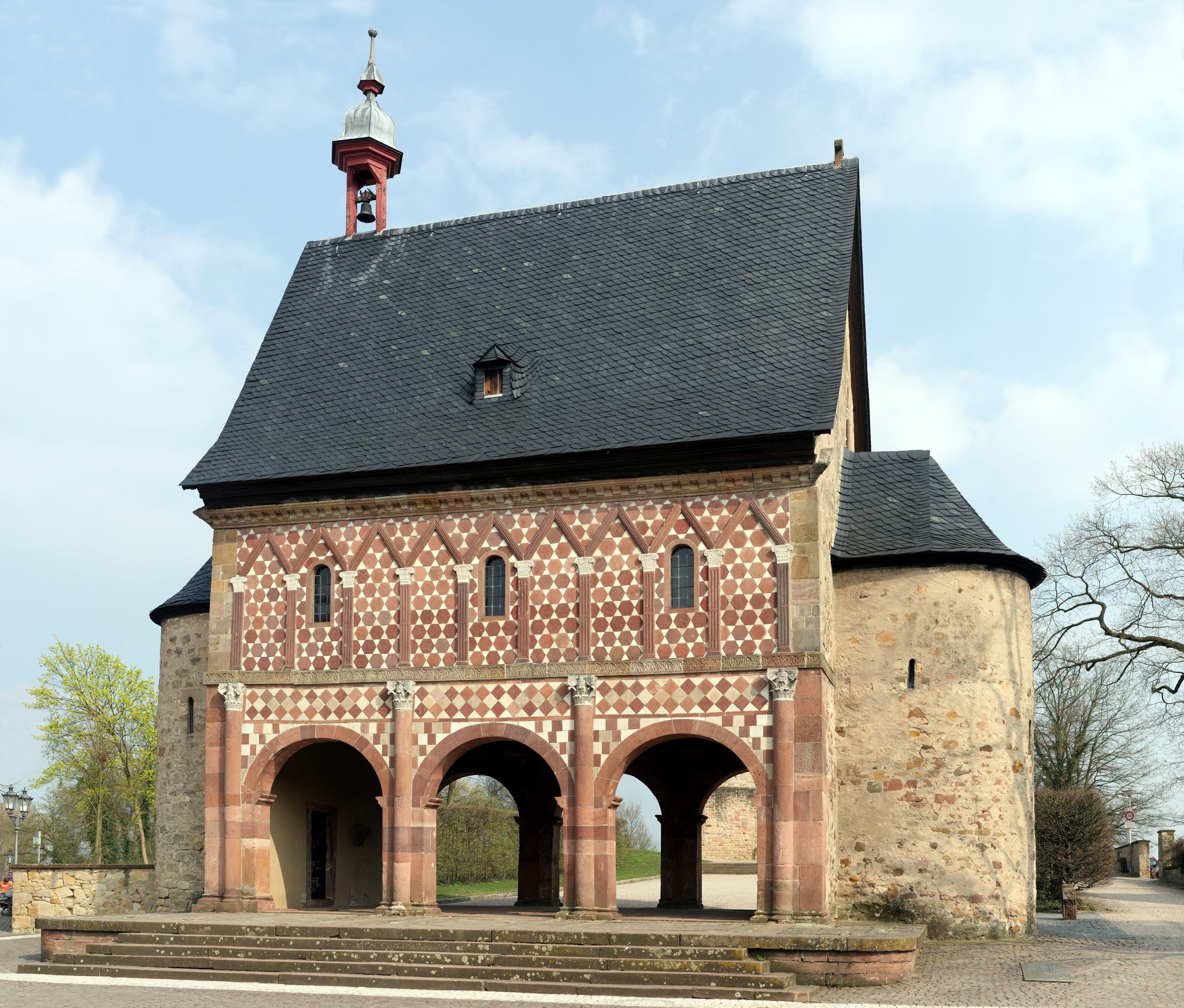
The western entrance complex included the Torhalle, also called the Königshalle or Royal Hall. This two-storey gatehouse was probably built during the reign of Louis the German in the ninth century, although its exact date and original function remain uncertain.
The ground floor contains an open passage framed by three semicircular arches on both its western and eastern sides. The upper storey has Ionic-style capitals, fluted rectangular panels, triangular gables, and a polychrome facade formed from square, hexagonal, and triangular panels in white and red sandstone. The building combines Hellenistic-Roman, Christian, eastern, and Germanic design elements. Wall paintings from Carolingian, Romanesque, and Gothic phases survive on the upper storey.
The original purpose of the Königshalle is unknown. Suggested interpretations include a library, court, reliquary chamber, or reception hall. After the abbey declined, the building deteriorated and was adapted in the late seventeenth century as a chapel for the archbishop of Mainz’s hunting residence. A small bell tower and other interior alterations were added before Friedrich Behn’s work restored its medieval appearance. The Königshalle is the only substantially intact Carolingian building at Lorsch and one of the oldest largely preserved post-Roman stone buildings in Germany.
Manuscripts and material heritage
Written and artistic remains
Lorsch’s written and artistic heritage includes the Codex Laureshamensis, the Codex Aureus of Lorsch, the Lorscher Arzneibuch, the Lorscher Rotulus, and the Lorscher Beehive Blessing. These works preserve information about the monastery’s possessions, liturgy, medical knowledge, book production, and intellectual life. The Codex Aureus is a richly illuminated Gospel manuscript, the Lorscher Arzneibuch is a late-eighth-century medical manuscript, and the Lorscher Rotulus is a medieval liturgical book. The Beehive Blessing is an Old High German charm concerned with protecting a swarm of bees. Surviving Lorsch manuscripts are dispersed among libraries, including the Vatican Library and the Batthyaneum Library.
Archaeological and museum structures
The former monastery grounds contain later interpretive and museum structures, including the Zehntscheune exhibition storehouse and the Museumszentrum Lorsch. The Zehntscheune displays archaeological finds from the Klosterhügel that illuminate the abbey’s history, trade, crafts, and medicine.
Reconstructed landscape and agricultural features
The Lauresham estate
The Lauresham open-air experimental archaeology laboratory contains a reconstruction of an eighth- or ninth-century Carolingian manorial estate. It covers 4.1 hectares and is based on archaeological evidence. The reconstruction provides a setting for research into early medieval agricultural and craft techniques.
Gardens and later rural buildings
A medicinal garden associated with the Lorscher Arzneibuch contains plants described in the manuscript. A separate peony garden reflects the peony’s documented importance as a medicinal plant. A former tobacco barn preserves evidence of the region’s later tobacco cultivation, including adjustable air vents used to dry tobacco leaves.
The Kulturachse landscape route links Altenmünster with the Klosterhügel and other elements of the World Heritage area. Its interpretation includes former agricultural areas, tobacco cultivation, and historic crop plants, connecting the archaeological remains with the surrounding cultural landscape.