Burg Jossa: A Medieval Hilltop Castle in Germany


Site at a Glance
- Rating
- 3.7
- Popularity
- Very Low
- Country
- Germany
- Primary era
- Medieval
- Eras represented
- Medieval
- Civilizations
- Holy Roman Empire
- Site type
- Military
- Remains
- Castle
On this page7 sections
History
Foundation and Mainz fief
Burg Jossa is a ruined hilltop castle in Germany, built by the noblemen Gebhard II and Giso IV of Jossa around 1290–1300 on a mountain then called Dagsberg. The medieval castle stood above the northern Bergstrasse region near Seeheim-Jugenheim and formed part of the Jossa administrative district, which included Jugenheim, Balkhausen, Quaddelbach, Winthan, Staffel, Langwaden, and the Dietersklingen estate.
Gebhard and Giso were sons of Reinhard I of Jossa and Agnes, the daughter of Konrad II of Bickenbach. After the deaths of Konrad and Guda of Falckenstein, Agnes and her sons inherited the district. The brothers then established the castle that became known as Jossa. The mountain and site appeared under several names over the following centuries, including Tagesberg in 1312, Dagesberg in 1335, Dasperg in 1339, Dagesbach in 1356, and Darsberg in 1783.
On 4 August 1312, Gerhard and Giso presented the castle to Peter of Aspelt, Archbishop of Mainz, and received it back as a fief, meaning property or jurisdiction granted in return for defined obligations and service. The Archbishops of Mainz were powerful ecclesiastical and territorial rulers in the medieval German Empire. Burg Jossa had to remain open to the archbishop during conflicts. Giso was required to stay neutral in feuds, while Gerhard had to support Mainz.
Transfer to the Erbach family
After Gerhard II died around 1335, his heirs gradually sold the castle and its associated lands to the Schenks of Erbach. Giso’s widow, Hedwig, and her son also sold their shares. These transactions brought the entire Jossa administrative district into the sole possession of the Erbach family, although the territory continued to be held as a fief of Mainz.
Decline and archaeological investigation
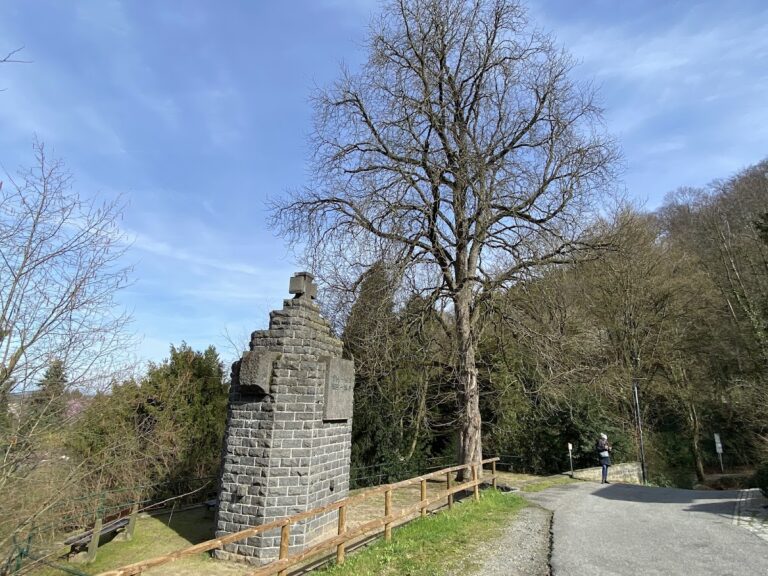
Burg Jossa fell into decay after 1360 and was gradually dismantled for building materials. In September 1848, Grand Duke Ludwig III of Hesse-Darmstadt ordered excavations in the ruin. The exposed foundations were covered again in 1860. The resulting mound was levelled and converted into a dance floor, altering the visible form of the archaeological site.
The surrounding woodland now forms part of the Natura 2000 protected area “Kniebrecht, Melibocus and Orbishöhe near Seeheim-Jugenheim, Alsbach and Zwingenberg,” an FFH area designated under the European Habitats Directive to protect habitats and species.
Remains
Layout and defensive works
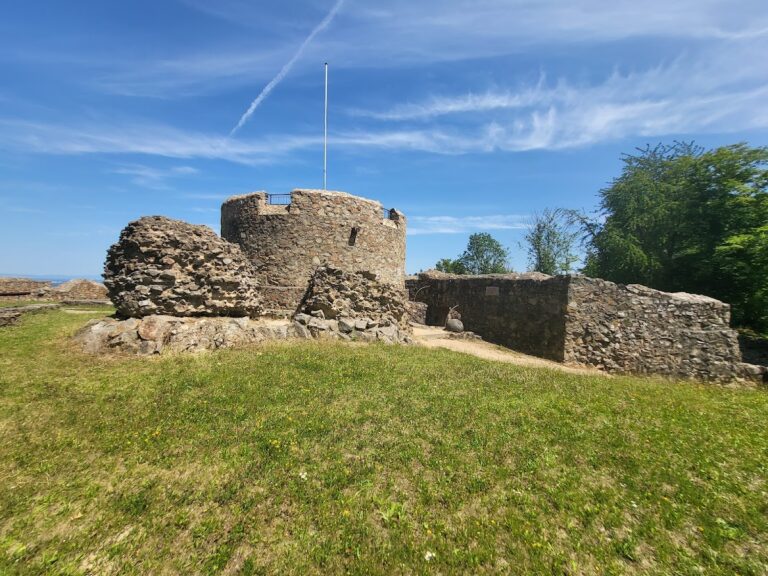
Burg Jossa occupies a mountain spur of Darsberg at about 295 metres above sea level, approximately 700 metres southeast of Darsberg itself. It lies between Katharinenberg near Alsbach to the southwest and Bayernhöhe to the east or northeast, on the northwestern edge of the Odenwald. Foundations, sections of the rampart wall, and the surrounding ditch system survive. The rampart enclosure has a circumference of about 270 metres and enclosed approximately 5,200 square metres, including the outer rampart, while the buildable castle area covered about 910 square metres.
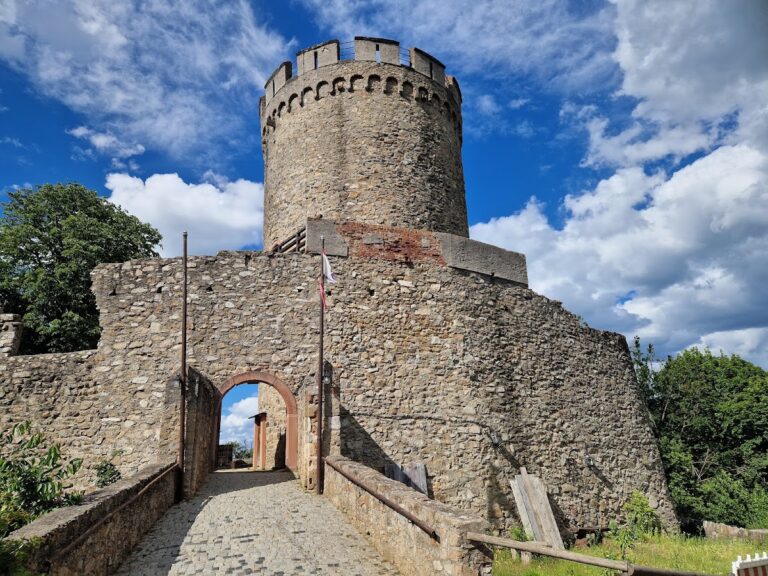
The castle’s strongest works faced the southeastern ridge, where a neck ditch, a ditch cut across a narrow ridge to obstruct approach, was nearly 50 metres wide. The shield wall, a particularly strong defensive wall, reached up to 3.75 metres in thickness. Burg Jossa had no outer defensive enclosure, but a second wall inside the ring wall extended from the keep into the courtyard. This arrangement could slow attackers and allow defenders to withdraw into the tower.
Buildings and excavated objects
The western part of the castle contained a residential building and an economic or service building. A stable and the keep occupied the eastern part. The keep, the principal fortified tower of the castle, had a diameter of 8.4 metres. The site’s water supply probably contributed to its early abandonment.
The 1848 excavation recovered three storage pots, a horn, a small shield, nails, and a small sword. These objects add material evidence for activities carried out within the castle before its decline and dismantling.