Rogoziński Villa at 2 Klasztorna Street: A Historic Residence in Kraków
Site at a Glance
- Popularity
- Medium
- Country
- Poland
- Primary era
- Modern
- Eras represented
- Modern
- Civilizations
- Austria-Hungary, Habsburg
- Site type
- Domestic
On this page9 sections
History
Schoolhouse and villa
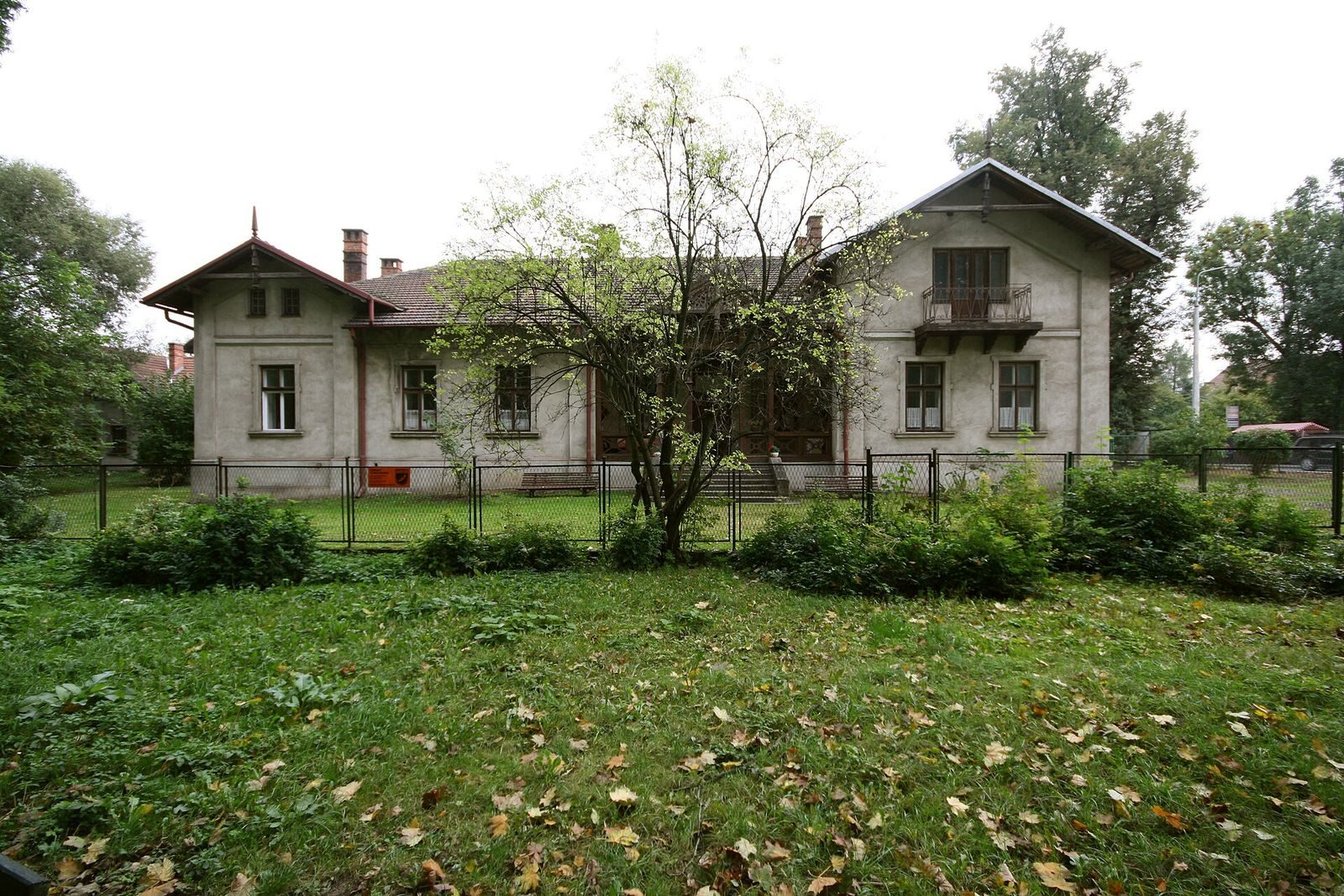
The Rogoziński Villa is an eclectic manor-style residence at 2 Klasztorna Street in Mogiła, a former village now within Kraków’s New Huta district, Poland. In 1838, teachers Kazimierz Rogoziński and Agnieszka Biczówna built a wooden house on the site and rented two rooms for Mogiła’s parish primary school.
Their descendants built a villa beside the older house beginning around 1880. Its completion is dated to about 1890, while the broader building phase extended into the early twentieth century. During the second half of the nineteenth century, villas increasingly took the place of suburban noble manor houses.
Family ownership and changes to the estate
The property remained with the Rogoziński family until the early 1920s. Jan Ignacy and Katarzyna Lelito became owners in 1921, followed in 1933 by Władysław Pobóg-Krasnodębski and his wife, Anna Maria Krasnodębska. During their ownership, the villa and grounds were altered, and the estate expanded southward onto adjoining land acquired from Stanisław Zemła.
After Władysław Krasnodębski died in 1947, his sister Blanka Regina Terczyńska took over the villa. In 1948, Franciszek and Katarzyna Lelito purchased the northern part of the property and added service buildings.
State use and later stewardship
After 1959, the property passed to the State Treasury. It first housed a Citizens’ Militia station, part of communist Poland’s state police force. The adjacent Stefan Żeromski Hospital later administered the building, which gradually deteriorated.
In 1971, a memorial to Wojciech Bogusławski was unveiled in the adjoining park. Bogusławski was a Polish actor, theatre director and playwright; his opera The Supposed Miracle, or Cracovians and Highlanders is set in Mogiła. In 1978, Lelito heirs sold their share of the villa to Andrzej Dziembaj.
From 1992, Urszula and Władysław Gawłowie owned the north wing and leased the rest. They sought to save the building and used it for a time as an art gallery. Their Association of Painters and Fine Arts Enthusiasts, “Old Manor Gallery,” exhibited paintings that included works by Antoni Maria Kwiek.
The villa and adjoining park entered Kraków’s register of historic monuments in 1996, with the registration updated in 2016. In 2015, the New Administrative Center put the property up for sale, and a tender made Kraków-based IPR Development its new owner.
Remains
The villa
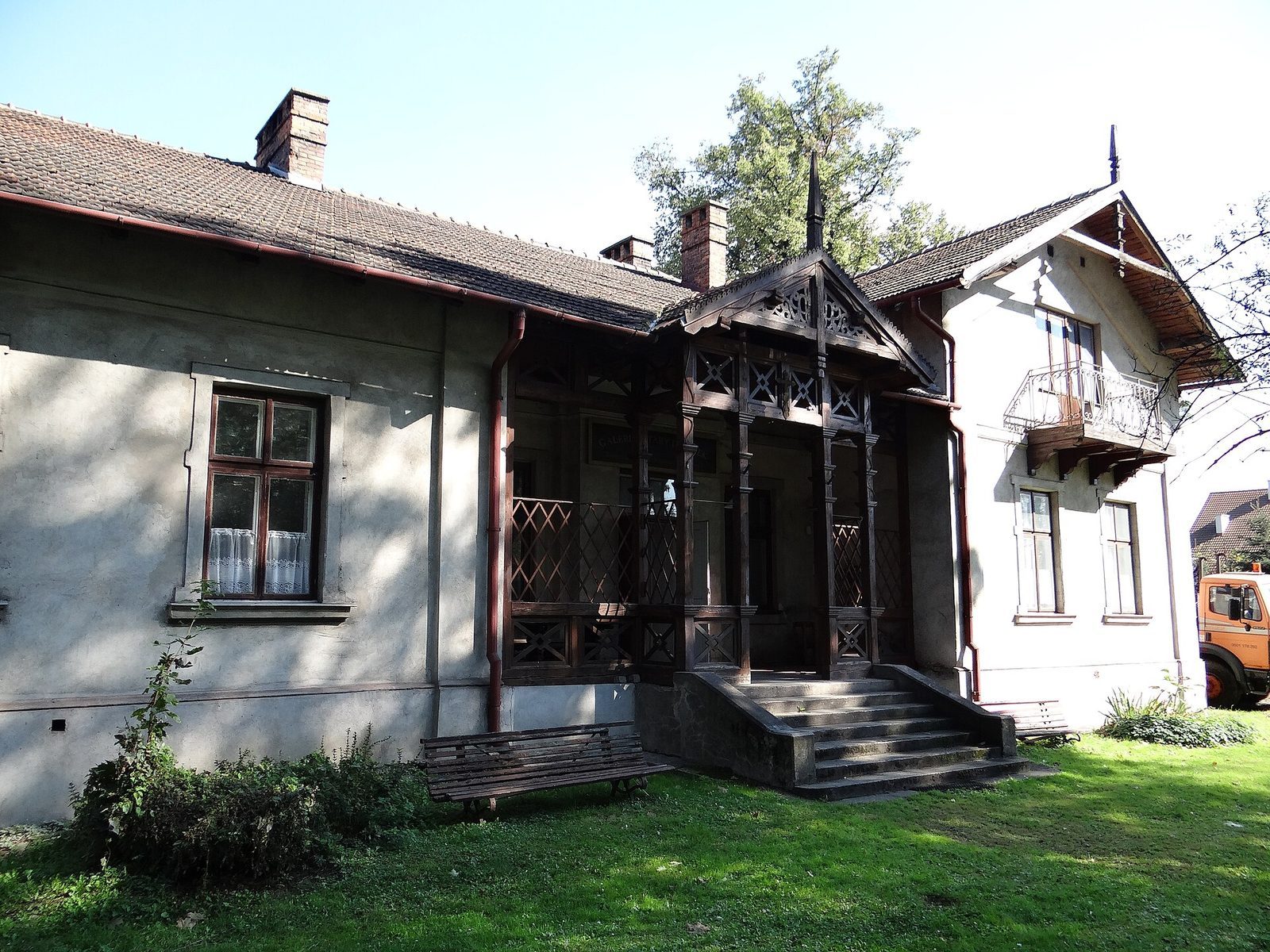
The villa is a brick building with plastered walls and an eclectic design, combining elements drawn from different architectural styles. A basement lies beneath part of it. The main body and west wing are single-storey, while the east wing has two storeys, a usable attic and a balcony with a balustrade.
A wooden porch sits in a recess between the east wing and the eastern part of the main body. Its gabled roof rests on eight wooden posts. Four extend beyond the facade to form a portico, a roofed entrance supported by posts, and steps lead up to the porch. The porch uses a Swiss style associated with health-resort villas. The building has a multi-pitched roof covered with Płaszów-type interlocking tiles. During the Krasnodębskis’ ownership, the windows were replaced with inward-opening ones, and grilles bearing coats of arms were installed.
Grounds and additions
Service buildings
The property’s other buildings include a north wing, a gardener’s building, a greenhouse and a boiler house. The greenhouse and boiler house occupy the northern part of the property.
Landscape park and memorial
The adjoining landscape park lies south of the villa. It contains a commemorative boulder honoring Wojciech Bogusławski, whose opera places its action in Mogiła.