Mayenburg: A Medieval Judicial and Administrative Castle in South Tyrol
Site at a Glance
- Popularity
- Medium
- Country
- Italy
- Primary era
- Medieval
- Eras represented
- Medieval, Early Modern
- Civilizations
- Habsburg, Holy Roman Empire
- Site type
- Military
- Remains
- Castle
On this page11 sections
History
Mayenburg is a ruined hilltop castle near Völlan in South Tyrol, Italy, built around 1240 by the Counts of Eppan as part of their defensive network. It became the principal administrative castle of the Maienberg-Tisens judicial district, a territory separated from the County of Eppan.
Foundation and Tyrolean rule
The castle is also known as Maienburg and Maienberg. Its first recorded mention, in 1241, calls it castrum de Uollan, meaning Castle of Völlan. A record from 1375 uses the form Mayenburch. An older claim that the castle was mentioned in 1229 came from a misreading of a later date, either 1299 or 1329.
After the Eppan line ended, the Counts of Tyrol acquired Mayenburg in 1253. For a period it served as the judicial castle of the Merano court. The local court dealt with offences that did not carry the death penalty.
The Häl family
Ludwig, Margrave of Brandenburg, a ruler of a border territory, granted the castle as a fief, property held under a feudal grant, to the knightly Hälen family, who had come from Swabia. In 1412 Duke Frederick IV of Tyrol granted the castle and the Tisens court to the brothers Sigismund, Hans, and Georg Häl. Their family retained the fief for more than two centuries, until 1570.
Later proprietors
In 1570 Archduke Ferdinand II transferred the fief to Lukas Römer von Maretsch for 1,500 gulden. Römer was a provincial commander in the Teutonic Order, a religious order that also maintained military and territorial administrations, in its Adige regional district. He later became its deputy provincial governor and adopted the name Römer von Maretsch und Mayenburg.
Christoph Lidl received the castle and Tisens court in 1592. In 1648 Franz and Karl Ferdinand Lidl sold Mayenburg for 17,000 gulden to Veit Benno, Count and Lord of Brandis, who enlarged the complex. In 1814 Joseph, Count of Brandis, ended the feudal tenure and sold the property to a farmer.
Decline and repairs
The castle deteriorated during the nineteenth century, although people continued to live there until 1825. In 1922 Josef Auffinger, a physician from Merano, acquired Mayenburg and arranged repairs. His son Roland had the keep fitted with new wooden shingles in 1975. The property remains with the Auffinger family.
Remains
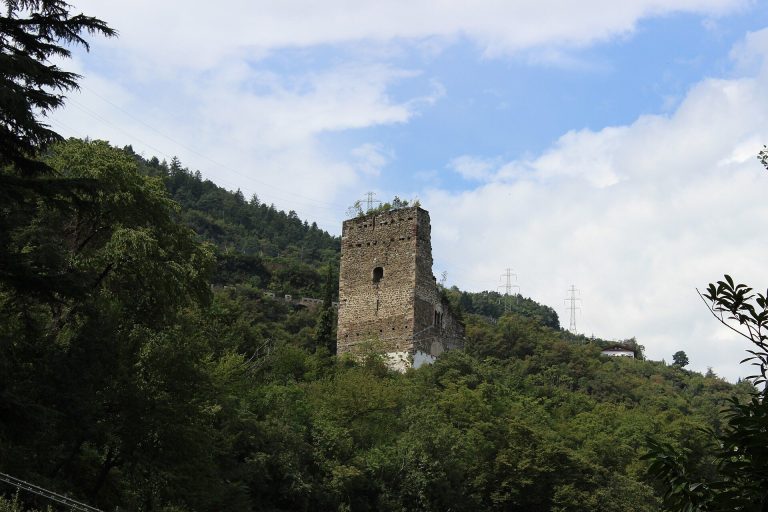
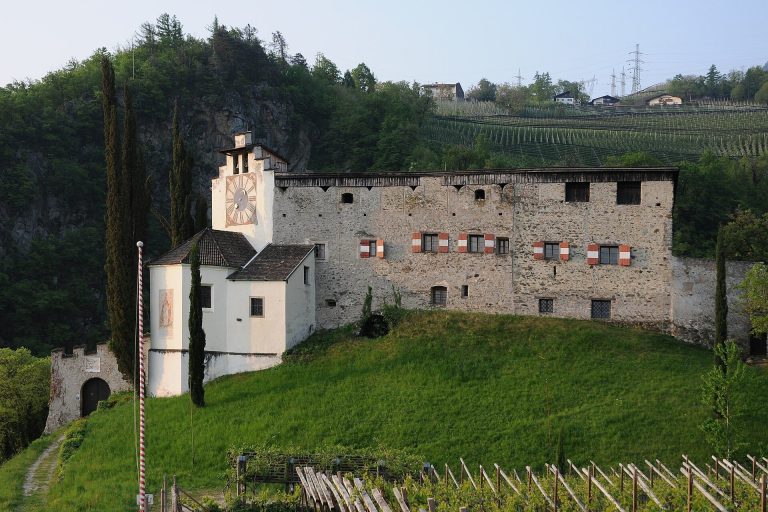
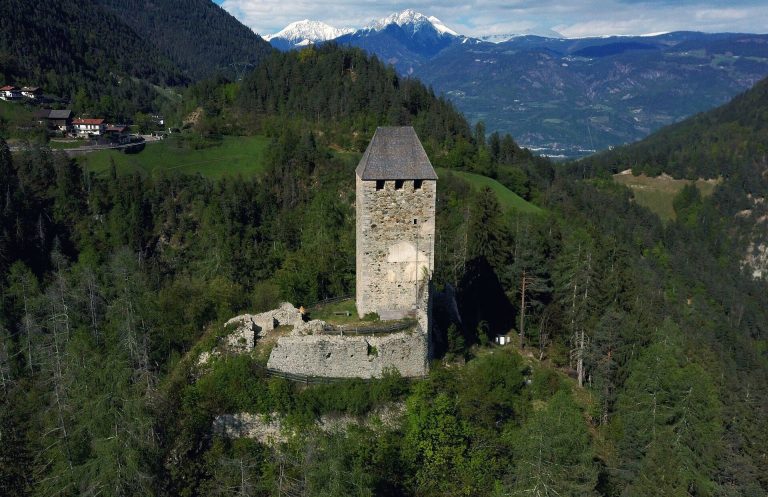
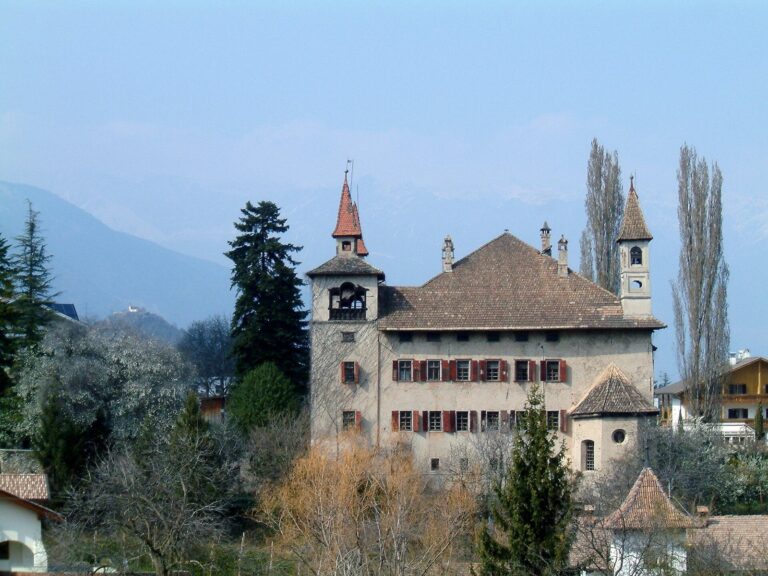
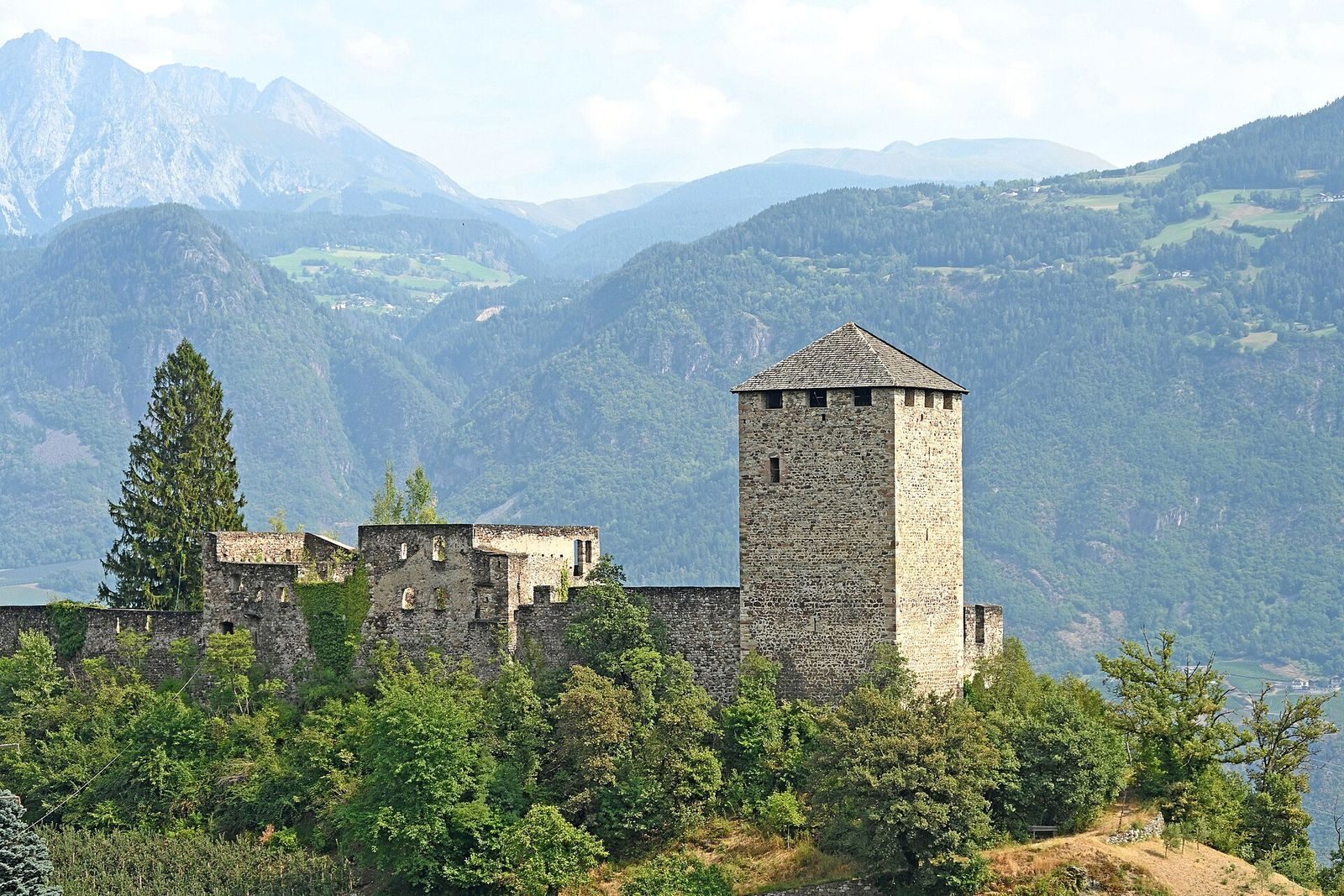
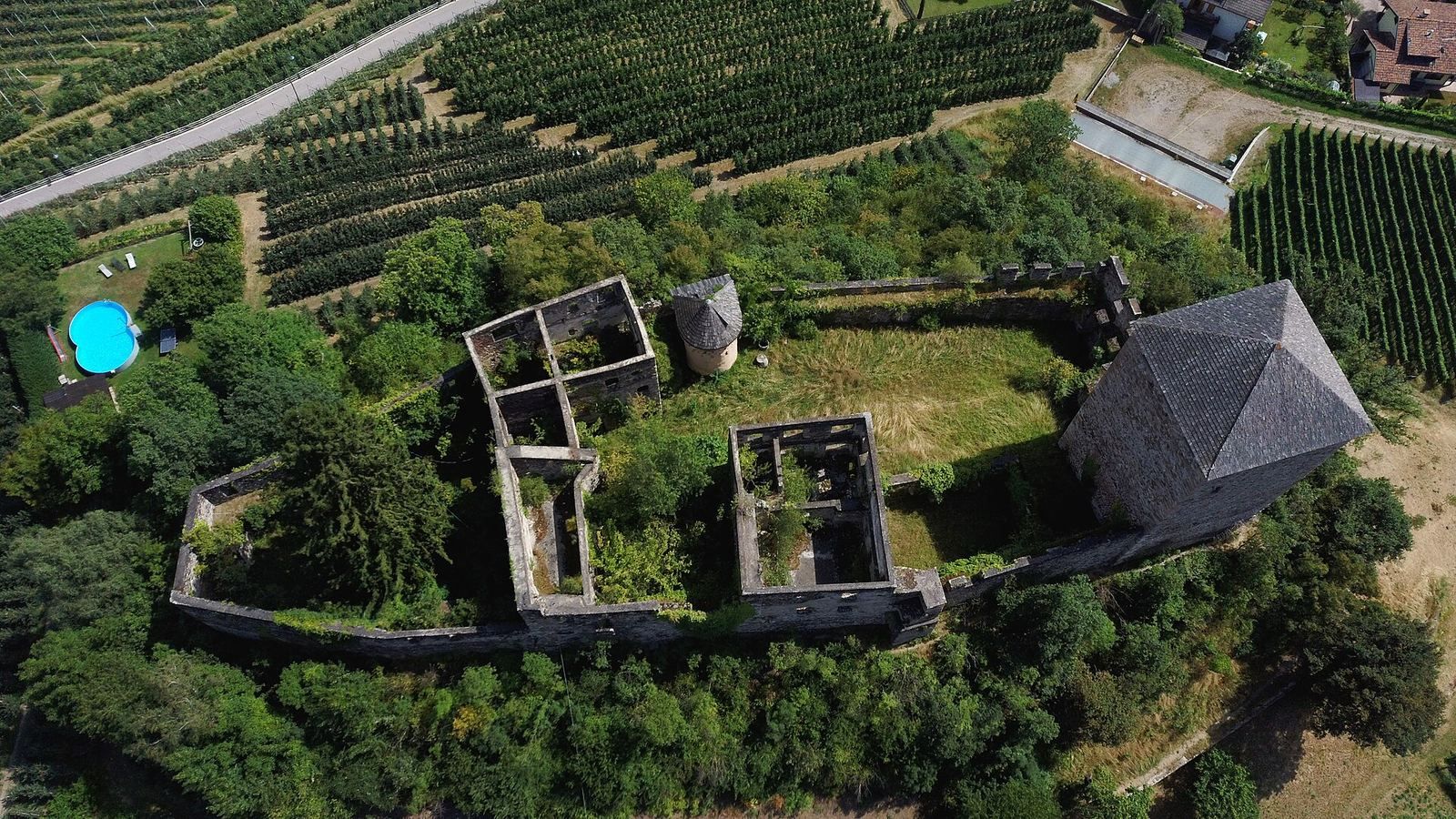
The castle stands on a long, narrow hill. Its walled enclosure contains two courtyards and the principal residential hall, with a keep, chapel, and smaller buildings forming the surviving complex.
Castle structures
Keep
The keep, the castle’s principal tower, rises 28 metres and is among the oldest parts of the complex. It is the exception to the otherwise roofless buildings.
Enclosure and residential hall
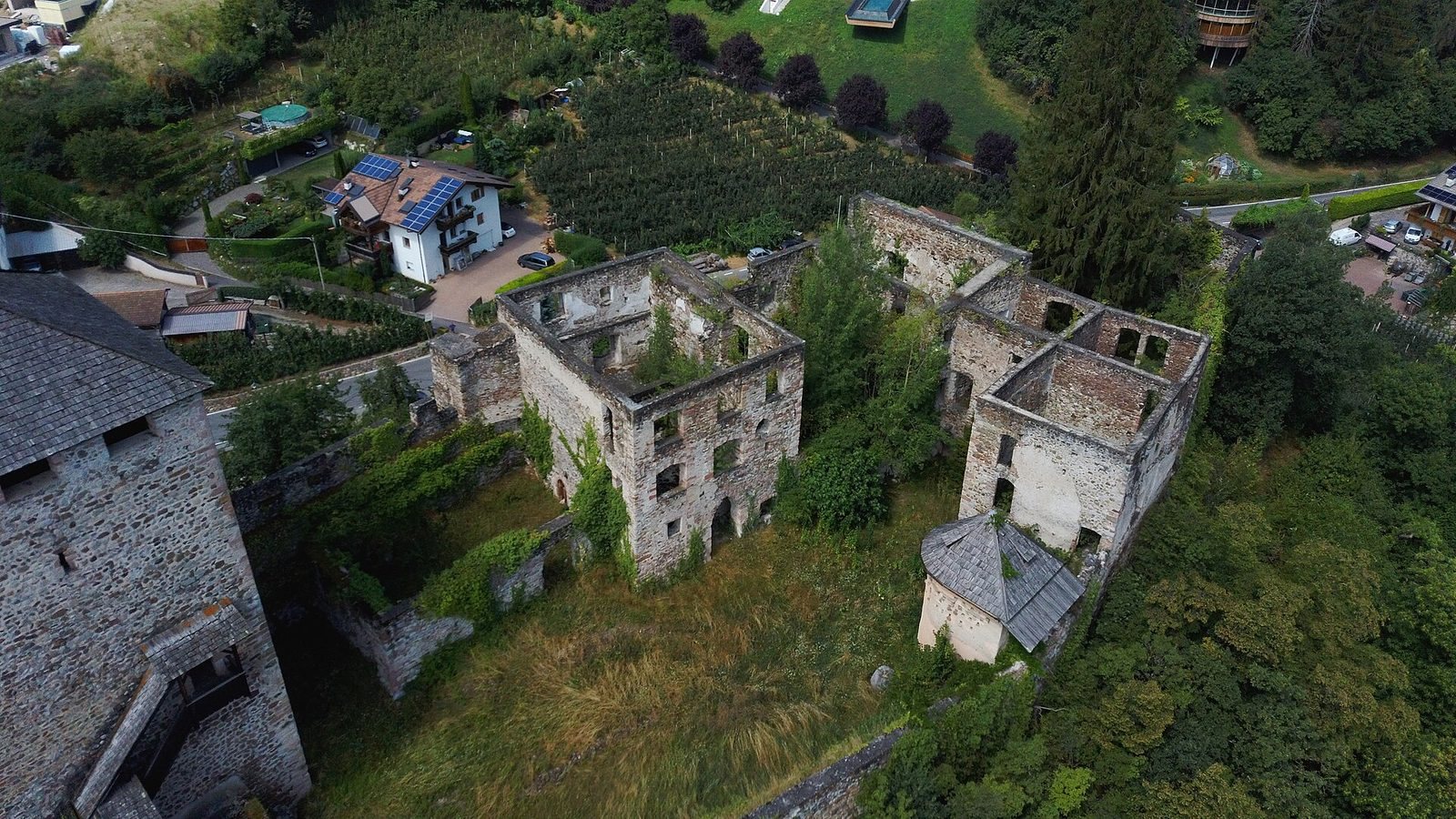
A defensive wall with a notched top encloses the courtyards and residential hall. Most buildings, apart from the keep, now survive as roofless structures, largely reduced to their outer walls. During the nineteenth century, owner Johann Wieser filled in the castle pond and removed the roof.
Chapel of Saint Barbara
The ruined chapel is dedicated to Saint Barbara. Traces of wall paintings from the fifteenth and sixteenth centuries remain inside.
Well tower
A round tower protected the castle well and also served as a dovecote, a structure for keeping pigeons.