Fort 49 1/4 “Grębałów”: An Austro-Hungarian Fortification in Kraków


Site at a Glance
- Rating
- 4.6
- Popularity
- Very Low
- Country
- Poland
- Primary era
- Modern
- External website
- Open
- Eras represented
- Modern
- Civilizations
- Habsburg
- Site type
- Military
- Remains
- Fort
On this page8 sections
History
Fort 49 1/4 “Grębałów” is an Austro-Hungarian military fortification in Kraków, Poland, built for the Austro-Hungarian Army in 1897–1899 as part of the Kraków Fortress. The large defensive system protected Kraków and its approaches. The fort was designed by the military architect Maurycy Brunner.
Wartime service
The fort took part in the First World War, including the First Battle of Kraków. Its garrison consisted of five officers, one of them a doctor, and 184 soldiers. In 1918–1919, the fort’s guns were used to arm Polish armoured trains dispatched to the Ukrainian front.
Between 1919 and 1939, Fort 49 1/4 “Grębałów” belonged to the Kraków Fortified Camp, a defensive system intended to protect the city. During the Second World War, the Wehrmacht used the fort as a warehouse. In 1944, it was incorporated into the defensive system surrounding Kraków known as the Henryk Line.
Protection and present use
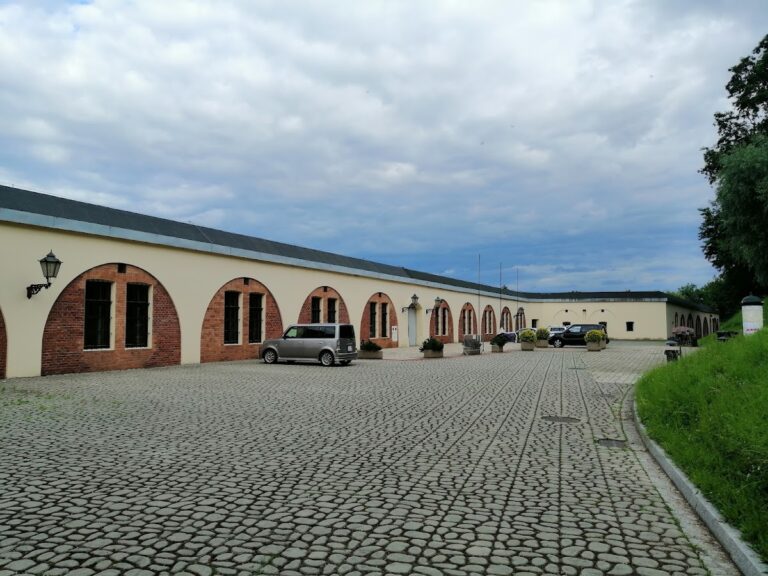
On 9 March 1989, the fort entered the register of monuments of the Lesser Poland Voivodeship as monument no. A-801 and was recognized as a cultural monument of the voivodeship. In 1988, it was transferred to the Przyjaciel Konika branch of the Society for the Promotion of Physical Culture, a non-profit organization with public-benefit status. The organization has used the site for children’s and youth equestrian recreation, hippotherapy for children with disabilities, and the promotion of its historical and natural heritage. It has been identified as the fort’s owner since 1998. The restored tradytor now contains an educational exhibition and a training room, and the fort serves educational purposes.
Remains
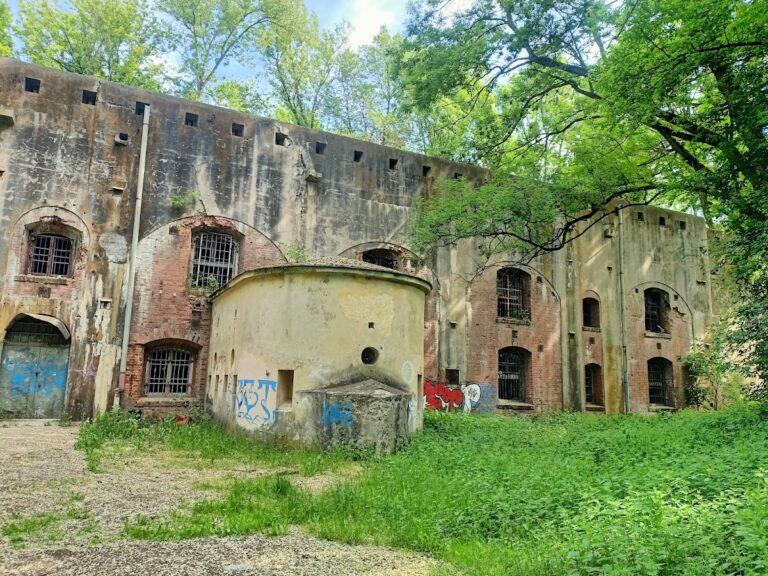
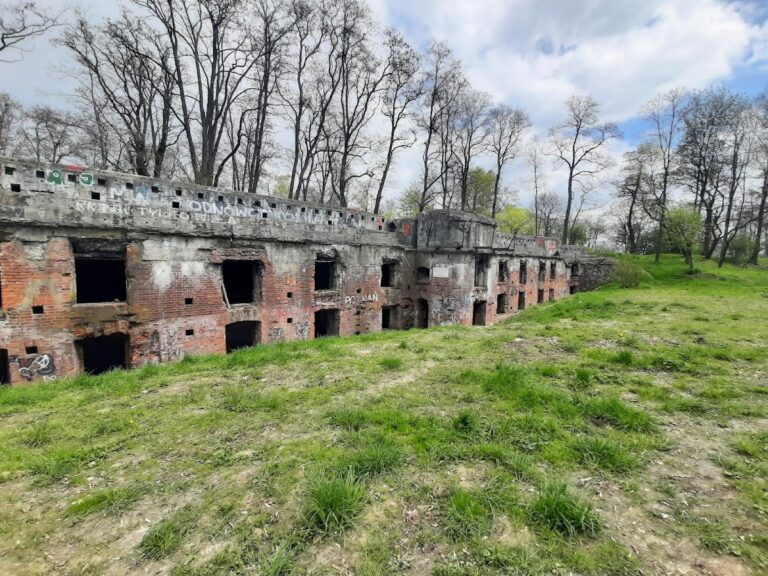
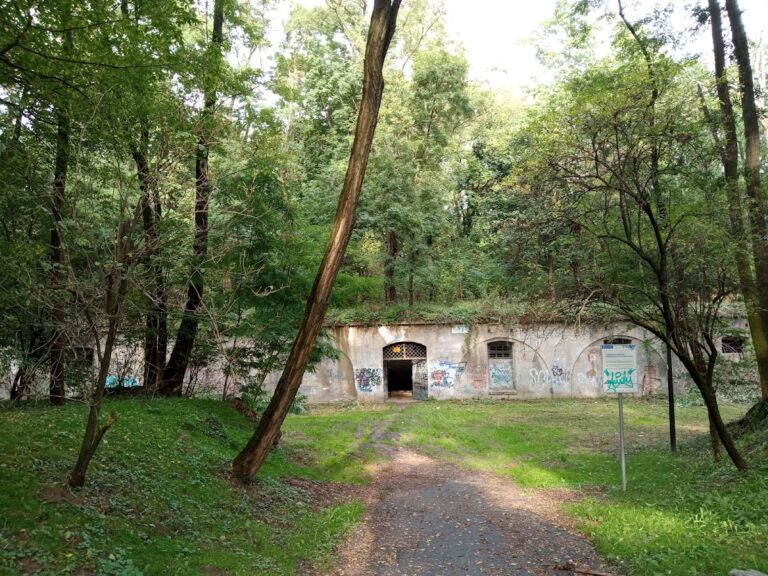
Fort 49 1/4 “Grębałów” is positioned beside Grębałów Cemetery and the “Wzgórza Krzesławickie” tram terminus in Kraków. Its defensive arrangement combined artillery positions, protected firing works, an underground passage, and close-defence facilities. The overall condition of the fort is satisfactory.
Defensive works and armament
Tradytor and caponier
The tradytor, a casemated artillery position designed mainly for flanking fire along a defensive approach, originally contained four firing positions protecting the entrance from the front. Its armoured casemates allowed fire against an attacking enemy approaching from the east. A caponier, a protected work projecting into a ditch or ravine, was enclosed by a natural ravine reshaped to form a fire barrier. Barbed wire protected its roof, while a poterne, or covered underground passage, led to the structure. The restored tradytor is among the fort’s surviving components.
Guns and close defence
The fort carried four M.94 8 cm guns, with a calibre of 76.45 mm, mounted in armoured towers within the barracks. Four further 8 cm guns on M.94 carriages occupied the tradytor’s armoured casemates. Approximately 17 machine guns supported the artillery, while an infantry firing gallery provided close defence.
Surviving defensive fabric
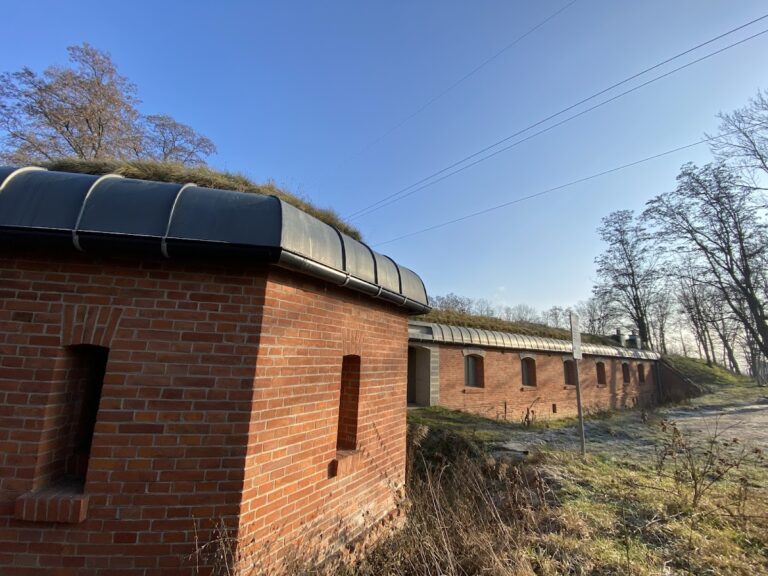
The former openings of the four asymmetrically arranged rotating armoured turrets and the observation tower are sealed and covered by sheet-metal reconstructions. These elements belonged to the fort’s original armoured defensive system, while the restored tradytor preserves an important part of its artillery architecture.
Nearby sites