Fort 49a “Dłubnia”: An Austro-Hungarian Fortress in Kraków


Site at a Glance
- Rating
- 4.6
- Popularity
- Very Low
- Country
- Poland
- Primary era
- Modern
- External website
- Open
- Eras represented
- Modern
- Civilizations
- Austria-Hungary, Habsburg
- Site type
- Military
- Remains
- Fort
On this page7 sections
History
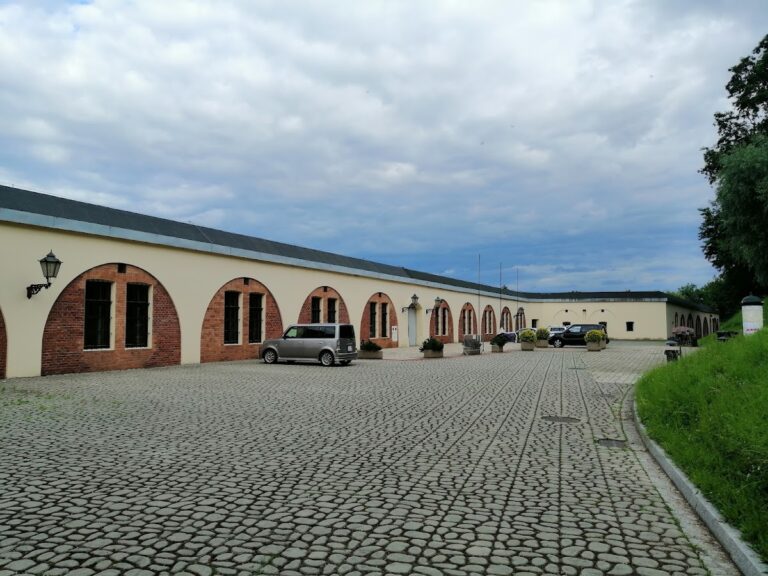
Fort 49a “Dłubnia” is a historic fort in Kraków, Poland, built for the Austro-Hungarian Army between 1892 and 1896 as part of the Kraków Fortress, a system of military fortifications established around the city under Austro-Hungarian rule. Its purpose was to protect the Dłubnia Valley.
Construction and military role
The Austro-Hungarian Army, the military force of Austria-Hungary from 1867 to 1918, financed the fort and held it as its first owner. Fort 49a “Dłubnia” operated within a defensive network that included Fort 49 Krzesławice and Fort 48a Mistrzejowice in support of the valley’s protection. Fort 49 1/4 Grębałów and Fort 49 Krzesławice formed part of the wider defensive system associated with it.
The fort did not take part in fighting during the First World War. It remained under military control during the interwar period, retaining its connection with the region’s organized defensive infrastructure.
Wartime damage and later use
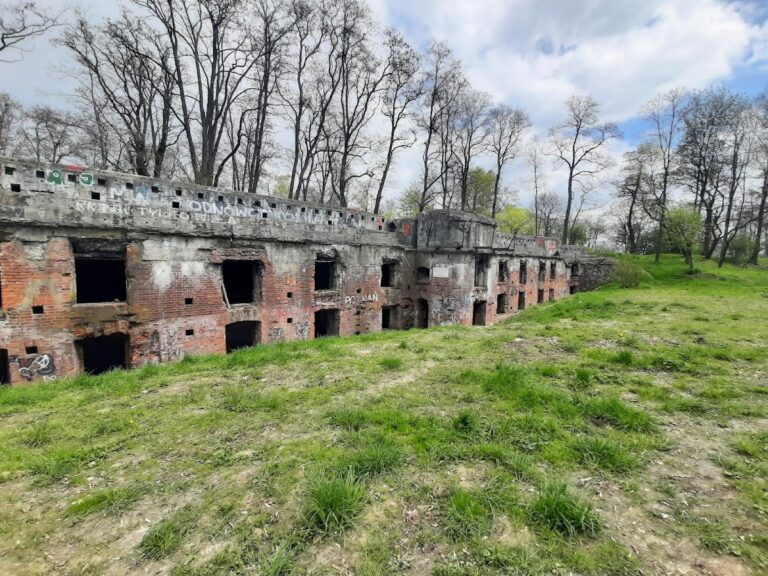
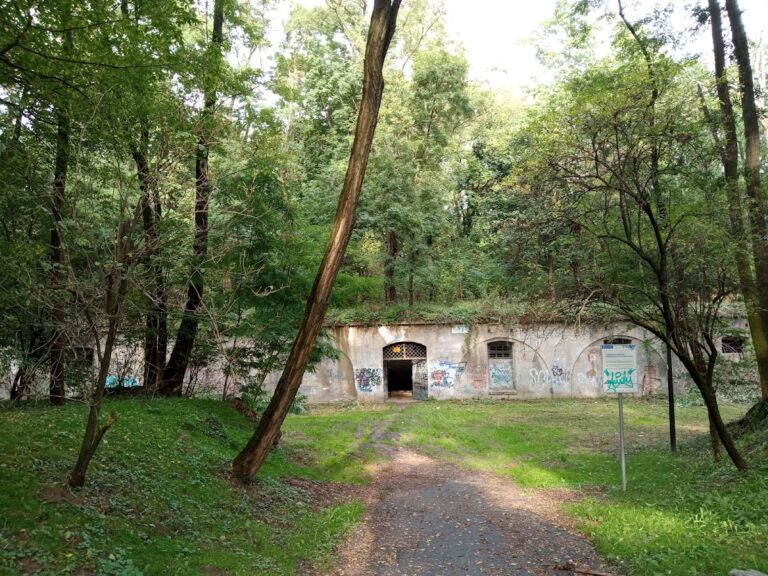
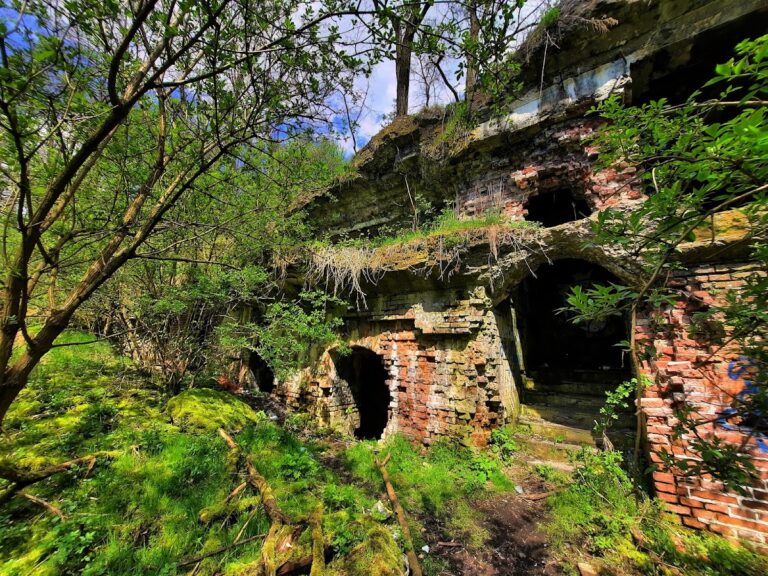
During the Second World War, explosions destroyed the fort’s armored towers. An armored tower was a protected gun position enclosed by armor to shield its artillery and crew. After the war, the fort was used for storage until 1990.
Fort 49a “Dłubnia” is registered as a protected monument under number A-94. The designation dates from 11 May 2007.
Remains
Fortification layout
Main defensive works
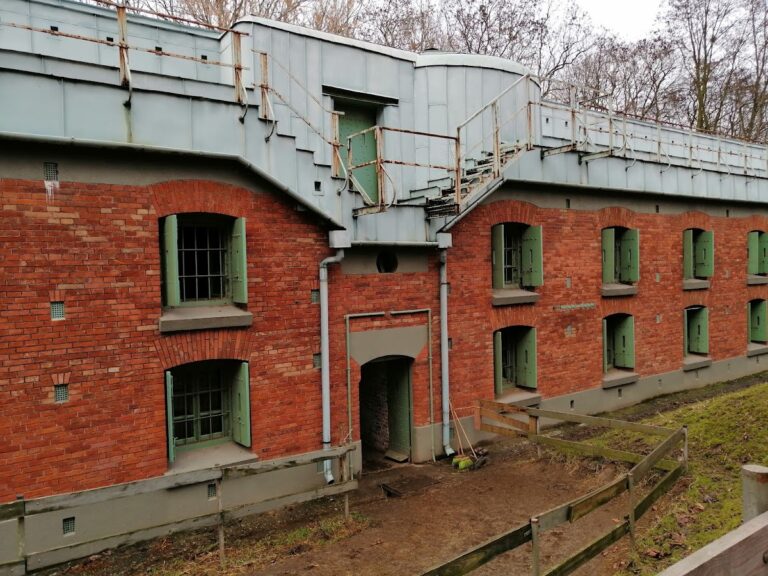
The fort’s defensive arrangement included a neck caponier, a left flank ditch, and a single reverse caponier. A caponier was a fortified structure projecting into or beside a ditch, allowing defenders to fire along the ditch. The reverse caponier served this function from the rear or opposite side of the fortification. The armored towers formed part of the fort’s protected gun positions before their destruction by explosions during the Second World War.
Associated outer works
The defensive works around Fort 49a “Dłubnia” included the infantry earthwork redoubt IS VI-1, battery FB VI-1, and another battery associated with the fort. These works belonged to the fort’s broader defensive arrangement around the Dłubnia Valley.
Nearby sites