Historic Sites in Peru: Explore Ancient Cities, Temples and Tombs
Peru’s collection includes monumental settlements built long before the Inca Empire, painted adobe temples, highland burial towers and colonial coastal defenses. These places belong to distinct societies and environments. Their articles explain the surviving fabric and show how cities and religious centers developed through repeated construction.
Primary Function: All
Type: All
Civilization: All
Popularity: All
Rating: All
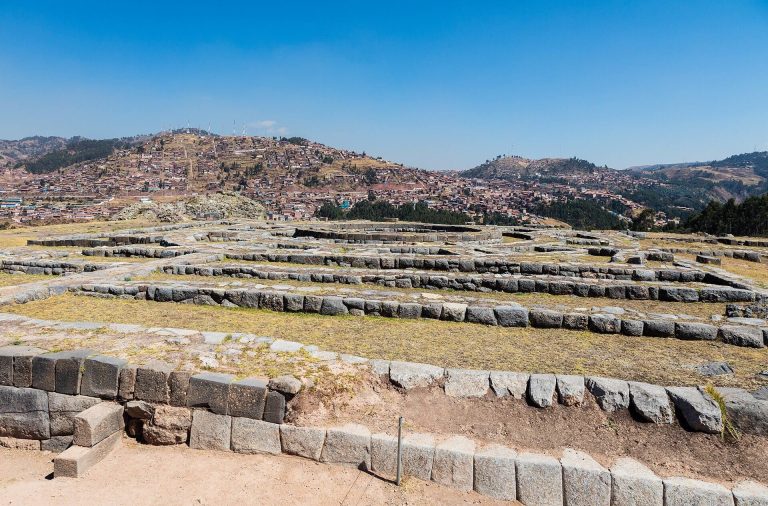
Muyuq Marka was an Inca circular tower and temple of Inti within the Saksaywaman fortress above Cusco, Peru. Its remains were uncovered in 1934 after…
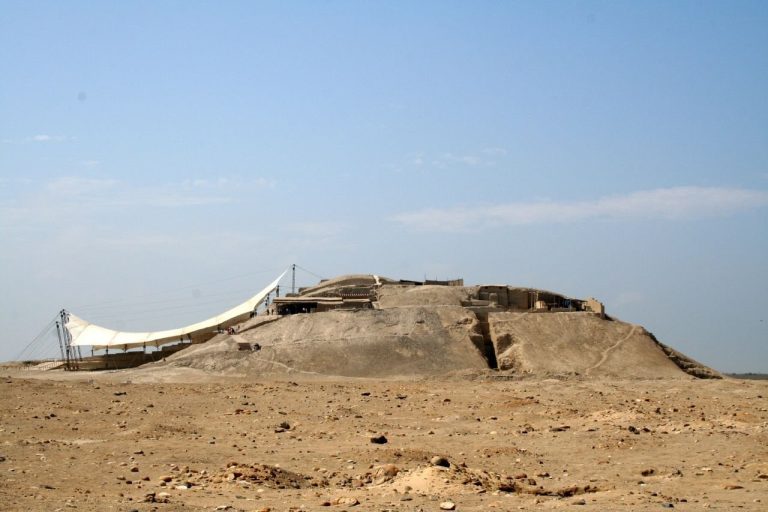
Huaca Cao Viejo was a Moche ceremonial and administrative center in Peru’s Chicama Valley, developed through successive construction phases and later…
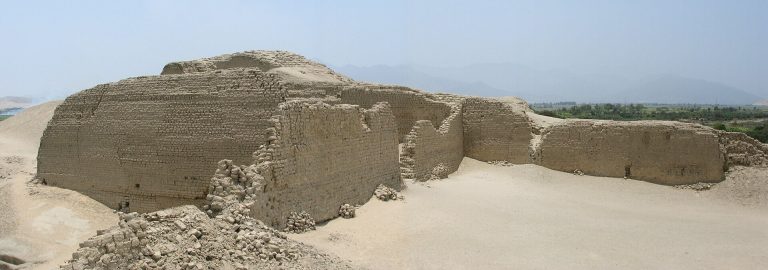
Pañamarca is a Moche archaeological site in Peru known for its adobe temple foundations, ceremonial murals, processional imagery, and evidence of…
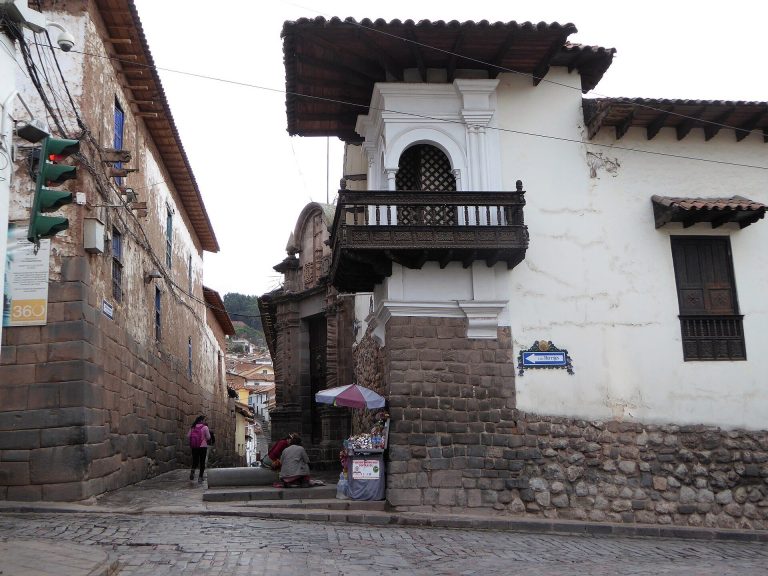
The Archbishop's Palace of Cusco occupies the site of an Inca royal palace and incorporates Inca, colonial, and republican elements. Since 1966, it…
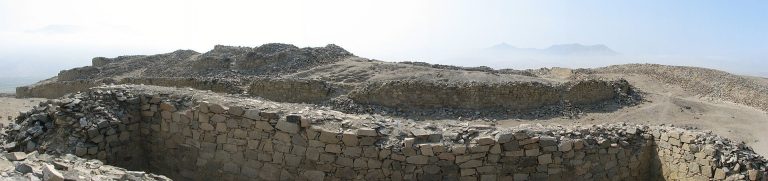
Chankillo is a monumental complex of the Casma–Sechin culture in Peru, known for its hilltop fortress and thirteen towers that tracked the sun’s…
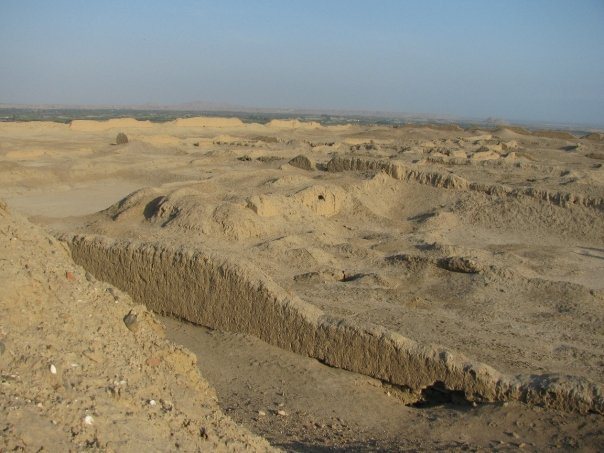
Pacatnamu is an adobe archaeological complex on Peru’s northern coast, occupied by Moche and Chimu communities and shaped by ceremonial,…
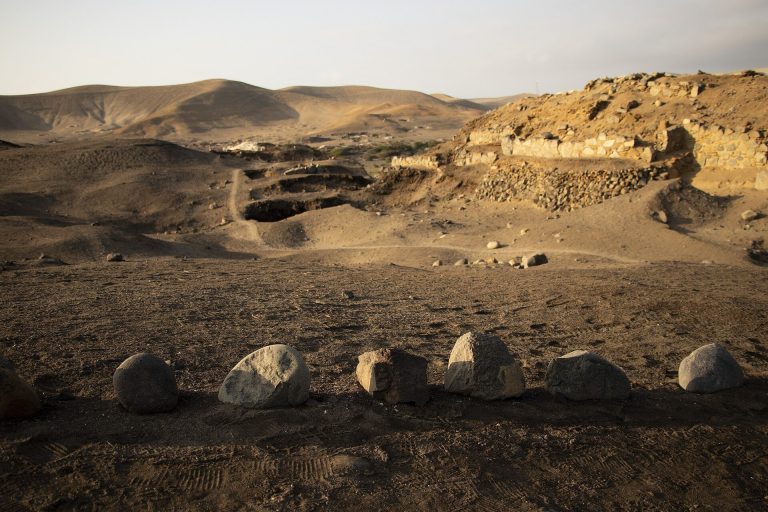
Aspero was a Late Archaic coastal settlement linked to Caral, with monumental pyramids, fishing infrastructure, ritual spaces, and burials that…
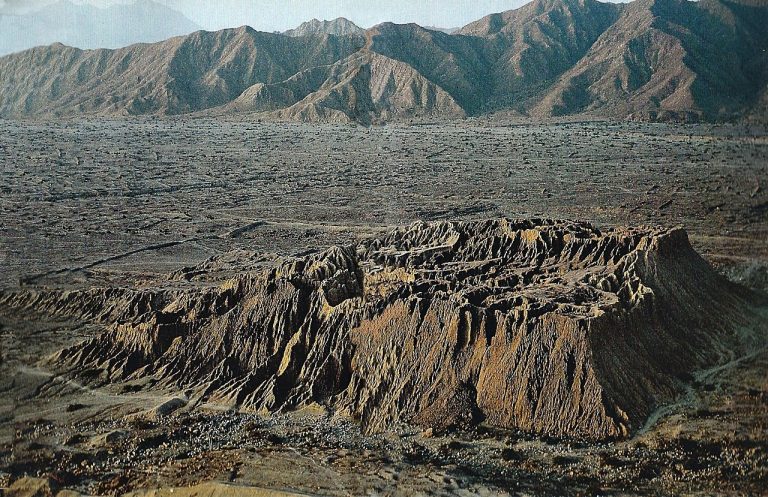
Pampa Grande was a major Moche settlement in northern Peru, probably serving as the culture’s final capital during Phase V. Its adobe pyramids,…
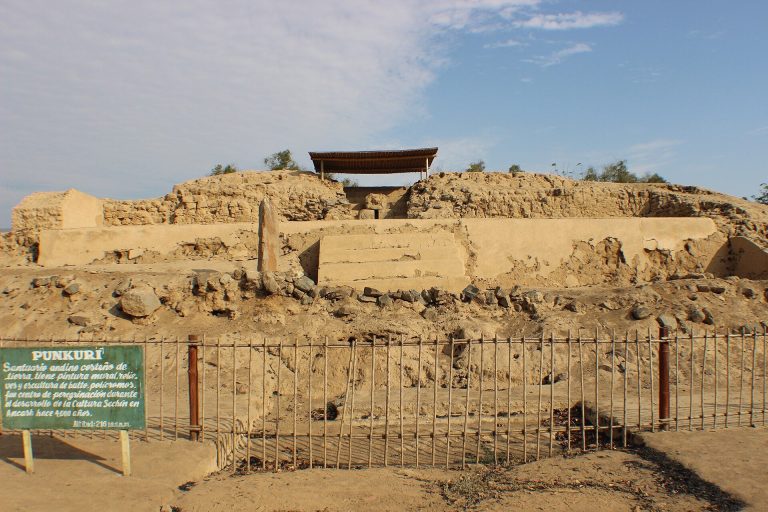
Punkurí is a multi-phase adobe temple on the Nepeña River in Áncash, Peru. Developed between approximately 2000 and 1400 BC, it preserves evidence of…
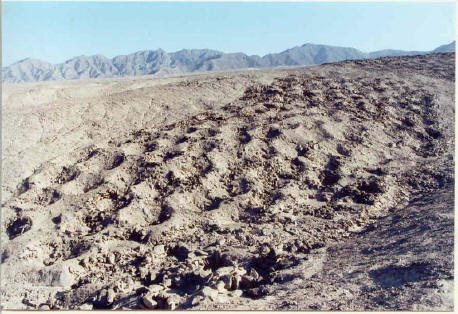
The Band of Holes, also called Monte Sierpe and Cerro Viruela, is a 1.5-kilometer formation of thousands of stone-lined pits in Peru’s Pisco Valley.…
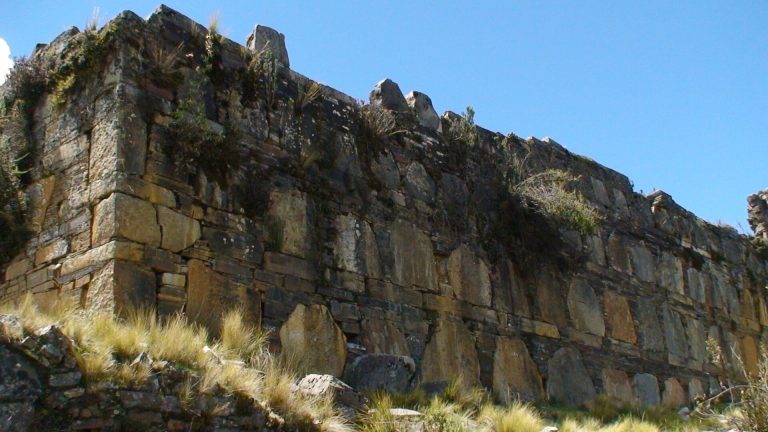
Yaynu was a major fortified administrative, residential, and ceremonial center of the Recuay culture in Peru’s Ancash highlands, occupied mainly…
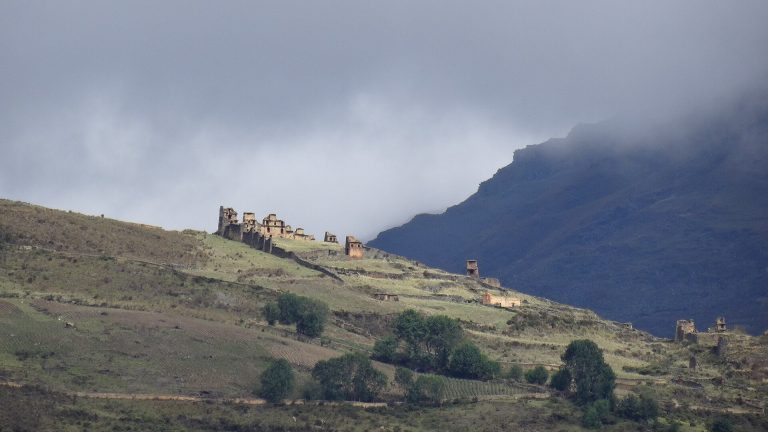
Piruro is a high-altitude archaeological complex in Peru with occupation from approximately 3000–2500 BC into the Inca period. Its fortress,…
For details on how to use the maps, which sites are included, how popularity and ratings are determined, and how sites are classified, see the help page.
On this page6 sections
Early urban platforms at Caral
Caral-Supe developed in a coastal valley during the third and early second millennia BC. Large public buildings, residential groups and sunken circular plazas occupy its central area, with further housing around the settlement. The monumental platforms were raised through coordinated earth and stone construction.
The arrangement of open courts and elevated buildings establishes an urban center very different in date and form from the later Inca sites. Residential spaces also accommodated work, connecting the public monuments with the everyday organization of the settlement. The surviving plan places those activities within the same valley landscape.
Stone galleries and painted adobe temples
Chavín de Huántar preserves a ceremonial center developed during the second and first millennia BC. Its stone-faced platforms contain passages, chambers and water conduits. An inward-facing group of buildings surrounds a circular court, while later construction enlarged the complex.
The internal galleries make circulation beneath and within the platforms part of the site’s architecture. Carved stones and carefully arranged passages belong to its religious use, with individual features explained in the site article.
At Huaca de la Luna, near Trujillo, Moche builders used adobe to create a large ceremonial complex. New platforms enclosed earlier rooms, preserving painted reliefs and surfaces inside successive construction layers. The exposed decoration and filled spaces allow changes in the temple to be followed through the structure itself. This is a different material tradition from Chavín’s stone galleries.
Kuélap’s raised settlement
Kuélap occupies a high ridge in northern Peru. The Chachapoyas built great retaining walls to form an elongated platform containing the settlement. Narrow entrances climb through the massive perimeter, while the interior preserves numerous building remains.
The site predates its incorporation into the Inca Empire. Its principal architecture should therefore retain its Chachapoya attribution, with later Inca activity treated as a separate phase. The platform, access routes and position above the surrounding valleys explain how the settlement was fitted to the mountain terrain.
Tomb towers beside Lake Umayo
Sillustani preserves funerary towers known as chullpas on a peninsula beside Lake Umayo. The burial landscape developed within the world of the Qolla and other highland communities and continued under Inca influence. Its towers vary in shape, masonry and degree of finish.
Some use carefully worked blocks, while others have rougher construction. Paths, terraces and working areas accompany the tombs, placing burial within a wider modified landscape. The differences among the towers are more useful than treating the entire complex as the product of one building campaign or one political power.
Artillery defenses at Callao
Real Felipe Fortress was built in the eighteenth century after the earthquake and tsunami that devastated Callao in 1746. Its pentagonal enclosure places bastions at the corners, with towers and internal buildings serving the defense of Peru’s principal colonial port.
Low walls and projecting gun positions belong to the requirements of artillery warfare. The fortress extends the collection into a later defensive tradition, distinct from the raised settlements and ceremonial platforms of the pre-Hispanic examples. Its subsequent military history is explained in the individual article.
Explore Peru’s remains
Use the map and grid to compare coastal valleys, highland sites and particular building types. Each entry opens an article on the place’s history, surviving architecture and the cultural phases represented there.