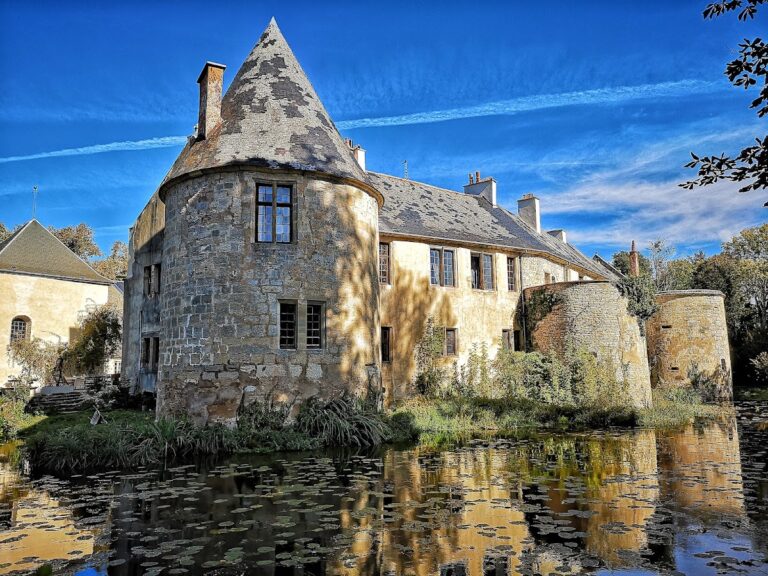
Royal Abbey of Molesme: A Benedictine Foundation in France


Site at a Glance
- Rating
- 4.3
- Popularity
- Very Low
- Country
- France
- Primary era
- Medieval
- External website
- Open
- Eras represented
- Medieval, Modern
- Civilizations
- Duchy of Burgundy, French
- Site type
- Religious
- Remains
- Monastery
On this page11 sections
History
The Royal Abbey of Molesme is a former Benedictine monastery in France, founded in 1075 by Robert of Molesme during the medieval reform of Western monasticism. It began as a community seeking strict observance of the Benedictine Rule, a monastic code emphasizing communal prayer, disciplined work, obedience, and stability. The abbey later became closely connected with the foundation of Cîteaux and the origins of the Cistercian Order.
Foundation and early austerity
Robert established the monastery on land at Molesme donated by Hugues de Norlennac, with the support of Hugues-Renaud, bishop of Langres. He arrived with seven hermits from the forest of Collan near Tonnerre. The first monks lived in shelters made from branches and combined communal labor and Benedictine worship with an eremitical life influenced by Camaldulian practice, which joined community living to periods of solitude.
The community’s austerity attracted additional monks, lay benefactors, and members of noble families. Their donations increased the foundation’s resources and gradually changed its character. About fifteen years after its foundation, Molesme possessed a church and monastic buildings, replacing the earliest structures of branches and other basic materials.
Robert of Molesme and the foundation of Cîteaux
Growing wealth and a larger community created tensions over the direction of the monastery. Robert sought to preserve solitude, poverty, and strict observance, while other members of the community favored the more developed institution that Molesme had become. With the authorization of Hugues de Die, the papal legate, Robert left Molesme in 1098 with Albéric, Étienne Harding, and twenty-one monks.
The group settled on land offered by Duke Eudes I of Burgundy and the viscounts of Beaune. On 21 March 1098 they founded the monastery of Cîteaux, which became the first and mother house of the Cistercian Order. Cistercian monasticism developed as a major reform movement within Western monasticism, growing from the community established by Robert and his companions.
The monks of Molesme appealed to Pope Urban II, and Robert returned to govern the abbey in 1100. He died at Molesme on 17 April 1111. Under his leadership, the monastery became a center of strict Benedictine observance. The foundation was also associated with figures who shaped other monastic traditions, including Bruno of Cologne, later founder of the Carthusian Order, and Guérin, founder of Aulps and later bishop of Sion. Étienne Harding subsequently became an important leader of the early Cistercian Order.
Expansion, destruction, and suppression
Hugues, archbishop of Sens, confirmed the donations made to Molesme by his predecessors in 1154. The abbey subsequently founded seven or eight male monasteries and approximately the same number of female monasteries or nunneries in France, England, Switzerland, and Belgium. These associated foundations included Aulps, Jully, and Franchevaux. Pernelle of Chacenay, countess of Bar-sur-Seine, founded Franchevaux on 6 July 1159.
The abbey and its possessions suffered during the war between France and Burgundy. In 1472 the complex was destroyed and its possessions were confiscated. Rebuilding followed, but the buildings were burned again toward the end of the sixteenth century by Huguenot forces during the French Wars of Religion, a series of conflicts between Catholics and Protestants that deeply affected France.
The Congregation of Saint Maur, a Benedictine reform movement associated with stricter discipline and scholarly activity, revived religious life at Molesme in 1648. Extensive restoration took place during the eighteenth century. The abbey was later confiscated and suppressed during the French Revolution. Afterward, several farming families occupied the former monastic complex. Molesme remained active until the Revolution and is now disused. Its surviving remains have been protected as historic monuments since 23 September 1971. Recorded revenues included taxation of 4,000 florins and an assessed value of 15,000 livres.
Remains
Layout and surviving fabric
The abbey stood in the southern part of present-day Molesme, on a hillside beside the River Laignes and near the remains of the Gallo-Roman settlement of Vertillum. The first community built a house and chapel from tree branches, while later benefactions supported a substantial church and a larger monastic complex. A plan in the Monasticon Gallicanum places the present Sainte-Croix church, formerly an abbey chapel, at the center of the complex’s right-hand boundary. Its dimensions indicate the former scale of the abbey church and the wider monastic buildings.
Sainte-Croix Church
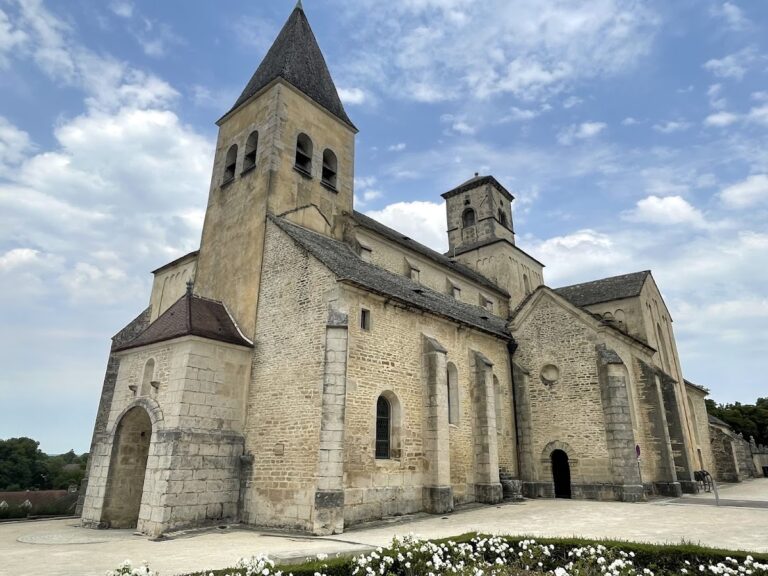
The surviving Sainte-Croix church was originally a chapel for the abbey’s novices. It dates from the second half of the thirteenth century and continued to serve as a church after the rest of the abbey was destroyed. A new bell tower was added in the nineteenth century. Fighting between French and German forces damaged the tower in 1940, and traces of that damage remain visible.
Former monastic buildings
The abbey church, chapter house, and library were demolished after the French Revolution, and their stone was reused as building material. The former monastic complex also retains remains of service and ancillary buildings, preserving parts of the practical structures that supported the religious community.
Associated dependencies
Saint-Broing-les-Moines
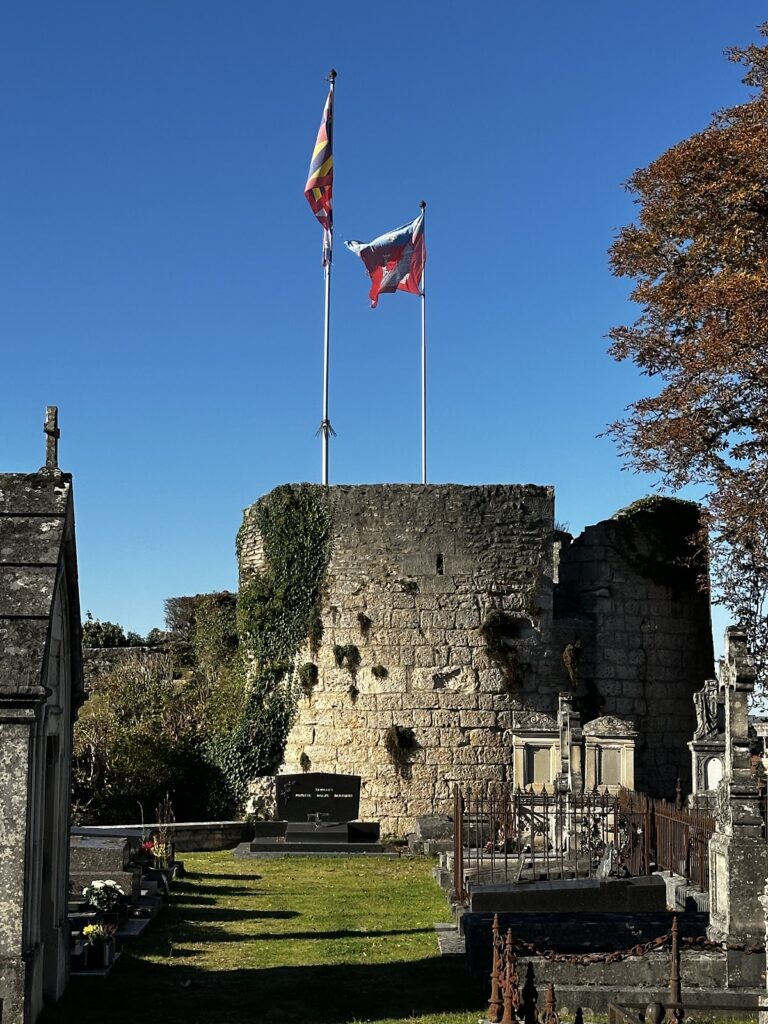
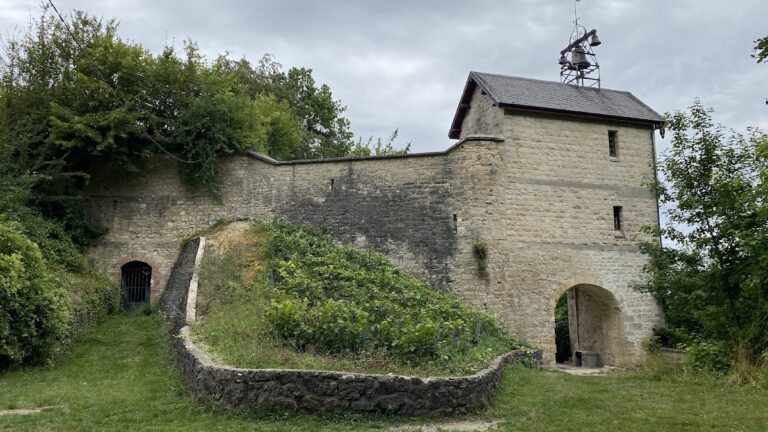
At Saint-Broing-les-Moines, a dependency associated with Molesme retains a fifteenth-century tower and a residential building. These elements were incorporated into a nineteenth-century structure, allowing an earlier phase of the abbey’s dependent settlement to survive within later construction.
Notre-Dame priory at Aube
The former Notre-Dame priory at Aube, in the Moselle region, developed as an agricultural domain organized around a courtyard. Its church and several agricultural buildings survive, and the overall arrangement appears to preserve the layout of the medieval priory.