Château de Châtillon-sur-Seine: A Ruined Ducal Fortress in France


Site at a Glance
- Rating
- 4.8
- Popularity
- Very Low
- Country
- France
- Primary era
- Medieval
- Eras represented
- Medieval
- Civilizations
- Duchy of Burgundy, French
- Site type
- Military
- Remains
- Castle
On this page8 sections
History
Early fortress and episcopal authority
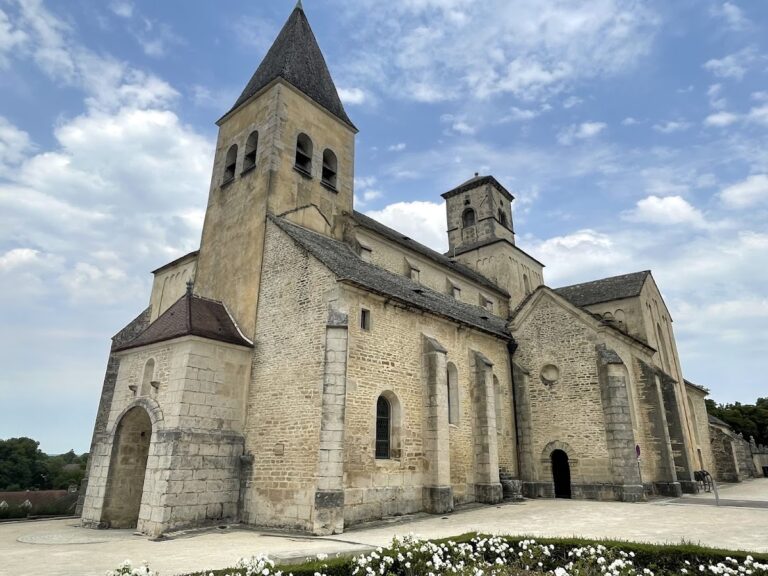
The Château de Châtillon-sur-Seine is a ruined hilltop fortress in France, built in the twelfth century by the Duke of Burgundy on a defensible hill overlooking the Seine and the town. The hill already held a castrum, a fortified settlement or military stronghold, before the tenth century. A church within its enclosure housed the relics of Saint Vorles from 868, and it was replaced by Saint-Vorles Church in the tenth century.
Until 973, the castrum belonged exclusively to the bishops of Langres, senior Roman Catholic officials who governed the Diocese of Langres. After that date, ownership was shared with the Duke of Burgundy, the ruler of the Duchy of Burgundy. In the twelfth century, the duke probably established the castle on part of the former fortified site. The ducal castle and the bishop’s residence occupied one enclosed defensive complex.
Damage, dismantling, and later use
The castle suffered serious damage during an English attack in 1359. It may have been partly rebuilt during the fourteenth century, and surviving masonry preserves substantial traces of later alteration. After the Wars of the League, a series of late-sixteenth-century civil conflicts involving the Catholic League and the French monarchy, the inhabitants dismantled the castle under letters patent issued by King Henri IV on 30 January 1598.
Part of the fortress continued to serve practical purposes after the dismantling. In 1608, the surviving ground floor of the Sainte-Anne Tower became a guardhouse. It was later converted into a bread oven, probably during the nineteenth century.
Protection and consolidation
The castle ruins have been protected as a French historic monument since 22 January 1909. This status forms part of France’s heritage-conservation system for sites of historical or architectural importance. The surviving structures were consolidated between 1979 and 1982, and the Commune of Châtillon-sur-Seine now owns the castle.
Remains
Fortified enclosure and northern remains
The ruins occupy the end of a high cliff above the Seine and the town, near Saint-Vorles Church, at an elevation of approximately 240 metres above sea level. Limestone and natural stone form the surviving construction. Parts of the fortified enclosure, its walls, and several towers remain, preserving portions of the castle’s hilltop defensive layout.
On the northern side, sections of the enclosure and the Tour de Gissey survive in the area once occupied by the bishop’s residence. The tower stands within the remains of that shared fortified complex and provides a viewpoint over the town.
Southern towers
Two towers remain on the southern side. The Tour Sainte-Anne survives only at ground-floor level beneath a stone, round-hipped roof. Its lower room later served first as a guardhouse and then, probably in the nineteenth century, as a bread oven. The Tour de la Guette retains an upper section that is severely damaged.
Cemetery and funerary remains
A cemetery has occupied the middle of the castle ruins since at least the nineteenth century. It contains funerary chapels and the grave of Marshal Marmont, a French military commander who held the rank of marshal of the Empire under Napoleon.
Nearby sites