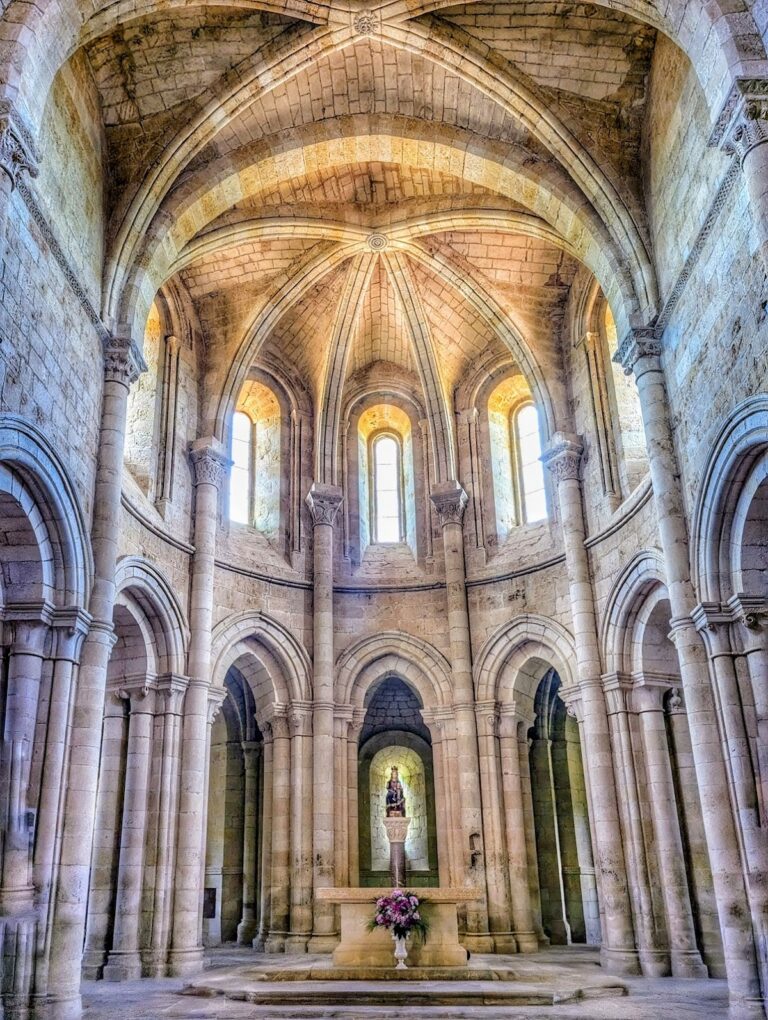
Monasterio de Sahagún: A Medieval Benedictine Monastery in Spain


Site at a Glance
- Rating
- 4.4
- Popularity
- Low
- Country
- Spain
- Primary era
- Medieval
- Eras represented
- Medieval, Early Modern
- Civilizations
- Kingdom of León, Spanish
- Site type
- Religious
- Remains
- Monastery
On this page18 sections
History
Monasterio de Sahagún, in Sahagún, León, Spain, was a Benedictine monastery that developed from the tenth century onward in the Romanesque tradition. Also known as the Royal Monastery of San Benito and the Monastery of Saints Facundus and Primitivus, it grew during the Middle Ages into one of the region’s most influential religious institutions, with possessions extending from Tierra de Campos to Liébana and Segovia.
Origins and destruction
The monastery originated beside an existing church where the relics of the martyrs Facundus and Primitivus were venerated. Alfonso III the Great, a ninth-century king of Asturias whose authority extended across much of the Christian northwest of the Iberian Peninsula, acquired the church and gave it to Abbot Alonso. Alonso had fled the persecution of Christians in Córdoba. The earliest surviving written reference dates from 904, when Alfonso III donated the village of Calzada to the abbot.
A later twelfth-century chronicle embellished this foundation story by connecting it with Alfonso III and the arrival of Mozarabic monks. Mozarabs were Christians living under Muslim rule in medieval Iberia who often retained their religious and cultural practices. The abbey was destroyed in 988 during an incursion led by Almanzor, the powerful military leader of the Córdoba-based Muslim polity who raided Christian territories in the late tenth century.
Royal patronage and monastic power
Sahagún reached its greatest medieval prominence under Alfonso VI of León and Castile, whose reign lasted from 1065 to 1109. Before becoming king, Alfonso entered the monastery and professed there. His marriage to Constance of Burgundy encouraged monks from Cluny to come to Sahagún. Cluny was a major Benedictine reform movement based at the Abbey of Cluny in Burgundy, and its influence promoted stricter monastic discipline and the Roman liturgy used in France. In 1080 Alfonso appointed Bernard of Aquitaine, a Frenchman, as abbot.
In 1085 Alfonso VI granted Sahagún its fueros, or municipal privileges. These helped the town expand while it remained under the abbey’s authority. The abbot’s jurisdiction also widened when the king granted him control over the monastery’s territory, which depended directly on the Holy See.
Revolts, royal burials, and political conflict
The monastery’s authority produced repeated disputes with the inhabitants of Sahagún. Conflicts involved obligations such as using the monastery oven and restrictions on selling fish or wine. The first recorded revolt took place in 1087, while tensions became more intense in the early twelfth century. The oven monopoly ended in 1095, but the monastery was burned and pillaged several times.
Alfonso VI died in 1109 and was buried at Sahagún, where several of his wives were also interred. The monastery thereafter served as a funerary pantheon for other nobles, including Pedro Ansúrez. Members of the royal family buried there included Alfonso VI; Agnes of Aquitaine; Constance of Burgundy; Berta; Zaida; possibly Isabel of France; Constance of Portugal; Sancho Alfónsez; Elvira Alfónsez; Beatrice Fadrique; and four unnamed children of Alfonso VI and Constance of Burgundy. Isabel of France’s burial remains disputed because some historians place her at San Isidoro of León.
Queen Urraca took refuge at the monastery in 1110 while awaiting papal annulment of her marriage to Alfonso I the Battler, king of Aragon and Navarre. The abbey was sacked in 1111 by townsmen of Sahagún supported by Alfonso I. His brother, Ramiro the Monk, was then appointed abbot and later became king of Aragon.
A later record from 1237 reflects the monastery’s connections with the wider political and social structures of medieval Iberia. Gonzalo Martínez, commander of Villamartín, sold a Muslim captive named Hameth to Abdalla, the monastery’s prior, for 50 maravedíes.
Decline and institutional change
The Black Death, which reached Spain in 1348, probably contributed to the decline of the monastery’s income. Its revenues fell by slightly more than half between 1338 and 1358. In 1388 John I of Castile began reforming the Castilian clergy and donated the Valladolid Alcázar to the Benedictines. Monks from Sahagún founded a monastery there in 1390.
Sahagún’s decline accelerated during the fifteenth century as the monarchy reduced the abbot’s seigneurial privileges. Royal ordinances ended the monastery’s lordship in 1488. In 1494 the monastery lost its ecclesiastical independence and became dependent on San Benito of Valladolid.
Damage, suppression, and preservation
The Lisbon earthquake of 1755 damaged the basilica’s crossing, the part of a church where the nave and transept meet. Extensive works followed to prevent the monastery from falling into ruin. The monks were expelled in 1820 during the suppression of monastic orders under the Liberal Triennium, the period of constitutional government in Spain from 1820 to 1823. The buildings were auctioned in 1821 and again during the confiscation of ecclesiastical property in the 1830s, when the state seized and sold church and monastic land and buildings.
The Clock Tower passed to the municipality because it contained the town clock. The Arco de San Benito and its adjoining section were also excluded from the sales because a road was planned beneath the arch. Other ashlar stones, columns, bases, capitals, and architectural elements from the ruins were sold individually.
A fire in 1810 destroyed the tomb containing Alfonso VI’s remains. The king’s remains and those of several wives were temporarily kept in the abbatial chamber, then moved in 1821 and again in 1835. During the 1835 confiscation, a monk’s relative hid two boxes containing the royal remains. Rodrigo Fernández Núñez found them in 1902. Alfonso VI’s remains are now kept in the Benedictine nunnery of Sahagún, in a plain stone chest with a modern marble cover at the foot of the church. A nearby plain tomb contains the remains of several wives, including Agnes of Aquitaine, Constance of Burgundy, and Berta.
The monastery was designated a Spanish Site of Cultural Interest in 1931. Its surviving complex forms an associated component of the UNESCO-listed Routes of Santiago de Compostela: the French Way and Routes of Northern Spain.
Remains
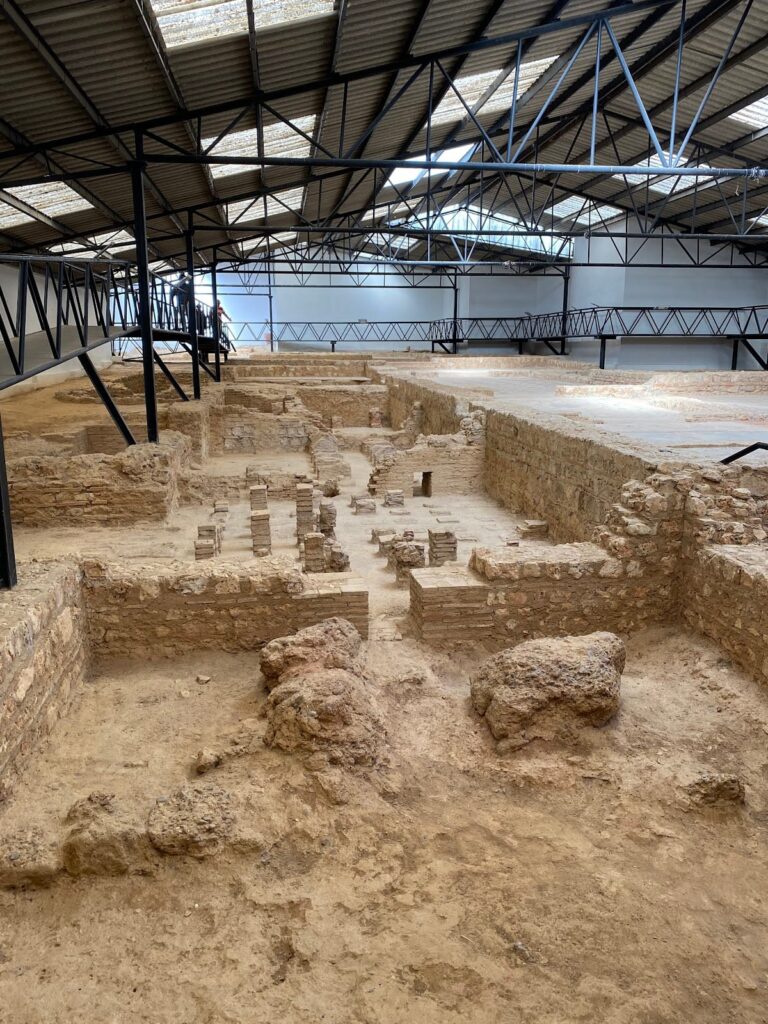
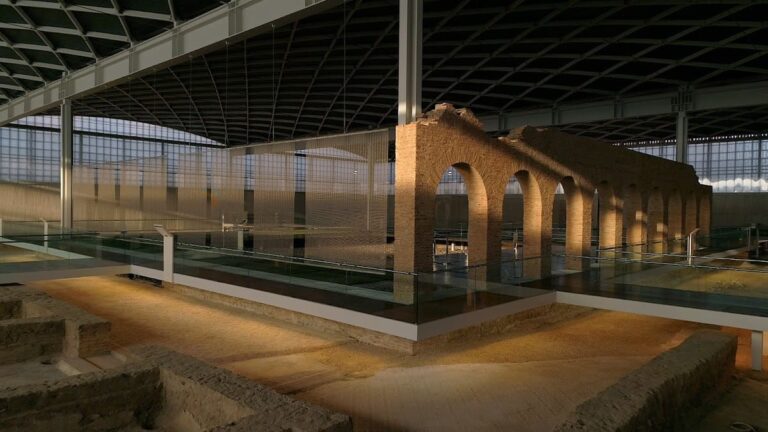
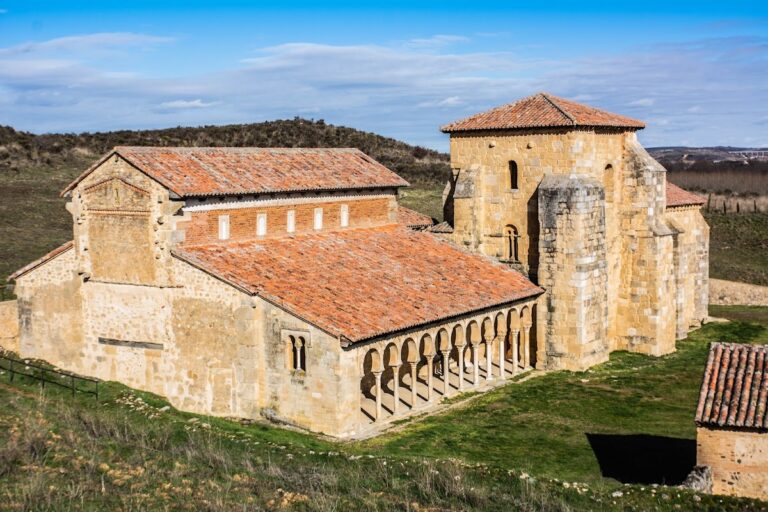
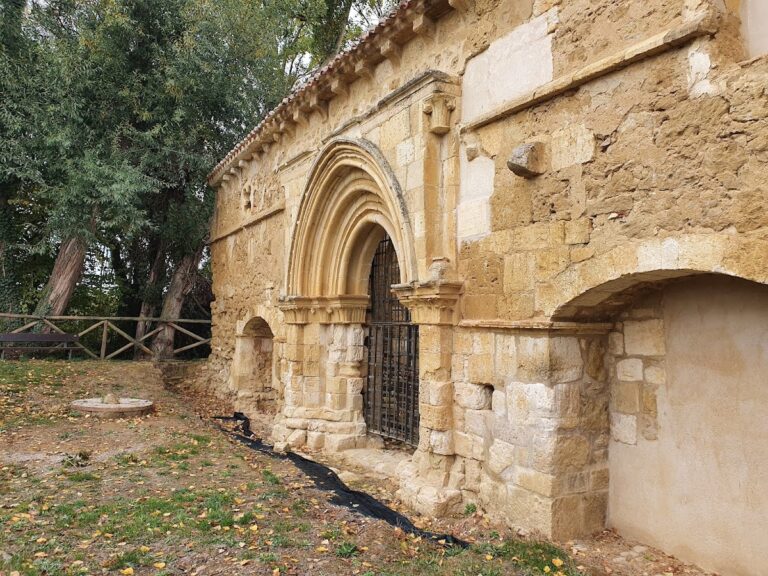
The surviving site consists of ruins and fragments of a formerly extensive Benedictine complex built mainly in the Romanesque tradition. The Chapel of San Mancio preserves Romanesque-Mudéjar features, while the Arco de San Benito and the Clock Tower mark former parts of the monastery’s entrance zone. Sections of the boundary walls and waterworks also survive.
Chapel and church area
Chapel of San Mancio
The Chapel of San Mancio stood north of the abbey church’s apse, the usually semicircular end of a church. Originally dedicated to Saint Benedict, it received the relics of Saint Mancio after they were brought to Sahagún. An inscription states that the Bishop of Astorga consecrated its altar in 1184. The twelfth-century chapel had a nave divided into three structural bays, or sections of the building, and its surviving fabric displays Romanesque-Mudéjar characteristics that combine Christian forms with Islamic artistic techniques.
Abbey church area
The former abbey church belonged to the same Romanesque monastic complex and included the crossing damaged by the Lisbon earthquake of 1755. The church’s historical importance is also connected with the royal burials at Sahagún, particularly those of Alfonso VI and members of his family. The royal remains now associated with the Benedictine nunnery preserve the funerary memory of this former monastery.
Entrance and waterworks
Arco de San Benito
The Arco de San Benito stands south of the former abbey church. Felipe Berrojo designed it in 1662 to replace an earlier Romanesque entrance portal that had fallen into ruin. When Eduardo Saavedra designed the national road N-120 through Sahagún, the road was carried beneath the arch, giving the structure the appearance of a triumphal arch. The arch and its adjoining section survived the nineteenth-century sales because the planned road required their preservation.
Clock Tower
Two matching towers once flanked the monastery entrance. One survived the fires and pillaging that affected the complex and became the Clock Tower after the town clock was installed in it. Its municipal ownership protected it during the nineteenth-century disposal of monastery property.
Boundary walls and mill
Parts of the monastery’s boundary walls remain. A section of the mill also survives beside the monastery dam. The dam’s channel began at the River Cea between Villapeceñil and Villamol and returned to the river near Puente Canto. Water from the dam continues to irrigate the former monastery gardens, preserving part of the hydraulic system associated with the complex.
Manuscripts and documentary remains
Library, scriptorium, and printing area
The monastery’s library, scriptorium, and printing facilities formed an important intellectual center. A scriptorium was a workshop where monks copied and illuminated manuscripts. The library’s holdings were partly dispersed, while the former library, copying, and printing area may have occupied a location now incorporated into Sahagún’s secondary school near the Arco de San Benito. This proposed location remains uncertain.
Beato manuscripts
The Beato of the Corsiniana Library was probably produced at Sahagún. A Beato is a manuscript of the eighth-century commentary on the Apocalypse traditionally associated with Beatus of Liébana. This twelfth-century illuminated copy is small in format and now belongs to the Biblioteca dell’Accademia Nazionale dei Lincei e Corsiniana in Rome, after entering Cardinal Neri Maria Corsini’s collection in 1723. It uses Visigothic script in part and Carolingian script with Gothic elements elsewhere, and it preserves eight illustrations after many were mutilated.
The Beato of Fernando I and Sancha, also called the Beato of Facundus, was probably made at the monastery. It is a particularly luxurious manuscript and is now preserved in the National Library of Spain in Madrid.
Documentary archive
The surviving administrative archive reflects the monastery’s organization and activities. It includes privileges, purchases, sales, donations, correspondence, abbatial appointments, and accounts of visits by kings, bishops, and nobles. The records passed through San Benito of Valladolid and are now preserved in the National Historical Archive in Madrid.