Roman Catacombs Valkenburg: An Underground Reconstruction of Early Christian Catacombs

Site at a Glance
- Rating
- 4.4
- Popularity
- Low
- Country
- Netherlands
- Primary era
- Modern
- External website
- Open
- Eras represented
- Modern
- Civilizations
- Roman
- Site type
- Burial
- Remains
- Catacomb
On this page9 sections
History
The Roman Catacombs Valkenburg in the Netherlands are an underground reconstruction of early Christian Roman burial complexes, created between 1908 and 1912 in the former Heidegroeve at Valkenburg. Jan Diepen, the son of a wealthy textile manufacturer, conceived the project in 1908 with his brother Karel Diepen and the architect Pierre Cuypers. The complex was intended to reproduce selected parts of the fourteen most important early Christian catacombs in Rome, using the abandoned marl quarries on the Diepen property.
Creation and openings
Cuypers directed the design, while Jan Diepen and the project team travelled to Rome to study the catacombs and prepare the work. The initiative received cooperation from the Vatican and Roman authorities. Pope Pius X, head of the Roman Catholic Church from 1903 to 1914, encouraged the undertaking and awarded Diepen the rank of Commander of the Order of Saint Gregory the Great, a papal order of knighthood.
The eastern section opened on 12 July 1910. Jan Diepen returned to Rome in 1911 with the contractor Lemmens and the painter Visschers to select material for an extension, which led to the opening of the western section on 2 July 1912. The archaeologists Marucchi, Bevignani, Wilpert, and Kanzler exclaimed “Siamo a Roma!” while walking through the Valkenburg galleries, expressing their impression of the replica’s close resemblance to the Roman examples.
Museum history and restoration
The original entrance was through the Cuypershuisje, a small entrance building above the quarry slope. The complex is now operated as Museum Romeinse Katakomben and was officially recognized as a museum in 2010. It is also a Dutch national monument, registered as Rijksmonument 36785.
The Cuypershuisje was restored in 2012. Larger restoration work followed from 2014, including the Bakers’ Crypt and the Basilica of Saints Felix and Adauctus in that year, and the Januarius Crypt in 2015. In 2018, the Stichting Restauratie Atelier Limburg began restoring the wall paintings in the Capella Greca after a crowdfunding campaign in 2017. The entrance building was renewed in 2019.
A marble statue of the Roman shepherd Pastor Bonus was stolen by a group of boys in 1966. The family of the perpetrator returned the statue to the museum in 2018 after his death.
Remains
Underground gallery complex
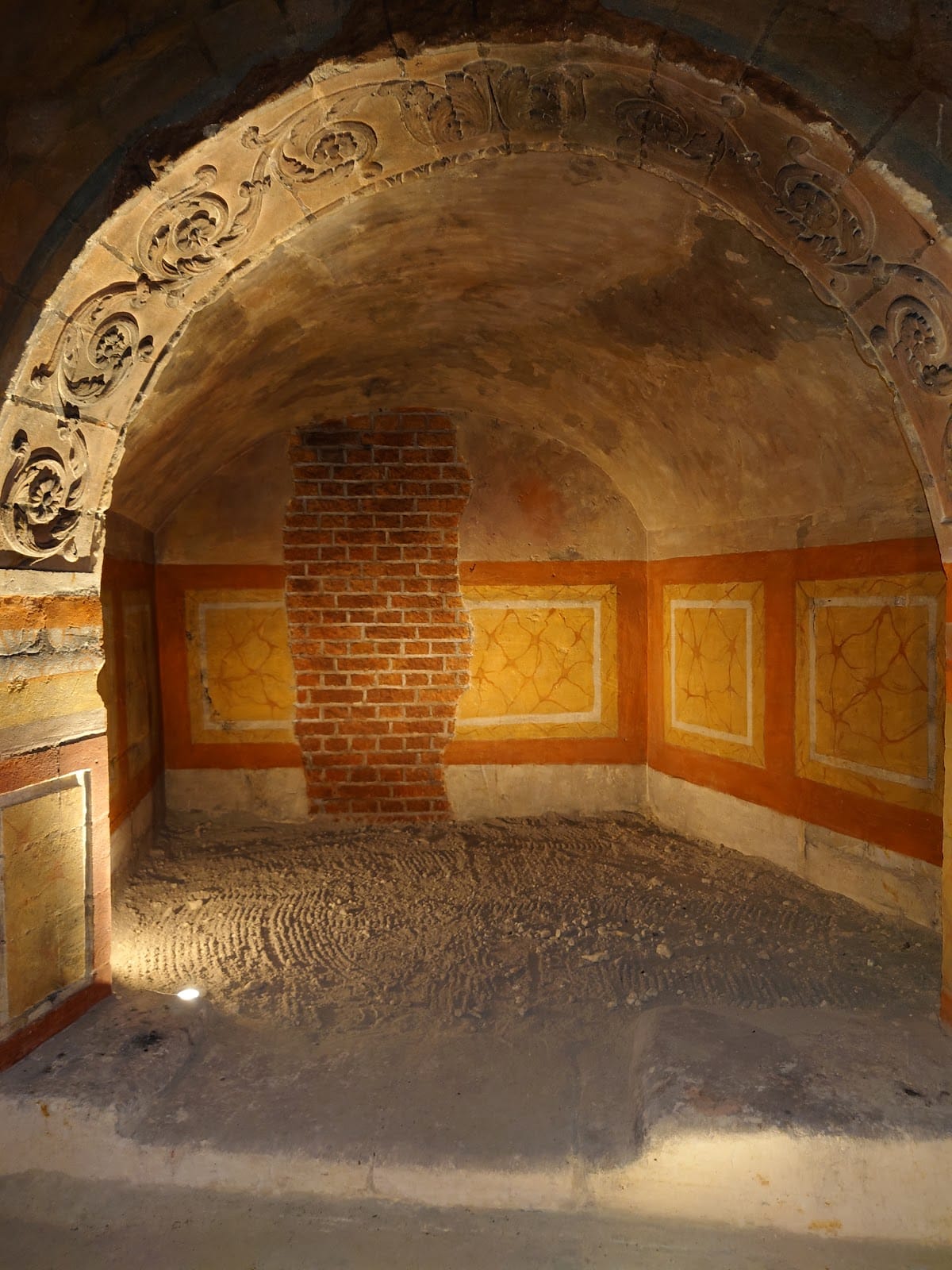
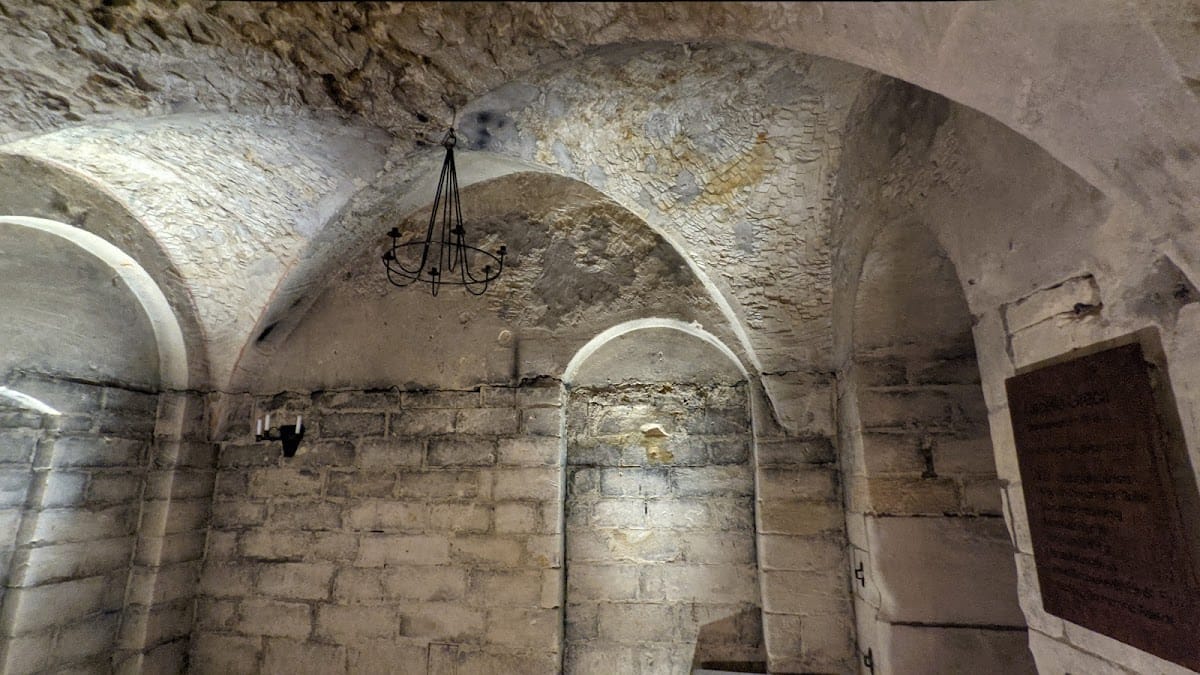
The Roman Catacombs Valkenburg form an underground gallery complex beneath the Polferbos, with the entrance on Plenkertstraat. Its two principal sections occupy the former quarry and reproduce elements from fourteen Roman catacombs. Galleries and rooms were carved and constructed with great precision in local marl and limestone. Together they contain hundreds of graves, crypts, chapels, a hypogeum, washing places, light shafts, air shafts, and other forms of underground construction.
Burial spaces
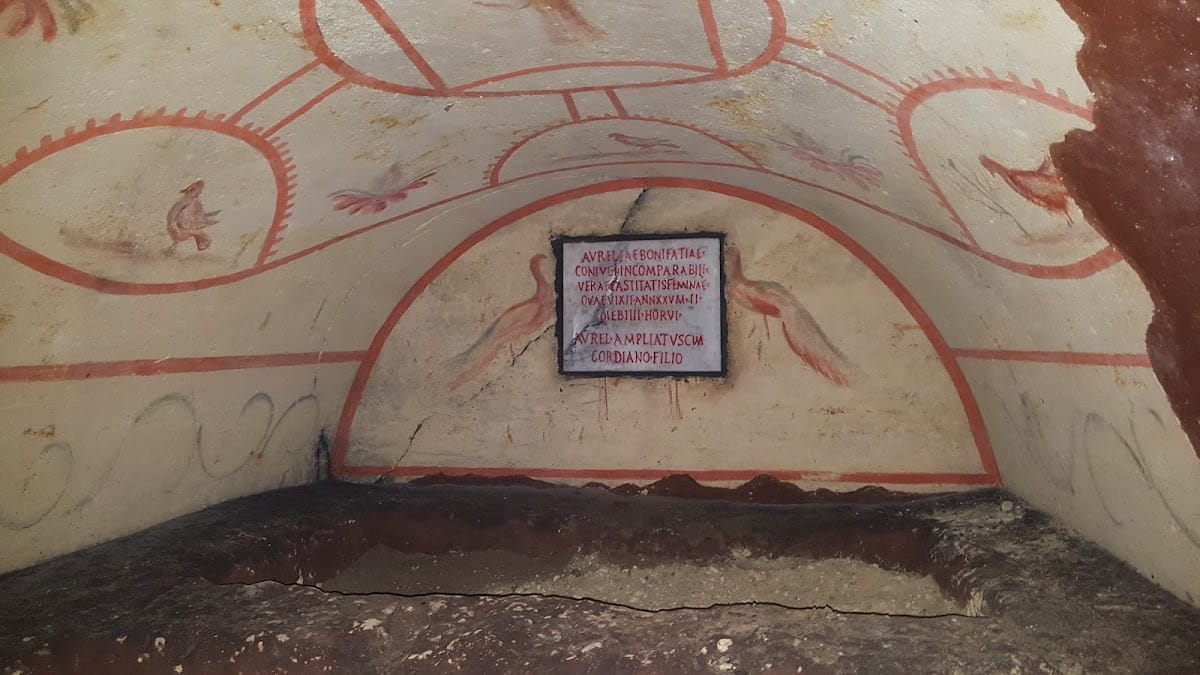
The galleries include loculi, horizontal burial niches cut into the walls. Their closures use terracotta, natural stone, or marble, reflecting the materials used for Roman burial niches. The complex also reproduces arcosolia, tombs cut into the rock beneath an arched recess. The dead were placed into these tombs from above before the opening was covered with a slab.
Chapels and painted interiors
Vaulted spaces, stairs, chapels, frescoes, marble sculptures, and inscribed marble slabs form part of the reproduced architecture. Numerous paintings are based on early Christian works dating from the third to the seventh century. Their subjects include funerary portraits, saints, biblical themes, and other decorative motifs.
Cuypershuisje
The Cuypershuisje stands above the quarry slope as a small marl structure in a classical style with a pediment. It served as the original entrance building, with the former approach located in the woodland opposite the former Leeuw brewery.
Pastor Bonus
The marble statue of Pastor Bonus, a Roman shepherd figure, belongs to the museum’s collection. After its theft in 1966, it was returned to the museum in 2018.