Den Halder Castle: A Medieval Fortified Residence in Valkenburg

Site at a Glance
- Rating
- 4.5
- Popularity
- Very Low
- Country
- Netherlands
- Primary era
- Early Modern
- External website
- Open
- Eras represented
- Medieval, Early Modern
- Civilizations
- Duchy of Brabant, Holy Roman Empire
- Site type
- Military
- Remains
- Castle
On this page10 sections
History
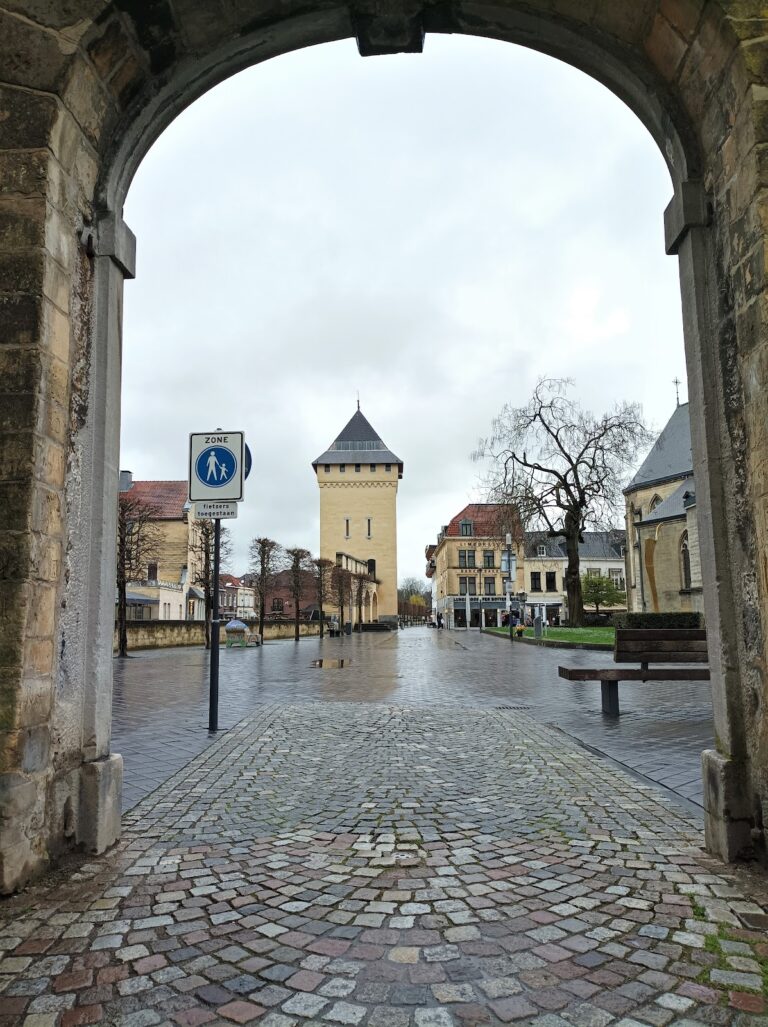
Den Halder Castle is a historic fortified residence in Valkenburg, Netherlands, developed from a medieval defensive tower that formed part of the town’s fortifications. Its origins lie in the medieval period, while its transformation into a castle was shaped especially by seventeenth-century rebuilding. The name Den Halder comes from a Dutch word meaning “holder” or “one who holds back,” reflecting the tower’s defensive purpose.
Medieval tower and early residents
The first recorded reference to Den Halder as a fortification tower appears in a charter issued by the Duke of Brabant in 1381. The document followed Valkenburg’s conquest after a siege that lasted several weeks. By 1573, when Peter van Ellerhorn was recorded as its first known resident, Den Halder was apparently already both an inhabited defensive tower and a residence.
Seventeenth- and eighteenth-century transformation
Den Halder became a full castle in the early seventeenth century. Gerard van Meer commissioned a major renovation in 1635, creating the principal phase of the castle’s development. The estate then included a farm, an oil mill, a large orchard, additional land, and several ponds.
In 1739, the Maastricht alderman Peter Boomhouwer purchased the castle from the Van Meer family and later sold it to the mayor of Wezet. Hendrik Pelerin, the son of Maastricht physician and professor Adrien Pelerin, acquired Den Halder in 1772. He left for England around 1789.
Ownership and urban change
The Van Pallandt family sold the castle to Bertrand Loisel in 1804. A Frenchman serving as Valkenburg’s mayor during the French period, when the town was administered under French rule, Loisel also acquired and remodelled the associated oil and flour mill on Lindenlaan. That mill later became known as the Fransche Molen.
During the nineteenth century, Valkenburg developed as a holiday and spa resort, increasing demand for land for hotels and country houses. The Amsterdam development company Bouwmaatschappij Valkenburg acquired Den Halder and its surroundings. Paved roads and bridges over the Geul gave the area a more urban character, while the municipality purchased part of the grounds and laid it out as Odapark.
Restoration, public use, and recent damage
The Valkenburg resident Habets later became the castle’s owner and thoroughly restored it. The De Casalette and Rooding families subsequently owned Den Halder, which was used as an office during their period of ownership. The castle suffered considerable damage during the Second World War. After the war, the municipality acquired and repaired it. Den Halder subsequently housed Valkenburg’s regional museum and later the provincial tourist office of Limburg.
Den Halder is protected as a national monument under the Netherlands’ national heritage system and forms part of the Buitengoed Geul & Maas regional heritage and landscape area. During the July 2021 floods, high water affected the castle. After the water receded, an electrical short circuit caused a fire during the night of 16–17 July when emergency generators were switched on. Firefighters extinguished the blaze relatively quickly, but the hall and oak staircase were damaged. Smoke damage affected all offices, which remained out of use for six months.
Remains
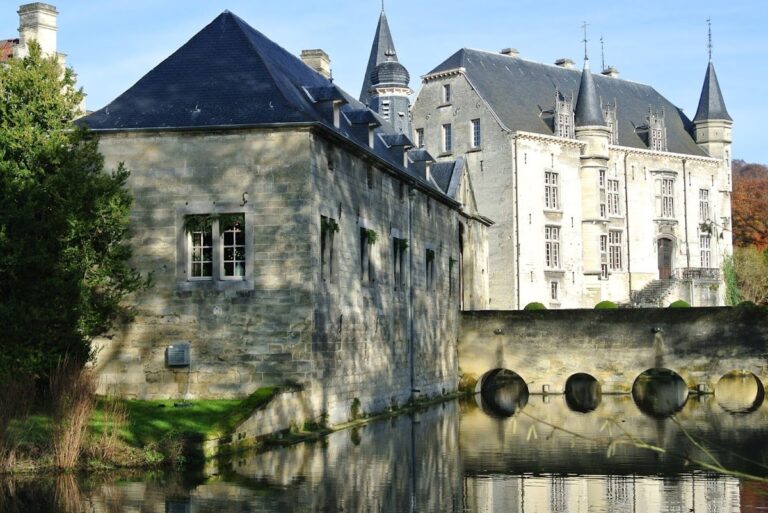
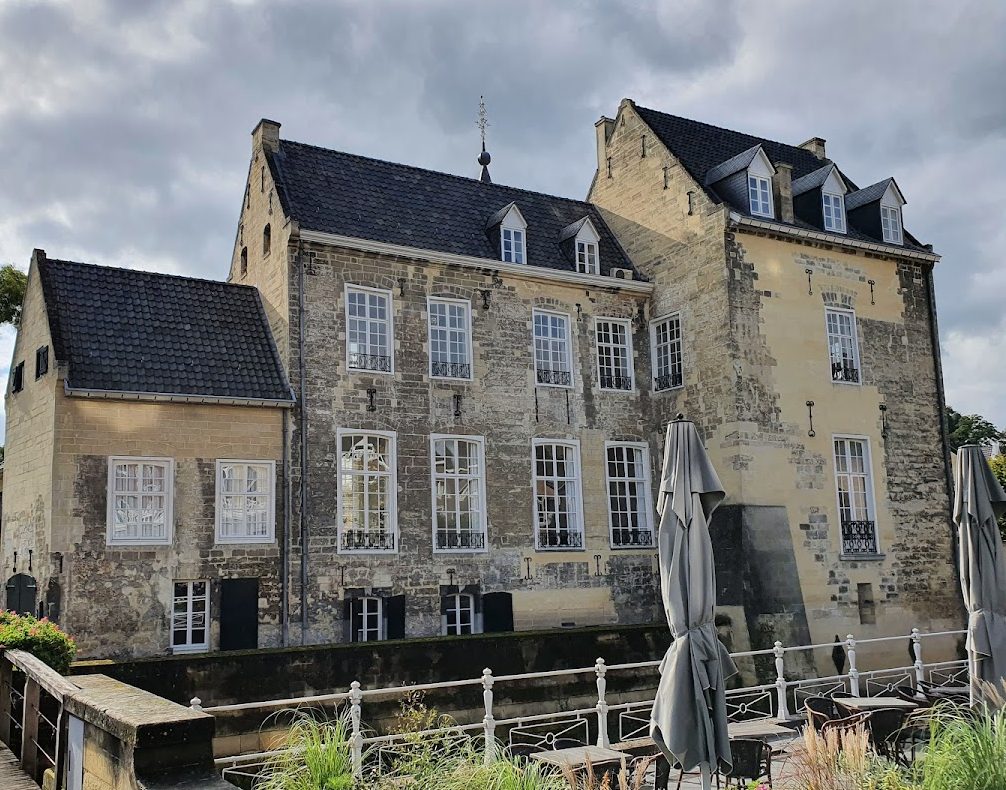
Den Halder Castle stands directly beside the Geul, a river in South Limburg, with the river channel running along its rear facade. The building has a rectangular plan and is constructed of Limburg marl. Its present form combines a fifteenth-century defensive tower with a largely seventeenth-century house attached in 1635, while later changes altered the castle house during the eighteenth century.
Castle buildings
Halder Tower
The Halder Tower is a square donjon, the principal fortified tower of a medieval castle and a structure that could serve defensive and residential purposes. It was later reused as a stair tower, retaining its place within the castle complex as the building developed around it.
Castle house
The castle house attached to the tower in 1635 forms the largely seventeenth-century part of the building. Constructed in Limburg marl and arranged on a rectangular plan, it was modified during the eighteenth century. The hall and its oak staircase were damaged in the fire of July 2021.
Park, moat, and estate features
Halderpark lies beside the castle as a public urban park. Reconstruction taking place in 2014 included work intended in part to make the former town moat visible again. The historic estate also comprised a farm, an oil mill, a large orchard, other agricultural land, and several ponds.
The associated oil and flour mill on Lindenlaan was remodelled under Bertrand Loisel and is known as the Fransche Molen. It formed part of the wider group of estate buildings and land connected with Den Halder’s historical development.