Ulpiana Archaeological Park: An Ancient Roman City in Kosovo
Site at a Glance
- Rating
- 4.7
- Popularity
- Very Low
- Country
- Kosovo
- Primary era
- Classical
- External website
- Open
- Eras represented
- Classical, Medieval
- Civilizations
- Byzantine, Roman
- Site type
- City
On this page14 sections
History
Ulpiana Archaeological Park in Kosovo, near Pristina, preserves an ancient Roman city established in the 1st century AD, probably on the site of an earlier Dardanian oppidum, or fortified settlement. The city became a Roman municipium, a community with recognized civic status in the imperial system, during the reign of Emperor Trajan before AD 117. It developed into a major political, cultural, economic, mining, and craft center in the Roman province of Dardania.
Pre-Roman Origins and Roman Development
Archaeological evidence points to occupation before Roman rule, although the first known mention of Ulpiana in ancient literature comes from Ptolemy in the second decade of the 2nd century AD. The city probably received its name from Trajan, whose family name was Ulpius. Its position near Scupi, the Dardanian capital, and along the Via Lissus–Naissus gave it an important place within regional communications.
Ulpiana reached its height during the 3rd and 4th centuries AD. It was known as Municipium Ulpiana Splendidissima and ranked among the largest settlements in the late-antique Balkans. Its prosperity was supported by nearby gold and silver mines at Janjevo and Shashkoc, as well as by routes connecting Rome with Constantinople and the Adriatic with the Aegean seas. Metal exports reached Caesarea in Israel, while amphoras marked with Ulpiana’s name have been found in northern Italy. These finds point to commerce in grain, wine, olive oil, and other goods.
Christianity and the Episcopal City
Christianity became an important part of Ulpiana’s history. The earliest known reference to Christians at the city concerns Florus and Laurus, brothers from Constantinople who were killed after their Christian identity was discovered while they were constructing a pagan temple at Ulpiana. Their association with the city later gave rise to the traditional name Church of the Martyrs for one of its early Christian basilicas.
In the second half of the 4th century, Ulpiana became the seat of the bishopric of Dardania. As an episcopal center, it hosted the Archbishop of Dardania. Known bishops included Machedonius, a member of the Council of Serdika, Paulus, associated with the Council of Constantinople in AD 553, and Gregentius, whom Emperor Justin I sent to Ethiopia and Yemen to mediate among Christian groups. Ulpiana retained this ecclesiastical role until the establishment of Justiniana Prima in AD 535.
Earthquakes, Attacks, and Justinianic Reconstruction
Natural disasters and attacks accompanied the weakening of Roman power in the 5th and 6th centuries. Shock waves from the earthquake at Nicomedia in AD 358 damaged buildings at Ulpiana. In AD 472, Theodoric the Great, the Gothic king who ruled Italy and parts of the former Western Roman world, attacked the city with 3,000 Gothic soldiers, plundered it, and destroyed parts of the settlement.
An earthquake in AD 518 caused severe damage at Ulpiana and destroyed 24 other major cities in the region. After AD 535, Emperor Justinian I ordered the city and its fortifications rebuilt. Justinian, the Byzantine emperor who ruled from AD 527 to 565, renamed it Justiniana Secunda to distinguish it from Justiniana Prima, the city he founded in AD 535.
Decline and Archaeological Rediscovery
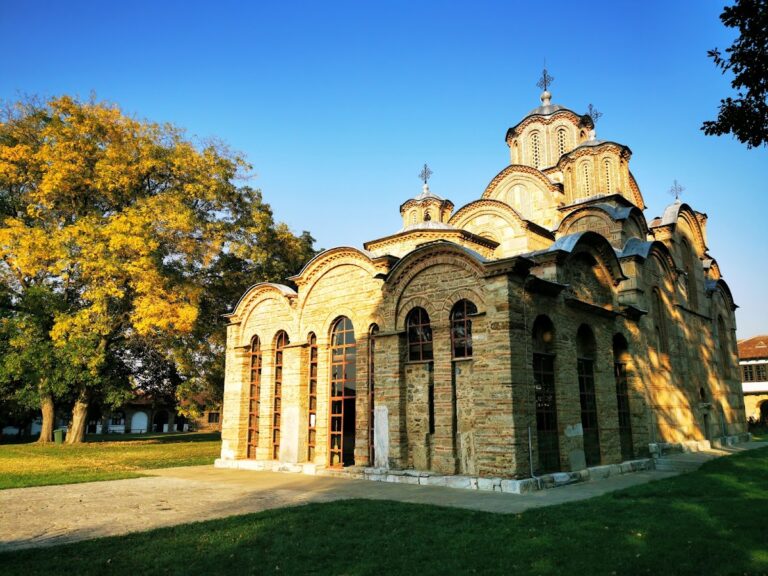
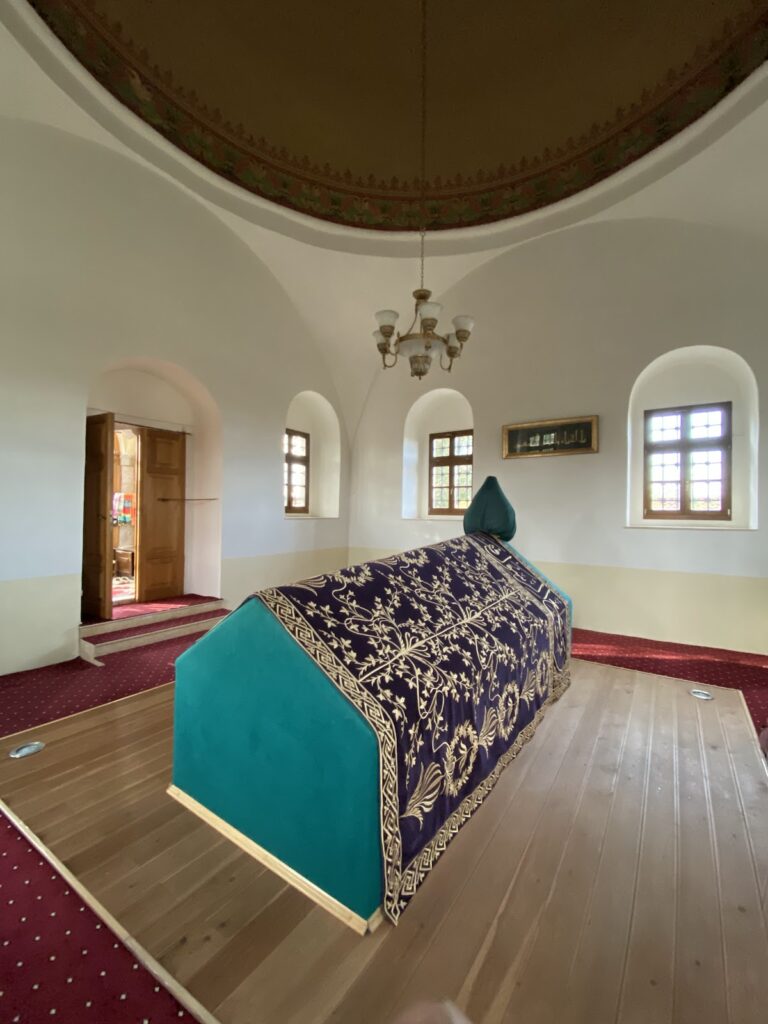
Ulpiana later suffered repeated Avar and Slavic attacks. Following the Slavic invasion of the Balkans in AD 618, the city was burned to the ground. Its later history remains uncertain, although the northern church and some other buildings may have continued in use during the 7th century. The settlement eventually fell into ruins, and its building materials were reused elsewhere. Gravestones from Ulpiana were incorporated into the lower walls of Gračanica Monastery, where their epitaphs remain visible.
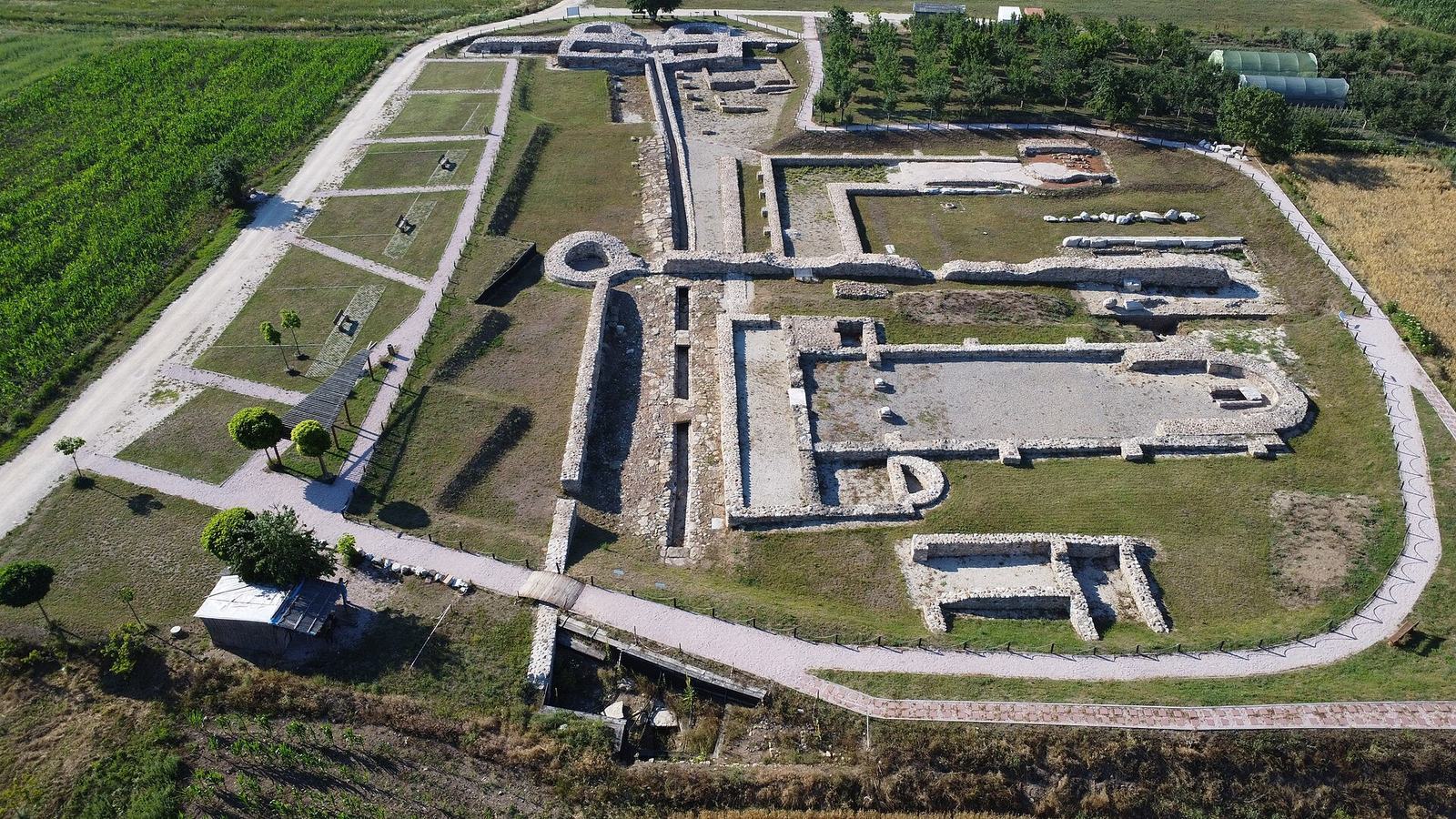
The modern location of Ulpiana was confirmed in 1953 after four graves were found in the northern cemetery. Excavation began immediately, with an initial campaign lasting from 1954 to 1959. Further work took place during the 1980s and 1990s, followed by excavations after the Kosovo War. A Kosovan-French archaeological team is investigating Sector IV. Aerial photography and satellite surveying have also revealed major buildings without requiring extensive excavation, including a public bath, forum, early Christian episcopal residence, and baptismal chapel.
In 2016, the Kosova Council for Cultural Heritage placed Municipium Ulpiana, or Iustiniana Secunda, under permanent archaeological protection and designated it an archaeological park. The park covers 161.10 hectares, with a surrounding protected zone of 96.23 hectares.
Remains
City Layout and Fortifications
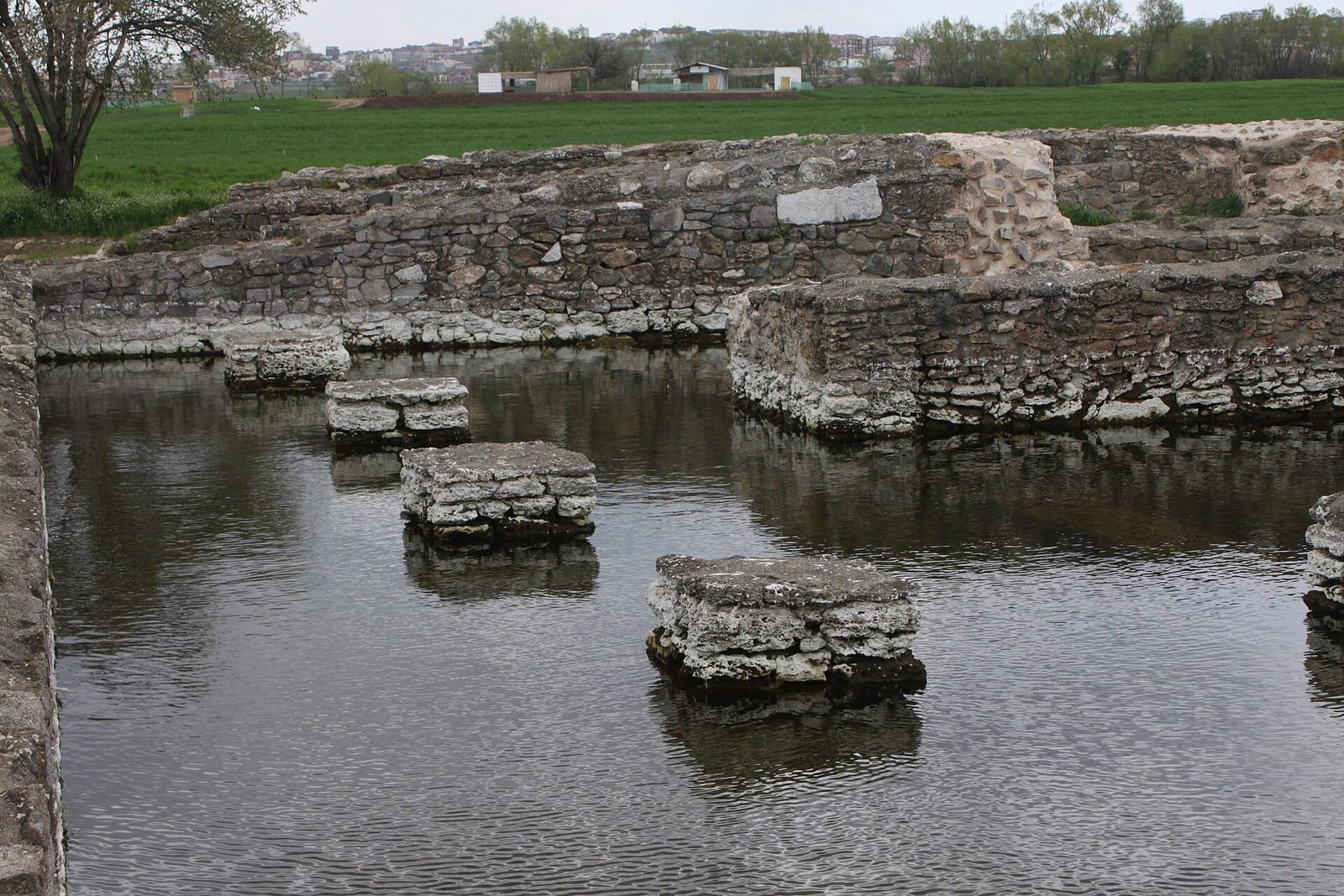
The archaeological city lies on fertile ground near the left bank of the Graçanka River and close to ancient mining areas. Geophysical research has identified structures across more than 120 hectares. The settlement included the Decumanus Maximus street network, residential quarters, utility buildings, and an aqueduct that supplied water to every building. Two fortified sections are known: an earlier enclosure covering 35.5 hectares and a second area of approximately 19 hectares, discovered in 2022.
The northern city gate survives with its two towers. A Roman army field garrison, or castrum, lies 100 metres east of the city’s eastern wall. Ground scanning has identified the garrison, which covers approximately 16 hectares, but it has not yet been excavated. Additional cemeteries lie northwest and south of the city. Other physical evidence includes a marble wall, stelae at a basilica entrance, and a stratigraphic trench showing successive occupation layers from prehistory through the period after Justinian.
Burial Complexes
Northern Necropolis
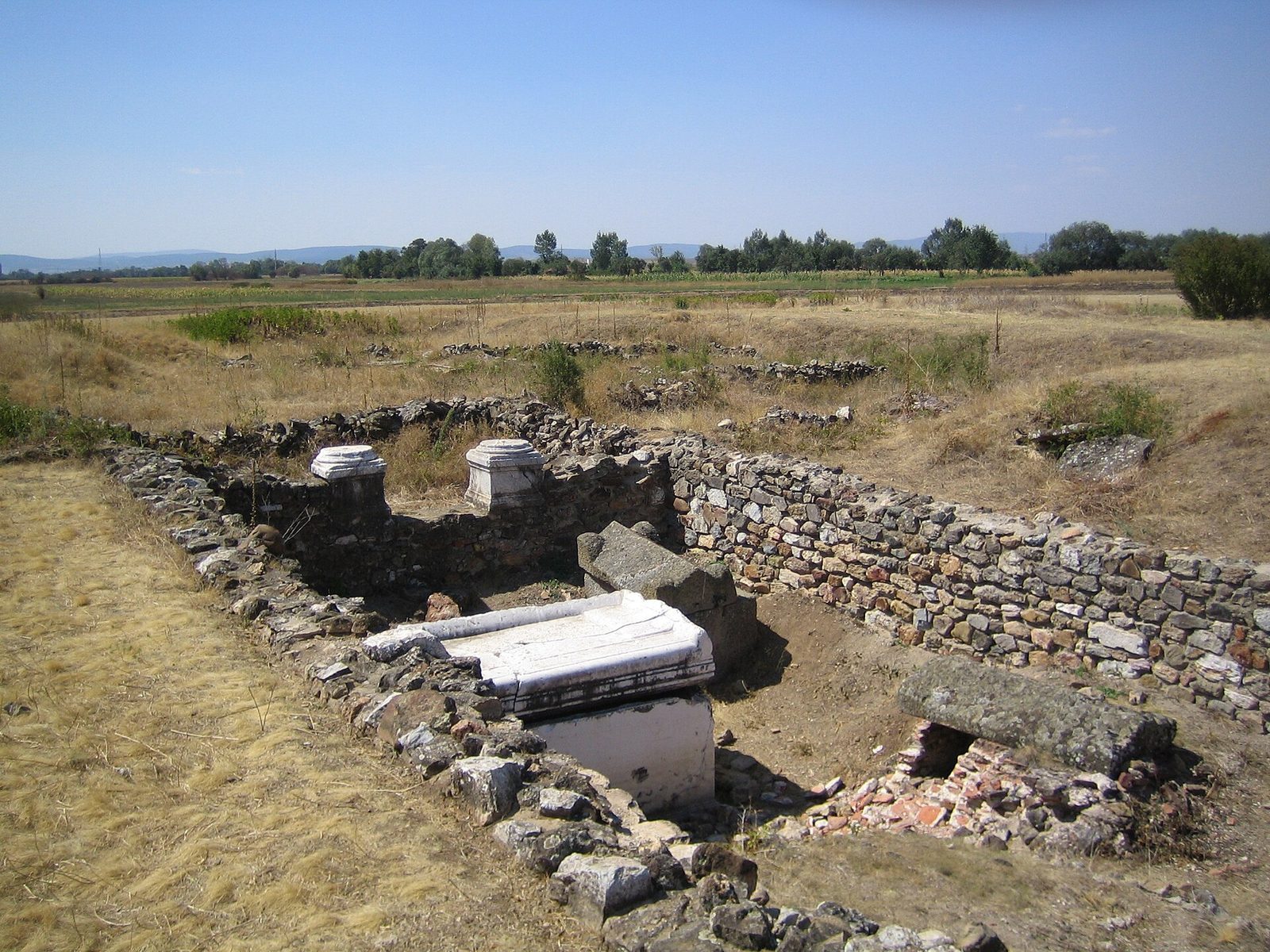
The Northern Necropolis, also called the Memoria, lies outside the city walls over a cemetery north of the first fortified area. Excavations began there in the 1950s with four graves and later uncovered several marble sarcophagi and two tombstones. One stone commemorated Aelia Clementilla, while the larger monument honored the local magistrate Marcus Pontius and his wife, Furia Caecilla.
The complex is generally dated to the 6th century, although it may have been built as early as the 4th century, before the city walls. It had an eastern apse and a two-columned doorway between the narthex, or entrance hall, and the nave. Its mosaic floor contained Latin inscriptions.
Christian Basilicas
Episcopal Basilica with Baptistry
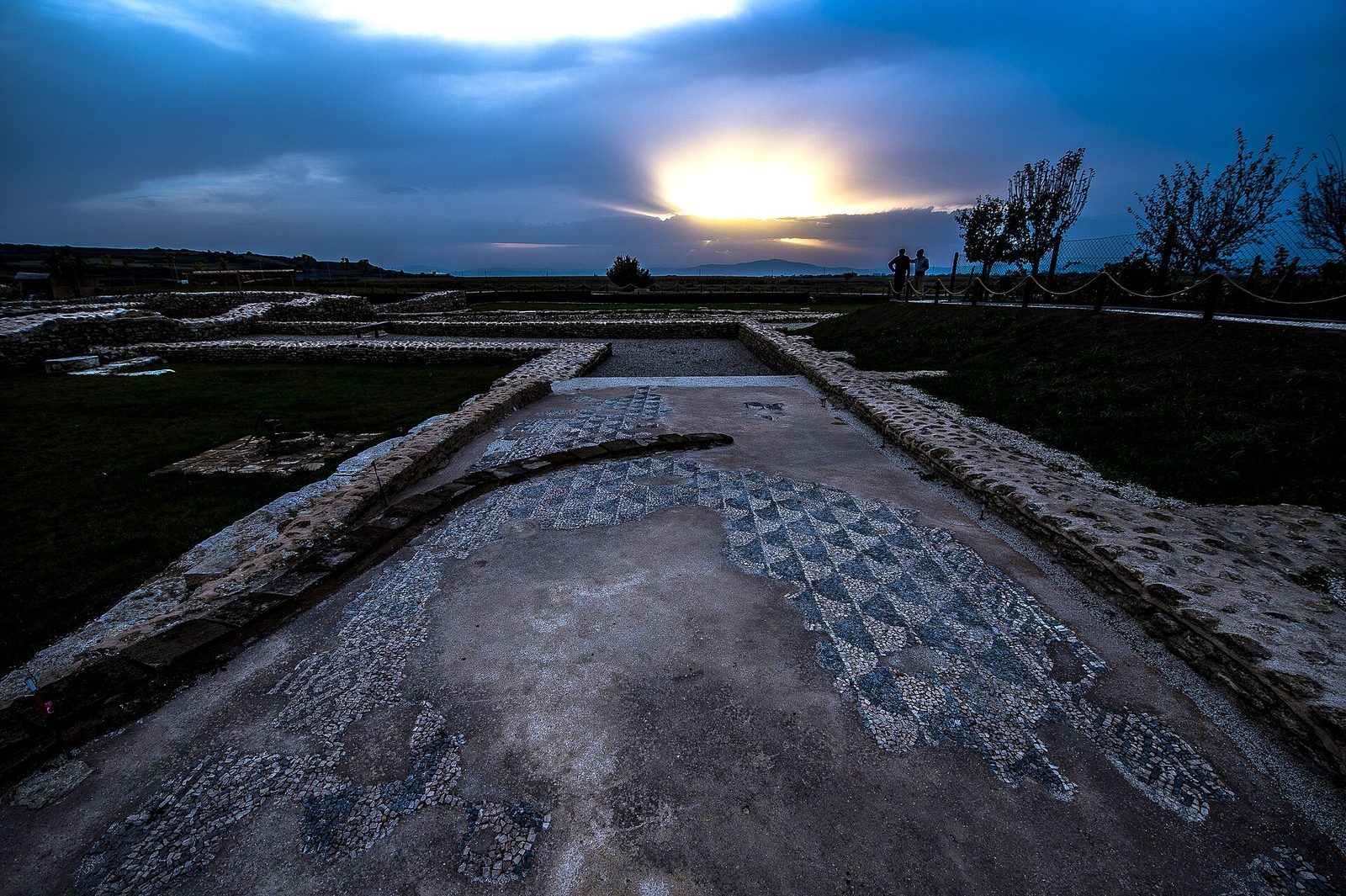
Discovered in 2012, the Episcopal Basilica with Baptistry was built before the 5th century AD. It measures approximately 40 by 20 metres and follows a longitudinal basilica plan, with a central nave flanked by two aisles separated by columns. The nave ended in a single eastern apse containing a synthronon, a tiered seating arrangement for clergy. Geometric mosaics covered the floor.
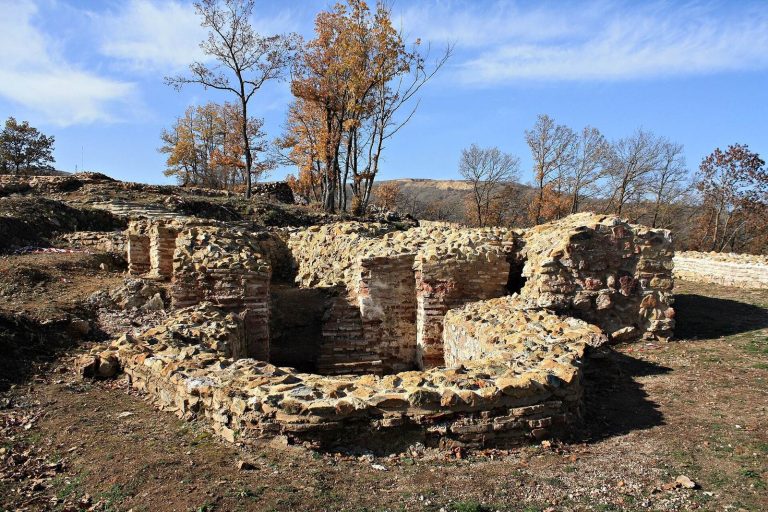
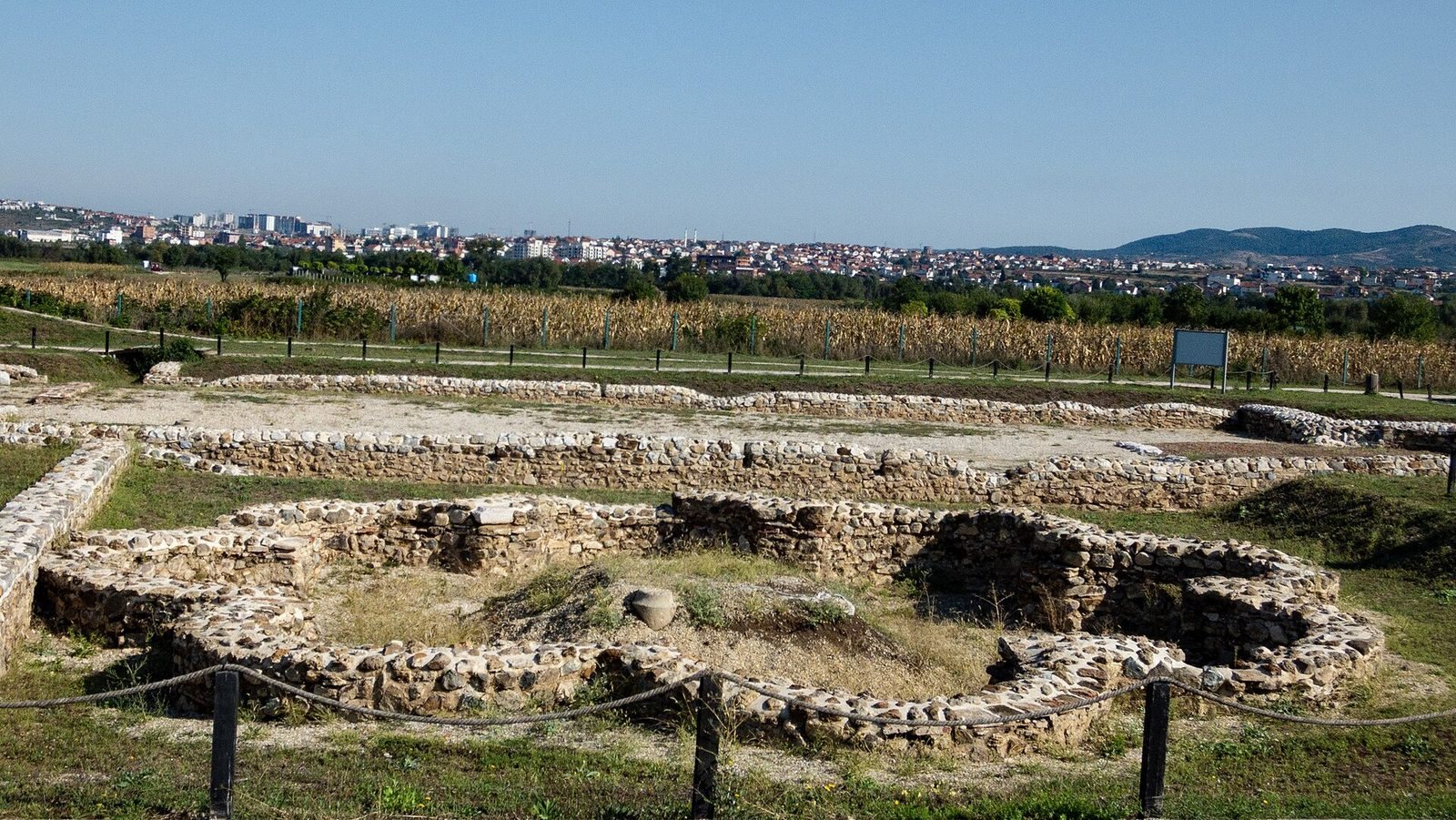
Three western doors opened into the narthex, and three more led from the narthex into the nave. Two additional entrances stood on the south side. A baptistry shaped like an eight-petalled rosette was positioned 7.5 metres south of the basilica, with a water conduit leading toward it. The original building appears to have been damaged by the AD 358 earthquake, rebuilt several decades later, and destroyed again in the 6th century. Holes reaching up to one metre deep were present in the nave.
Early Christian Basilica
The Early Christian Basilica is a single-aisled building measuring 33.5 by 14 metres. It appears to have developed through five construction phases and is also known as the Church of the Martyrs because of its presumed dedication to Florus and Laurus. Built in the 6th century, it contains a floor mosaic that had not yet been uncovered. Three columns along the southern wall indicate that a subsidiary chapel, or parecclesion, once stood there.
The basilica may have replaced the Episcopal Basilica with Baptistry after that earlier church was irreparably damaged in the earthquake of AD 518.
Archiepiscopal Basilica
The Archiepiscopal Basilica was discovered in August 2022 in Sector IV, within the 19-hectare fortified section northeast of the rest of the city. Measuring 70 by 20 metres, it is the largest basilica identified at Ulpiana and one of the largest in the region. It is believed to have belonged to the Archbishop of Ulpiana.
Numerous floor mosaics are being excavated inside the building. A mosaic found in 2023 refers to Emperor Justinian and indicates that he commissioned the basilica. The church may have been dedicated to his wife, Theodora, Justinian’s empress and political partner. Its partially exposed inscription mentions a city in Dardania, probably Ulpiana, and is written in Latin despite its association with a Byzantine emperor. The inscription has been taken to indicate that Dardania retained some autonomous identity in the 6th century and was not fully Romanized.
Sculpture, Objects, and Earlier Occupation
Excavations have produced sculptures, coins, weapons, pottery, personal objects, a terracotta figure, and a theatrical tragic mask. A woman’s head, carved from fine-grained marble and measuring 18 centimetres in height, represents a middle-aged woman and is tentatively dated to the late 4th century. Another marble head, 33 centimetres high, depicts a middle-aged man and probably belonged to a life-sized statue. Its style resembles Roman portrait art of the 3rd century.
A third marble head represents Eros as a child with long hair. Its original purpose and meaning remain uncertain. The tragic mask, found in the Northern Necropolis, is a marble theatrical mask 27.5 centimetres high. It depicts a man with grotesque features and probably dates to the 2nd century AD.
Evidence for occupation before the Roman city includes a prehistoric cemetery discovered in the city center in 1982. Dating from the 13th to the 9th centuries BC, it contained ceramics and other Bronze Age objects. A Neolithic terracotta figurine was found near the two towers of the northern gate in 2016, adding an earlier layer to the long sequence of occupation at Ulpiana.