Harilaq Fortress: A Late Antique and Early Byzantine Hilltop Fortification in Kosovo


Site at a Glance
- Rating
- 4.6
- Popularity
- Very Low
- Country
- Kosovo
- Primary era
- Medieval
- External website
- Open
- Eras represented
- Medieval
- Civilizations
- Byzantine
- Site type
- Military
- Remains
- Fort
On this page6 sections
History
Early occupation and Byzantine development
Harilaq Fortress is a hilltop fortification in Kosovo whose origins extend to prehistoric times. Evidence of occupation continues through the Medieval Period, while the site reached its greatest development during Late Antiquity and the early Byzantine period, the eastern Roman phase associated with the transition toward medieval societies.
The fortress formed part of the fortification network in Dardania, an ancient region of the central Balkans that included territory around present-day Kosovo. It was constructed or reconstructed during the reign of Justinian I, the sixth-century Byzantine emperor whose rule included a broad program of rebuilding and military fortification between AD 527 and 565. The Byzantine historian Procopius described this imperial building activity in De Aedificiis, or On Buildings.
Excavation and heritage status
Systematic archaeological excavation began in 2005 and continued through 2009 in five seasons. The Museum of Kosovo and the Archaeological Institute of Kosovo carried out the work, including measures to preserve the enclosing walls and conserve or reconstruct selected fortress elements. Finds recovered between 2005 and 2008 were presented at the International Conference on Illyria in Grenoble, France, from 8 to 11 October 2008.
Harilaq Fortress is recognized as a monument of Kosovo’s cultural heritage. Among fortresses of the same period in Kosovo, it has the most extensively excavated area.
Remains
The fortress occupies a forested hill of approximately 1.3 hectares west of the village of Harilaq. The hill rises from about 736 to 767 metres, and the fortification stands at approximately 766 metres. Its elevated position overlooks the Kosovo Field, with parts of the territories of Kosovo Polje, Pristina, Obiliq, Lipjan, Ferizaj, Shtime, and Drenas visible from the site. Golesh Hill, which reaches 1,019 metres, lies to the west.
Fortifications and interior structures
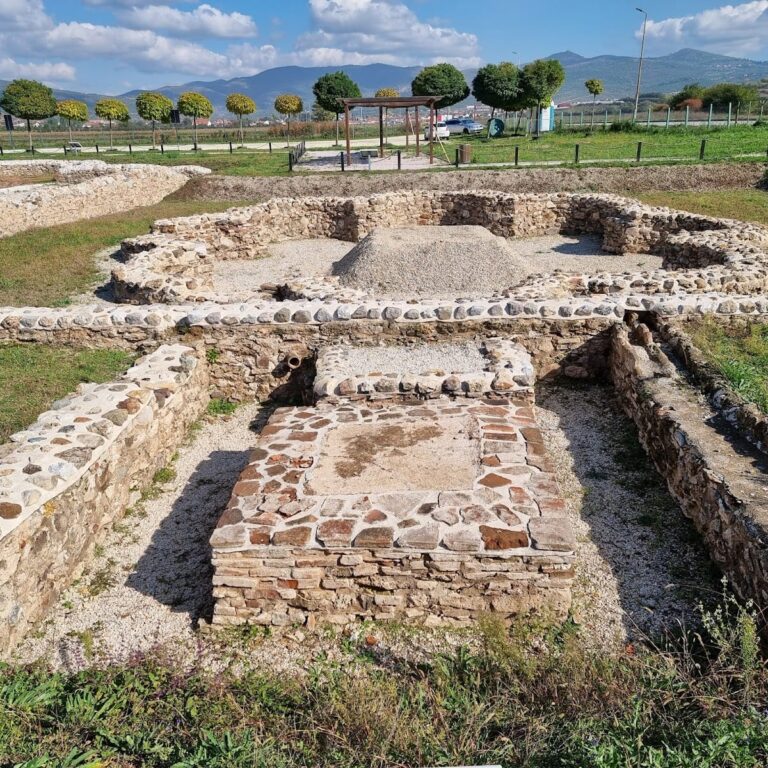
Before excavation, soil and vegetation covered the ramparts and interior. Excavation exposed the enclosing walls, circular wall remains, defensive towers, foundations, and the remains of other structures. The defensive system includes rampart towers, while the interior contains a three-aisled church and two rounded sacral buildings of uncertain function.
Archaeological finds
Excavated material includes metal tools, jewelry, coins, bricks, and fragments of glass. These finds are associated particularly with Late Antiquity and the period of Justinian I, adding material evidence for the fortress’s occupation and development during its principal phase.
Nearby sites