Roma kungsgård: A Former Crown Estate and Manor House in Sweden


Site at a Glance
- Rating
- 4.2
- Popularity
- Very Low
- Country
- Sweden
- Primary era
- Early Modern
- Eras represented
- Medieval, Early Modern
- Civilizations
- Swedish
- Site type
- Domestic
- Remains
- Manor House
On this page9 sections
History
Assembly place and monastery
Roma kungsgård is a former Crown estate and manor house in Sweden, on Gotland, whose history reaches back to the island’s medieval political and religious life. In the twelfth century, Roma hosted Gotland’s allting, a regional assembly where representatives of the island’s 20 territorial things handled communal, judicial, and administrative affairs. A local market also operated at the site.
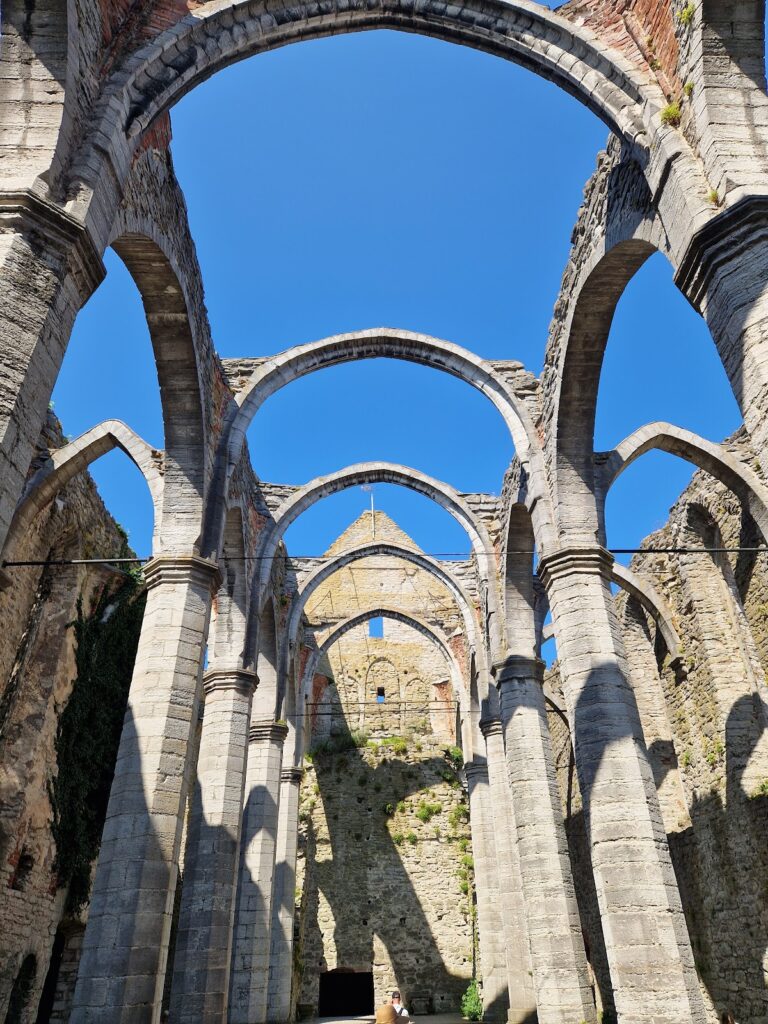
A Cistercian monastery was founded at Roma in the 1160s. The Cistercians were a Catholic monastic order that emphasized communal religious life, manual labor, and agricultural self-sufficiency. The monastery church was rebuilt in the fourteenth century, and its ruins survive today. Some of the monastery’s other buildings were later adapted for agricultural use.
From monastic property to Crown estate
The monastery was dissolved during the Danish Reformation in 1531, when many Catholic religious houses in Denmark and its territories were closed as the region became Lutheran Protestant. Its property passed to the Danish Crown. Gotland was transferred to Sweden by the Peace of Brömsebro in 1645, and Roma kungsgård was subsequently leased by the Swedish Crown.
By the eighteenth century, the estate had deteriorated and parts of it had collapsed. From 1721, it became the residence of the Swedish governors of Gotland. Gustaf von Psilander, the island’s first governor, initially occupied a wooden residence built in the 1720s. After a fire, that house was demolished, and Johan Didrik Grönhagen commissioned the present main residence, completed in 1733.
Roma kungsgård remained a governor’s salary benefit until 1832. Jacob Cederström was the last governor associated with the estate. It was then leased again. The first tenant was unsuccessful, but farming was revived as a model agricultural operation under Oskar Myhrman, who managed the estate from 1849 to 1907.
Military use and later administration
The military took over Roma kungsgård in 1937. Under the architect R. Cronstedt, the buildings were repaired and reconstructed for military purposes. A military airfield was built beside the estate in 1940 and closed in 1945. Its construction led to the cutting down of part of the avenues approaching the estate. The armed forces left Roma in the late 1980s.
In 1993, Roma kungsgård came under the administration of Sweden’s National Property Board, the state institution responsible for important government-owned historic properties and cultural sites. The Friends of Roma Estate association was formed the same year to develop the property as a cultural center. Since 2004, a regional company of Gotland Municipality has leased the estate in cooperation with the National Property Board for its management, development, and maintenance. The land and economic buildings continue to be leased for farming, including crop cultivation and livestock husbandry.
Remains
Estate and principal buildings
Roma kungsgård occupies more than 300 hectares in central Gotland. The grounds consist chiefly of arable land and include the manor house, agricultural buildings, and remains of the medieval monastery. Many of the agricultural structures date from the late nineteenth or early twentieth century, while the main residence belongs to the estate’s eighteenth-century phase.
Main residence
The present main building was constructed in 1733 as a two-winged residence. It is built of plastered limestone, with building material taken from the monastery ruins. Two Gothic portals were incorporated into the wings, linking the governor’s residence physically with the earlier monastic complex. The roof was remodeled in the late eighteenth century.
Monastery church ruin
The monastery church survives as fourteenth-century ruins. The ruin forms part of the estate’s historic remains and is used as the setting for summer theatrical performances, giving the former monastic church a continuing cultural function.
Agricultural buildings and airfield
Several former monastery buildings were reused for agricultural purposes. Among them are a granary and a fodder silo. Other monastic structures were left to decay. The estate’s later military history is represented in its physical setting by the former airfield built beside the property in 1940. The airfield closed in 1945, and its construction altered the approach to the estate by removing parts of the avenues.
Roma kungsgård is protected by the Swedish state as a historic architectural monument. Its manor house, monastic remains, agricultural buildings, and extensive farmland together preserve the successive functions of the property as an assembly place, monastery, Crown estate, governors’ residence, military installation, and working farm.
Nearby sites