Källunge Church: A Medieval Stone Church on Gotland
Site at a Glance
- Country
- Sweden
- Primary era
- Medieval
- Eras represented
- Medieval, Early Modern
- Civilizations
- Swedish
- Site type
- Religious
- Remains
- Church
On this page19 sections
History
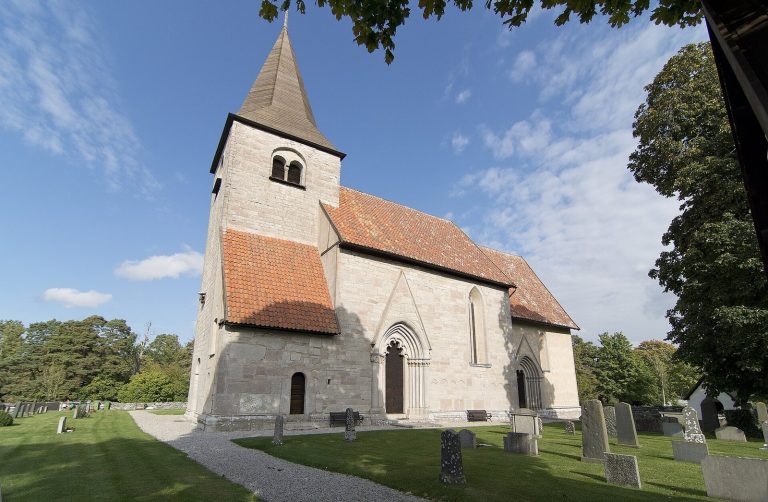
Källunge Church is a medieval stone church on Gotland, Sweden, consecrated in the 12th century and later reshaped by an unfinished Gothic campaign in the 14th century. It is among Gotland’s oldest stone churches, and its history reflects the transition from Romanesque, an earlier medieval architectural tradition, to Gothic design, which commonly used pointed arches.
The 14th-century rebuilding
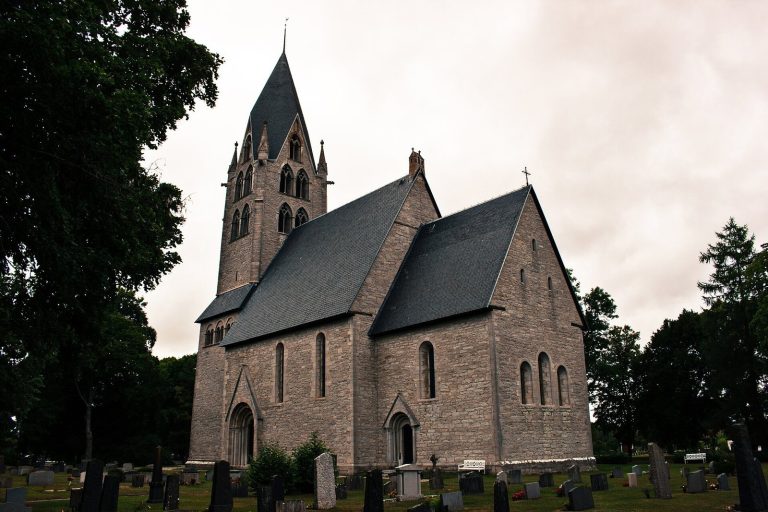
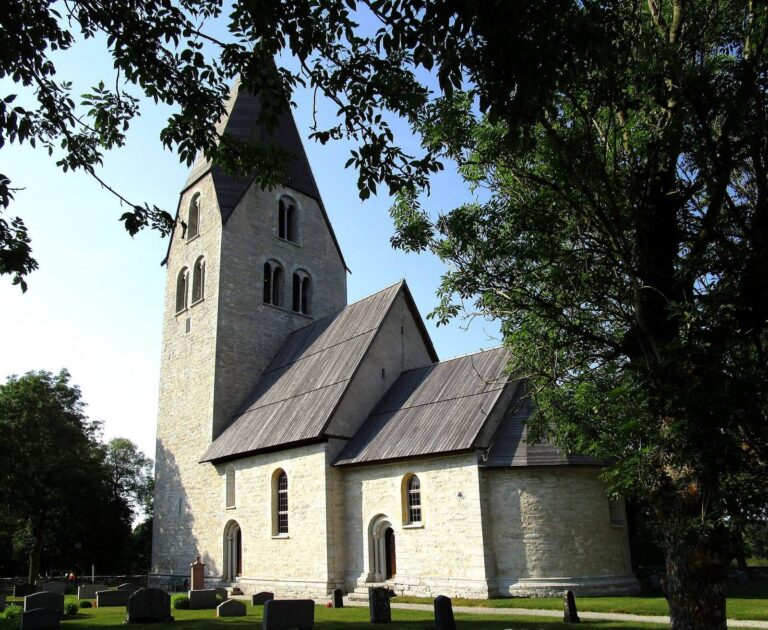
An ambitious Gothic reconstruction began in the 14th century. Work stopped after the large choir was completed in the first half of that century. The plan called for the older parts of the church to be demolished and replaced by a new building with a large tower at the west end, but that work was never carried out.
Källunge Church belongs to the Lutheran Church of Sweden and the Diocese of Visby, an ecclesiastical district. Its local parish merged with Gothem parish in 2010.
Remains
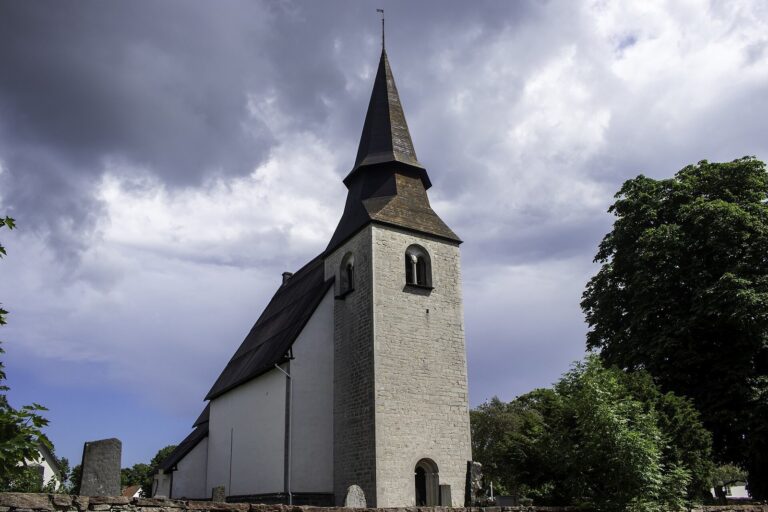
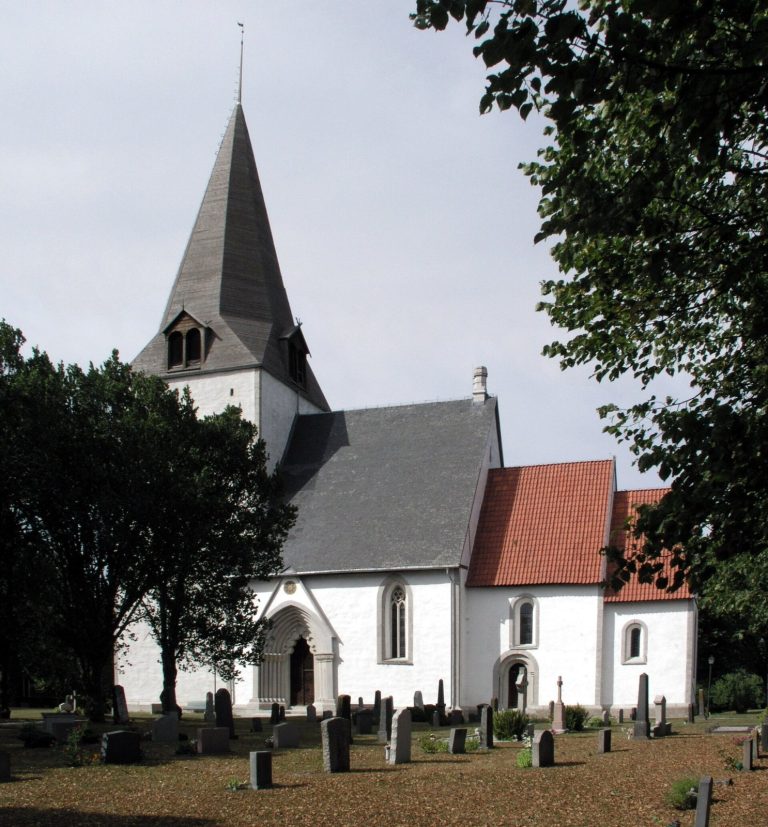
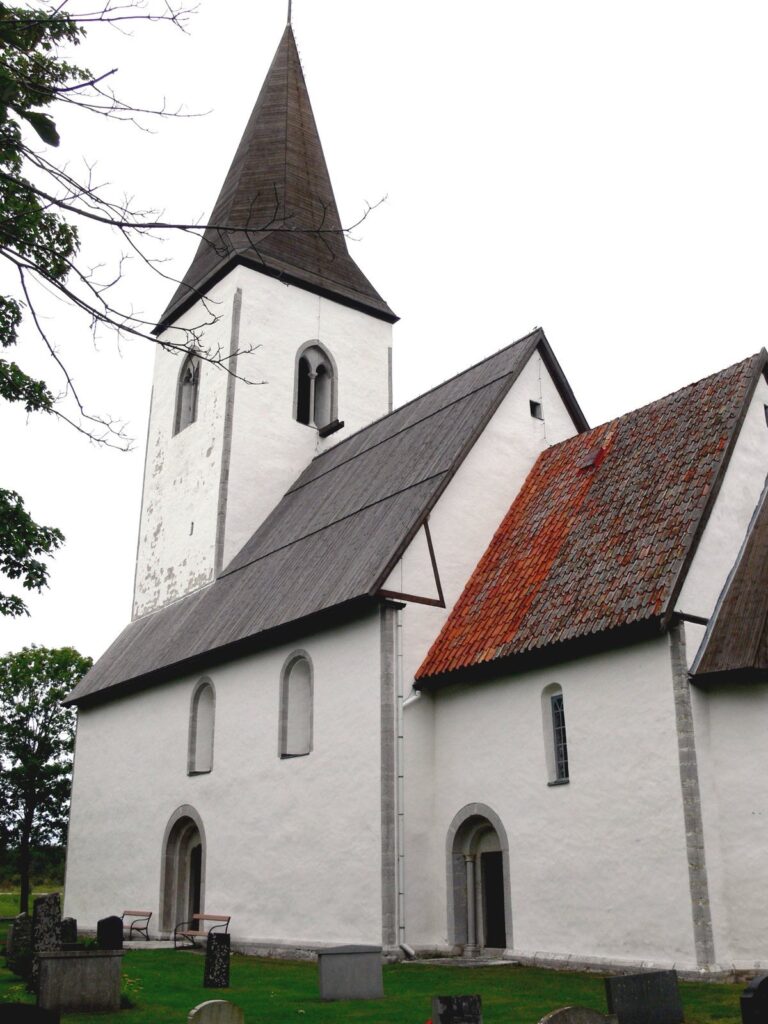
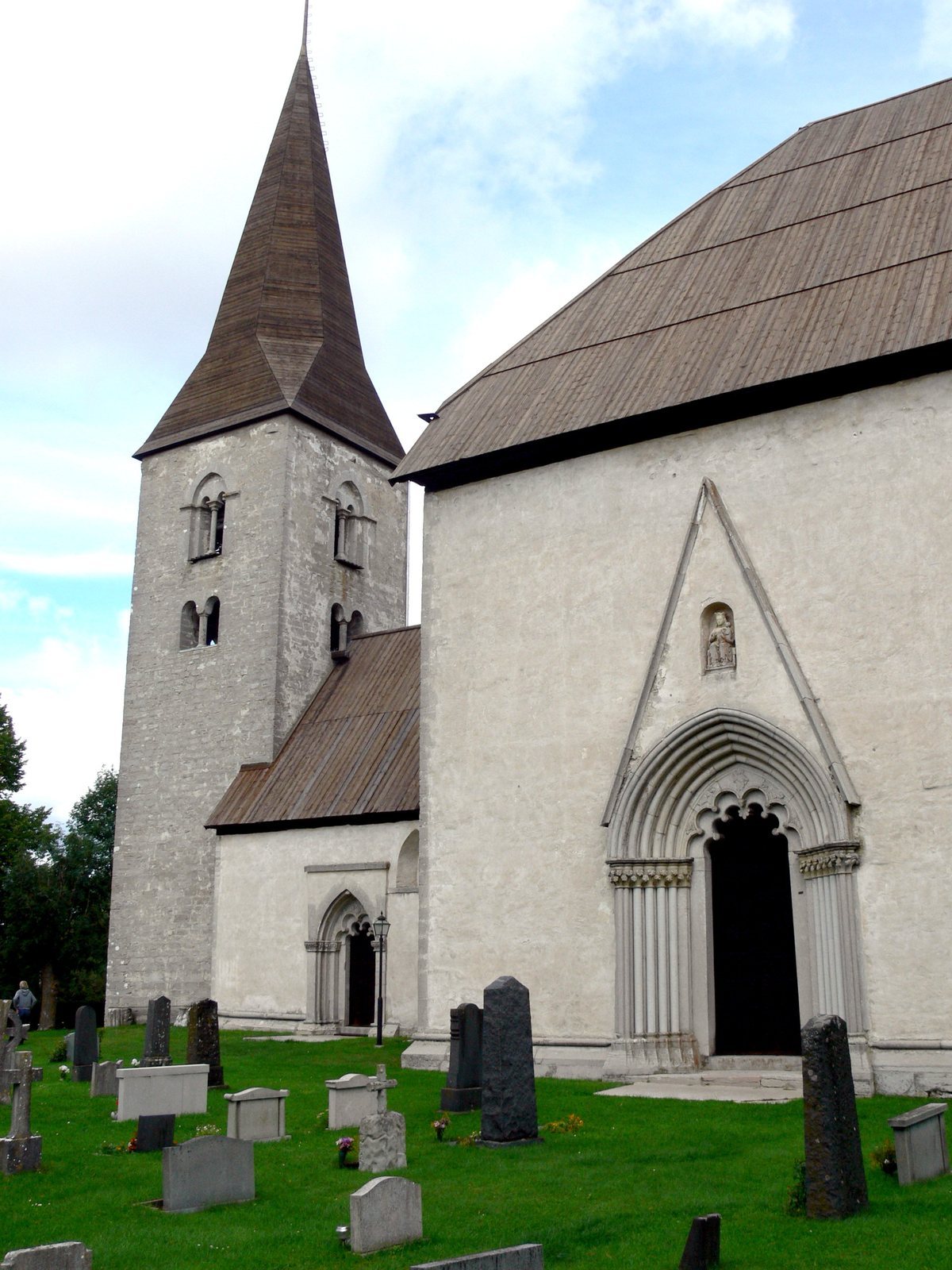
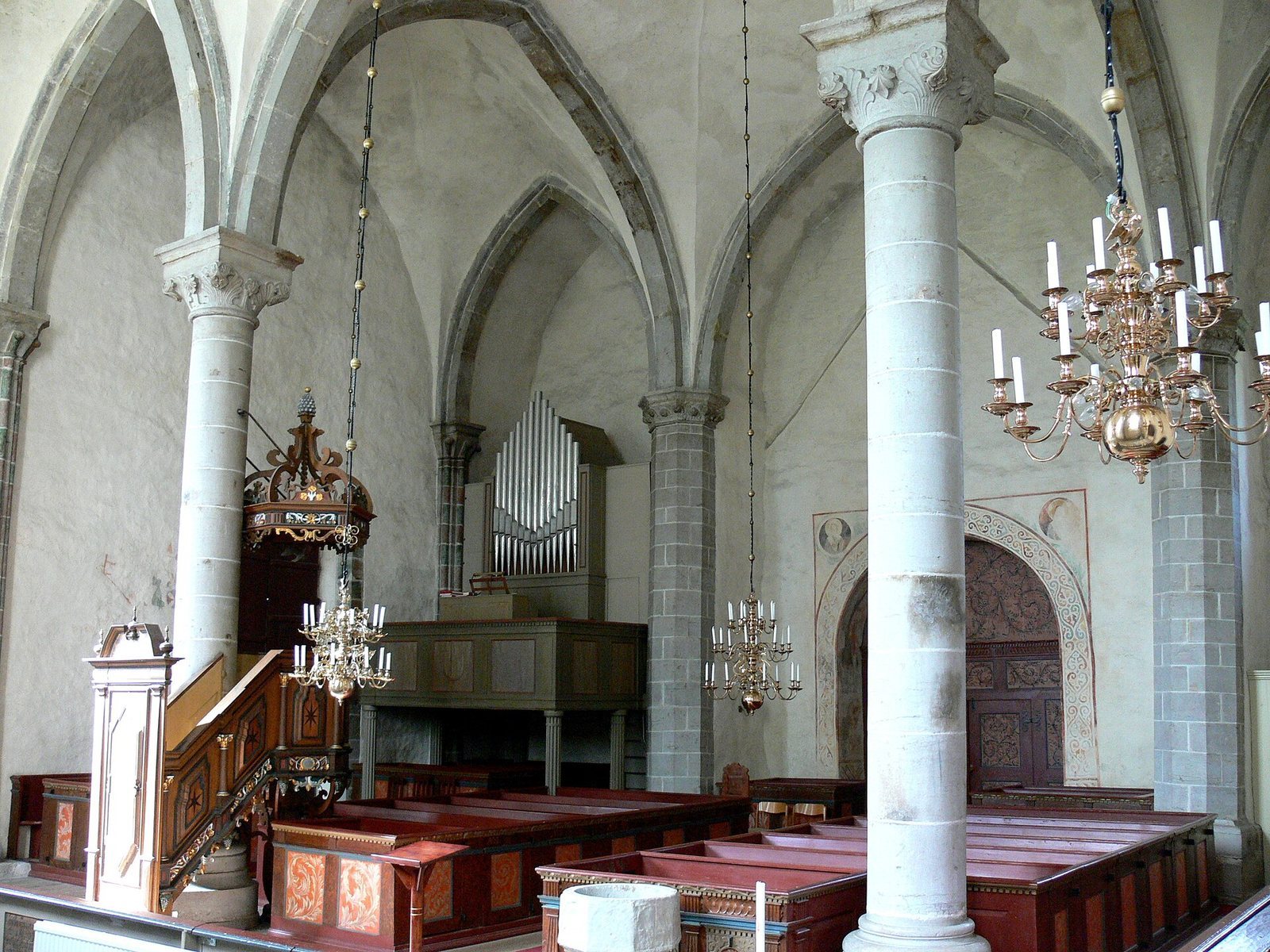
The church has a distinctive saddle-like outline and is notably large for a rural church. At the west end, a small Romanesque nave and tower contrast with the much larger Gothic choir to the east. The nave now serves as an entrance vestibule, while the choir is the principal interior space, formed as a hall with three aisles and supported by two round and two octagonal pillars.
West end and earlier fabric
Nave and tower
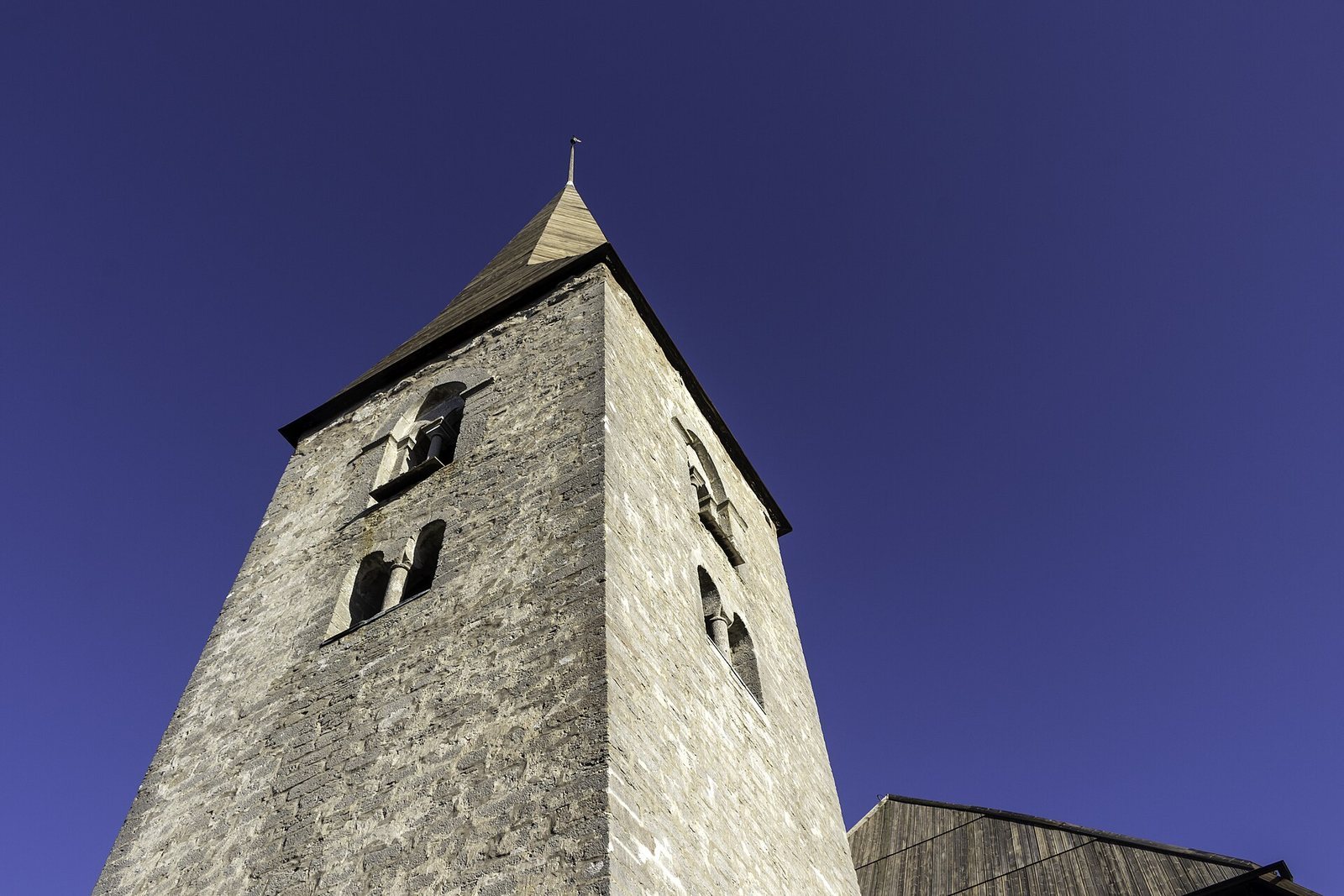
The nave’s east wall, including the triumphal arch that separates nave and choir, is largely original. The tower has a narrow, plain portal. Its arch opening toward the nave was later enlarged into a pointed arch, and the tower gained a new bell stage, the level that houses the bells, and a steeper spire.
Earlier apse choir
A masonry base survives from an earlier apse choir, an ending with a rounded or polygonal recess. This part of the church was contemporary with the nave. The base was uncovered during restoration work in 1951.
Portal sculpture
South portal
The richly decorated south portal includes a tympanum, the ornamented field within a portal, showing Christ with two female saints. An ornamental gable above it carries an image of Mary with the infant Jesus. The capitals, or upper parts of the columns, bear carved scenes of medieval life. These reliefs are attributed to the sculptor known as Neoikonicus and draw mainly on folk rather than religious subjects.
Instrument relief
A relief on one of the church portals, dated to about 1350, probably includes one of the earliest depictions of a nyckelharpa, a Swedish bowed string instrument played with keys. The carved instrument resembles an early form of the Mora-harpa.
Wall paintings
Romanesque paintings
Fragments of Byzantine-influenced paintings survive in the Romanesque part of the church. They include two Magi, the visitors who bring gifts to the infant Jesus, traveling toward Bethlehem, with a scene of the journey to Golgotha, associated with Jesus’s crucifixion, above them. Other paintings show Saint George, a Christian saint, fighting a dragon; a medallion of Christ surrounded by saints in the triumphal arch opening; and ornamental decoration on the choir-facing side of the arch. Fragments of the Last Judgment, the Christian belief in God’s final judgment of humanity, remain on the west wall. These works are important early examples of wall painting on Gotland and illustrate Byzantine influence on Swedish art in the 12th and 13th centuries.
Gothic paintings
Paintings from the 14th and 15th centuries also survive in the Gothic part of the church. They are attributed to the Passion Master, the conventional name for an unidentified 15th-century painter.
Gothic sacristy
The sacristy, a room for preparing and storing vestments and church objects, belongs to the Gothic building phase. Its vaulted ceiling and narrow windows offer an example of the rooms found in medieval stone-built parsonages and farmhouses on Gotland.
Furnishings and memorials
Altarpiece
The early 16th-century winged altarpiece, with hinged side panels, is a North German work. Its three-panel arrangement is a triptych, with the Coronation of Mary at its center. The altarpiece belonged to Visby Cathedral until 1684, after which it came to Källunge.
Sacrament cupboard and ship’s flag
A large sacrament cupboard stands on the north wall to the left of the altar. Its columned frame surrounds a cupboard used to store consecrated Eucharistic bread. A copy of a ship’s flag stands beside it; the original is held at Gotlands Fornsal, Gotland’s regional historical museum.
Nave altar and font
A pre-Reformation Marian altar, dedicated to Mary, stands in the northeast corner of the nave. The baptismal font is a 12th-century Romanesque work by the anonymous sculptor conventionally known as Byzantios.
Gravestones
The choir floor contains gravestones dating from the 14th through the 17th century.
Pulpit and organs
The pulpit was made in 1707 by the Visby carpenter Christian Fedder and painted in 1726 by Johan Hernell. Olof Fredrik Vigström of Källunge built a two-stop organ in 1875. In 1931, the Stockholm firm Åkerman & Lund built a pneumatic organ, which uses air pressure in its mechanism to operate the pipes.