Château La Tour Carnet: A Fourth Growth Wine Estate in France


Site at a Glance
- Rating
- 4.6
- Popularity
- Low
- Country
- France
- Primary era
- Medieval
- External website
- Open
- Eras represented
- Medieval, Modern
- Civilizations
- English, French
- Site type
- Economic
- Remains
- Production Complex
On this page9 sections
History
Medieval origins and English rule
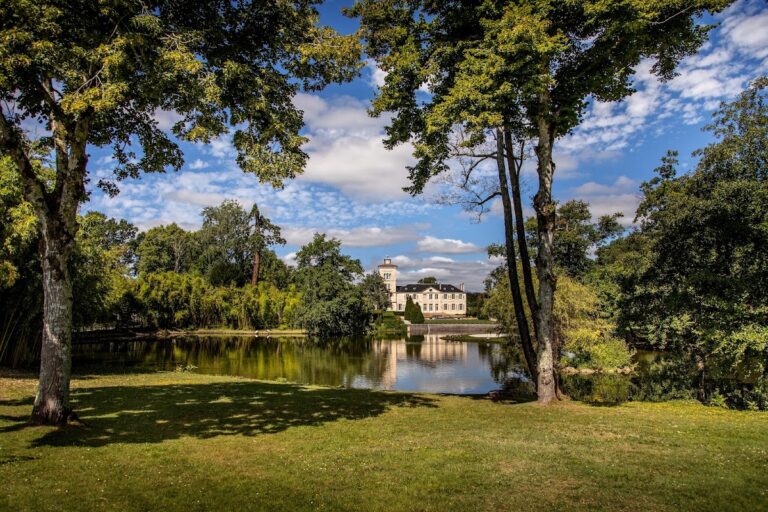
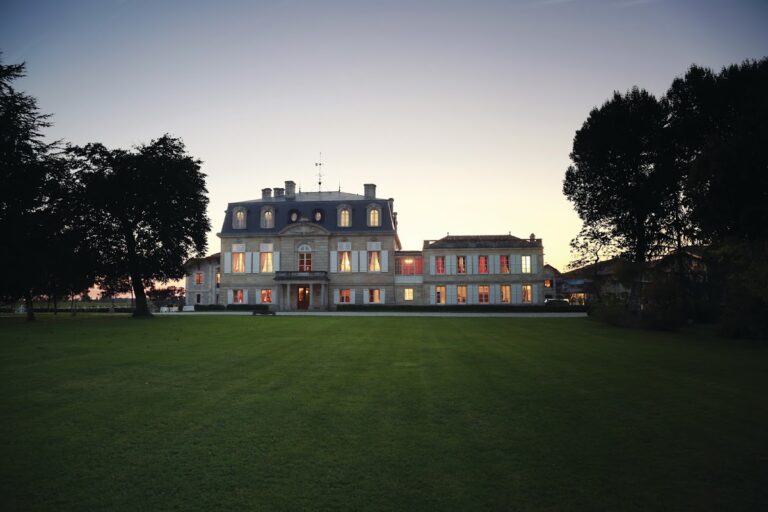
Château La Tour Carnet is a historic wine estate in Saint-Laurent-Médoc, France, within the Haut-Médoc appellation, a legally defined area governing the identity and production of its wines. Its origins reach back to the early Middle Ages, and tradition places its foundation in the twelfth century, although the details of its earliest history remain uncertain. The property began as a fortified estate and later became known as Château de Saint-Laurent.
After the marriage of Henry Plantagenet, the future King Henry II of England, to Eleanor of Aquitaine in 1152, extensive territories in western France came under English control. The fortified estate belonged to the English from the twelfth century. By the thirteenth century, Saint-Laurent lay within the sphere of the House of Foix, a medieval noble family with authority in parts of southwestern France and the Pyrenean region.
The fifteenth-century conflict
When Bordeaux submitted to the French Crown in 1451, Jean de Foix and his cavalry commander Carnet refused to accept the change. After Jean de Foix died, Carnet administered the estate from 1486, but he could not prevent its destruction during the conflict. A long-standing tradition connects the estate’s later name with Carnet and credits him with constructing its tower, although his precise identity and role remain uncertain.
After the destruction, Château de Saint-Laurent passed through numerous owners. One of them was Thibault de Carmaing, who was the brother-in-law of the writer and statesman Michel de Montaigne. The property’s changing ownership formed part of a long transition from medieval fortified estate to an agricultural and wine-producing domain.
The Luetkens period and the 1855 classification
Heinrich Luetkens, a German merchant who immigrated in 1685, began acquiring agricultural land in the Médoc about a decade later. After the French Revolution, his grandson Charles Luetkens, who lived from 1744 to 1801, acquired Château de Saint-Laurent. Charles was already a royal councillor and cavalry commander, and he obtained the title Seigneur de Tour-Carnet. He also owned parts of what is now Château Saint-Pierre.
At the time of the Bordeaux Wine Official Classification of 1855, the estate was known as Carnet and was managed by Angélique Raymond, the wife of Charles’s son, Jean-Jacques Luetkens. The classification ranks leading Bordeaux estates in recognized growth categories, and Château La Tour Carnet was placed among the Quatrième Grand Cru Classé, or Fourth Growth, properties. Charles-Oscar de Luetkens directed the estate from 1861.
Crisis, restoration, and modern ownership
Phylloxera, an insect pest that devastated European vineyards in the nineteenth century, powdery mildew, a fungal vine disease, and the two World Wars brought the estate into a severe crisis. When Louis Lipschitz acquired it in 1962, only five hectares were productive. He renovated the buildings and replanted abandoned vineyard parcels. His daughter, Marie-Claire Pelegrin, continued the work from 1978.
Bernard Magrez took over the estate in 1999 and began renovating the vineyards and winery buildings. The property has remained under his ownership since then, with Michel Rolland serving as consultant oenologist. Earlier vintages around 2000 and 2001 were regarded as a return to quality after a prolonged decline linked to changes of ownership and the replanting programme. The estate’s second wine is called Les Douves du Château La Tour Carnet.
Château La Tour Carnet produces approximately 180,000 bottles of its grand vin in a typical year and about 110,000 bottles of its second wine. A 2.5-hectare experimental vineyard, known as La Tour Carnet 2050, was artificially heated with cables to simulate warming of 2 to 4 degrees Celsius. Conducted with INRAE, France’s national research institution for agriculture, food, and environmental science, the project tested how different grape varieties might adapt to climate change.
Remains
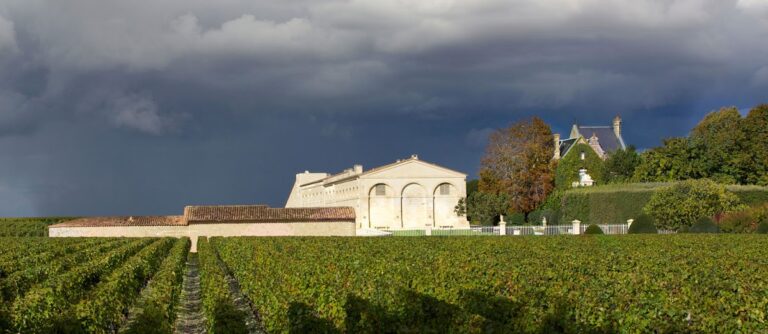
Fortified estate and vineyard setting
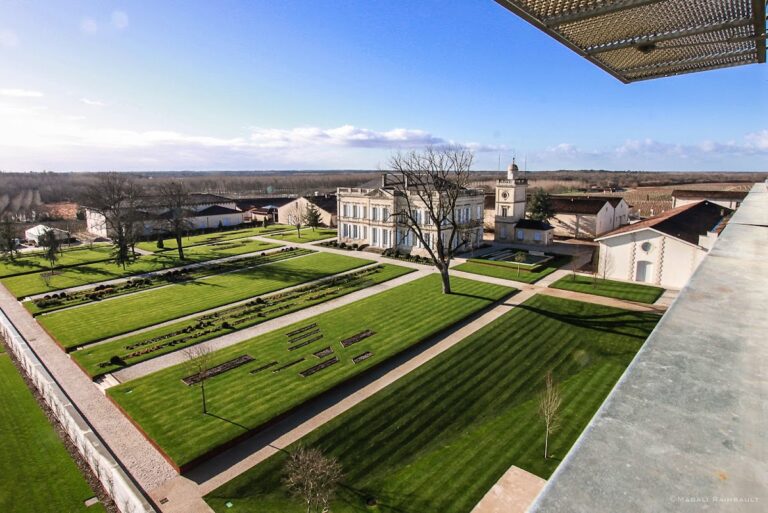
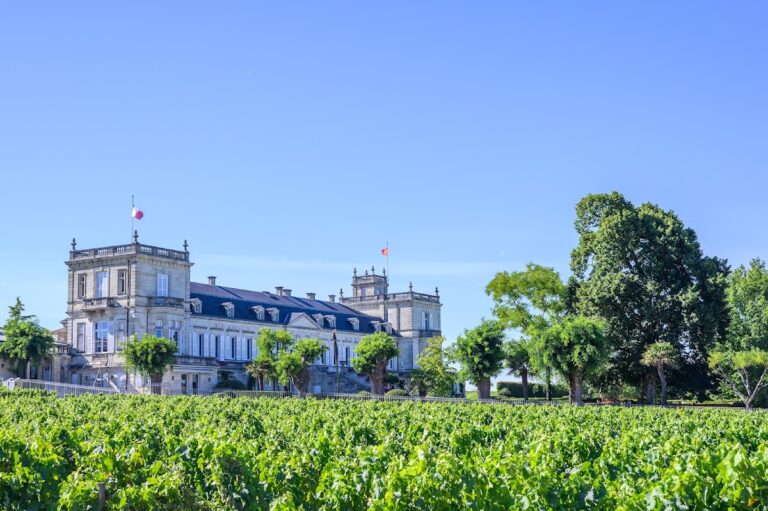
The surviving estate developed from a fortified property and includes a château tower traditionally associated with Carnet. The tower’s construction is attributed to him, though that attribution remains uncertain. The vineyards occupy the butte of La Tour Carnet, which rises to 19 metres. Beneath them lies an extremely calcareous clay base covered by a very thick layer of Günz gravel, ancient river deposits made largely of rounded stones.
Vineyard landscape
The estate extends across approximately 126 hectares, including 73 hectares planted with vines. Merlot and Cabernet Sauvignon make up most of the plantings, alongside Cabernet Franc and Petit Verdot. One stated distribution is 50 percent Merlot, 45 percent Cabernet Sauvignon, 3 percent Cabernet Franc, and 2 percent Petit Verdot. The vineyards are therefore a major physical component of the estate, occupying the raised ground and its gravel-covered clay soils.
Winery buildings and production equipment
Grapes are harvested by hand, destemmed, and repeatedly sorted in the winery. Fermentation takes place partly in 18 oak vats, each holding 70 hectolitres, with controlled temperatures and a stated fermentation period of 8 to 9 days. The winery uses saignée, a method in which some juice is drawn from fermenting red-grape must to concentrate the remaining wine. During maceration, the cap is submerged and loosened several times, and the process lasts approximately 25 to 30 days, with finesse rather than maximum concentration as its stated aim.
After fermentation and maceration, the wine is transferred without filtration into barriques, small oak barrels traditionally holding about 225 litres, where it remains for 18 months. Approximately half of the new oak is renewed each year. The wine is racked every three months, fined with egg white, and bottled using gentle filtration. The bottling cellar was redesigned in 2001 so that bottling could be carried out entirely by gravity.