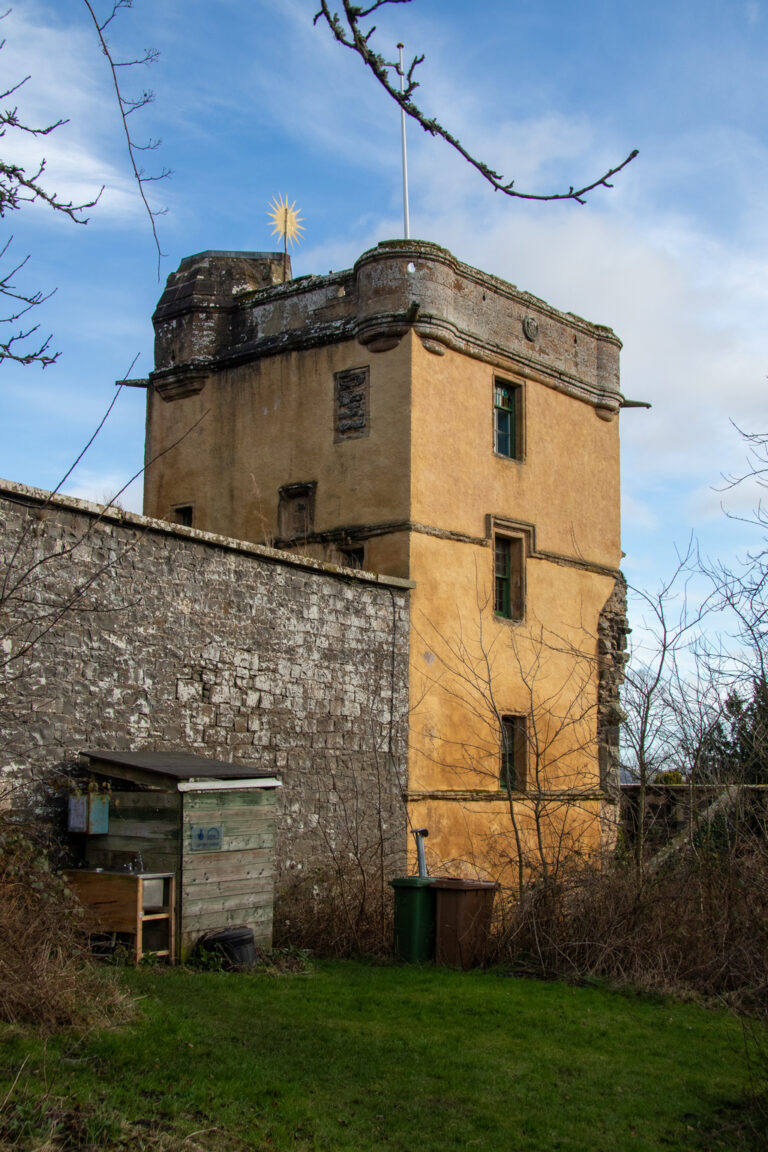
Dairsie Castle: A Restored Scottish Z-Plan Tower House


Site at a Glance
- Rating
- 4.5
- Popularity
- Very Low
- Country
- United Kingdom
- Primary era
- Early Modern
- External website
- Open
- Eras represented
- Medieval, Early Modern
- Civilizations
- Kingdom of Scotland
- Site type
- Military
- Remains
- Castle
On this page7 sections
History
Medieval Episcopal Stronghold
The first Dairsie Castle in Scotland belonged to the bishops of St Andrews and may have been built around 1300 by William de Lamberton, who held that important medieval Scottish ecclesiastical office from 1298 to 1328. In early 1335, the castle hosted a meeting of the Scottish parliament, placing it within the political affairs of medieval Scotland.
The Learmonth Rebuilding
The Learmonth family rebuilt the castle during the sixteenth century. Its later history became closely connected with the Marian Civil War, the conflict between supporters of Mary, Queen of Scots, and those who supported her son James VI and the government formed after Mary’s abdication.
In March 1572, the laird of Dairsie, who was also Provost of St Andrews, invited the English ambassadors Thomas Randolph and William Drury to a banquet at the castle. They declined, and tradition holds that the laird then invited Gavin Hamilton, the new Archbishop of St Andrews, Robert Hamilton, minister of St Andrews, and William Skene instead.
Patrick Learmonth of Dairsie had lent money to William Kirkcaldy of Grange, a soldier and political figure in the Marian conflict, and held some of Mary, Queen of Scots’ jewels as security. In 1575, James Douglas, 4th Earl of Morton, who was Regent of Scotland for the underage James VI, besieged Dairsie Castle and demanded the return of the jewels.
Royal Refuge and Ecclesiastical Ownership
James VI stayed at Dairsie Castle in 1583 after escaping the Raid of Ruthven in June of that year. James had been king of Scotland since 1567 and later became James I of England and Ireland in 1603.
During the seventeenth century, the castle was sold to John Spottiswoode, Archbishop of St Andrews and an ecclesiastical historian. In 1621, Spottiswoode commissioned Dairsie Old Church beside the castle. The castle became ruinous during the nineteenth century, but rebuilding in the 1990s returned it to use as holiday accommodation. It is a Category B listed building, a designation for a protected historic building of regional or more than local importance in Scotland. The site was formerly a Scheduled Monument, a protected archaeological or historic monument, but it was removed from that category in 1997 before the restoration works.
Remains
Castle Form and Setting
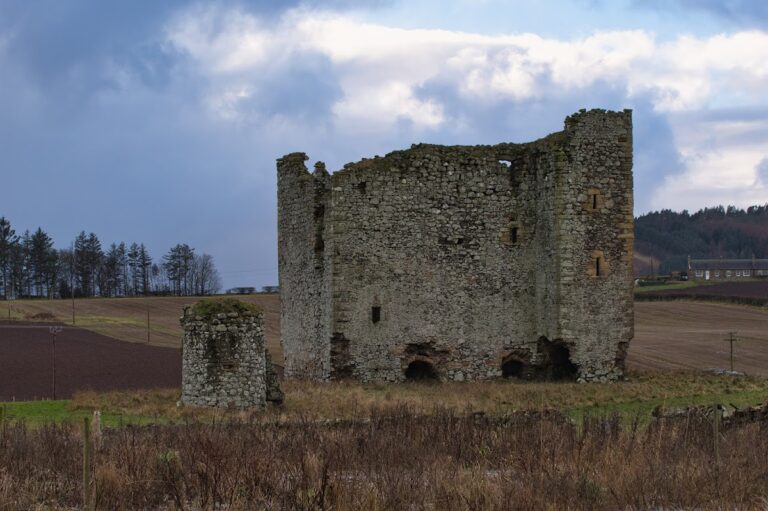
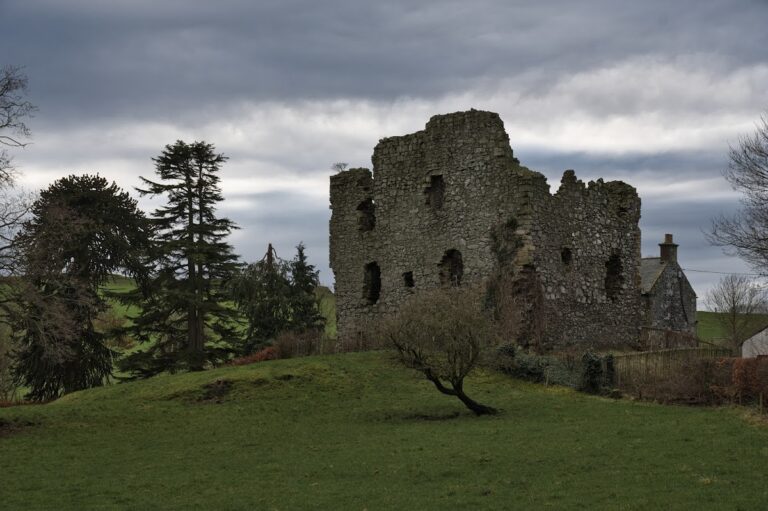
Dairsie Castle is a restored Z-plan tower house located 1.3 kilometres south of Dairsie in north-east Fife. A Z-plan tower house is a fortified Scottish residence with projecting towers or wings arranged in a roughly Z-shaped layout. The castle overlooks the River Eden, and its surviving form reflects the sixteenth-century rebuilding associated with the Learmonth family.
Dairsie Old Church
Dairsie Old Church stands beside the castle. It was commissioned in 1621 by John Spottiswoode, Archbishop of St Andrews, after the castle had passed into his ownership during the seventeenth century.