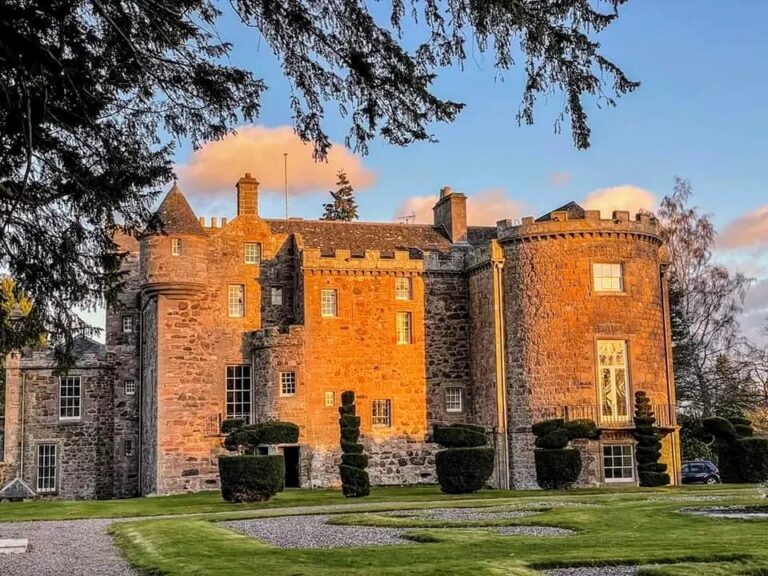
Creich Castle: A Ruined Scottish Tower House in Fife


Site at a Glance
- Rating
- 4.4
- Popularity
- Very Low
- Country
- United Kingdom
- Primary era
- Early Modern
- Eras represented
- Early Modern
- Civilizations
- British, Kingdom of Scotland
- Site type
- Military
- Remains
- Castle
On this page7 sections
History
Creich Castle is a ruined tower house in the United Kingdom, near Cupar in Fife. Its visible remains date from the 16th century, although a castle on the estate had earlier medieval origins. The site developed as a fortified residence and defensive work, later becoming associated with the Beaton family and surviving as a protected historic monument.
Medieval origins
An 11th-century castle was built in response to Viking raids that threatened prosperous farms south of the River Tay. Constantine, Earl of Fife, enlarged the defensive work. An earl was a high-ranking Scottish nobleman, broadly comparable to a count elsewhere in Europe, and the Earls of Fife were among medieval Scotland’s leading noble families.
The earliest surviving records identify Creich as a possession of the MacDuff Earls of Fife, who probably built the first castle. A castle on the property is mentioned in the 13th century, although its connection with the surviving structure remains uncertain.
Later ownership and rebuilding
The estate later passed to the Liddel family, who forfeited it after being charged with treason. The Beaton family acquired the property in 1503. Creich has since been associated with David Betoun of Creich, Cardinal David Beaton, a 16th-century Scottish churchman and Archbishop of St Andrews, and Mary Bethune, a Scottish noblewoman.
The ruins visible today belong to a later phase of construction. A charter of 1553 refers to a “tower, fortalice and manor,” meaning a tower, fortified stronghold, and residence. The existing building either postdates that charter or was extensively remodelled afterward, since its architectural character suggests a date later than the first half of the 16th century.
Protection
Creich Castle and its associated buildings have been protected as a scheduled monument since 1935 under designation SM848. A scheduled monument is a legally protected site of national archaeological or historical importance. The nearby Creich Castle Doocot is separately recognised as a Category A listed building, a structure considered nationally important for its architectural or historic interest.
Remains
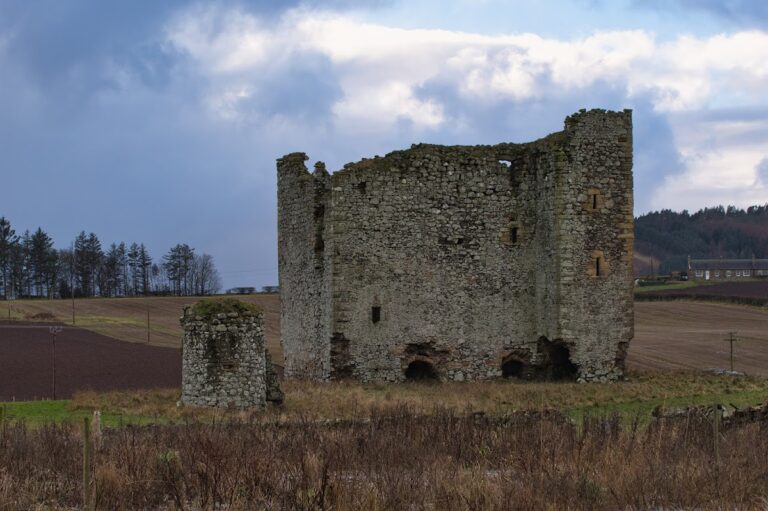
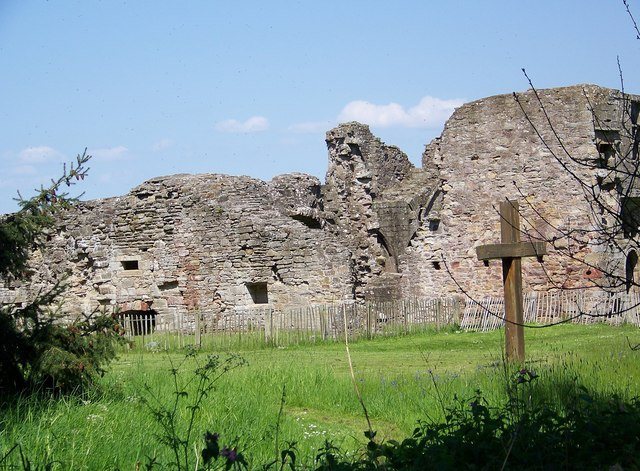
Creich Castle stands 1.7 kilometres south of the River Tay in a hollow surrounded by higher ground. Marshy ground once extended around the lower levels of the tower complex, and part of this wetland survives. The setting strengthened the castle’s natural defences. The principal building is a ruined tower house, a fortified residence that combined domestic accommodation with defensive construction.
Tower house and defensive enclosure
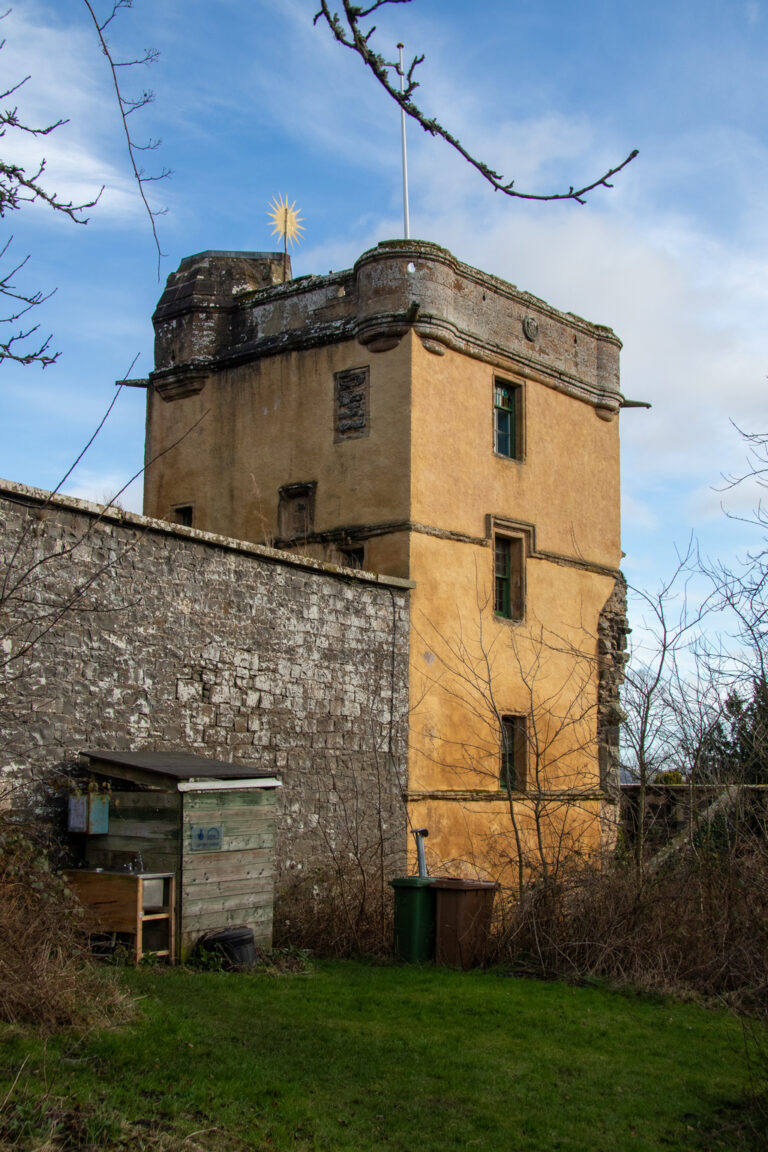
The tower house has an L-shaped plan measuring 39 feet 2 inches by 27 feet 8 inches, or 11.9 by 8.4 metres. Its main block rises three storeys, while the wing measures 20 by 20 feet, or 6.1 by 6.1 metres, and reaches four storeys. The walls are built from whin rubble, a locally available hard stone, with ashlar dressings formed from regularly cut and finished blocks. Above the stair tower, a heavily corbelled cornice supported the parapet walk. The upper floors are inaccessible and in poor repair.
The tower was probably enclosed by a courtyard. About 20 yards, or 18 metres, to the west, the remains of a small round tower survive. Such towers commonly formed part of gateways and were sometimes incorporated into barmkins, which were defensive walls or courtyards surrounding Scottish tower houses.
Creich Castle Doocot
Near the castle stands the Creich Castle Doocot, built in 1723. The rectangular building contains two internal chambers and was designed as a doocot, or dovecote, for keeping pigeons or doves. It forms part of the later building group associated with the castle estate.