Fortress Mitterberg: An Austro-Hungarian Border Fortification in Italy


Site at a Glance
- Rating
- 4
- Popularity
- Very Low
- Country
- Italy
- Primary era
- Modern
- External website
- Open
- Eras represented
- Modern
- Civilizations
- Habsburg
- Site type
- Military
- Remains
- Fort
On this page8 sections
History
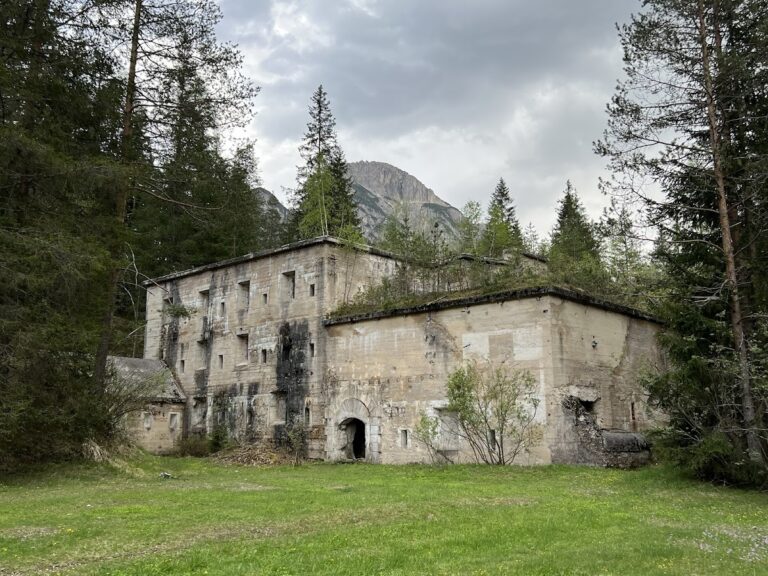
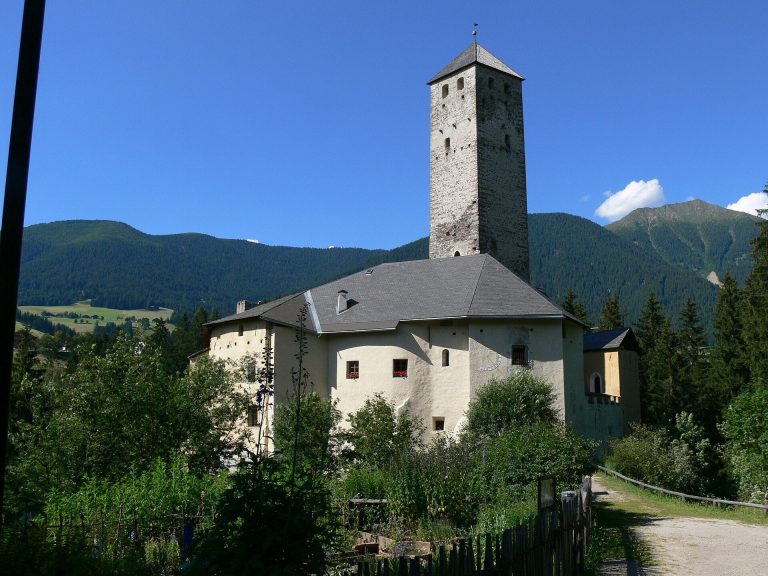
Fortress Mitterberg is an Austro-Hungarian fortification in Italy near Sesto, built between 1885 and 1889 in the late nineteenth-century neoclassical style at an elevation of 1,575 metres. Also known as Werk Mitterberg, it formed part of the Habsburg Empire’s border defenses and worked with Fortress Haideck to control the route from the Monte Croce di Comelico Pass into the Sesto Valley and the empire.
Construction and changing defenses
When completed, Fortress Mitterberg was considered tactically modern. The development of more powerful shells, with greater explosive and penetrating force, later reduced the security of this type of fortification. In 1909, the fortress was judged no longer sufficiently safe for its original role.
In January 1915, its artillery was removed and the fortress was converted into a depot. The guns were moved outdoors to a higher position, while the building continued to serve military purposes. During the First World War, it also operated as an infantry support position.
First World War and later use
Approximately 160 shells were directed at Fortress Mitterberg during the fighting, but only 12 struck the structure. All of the shells that hit it had a calibre of 280 millimetres. Austrian soldiers also tried to make Italian forces believe that the fortress remained operational. During the day they burned wet wood to create dense black smoke, and at night they kept the lights on.
After the Austro-German victory at Caporetto in 1917, a major defeat of Italian forces during the First World War, the fortress was used in 1918 as emergency accommodation for displaced families waiting for their homes to be rebuilt. After the war, the Italian military administration acquired the site, which was used mainly as a depot.
Preservation
In the late 1960s, the Dolomitenfreunde association sought permission to turn the fortress into a museum, but authorization was not granted. In more recent years, the municipality of Sesto has pursued acquisition of the site for inclusion in the town’s cultural and historical infrastructure. Fortress Mitterberg has been restored.
Remains
Fortress Mitterberg survives as a large, three-level structure in neoclassical style. Granite blocks protect or armour the building, and its defensive arrangement includes fixed artillery positions and a frontal ditch facing the Monte Croce di Comelico Pass. The surviving layout reflects a fort designed to combine protected artillery chambers with external defenses and additional field positions.
Fortress structure and artillery
Protected artillery positions
Three 120 millimetre Model 80/96 guns were installed in gun casemates, protected chambers from which artillery fired through small openings in the fortification. Three 150 millimetre Model 78 mortars were placed in armoured cupolas, protective structures enclosing mortar positions. At the beginning of the twentieth century, these mortars were replaced by three 100 millimetre mortars.
Machine guns and outer defenses
The armament also included eleven 11 millimetre Montigny machine guns, along with additional weapons positioned in field emplacements. These positions complemented the fixed artillery and the frontal defensive ditch, which faced the pass approached by the fortress’s defensive system.