Casalgrande Castle: A Medieval Hilltop Fortress in Italy


Site at a Glance
- Rating
- 4.1
- Popularity
- Very Low
- Country
- Italy
- Primary era
- Medieval
- Eras represented
- Medieval
- Civilizations
- Unclassified
- Site type
- Military
- Remains
- Castle
On this page9 sections
History
Casalgrande Castle is a medieval hilltop fortress in Italy, in Casalgrande, Emilia-Romagna, probably founded in the thirteenth century by the Guidelli family. The local lords expanded and governed it during that century, and the castle became the center of the settlement’s economic and social life.
Changing Feudal Ownership
In 1335, the castle passed to the Fogliani family. Members of that family disputed possession for approximately a century. In 1452, Borso d’Este, Duke of Ferrara, granted the castle as a fief, a territorial grant made in return for allegiance or service, to Feltrino Boiardo, Count of Scandiano.
Attack and Reconstruction
On 15 November 1557, Spanish forces led by Ottavio Farnese, Duke of Parma, attacked Casalgrande during his war against the Este family. After a determined defense, the castle was looted and destroyed, and its oratory was demolished. In 1560, Ottavio I Thiene, Count of Scandiano, ordered the rebuilding of both the castle and the settlement. The oratory was reconstructed outside the walls, where it remains.
Later Ownership and Stewardship
The Thiene family held the castle until 1622. The Bentivoglio family then owned it from 1622 to 1643, followed by the Este family until 1725. The Este were a major Italian ruling dynasty whose possessions included Ferrara and whose members were involved in the castle’s feudal and ownership history.
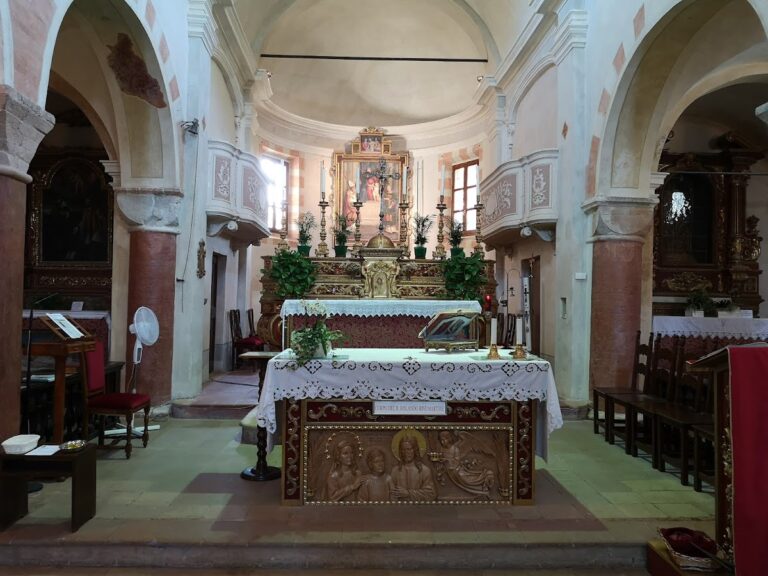
The Municipality of Casalgrande now owns the eastern gate, the Praetorian Tower, and the Oratory of San Sebastiano, while the remaining parts of the castle are privately owned. The castle is described as restored. The oratory, a small place of prayer, was deconsecrated, although religious services continued there until the mid-twentieth century. Dedicated to Saint Sebastian, a Christian martyr traditionally associated with protection against plague and epidemics, it honors Casalgrande’s second patron. The municipal administration completely restored the building, which is now used for cultural initiatives and wedding ceremonies.
Remains
Fortified Court
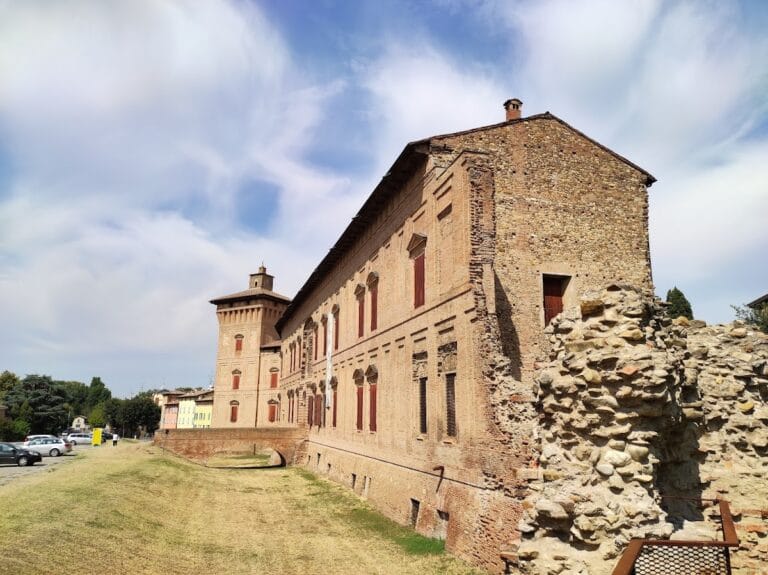
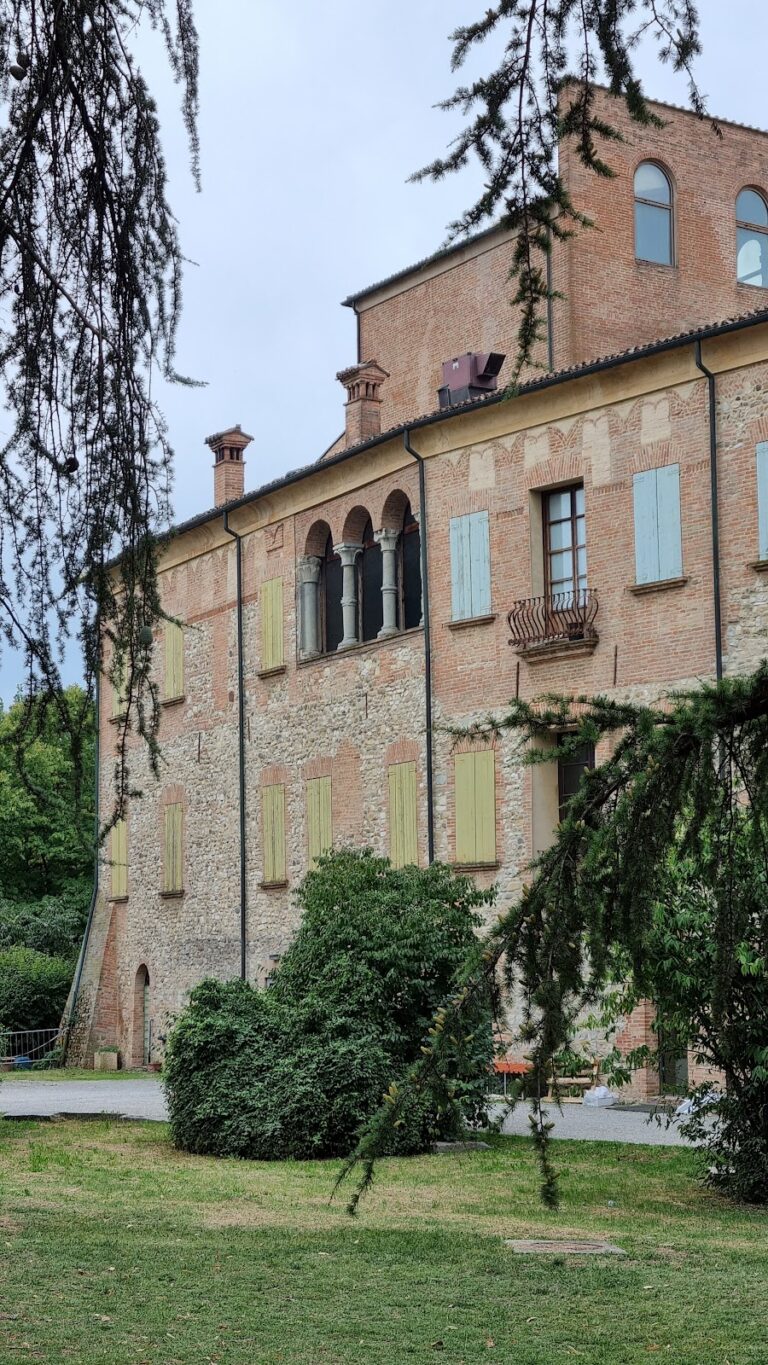
Casalgrande Castle stands on the surrounding hills at approximately 203 metres above sea level. Built in brick masonry, the surviving complex forms a fifteenth-century rural court with an elliptical plan enclosing a large square. One part served residential and military purposes, while another supported agricultural activity.
Moat and Entrances
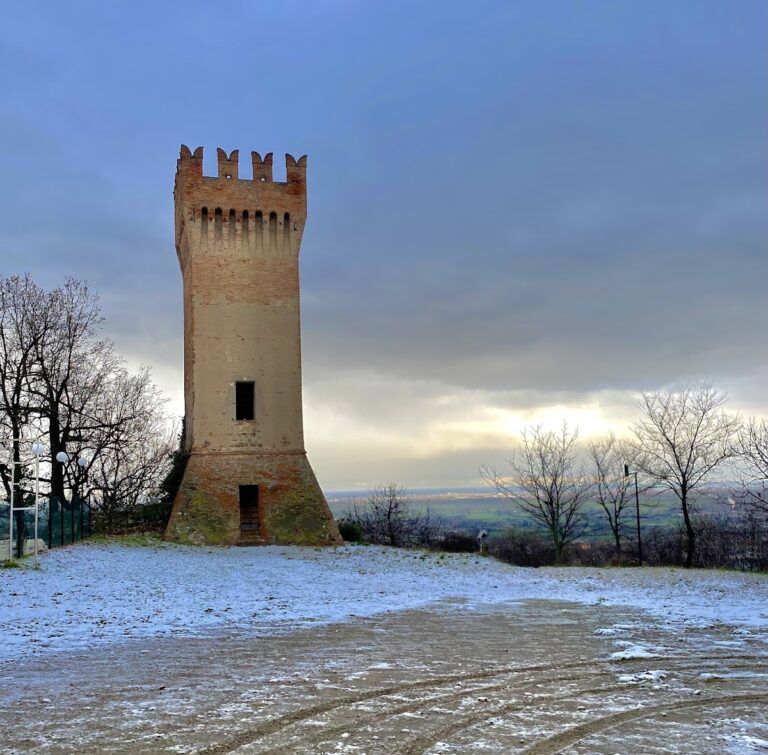
By the period of the Boiardo family, the fortress was enclosed by a moat and reached across a drawbridge. Two entrances remain, one for pedestrians and one for vehicles. A high watchtower overlooked the plain, while four smaller towers strengthened the defenses, with two beside the main fortress and two positioned on either side of the entrance tower. A corroded and barely legible coat of arms is set in the center of the castle complex.
Fortified Residence
The fortified residence contains two square towers fitted with machicolations, projecting openings through which defenders could drop objects onto attackers below. A central building connects the towers, forming the principal residential and defensive group within the rural court.
Oratory of San Sebastiano
The Oratory of San Sebastiano stands outside the castle beside the old access road leading toward the settlement below. Built in 1479, it was rebuilt beyond the walls after the castle’s destruction in 1557. Its restored building is owned by the municipality and continues to serve cultural and ceremonial purposes.