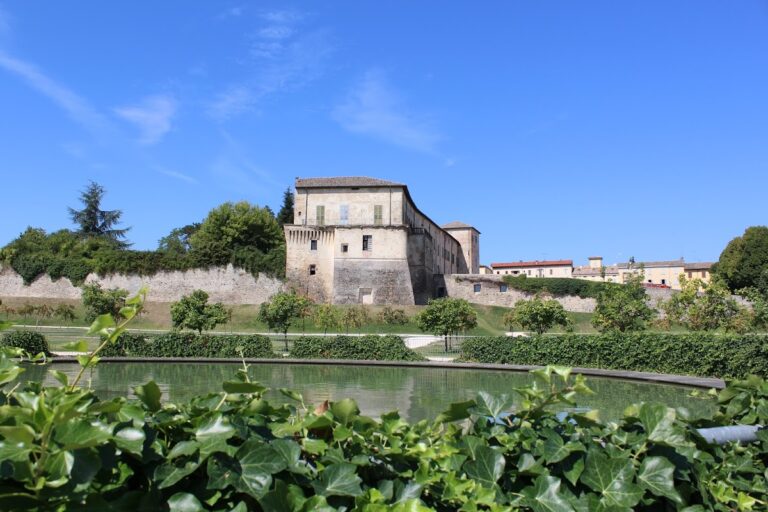
Monte Palero Castle: A Medieval Fortification in Italy


Site at a Glance
- Rating
- 4.6
- Popularity
- Very Low
- Country
- Italy
- Primary era
- Unclassified
- Eras represented
- Unclassified
- Civilizations
- Unclassified
- Site type
- Military
- Remains
- Castle
On this page9 sections
History
Monte Palero Castle was a medieval stone fortification near San Vitale Baganza in Italy, built by the Pallavicino marquises in 1196 over an earlier Byzantine-period fortified nucleus on Monte Palero. Its history reflects the changing control of feudal territories in the Parma area, as well as repeated conflict among local ruling families, communal forces, and larger princely powers.
Byzantine Foundations and Pallavicino Rule
A fortified site already occupied Monte Palero during the Byzantine period. In 1189, Holy Roman Emperor Frederick Barbarossa, who ruled from 1155 to 1190, granted Marquis Oberto I Pallavicino Monte Palero and other territories in the Parma, Piacenza, and Tuscan areas. The Pallavicino were a powerful marquessal family whose lands included numerous fiefs, territories held under feudal rights and obligations.
In 1196, the Pallavicino built a castle over the earlier fortification. Emperor Frederick II, who ruled from 1220 to 1250, confirmed Oberto II Pallavicino’s rights to the fief in 1249. The castle therefore formed part of the family’s territorial power during the medieval consolidation of its lands.
Destruction by the Commune of Parma
In 1266, Guelf troops from the Commune of Parma besieged the castle. Guelfs supported the papacy and generally opposed the imperial faction in medieval Italian politics. The garrison consisted of exiles from Parma, while the attacking force was led by Jacopo della Porta, the Capitano del Popolo, a communal official who could exercise military and executive authority.
Bad weather compelled the Parma troops to withdraw, but they returned in the following year. They captured and razed the castle, killing the survivors. In 1297, the Commune of Parma prohibited the construction of another fortification at Monte Palero.
Fourteenth-Century Inheritance and Renewed Control
After Marquis Manfredino Pallavicino died in 1348, his son Donnino inherited Monte Palero along with the fiefs of Ravarano, Parola, and Zibello and their associated lands. In 1395, Wenceslaus of Luxembourg, the late-fourteenth-century king of the Romans, confirmed Marquis Niccolò Pallavicino’s privileges over Monte Palero and several other fiefs.
In 1405, after Giacomo and Ottobuono Terzi conquered the Rossian castle of Pariano, Bishop Giacomo de’ Rossi occupied Monte Palero with his troops. De’ Rossi belonged to the powerful Rossi family of the Parma area. He rebuilt a defensive fortification called Castel Palerio and used it as the base for a conspiracy against Giacomo Terzi in 1406. The plot failed.
Piccinino’s Conquest and Later Feudal Administration
Tenant farmers inhabited Castel Palerio, but the settlement was abandoned after a few years when the Rossi were forced to return Monte Palero to the Pallavicino. In 1441, the condottiere Niccolò Piccinino, a professional military commander who led troops under contract, persuaded Filippo Maria Visconti, Duke of Milan, that Rolando il Magnifico had committed treason. Piccinino was then commissioned to conquer the Pallavicino lordship.
Rolando fled, and the Duke of Milan confiscated his possessions. In 1442, the duke granted Piccinino Monte Palero and other fiefs in the Parma area. The Pallavicino later recovered the fief, although the abandoned castle continued to decline. Monte Palero was eventually absorbed into the ducal administration of Parma, which granted it, together with nearby Neviano, to Marquis Marcello Prati in 1631.
From Feudal Estate to Ruined Site
During the seventeenth century, the Boriani family of Piacenza acquired the fortified outpost known as Torre del Boriano. The counts Bondani later held the Monte Palero fief until Napoleon abolished feudal rights in the Duchy of Parma and Piacenza in 1805.
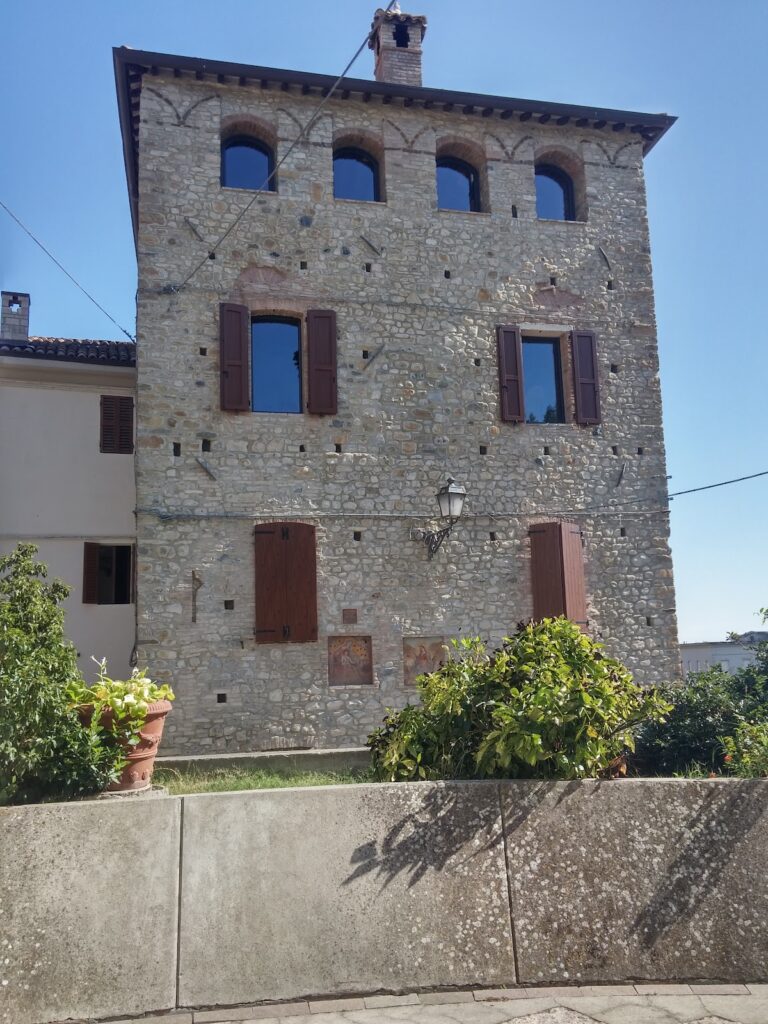
By the period of Rossian control, only the castle ruins remained. Residential and agricultural buildings were constructed over the former ruins between the late nineteenth and early twentieth centuries. These buildings were modified again after 1970, giving the site its later physical form.
Remains
The former castle site lies on the eastern slope of Monte Palero at approximately 468 metres above sea level. The medieval fortification was built in stone over the earlier Byzantine-period fortified nucleus. The castle itself is now represented as a disappeared site rather than a standing medieval structure, while later residential and agricultural buildings occupy the area of the former ruins.
Monte Palero Castle Site
The castle occupied the mountain slope as a fortified medieval complex. Its first Pallavicino construction dates to 1196, and the defensive structure rebuilt by Giacomo de’ Rossi in 1405 was known as Castel Palerio. The later buildings over the ruins date from the late nineteenth and early twentieth centuries and were altered after 1970.
Torre del Boriano
A separate fortified outpost, Torre del Boriano, stood on Monte Bastia northeast of Monte Palero. It was a large stone fortified house designed as an advanced defensive position. During the seventeenth century, the Boriani family acquired this outpost, which formed a distinct element of the wider fortified landscape associated with Monte Palero.
Nearby sites