Sterckshof: A Reconstructed Renaissance Castle in Antwerp
Site at a Glance
- Rating
- 4.4
- Popularity
- Very Low
- Country
- Belgium
- Primary era
- Early Modern
- Eras represented
- Medieval, Early Modern
- Civilizations
- Duchy of Brabant, Habsburg, Holy Roman Empire
- Site type
- Domestic
- Remains
- Castle
On this page7 sections
History
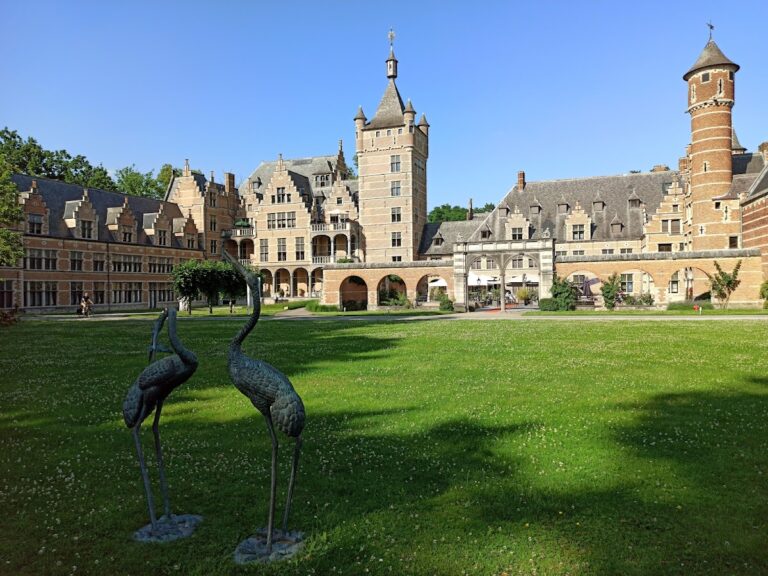
Sterckshof is a reconstructed Renaissance castle in Belgium, located in Deurne, Antwerp. Its origins reach back at least to the thirteenth century, while its present form recalls the sixteenth-century residence created by Gerard Sterck. The estate later became a museum complex and remains part of Rivierenhof park.
From Hooftvunder farmhouse to Sterckshof
At least from the thirteenth century, the site was occupied by the fortified Hooftvunder farmhouse, which stood within a moat. It probably helped defend a nearby wooden bridge over the Grote Schijn River. The estate included agricultural and water-related facilities, including ponds and a fishery.
Gerard Sterck acquired the property in 1524, when it was described as a farm with a house, brewery, moat, ponds, and fishery. He transformed it into a Renaissance castle with picturesque buildings, towers, and turrets, and gave it the name Sterckshof. Sterck was a merchant, banker, and confidential adviser to Charles V, the Habsburg emperor who ruled much of Europe, including the Low Countries, during the sixteenth century.
Among Sterck’s descendants was his grandson Guillaume de Berghes, bishop of Antwerp. A monument to Berghes in Antwerp Cathedral described him as a knight and lord of several estates, including Hooft-Vundere.
Decline and changing ownership
Jacob Edelheer, a later owner, furnished the castle with art and scientific collections. After Jacob van Lemens died childless in 1664, a dispute among the heirs contributed to the neglect of the estate. Although the castle avoided destruction during the wars of the sixteenth and seventeenth centuries, it was damaged or allowed to deteriorate during the War of the Austrian Succession from 1740 to 1748.
From 1693, Sterckshof belonged to the Jesuits of Lier. The Jesuits were members of the Society of Jesus, a Catholic religious order founded in the sixteenth century. After the order was suppressed, the estate was sold in 1776 to the banker Jan Baptist Cogels, who merged it with his Ter Rivieren estate. Following a long period of abandonment, the buildings had become ruins by the 1880s.
Reconstruction and museum history
The Province of Antwerp acquired the Ter Rivieren estate, including Sterckshof, in 1921 to create the present Rivierenhof park. Architect J. A. Van der Gucht submitted reconstruction plans in 1922. Work carried out during the 1930s used old images together with archaeological discoveries made at the site. The result was a twentieth-century reconstruction of the earlier castle complex rather than an unchanged survival of the historic building.
Several possible uses were rejected during this period. Deurne declined to use the building as its town hall, the provincial technical department considered it unsuitable in 1926, and a proposal to convert it into a dairy was abandoned.
An association founded in 1934 to establish a Museum of Flemish Civilization received the castle on 21 May 1938 and opened it to the public immediately. Joseph De Beer, its honorary curator, lived in the building and assembled collections covering archaeology, natural history, ethnology, arts and crafts, and art. State funding began in 1951. After De Beer died in February 1953, the association was liquidated and the Province of Antwerp took control.
The building first housed the provincial Museum of Arts and Crafts and later the Sterckshof Silver Museum. The latter presented metalworking techniques, religious and domestic uses of metalwork, and a silversmith’s workshop, alongside Belgian silver and pewter objects dating from the sixteenth century to the present and some antique furniture. The Silver Museum closed in 2014 because planning restrictions prevented its expansion. Its collections were merged with those of the Antwerp Diamond Museum to form DIVA, which opened in Antwerp city centre in 2018.
Since 1994, Sterckshof, its moat, and the land within the moat have been protected as a monument and townscape. In May 2025, the castle was sold for 4.5 million euros to a Dutch investment group.
Remains
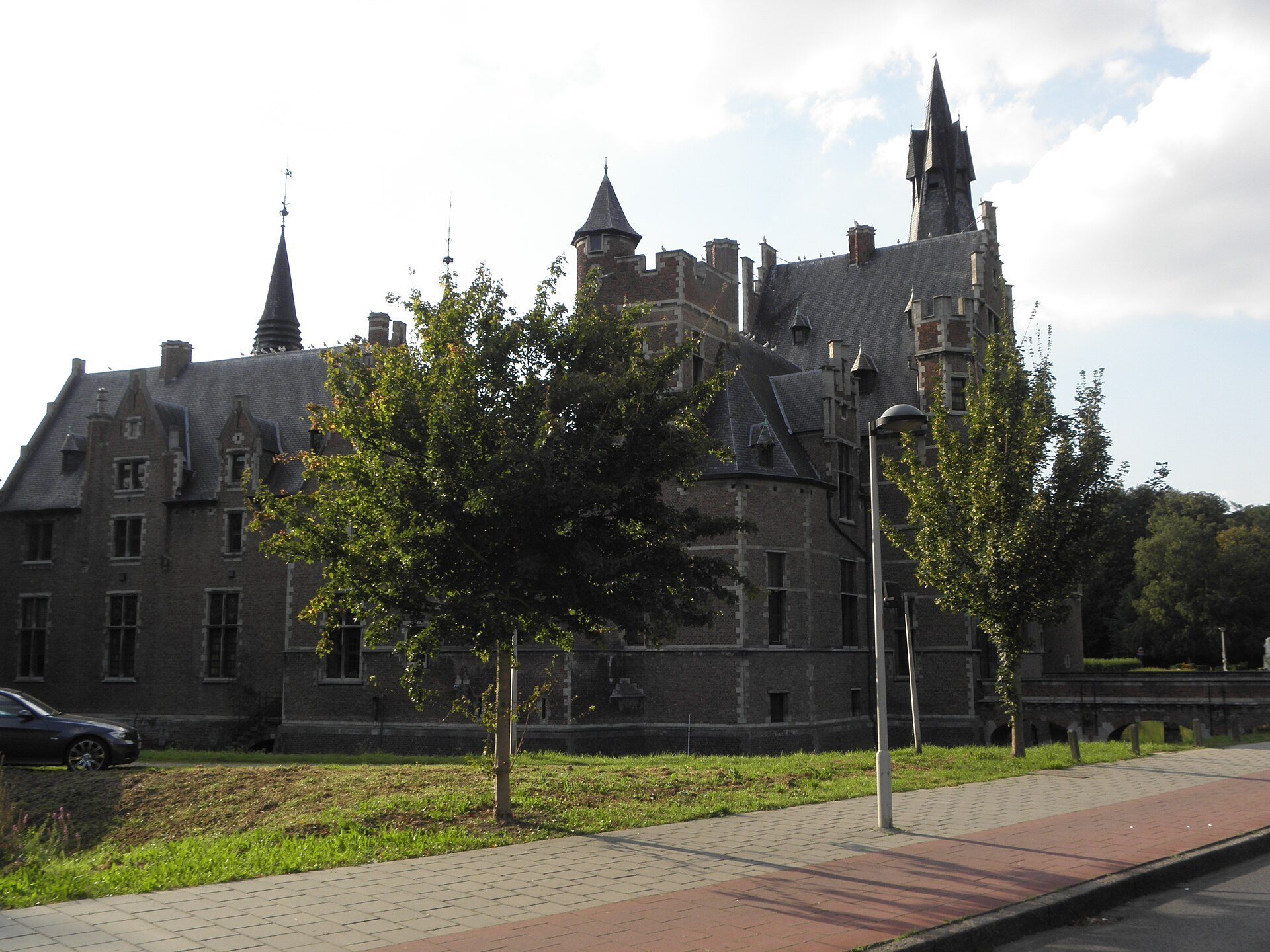
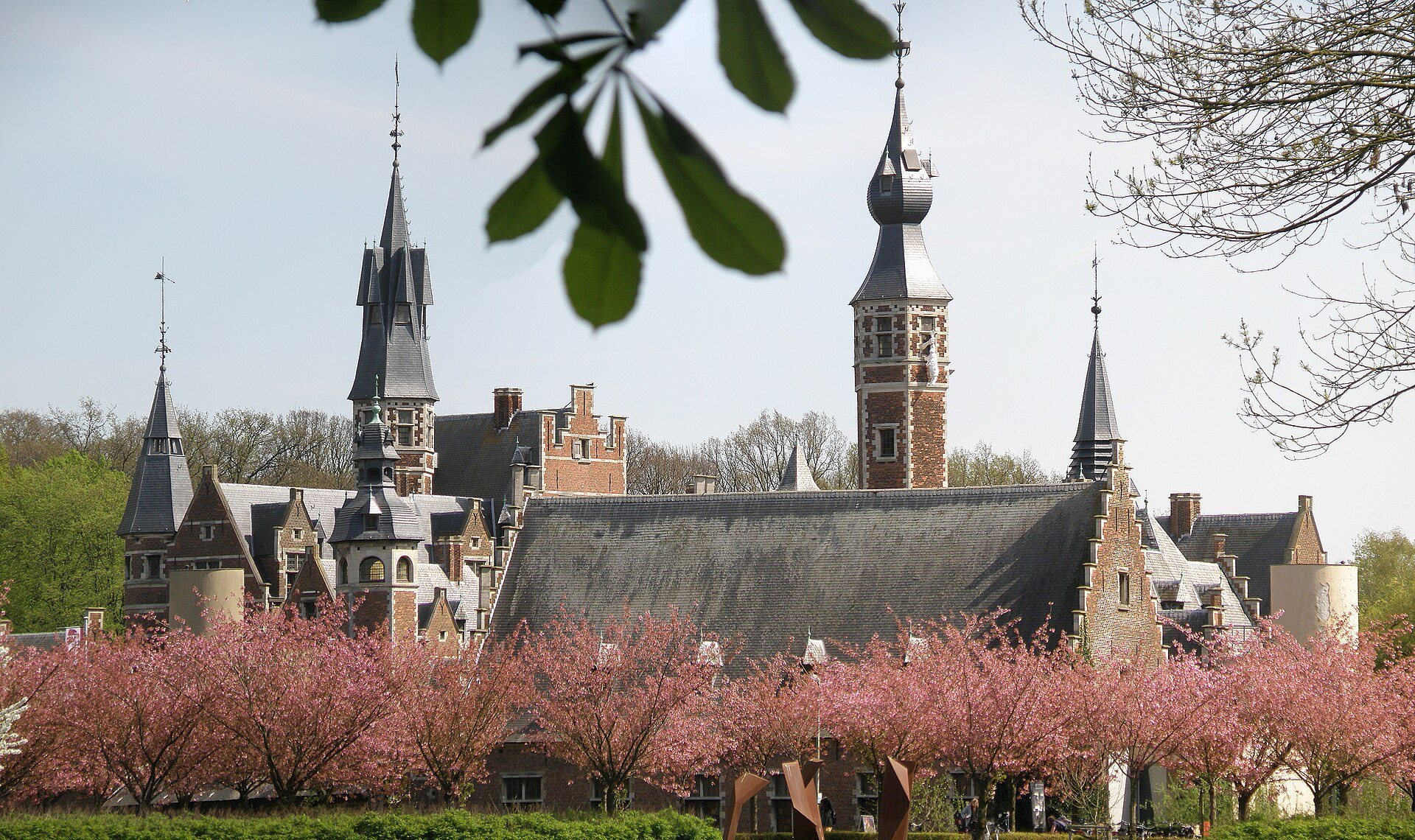
Sterckshof stands in Rivierenhof park at approximately 3 metres above sea level, about 6 kilometres east of Antwerp city centre. The reconstructed complex is arranged around courtyards and enclosed by a moat. Red-brick turrets, formal French-style gardens, and the surrounding water evoke the appearance intended for wealthy sixteenth-century residences.
Castle and water features
When the province acquired the estate in 1921, only the floor of a tower, the entrance gate, and several dilapidated ancillary buildings remained. Van der Gucht’s 1922 plans, archaeological discoveries, and old images guided the reconstruction of the castle during the 1930s. The surviving moat and the grounds within it remain part of the castle ensemble. The earlier estate’s ponds and fishery belonged to the same fortified agricultural complex.
Interiors and museum collections
Fragments from Antwerp town houses demolished during the 1950s were incorporated into the reconstructed castle’s interiors. During its museum use, the building contained displays and collections relating to archaeological remains, natural history, ethnology, arts and crafts, Belgian silver, and pewter. The silver displays also included a silversmith’s workshop, connecting the collections with the techniques and working environment they represented.