St. Paul’s Church: A Dominican Church in Antwerp
Site at a Glance
- Popularity
- Medium
- Country
- Belgium
- Primary era
- Early Modern
- Eras represented
- Early Modern
- Civilizations
- Duchy of Brabant, Habsburg, Holy Roman Empire, Spanish
- Site type
- Religious
- Remains
- Church
On this page23 sections
History
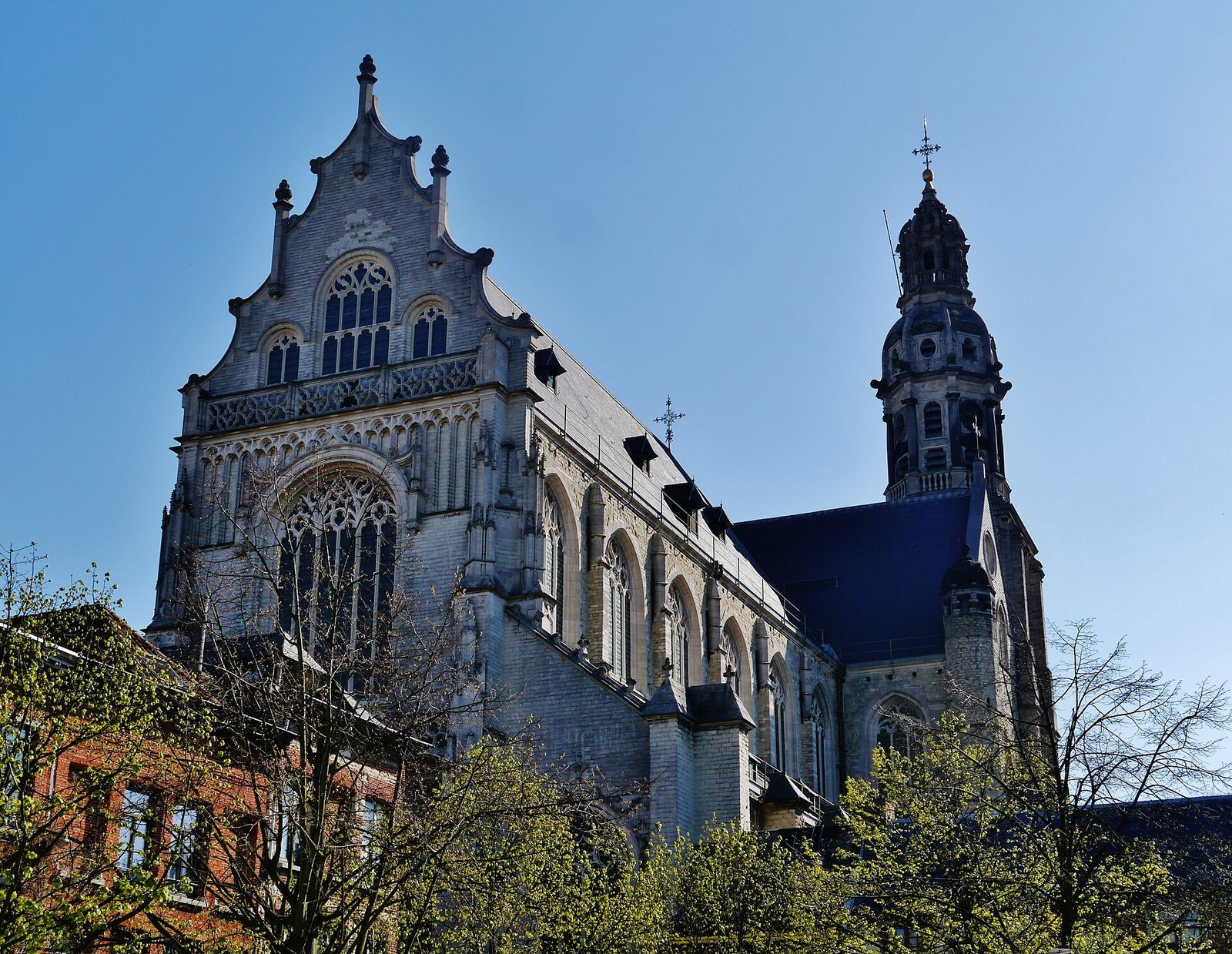
St. Paul’s Church is a Dominican church in Antwerp, Belgium, whose present building was completed in 1571. Its exterior is chiefly Brabantine Gothic, while its interior developed a richly decorated Flemish Baroque character. The Dominican Order, a Catholic religious community combining preaching with communal life, first established a smaller church near the Scheldt in Antwerp’s old city center, in a district once inhabited by sailors.
Foundation and construction
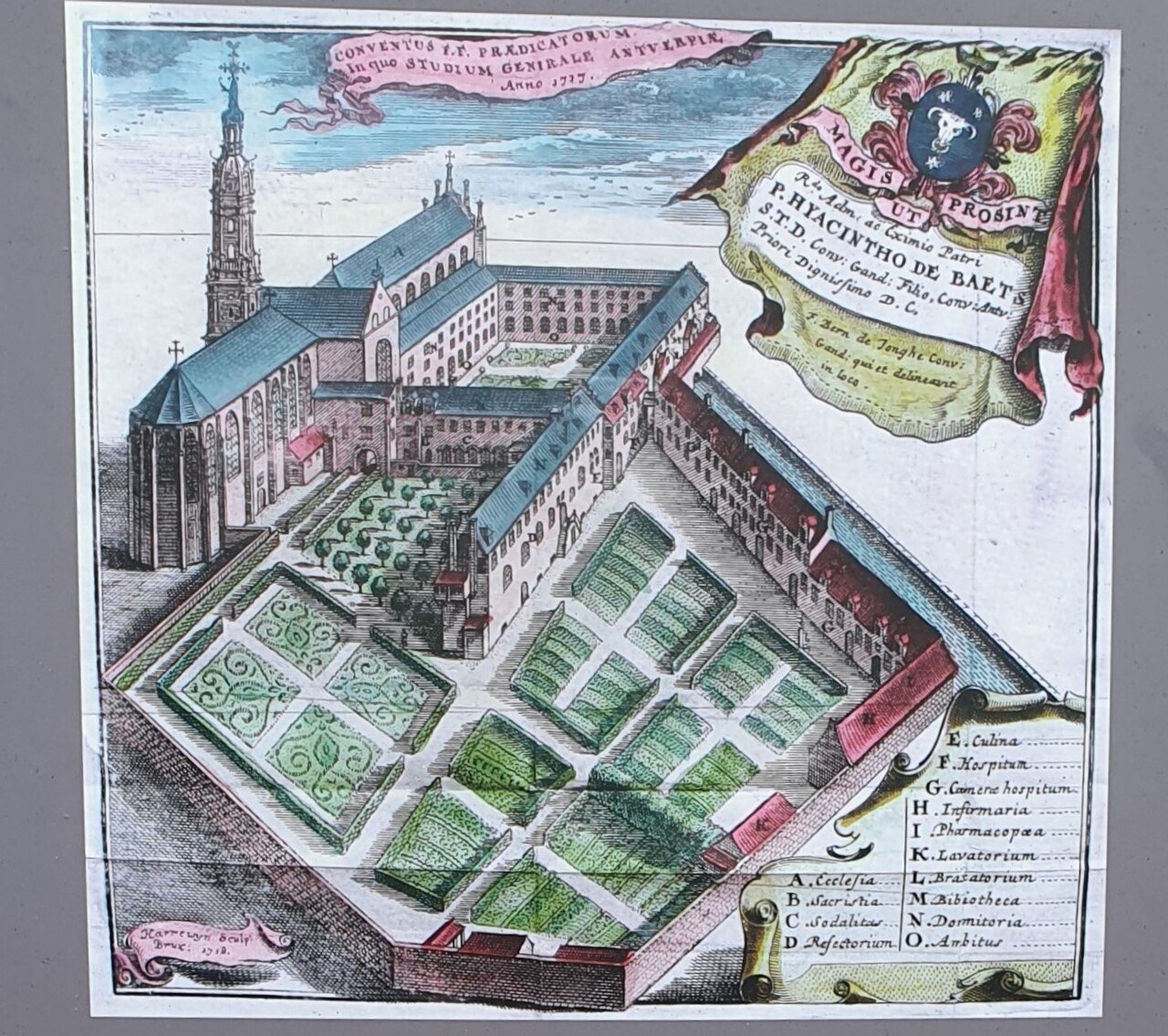
Albertus Magnus consecrated the first church in 1276. It was dedicated to Saint Paul, the patron saint of the Dominicans. A change in the Scheldt’s course later left the building vulnerable to flooding. Dominican prior A. van Leent therefore chose higher ground beside the existing church for a larger replacement. The plans were probably drawn by Domien de Waghemakere, who had also worked on Antwerp Cathedral; Rombout de Dryvere continued the project after de Waghemakere’s death.
The new church was partly in use by 1548, and the earlier building was demolished the following year. The replacement was completed and consecrated in 1571. A religious association, or confraternity, devoted to the Rosary was established that year in memory of the Battle of Lepanto, a naval victory in which the Holy League, an alliance of Catholic states, defeated the Ottoman fleet. A new Dominican monastery probably began to rise around the same time.
Disruption and rebuilding
In 1578, Calvinists, followers of a Protestant movement associated with John Calvin, gained power in Antwerp and expelled the Dominicans. The church and monastery were cleared. The church’s main body became a Calvinist place of worship, while parts of its cross-arms and altar area were demolished. Part of the monastery served as a cannon foundry.
During Alessandro Farnese’s siege of Antwerp in 1584, his forces built a bridge across the Scheldt to cut supplies to the city. Antwerp’s defenders tried to burn the bridge with fire ships and used material from the church’s cross-arms and choir as ballast. After the city fell in 1585, the Dominicans returned and began restoring the church and monastery.
The monastery’s first rebuilding phase ran from 1605 to 1616, and the complex was completed in 1662. Work on a larger choir and cross-arms began in 1618; the Bishop of Antwerp consecrated the choir in 1639. Baroque furnishings and decoration accumulated over the following decades, and the Venerable Chapel was completed in 1692. A fire in 1679 damaged the nave vaults and upper west facade. Repairs followed in 1680–81, when the tower’s Baroque top, designed by Nicolaes Millich, was completed.
The Calvary, a devotional sculptural ensemble depicting scenes from Christ’s Passion and Crucifixion, was created beside the church’s south side between 1697 and 1747. Its construction was finished in 1734, with further statues added over the next thirteen years.
Suppression and parish use
Caravaggio’s Madonna of the Rosary probably reached Antwerp through the Dutch art market in 1623. At the urging of artists including Peter Paul Rubens, Hendrick van Balen, and Jan Brueghel the Elder, the painting was donated to the church as an altar painting. In 1786, Emperor Joseph II claimed it for his art collection after ordering the closure of monasteries he considered unnecessary. The work is now in Vienna’s Kunsthistorisches Museum.
French occupiers seized Rubens’s Vision of St. Dominic and Theodoor Boeyermans’s Martyrdom of St. Paul from the main altar in 1794 and sent them to Paris. Napoleon assigned them in 1811 to museums in Lyon and Aix-en-Provence, respectively. The 1815 Congress of Vienna agreements did not bring their return, since Napoleon had allocated them to regional museums.
In 1796, French occupiers dissolved Dominican monasteries in the Southern Netherlands, and the church’s old records about the order, church, and monastery were lost. After the church was sold publicly, Dominican prior Peltiers bought it, preserving its furnishings. Antwerp’s city council took over the church, Calvary, and part of the monastery in 1802. The church became a parish in 1803, replacing the deteriorating St. Walburga Church, which was demolished in 1817.
Damage and later changes
Dutch forces damaged the church during the bombardment of Antwerp in 1830, in the Ten Days’ Campaign that followed the Belgian Revolution. In 1833, the 1654 rood screen, a partition between the nave and choir, was removed to open the view toward the choir.
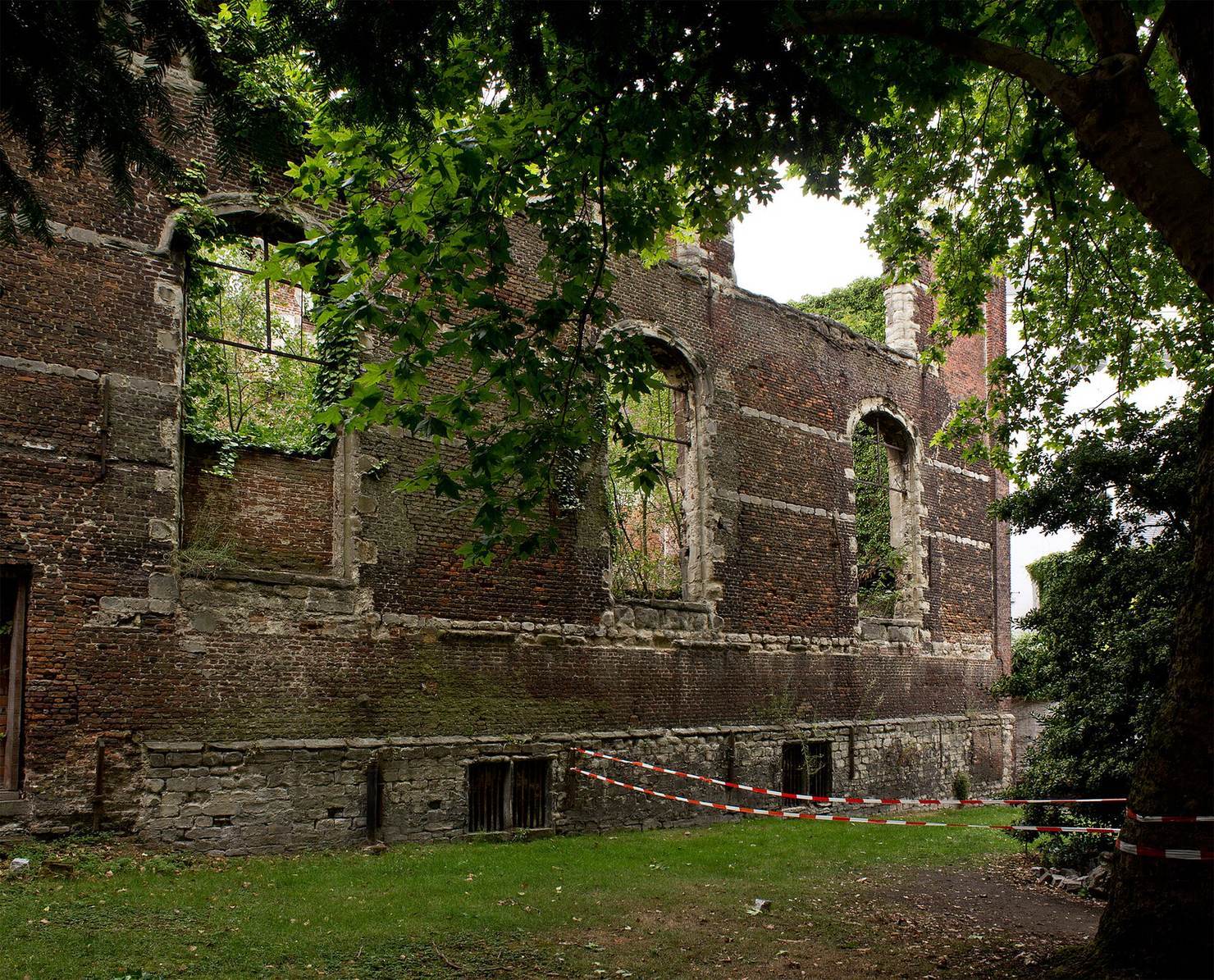
A fire in April 1968 destroyed the roof, damaged the vaults and interior, burned the top of the Baroque tower, and left three-quarters of the monastery in ruins. Extended restoration work followed.
Remains
The church stands at Veemarkt near the Scheldt. Its restrained Brabantine Gothic exterior contrasts with an interior richly decorated in the Flemish Baroque style. The interior walls are brick, while the outer walls and structural elements are built of Lede sandstone. The building’s principal spaces include the nave, or main body, the transepts, or cross-arms, and the chancel around the altar.
Main church
Exterior and entrance
The tower is topped by a Baroque structure, and a Baroque portal stands at the corner of Veemarkt and Zwartzustersstraat. Its sculpted panel above the doorway, dated 1734, was made by Jan Claudius de Cock. It shows Our Lady of the Rosary giving the rosary to Saint Dominic and Catherine of Siena.
Interior architecture
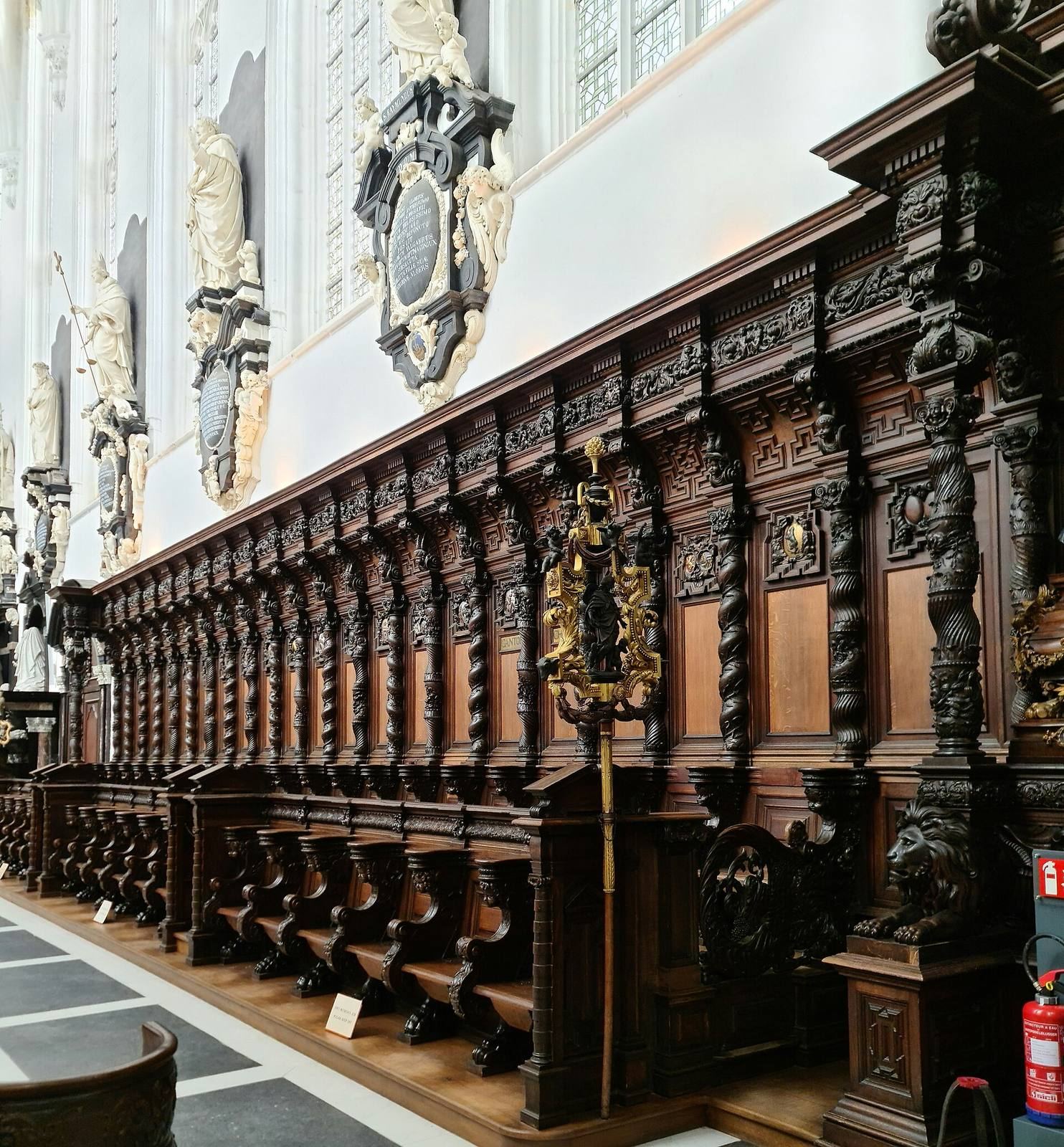
Cylindrical columns inside the church have capitals carved with cabbage-leaf patterns. A gallery occupies the west end of the nave. The combination of brick interior walls, sandstone exterior walls, and the church’s ornate furnishings brings together its Gothic structure and Baroque decoration.
Paintings and altar furnishings
Paintings
The church’s collection includes about fifty paintings. Its fifteen paintings on the Mysteries of the Rosary were made by eleven artists around 1617–18. Rubens organized Antwerp painters to create this series to flank the church’s central Rosary image. Other works include Cornelis de Vos’s Adoration of the Shepherds (1620), Artus de Bruyn’s Crowning with Thorns (1618), Rubens’s Flagellation of Christ (1617), and Jacob Jordaens’s Christ on the Cross (1618). The wider collection includes works by Anthony van Dyck, Frans Francken II, Abraham van Diepenbeeck, Gaspar de Crayer, David Teniers the Elder, and other Antwerp painters.
Main altar
Pieter Verbrugghen I and his son Pieter Verbrugghen II made the Baroque marble main altar around Rubens’s Vision of St. Dominic. The Dominicans commissioned Boeyermans’s Martyrdom of St. Paul in 1670. A hinged rotating mechanism allowed the two paintings to be displayed alternately. Cornelis Cels’s Descent from the Cross, completed in 1807, has occupied the place of the seized paintings since 1830.
Confessionals and choir sculptures
Ten oak confessionals made around 1659 by Pieter Verbrugghen I, his workshop, and other sculptors stand in groups of five along the two aisles. Statues flank each confessional, while connecting wood panelling gives each aisle wall the character of a continuous furnishing ensemble with a unified iconography. Between the choir windows are eight life-size white-stone sculptures of Dominican saints, made between 1631 and 1700 by Artus Quellinus the Elder, Verbrugghen, Jan Pieter van Baurscheit the Elder, and Andries Colyns de Nole.
Chapels and memorials
Chapel of the Holy Sacrament and the Sweet Name of Jesus
On the south side, this chapel has an altar carved by Pieter Verbrugghen I and a Rubens altar painting, The Disputation of the Holy Sacrament. A Baroque confessional by Willem Kerricx is also housed here. It originally stood north of the main entrance.
Chapel of Mary
The chapel on the north side has a Baroque altar begun by Huybrecht Van den Eynde, continued by his pupil Sebastiaen de Neve, and completed by Jan Pieter van Baurscheit the Elder in 1728. Its twisted marble columns carry rising branches with Marian plant designs and many miniature child figures and cherubs. Rubens’s Adoration of the Shepherds serves as the altar painting, and the chapel also contains van Baurscheit’s white-marble Our Lady of Sorrows.
Tombs
The church contains elaborate tomb monuments attributed to Johannes van Mildert, Pieter Verbrugghen II, and Andries Colyns de Nole. Those buried there include Jean de Béjar, an Antwerp mayor, and Michael Ophovius, a Dutch cleric.
Organ and windows
Organ
Nicolaes van Haeghen made the organ in 1650. Its monumental case was sculpted by Pieter Verbrugghen I to a design by Erasmus Quellinus II. Following later alterations and restorations, the instrument has 49 stops, three hand keyboards, and a foot keyboard.
Windows and west gallery
The church’s seventeenth-century stained-glass windows were designed by Abraham van Diepenbeeck and destroyed in the 1830 bombardment. A gallery had been built at the west end of the nave before the rood screen was dismantled.
Calvary
Courtyard and sculptural groups
The Calvary occupies the site of an old Dominican cemetery outside the church. Built as a courtyard, it adjoins the south aisle and the Chapel of the Holy Sacrament. Its 63 life-size statues and nine reliefs form four groups: an ascending angel path leading to the Holy Sepulchre; a garden of prophets on the left; a garden of evangelists on the right; and the Calvary itself, an artificial rock raised in three terraces, with Christ on the cross at its summit.
Figures and materials
The ensemble has a popular, theatrical character. Most of its statues are carved from white stone, while others are wood; some bear dates or signatures. Michiel van der Voort the Elder, Alexander van Papenhoven, and Jan Claudius de Cock were its principal sculptors. Other works are by Willem Kerricx and his son Willem Ignatius Kerricx, Jan Pieter van Baurscheit the Elder, and anonymous collaborators.