Castell de Clariana de Cardener: A Strategic Medieval Fortress in Spain


Site at a Glance
- Rating
- 3.9
- Popularity
- Very Low
- Country
- Spain
- Primary era
- Medieval
- External website
- Open
- Eras represented
- Medieval
- Civilizations
- Unclassified
- Site type
- Military
- Remains
- Castle
On this page8 sections
History
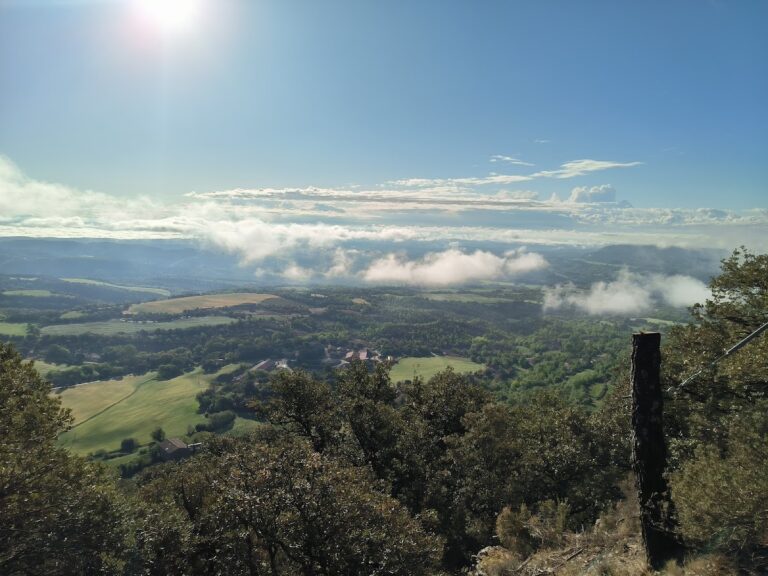
Castell de Clariana de Cardener is a medieval fortress in Spain, positioned above the Flotats plain where the Cardener and Riu Negre meet. Its hilltop location gave it a strategic role, including the ability to exchange signals with the castles of Navès, Solsona, Pinós, and Cardona.
Cardona lordship and early records
The castle belonged to the viscomital family of Cardona and stood within the territorial jurisdiction of the Cardona bailiwick. The Cardona lords also held several allods, or parcels of free property, in the surrounding area. An aprisio record dated 879–890 mentions both Clariana and Cardona, providing an early reference to the two fortifications.
In 1010, Arnulf, bishop of Vic, referred in his testament to property he held at Cardona and Clariana. Viscount Bermon I transferred the castle, its fief, and its allod to his brother Guillem in 1026. In 1086, Ramon Folc included “Cleriana” among several castles in a bequest. By the early thirteenth century, the knight Arnau de Cardona was lord of the castle.
Castellans and changing jurisdiction
Senfred Duran is among the earliest recorded castellans, the officials who administered and defended castles for their superior lords. In 1073, he and his wife, Rotruda, donated property to the church of Solsona. The associated document also refers to a fortification or guard post at the southeastern end of the territory.
The Brull, or Descatllar, family later held the castle, while the Cardona family retained both high and low jurisdiction, meaning judicial authority over serious and lesser legal matters. The place consequently became known as Clariana del Ducat. Guillem del Brull and his wife, Sibil·la, were castellans in 1296, and the Brull castellany, the office and jurisdiction attached to the castle, continued until 1415.
The creation of the County of Cardona in 1375 confirmed the counts’ superior lordship. The Brull lineage was again connected with the lordship in 1506, when it belonged to Pere del Brull, castellan of the nearby Castle of Abella.
Religious and municipal changes
During the final period of the old feudal order, Clariana’s tithes, customary payments to a religious institution, belonged to the Hospital of Cardona. Until the nineteenth century, the parish territory formed part of the wider territory of Cardona. It was incorporated into the municipality of Cardona in 1844, but protests subsequently led to Clariana’s separation.
The original church associated with the castle was dedicated to Sant Serni, also known as Sant Sadurní, forms of the dedication to Saint Saturninus. Bishop Eriball, who was also a viscount of Cardona, consecrated it during his episcopate between 1035 and 1040. Between 1040 and 1154, the church depended on the collegiate church of Sant Vicenç de Cardona, a church served by a community of canons rather than monks.
The church’s religious role continued through medieval and early modern donations. In 1102, Bernat Bermont bequeathed the produce of Clariana’s vineyards to Sant Sadurní de Clariana. Pope Anastasius IV confirmed the possessions of the canons of Cardona, including the church, in 1154. In August 1214, Arnau de Cardona left the church the tithes from his local allods.
A new church with the same dedication was constructed between 1902 and 1905. The nearby church was abandoned in 1927, following the construction of the new building. Castell de Clariana de Cardener is protected as a Cultural Asset of National Interest and a historical monument. It is also registered as a Spanish Asset of Cultural Interest under reference RI-51-0006309 and in the Catalan Architectural Heritage Inventory under code 773.
Remains
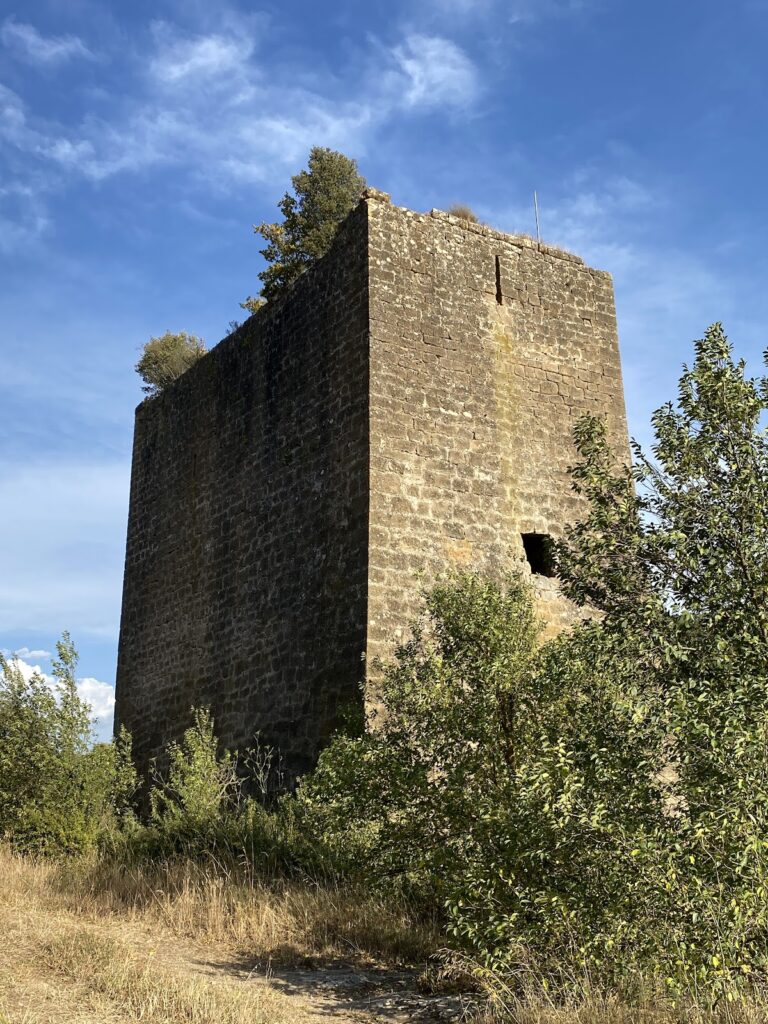
The castle stands at 598 metres above sea level on a hill at Dalt la costa, northwest of Clariana de Cardener. The surviving complex is severely damaged and intermingled with later constructions. Its remains combine a square keep above the former entrance portal with the church of Sant Serni, which was incorporated into the fortress and formed part of its defensive system.
Fortress structures
Square keep and entrance
The characteristic surviving element of the fortress is a square-plan keep positioned above the former entrance portal. Its elevated placement belongs to the defensive organization of the complex, although the castle as a whole survives in a severely damaged condition and is mixed with later building work.
Church of Sant Serni
Sant Serni is a rectangular, single-nave church incorporated into the castle ruins. It has a barrel vault, a continuous curved ceiling extending along the length of the building, and no separately articulated apse. The plan and interior structure have undergone numerous adaptations. The earliest associated date is 1035, when a property sale in the lower Lord valley described holdings adjoining the parish of Clariana to the south.
The church’s main altarpiece was made by the sculptor Josep Riera in 1651. The building now survives as part of the damaged fortress complex, where its position and construction helped reinforce the castle’s defensive arrangement.
Nearby sites