Burg Steinegg: A Medieval Castle Ruin in Germany


Site at a Glance
- Rating
- 3.5
- Popularity
- Very Low
- Country
- Germany
- Primary era
- Medieval
- Eras represented
- Medieval, Early Modern
- Civilizations
- Holy Roman Empire
- Site type
- Military
- Remains
- Castle
On this page5 sections
History
Foundation and changing ownership
Burg Steinegg is a medieval castle ruin near Bonndorf in Germany, built in the twelfth century by the Lords of Steinegg. These nobles were ministerials, legally unfree service officials who could nevertheless hold influence through military and administrative duties, serving the dukes of Zähringen, a powerful southwestern German ducal dynasty.
After the Lords of Steinegg died out, the castle passed to the Counts of Nellenburg. It later changed hands several times, reflecting the shifting ownership of noble estates during the medieval period.
Destruction in 1525
During the German Peasants’ War, a widespread uprising against social, economic, and political conditions in the German lands, Burg Steinegg was destroyed in 1525 together with nearby Burg Roggenbach. The castle was not rebuilt. In Bonndorf, the two ruins are often referred to collectively as the Roggenbach castles.
Remains
Ridge fortifications and keep
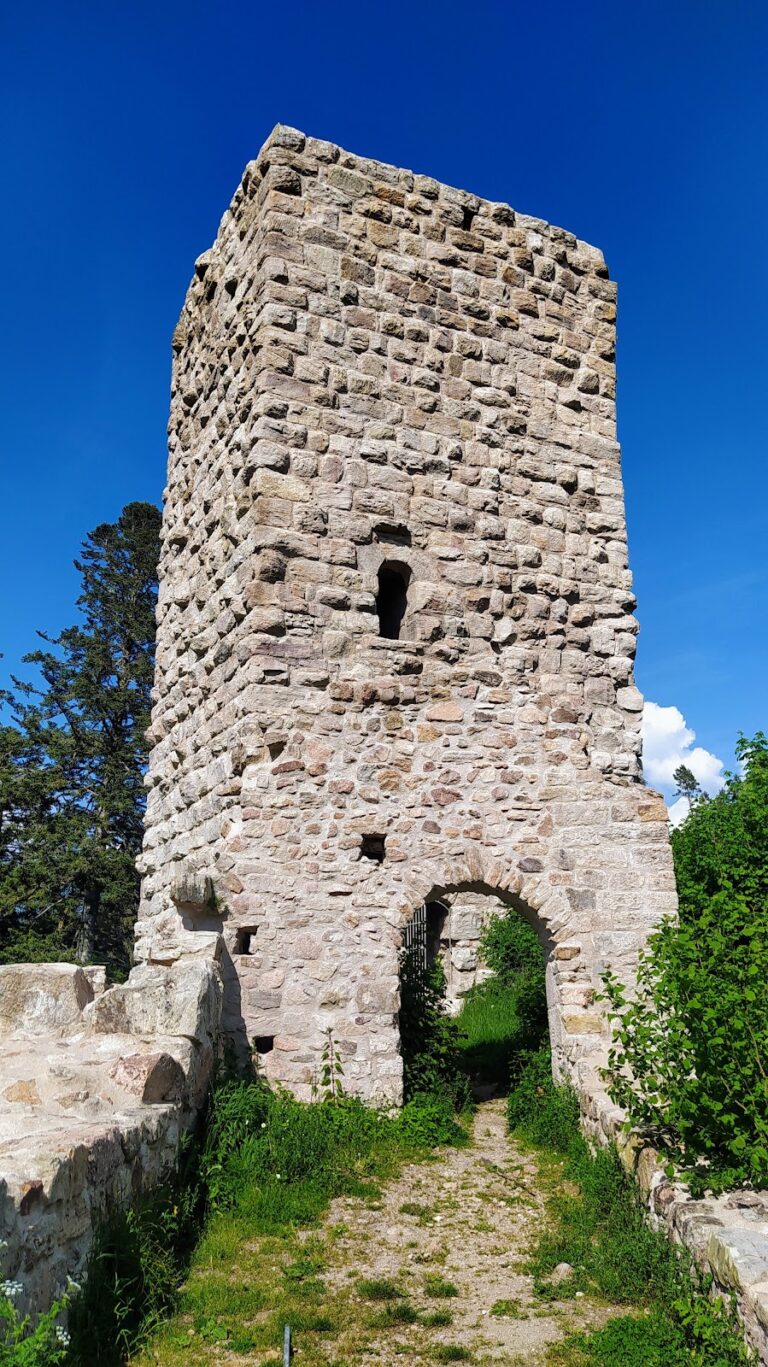
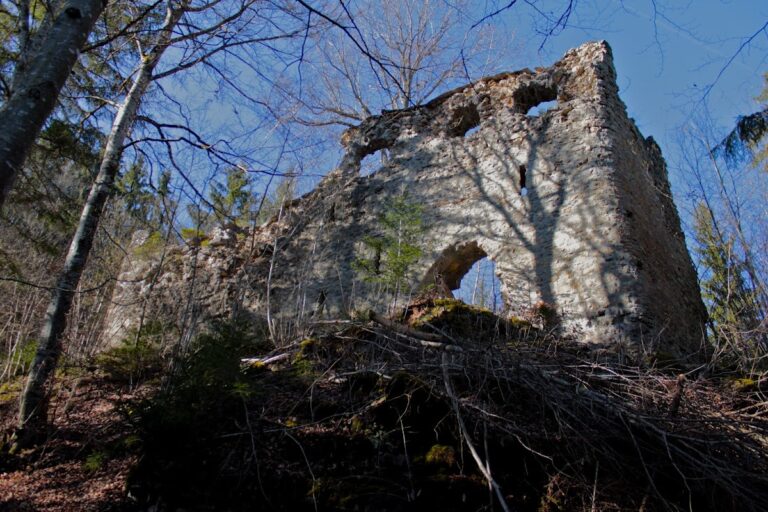
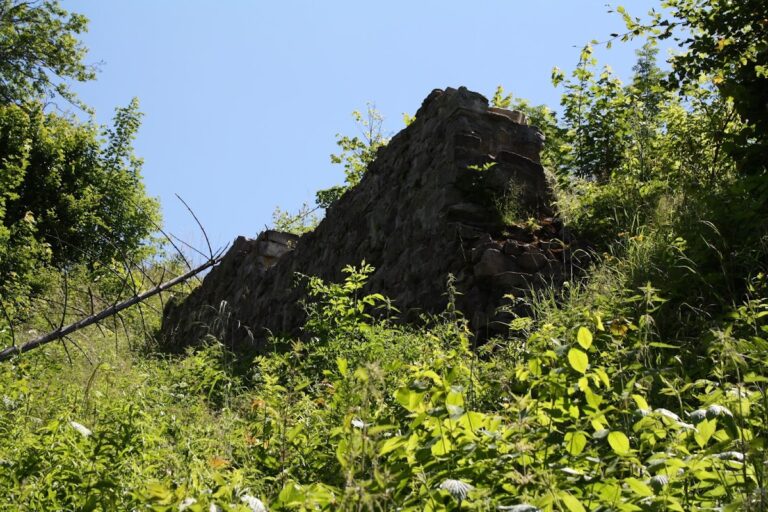
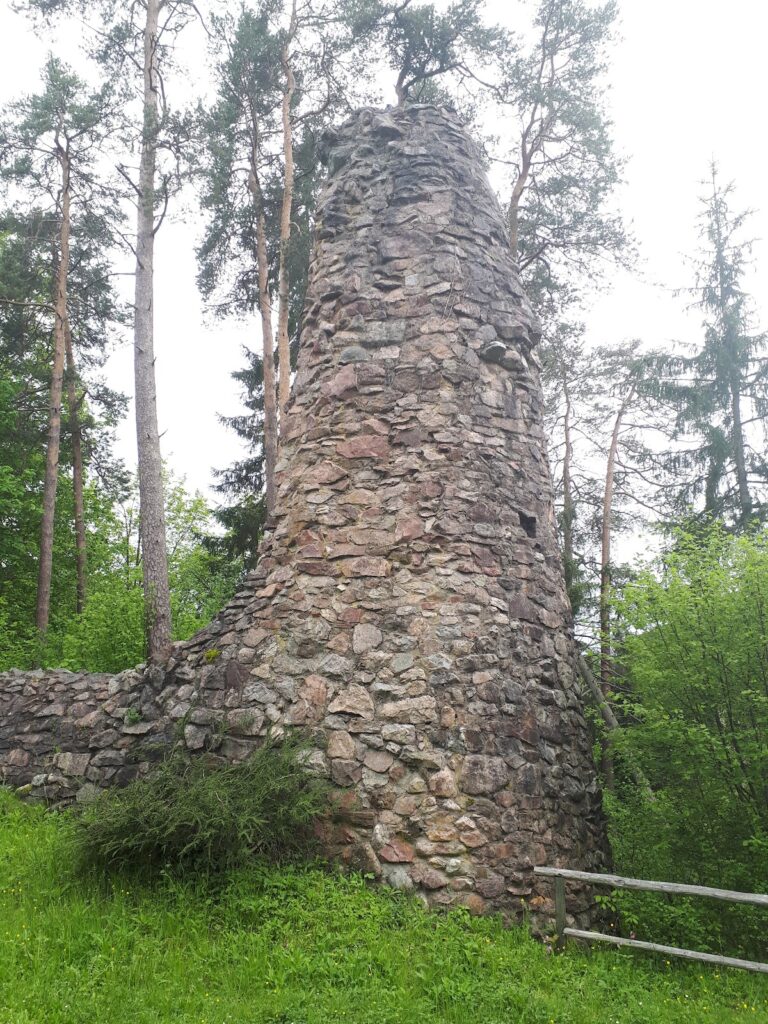
The ruin stands on a mountain ridge at about 720 metres above sea level near Wittlekofen, a district of Bonndorf in Baden-Württemberg. Burg Roggenbach lies approximately 400 metres away. The surviving layout includes the keep, part of a wall that originally stood about 6 metres high, and a neck ditch, a defensive trench cut across a ridge or narrow approach, measuring about 20 metres deep.
The square keep measures 9 by 9 metres, with walls approximately 3 metres thick. Its red sandstone construction uses bossed ashlar, carefully dressed blocks whose central faces project outward to create a rough, bulging surface. In the eighteenth century, an opening was cut at ground level through the wall at one corner. The space inside is lined with carefully smoothed stone blocks. It has been interpreted as a treasure chamber, archive, or dungeon, but its original purpose was the castle’s emergency cistern.
Nearby sites