Burg Kempe: A Probable Customs and Refuge Castle in Saxony


Site at a Glance
- Rating
- 3.9
- Popularity
- Very Low
- Country
- Germany
- Primary era
- Medieval
- Eras represented
- Medieval
- Civilizations
- Holy Roman Empire, Margraviate of Meissen
- Site type
- Military
- Remains
- Castle
On this page5 sections
History
Origins and decline
Burg Kempe is a late-medieval castle ruin in Germany, in Mahlitzsch, now part of Roßwein in Saxony. The castle is generally dated to the 14th century, although its probable construction is also placed in the 13th century. A castle at the site was first documented in 1220. It was probably built as a customs and refuge castle and served as the ancestral seat of the von Mals family.
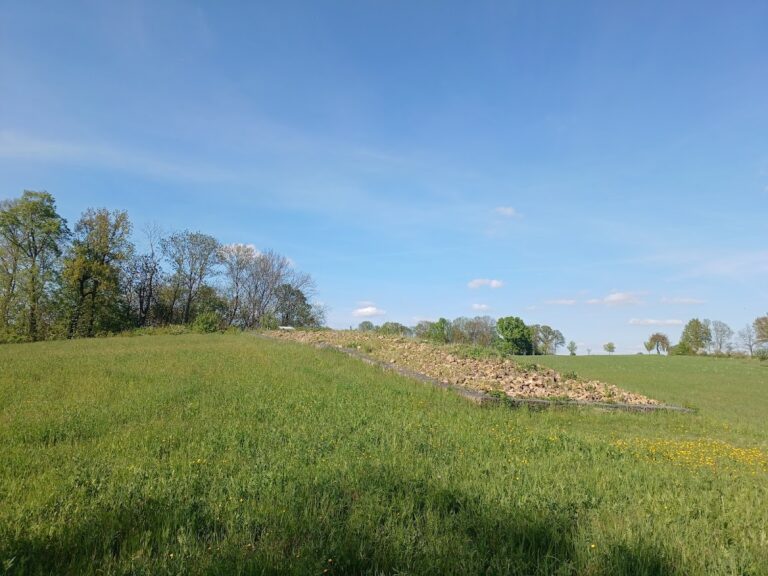
The castle began to decline from 1298. Its surviving fabric now consists of ruins and sections of masonry. Since 2000, Burg Kempe has been privately owned. The ruin is protected as a heritage monument in Saxony and is also entered in the local monument register.
A legend connected with Burg Kempe tells of Jule, the daughter of a wealthy knight. After her father refused alms to a woman and had her driven away, Jule was transformed into a serpent. According to the tradition, she can be released only once every hundred years, at midnight as one century changes to the next, by the kiss of a courageous young man. The legend says that no one has yet dared to attempt it.
Remains
Hilltop castle structure
The ruin stands on slate rock directly above the Freiberg Mulde. It was a hilltop castle with a residential tower, a tower that combined defensive and domestic functions. The former structure had three levels and was entered through an elevated entrance positioned above ground level and reached by stairs or a ladder. Its lowest level had no windows and probably served as a dungeon or storage room.
Water supply and surviving masonry
Burg Kempe possessed its own underground water supply, which could have helped the castle withstand a siege for a longer period. The remains preserve ruined sections and surviving masonry from the former castle, including the physical evidence of its elevated tower structure.