Hoheneck Castle: A Medieval Hill Castle and Historic Administrative Seat in Bavaria


Site at a Glance
- Rating
- 4.3
- Popularity
- Very Low
- Country
- Germany
- Primary era
- Medieval
- External website
- Open
- Eras represented
- Medieval
- Civilizations
- Holy Roman Empire
- Site type
- Military
- Remains
- Castle
On this page8 sections
History
Hoheneck Castle is a medieval hill castle in Germany above Ipsheim, Bavaria, whose earliest known reference dates to 1132. Its history includes service as a Hohenzollern administrative center, destruction during a fifteenth-century war, and later use by nationalist and Nazi organizations before its conversion into a youth educational center.
Medieval origins and territorial administration
Hoheneck first appears in written records in 1132, when Dietmar de Hohenekke was named in the founding charter of Heilsbronn Monastery. This reference is also the earliest known mention of Hoheneck as a place. In 1381, Arnold von Seckendorff sold the castle, along with surrounding land and forest, to Frederick V, Burgrave of Nuremberg.
A few years later, Frederick established the Oberamt Hoheneck, a higher-level territorial administrative district. Its later jurisdiction included the Vogtamt of Lenkersheim, an office administered by a bailiff, the Kastenamt of Ipsheim, which managed princely revenues and estates, and the Schultheißenämter of Markt Bergel and Burgbernheim, local administrative offices concerned with municipal and judicial duties.
From the fifteenth century, Hoheneck was under Hohenzollern control. The Hohenzollerns were the ruling dynasty associated with Brandenburg and later the Prussian monarchy. In subsequent centuries, Brandenburg institutions and then institutions of the Prussian crown operated at the castle. By the end of the eighteenth century, the Brandenburg-Bayreuth Vogtamt of Lenkersheim exercised high jurisdiction, while the Kastenamt of Ipsheim held manorial lordship over the castle. The Oberamt Hoheneck was later absorbed into the Kammeramt of Ipsheim during the period of Prussian administration.
War and municipal change
Hoheneck was burned in 1462 during the war between Margrave Albert III of Brandenburg and the bishops of Würzburg. The conflict formed part of the struggles between Brandenburg interests and the ecclesiastical rulers of Würzburg, and the fire became a major destructive event in the castle’s history.
Bavarian municipal reforms subsequently altered Hoheneck’s administrative affiliations. In 1811, it was assigned to the Ipsheim tax district, and in 1817 to the rural municipality of Ipsheim. Under the Second Municipal Edict of 1818, it belonged to Eichelberg. Hoheneck was incorporated into the market municipality of Ipsheim on 1 July 1972.
Nationalist and Nazi-era uses
Munich publisher Julius Friedrich Lehmann bought the castle in the early 1920s. Hoheneck then became a venue for the Bund Oberland, a German paramilitary association, including leadership conferences in 1924 and 1927. The April 1924 meeting involved Friedrich Weber, Gustav Sondermann, Josef Römer, and August Winnig. From 4 to 6 June 1927, Willy Liebel led a meeting of the Altreichsflagge at Hoheneck, where General Erich Ludendorff and his wife, Mathilde Ludendorff, delivered nationalist speeches.
On 18 November 1927, the burial of Munich police president Ernst Pöhner took place in the nearby Heroes’ Grove. Adolf Hitler and Joseph Goebbels were among those present. From 1928, Hoheneck served as a training center for the Sturmabteilung, or SA, the Nazi Party’s paramilitary organization in southern Germany.
The castle also hosted major Nazi Party events. A Whitsun district gathering in June 1930 was attended by Julius Streicher, Adolf Hitler, and General Franz Xaver von Epp. On 18 January 1932, Hoheneck hosted the first Middle Franconian SA leadership preparatory school, involving Julius Streicher, Wilhelm Stegmann, and Willy Liebel. Historian Manfred Kittel identified the castle’s nationalist influence as one factor in the development of western Middle Franconia as a stronghold of National Socialism.
Modern ownership and use
In 1936, the Reich Veterinary Chamber, the professional body representing veterinarians in the German Reich, acquired Hoheneck and converted it into a training castle for Reich veterinarians. The City of Nuremberg has owned the castle since 1953. Since April 1984, the Nuremberg City District Youth Council has operated it as a youth educational center, with educational work focused on history and medieval fortresses.
Hoheneck has been predominantly Evangelical Lutheran since the Reformation, the sixteenth-century movement that produced Protestant churches, and it remains attached to the parish of St. John the Baptist in Ipsheim. Its Catholic residents belong to the parish of St. Boniface in Bad Windsheim.
Remains
Hilltop setting
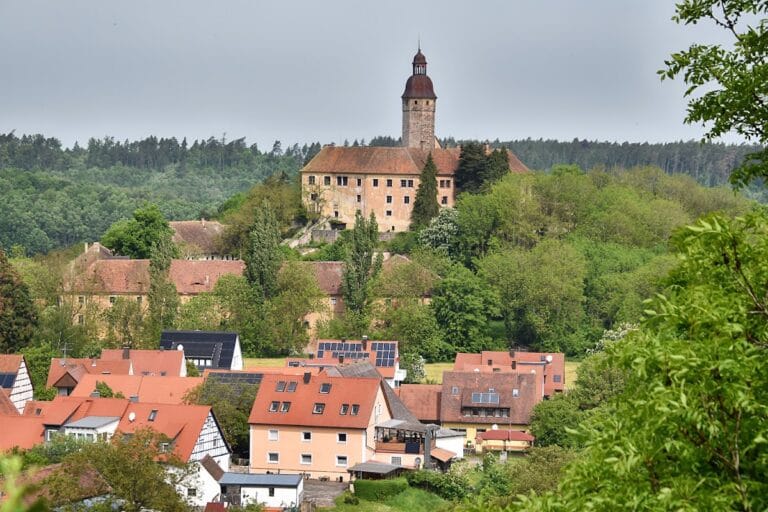
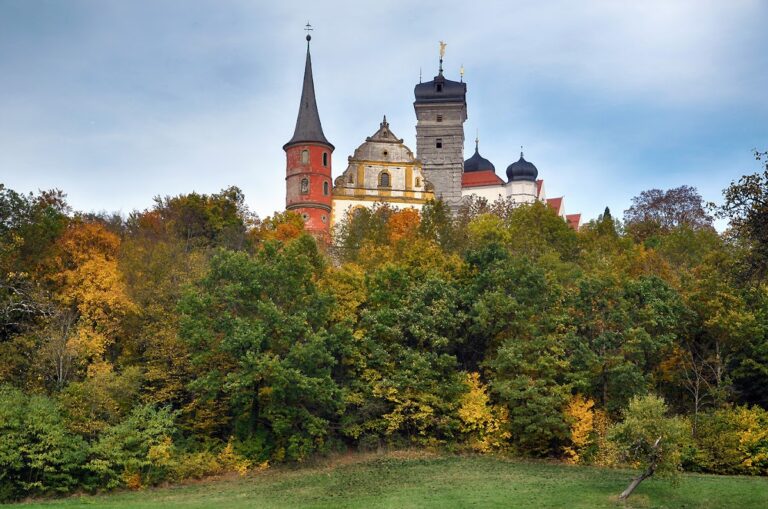
Hoheneck stands at approximately 410 metres above sea level in a spur-top position above the Aisch valley, on the rise of the Frankenhöhe. A spur-top castle is a fortified site placed on a projecting ridge or spur. The complex lies within the wooded Frankenhöhe upland and natural park, with extensive Hoheneck Forest to the east and a wine-growing area of central Middle Franconia at the foot of the uplands.
Surviving castle complex
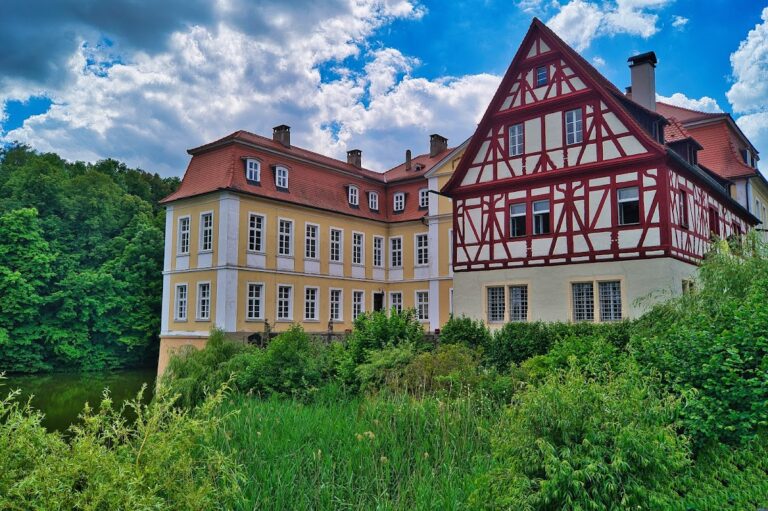
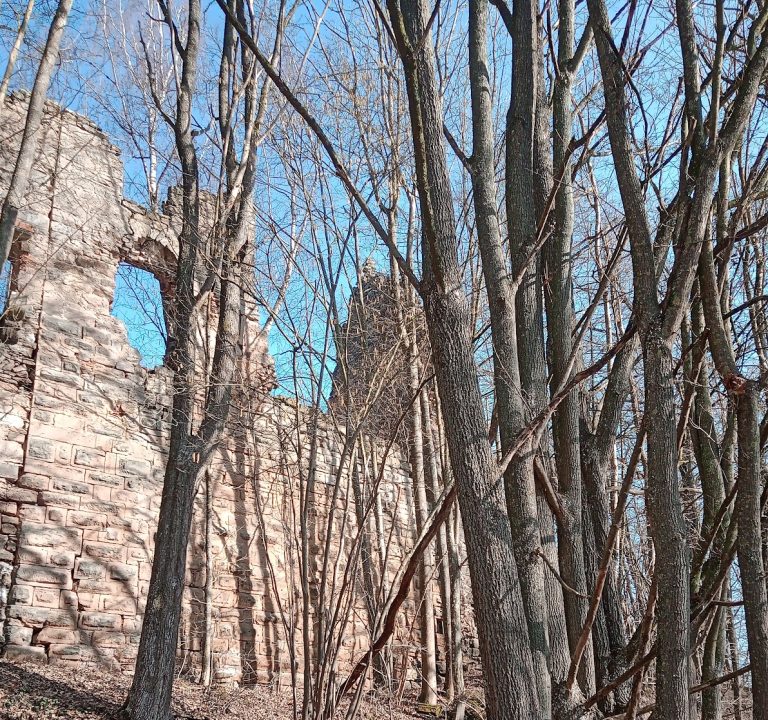
The preserved and restored castle complex includes a gate, an inner courtyard, a half-timbered gallery, and a main building. These elements form the surviving physical arrangement of the medieval hilltop site, while the restored fabric allows the complex to continue serving its educational purpose.