Forte di Canarbino: An Italian Defensive Fortress Overlooking the Gulf of La Spezia

Site at a Glance
- Rating
- 4.2
- Popularity
- Low
- Country
- Italy
- Primary era
- Modern
- External website
- Open
- Eras represented
- Modern
- Civilizations
- Italian
- Site type
- Military
- Remains
- Fort
On this page5 sections
History
Forte di Canarbino is a defensive fortress in Italy, built by the Kingdom of Italy between 1870 and 1880 as part of the fortified system of the Gulf of La Spezia. Its purpose was to protect the La Spezia Military Maritime Arsenal, a naval industrial and logistical complex constructed between 1862 and 1869. The fort originally carried the military identification code S.840, and its strategic role continued until after the Second World War.
Foundation and coastal defence
From its establishment, Forte di Canarbino formed part of the military protection of the arsenal and the Gulf of La Spezia. Its original armament comprised 28 cannons, including 14 Model 149 G guns. These weapons gave the installation a substantial artillery role within the wider defensive network created by the Kingdom of Italy.
Antiaircraft command
The growth of military aviation in the early twentieth century led to the installation of new antiaircraft positions, armed with 76/40 mm guns. Antiaircraft artillery was designed to engage aircraft. Forte di Canarbino became the headquarters of the Eastern Group Command of the antiaircraft batteries, with the positions at Baccano, Santa Teresa, Maramozza, and Rocchetta under its command.
During the Second World War, particularly after 1943 under the Italian Social Republic, a German-backed Italian state that existed from 1943 to 1945, the fort received new Ansaldo 90/53 mm guns. After the war, it lost its military function. The property is now privately owned and used as a shooting range.
Remains
Setting and construction
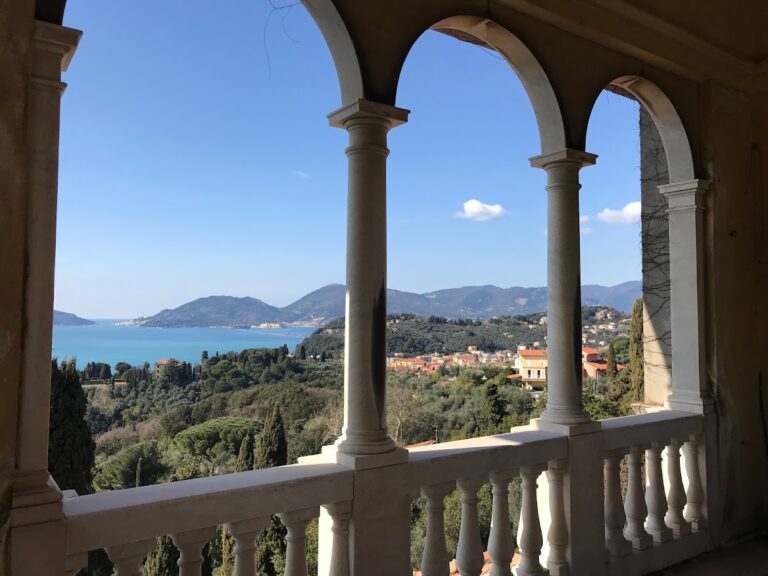
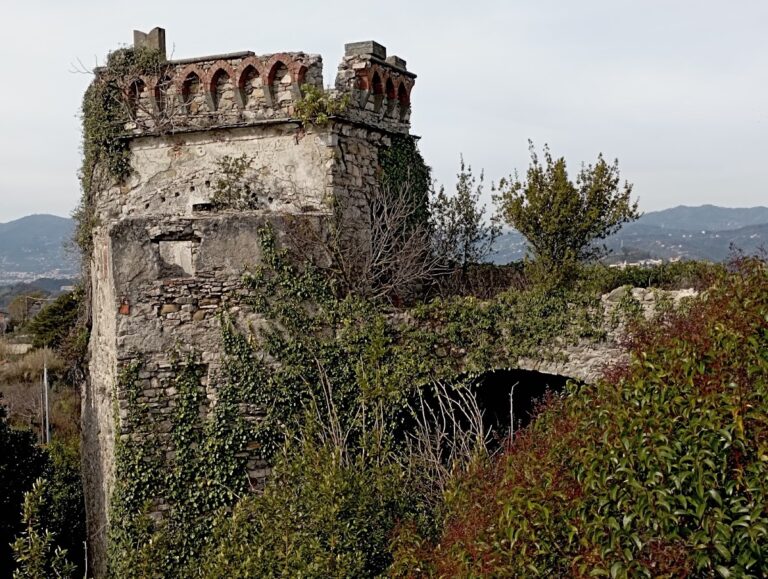
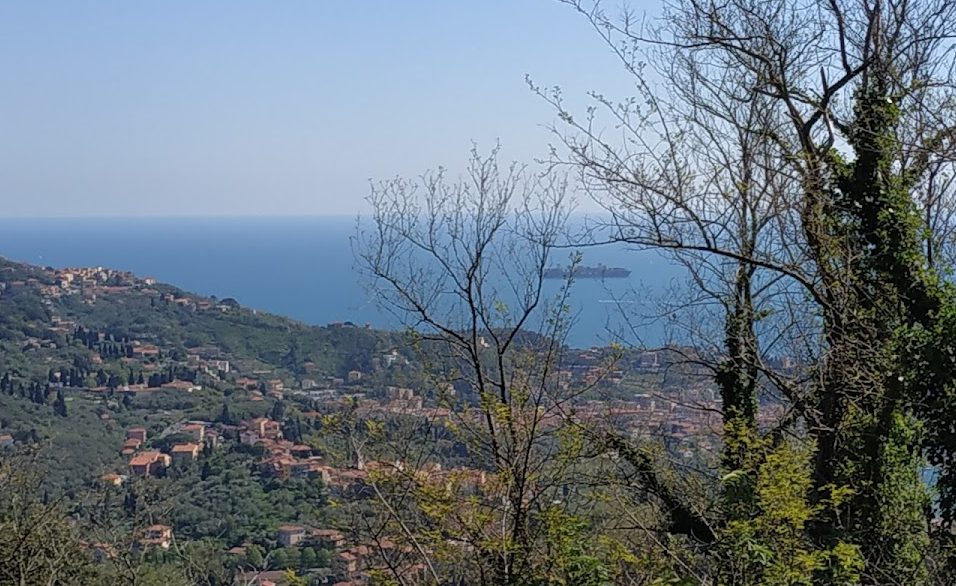
Forte di Canarbino stands in the municipality of Arcola, in the Magra Valley of the Province of La Spezia. The fortress occupies elevated ground 260 metres above sea level, behind the coastal village of San Terenzo in Lerici, with views over the Gulf of La Spezia. Vegetation typical of Mediterranean scrub largely conceals the installation.
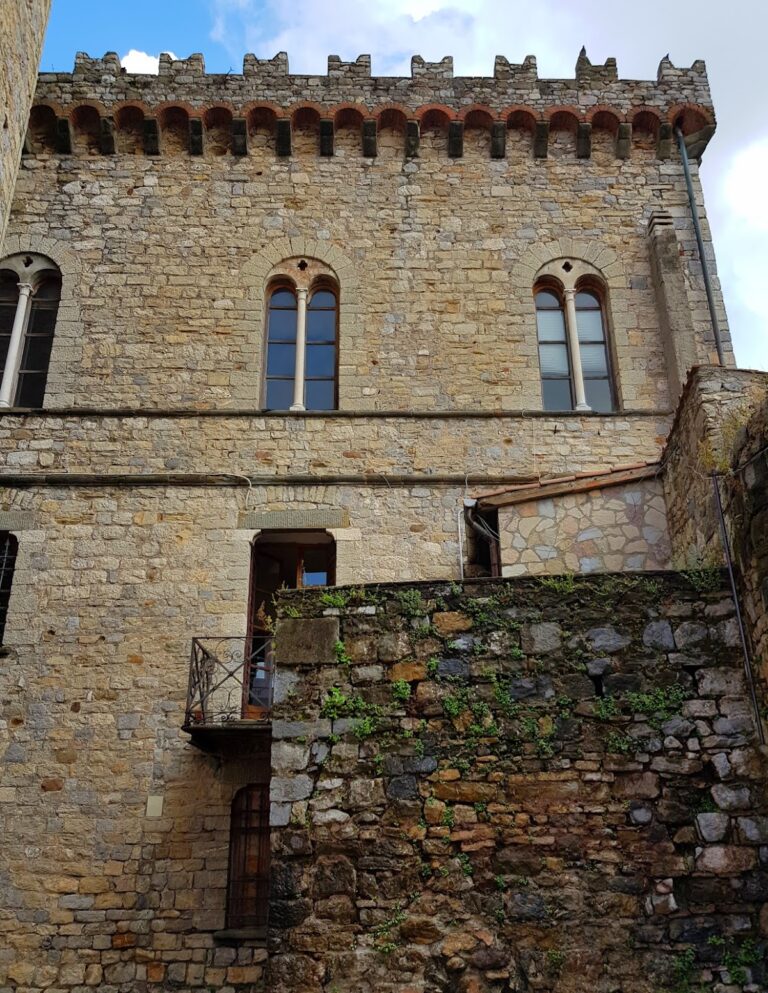
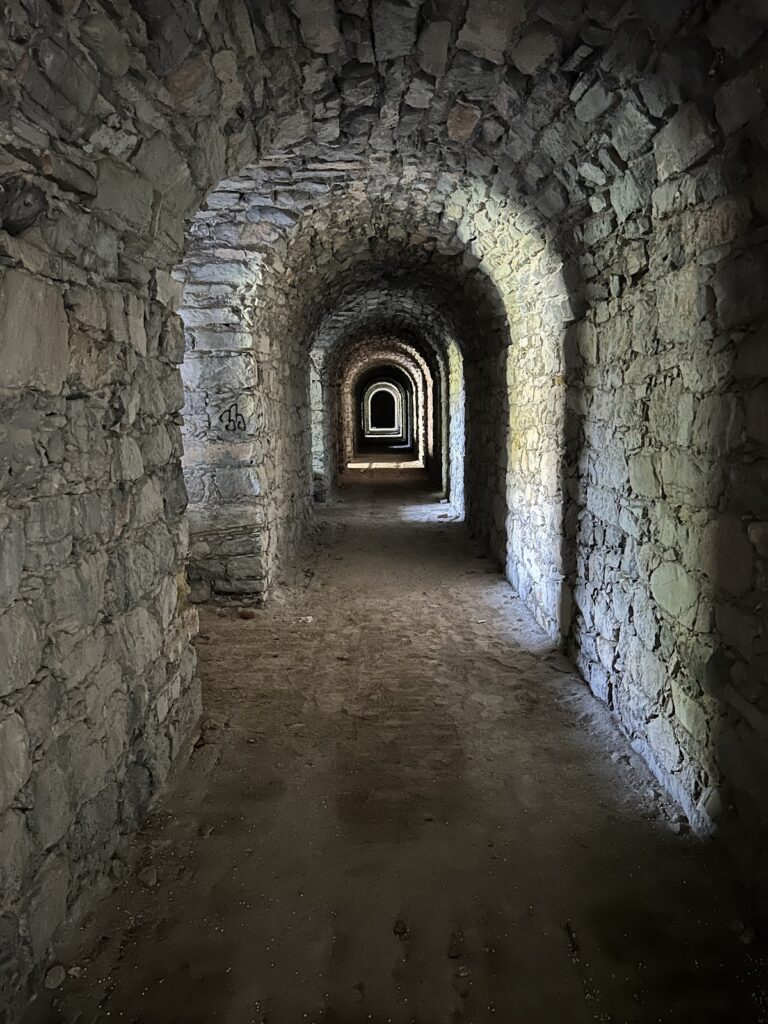
The surviving structure is a defensive fortress built from local stone. Its present condition reflects its adaptation to another use rather than continued military service, and the site remains associated with its later function as a shooting range.
Nearby sites