Fort 53a “Winnica”: An Auxiliary Armored Fort in Kraków


Site at a Glance
- Rating
- 4.4
- Popularity
- Low
- Country
- Poland
- Primary era
- Modern
- External website
- Open
- Eras represented
- Modern
- Civilizations
- Habsburg
- Site type
- Military
- Remains
- Fort
On this page6 sections
History
Fort 53a “Winnica” is an auxiliary armored fort in Kraków, Poland, built in 1898–1899 as part of the Kraków Fortress, a system of military forts and defensive works constructed around the city. It was the last of the close-defense armored forts in the system, and its design solutions later served as prototypes for combat shelters and fortified groups during the interwar period.
Alongside Fort 38 “Skała,” Fort 53a “Winnica” was one of only two mountain-type forts in the Kraków Fortress. This type of fort was designed for elevated terrain, adapting its defensive arrangement to the shape of a hill. During the First World War, underground caverns and trenches were added in the foreground of the fort.
The fort was entered in Poland’s register of monuments under number A-800 on 2 March 1989. Cleanup and repair work is currently being carried out at the site.
Remains
Fort Layout
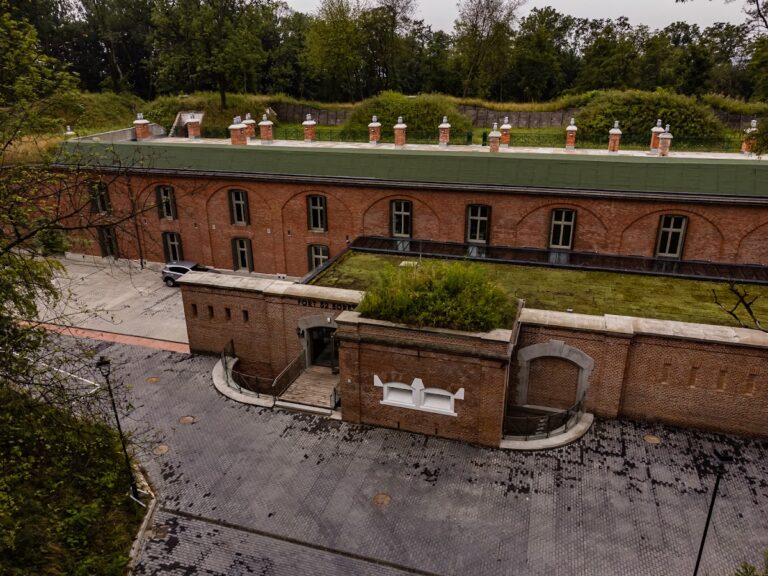
The fort occupies Winnica Hill at 234 metres above sea level, in the area of the former villages of Kostrze and Skotniki. It now stands approximately 300 metres west of Winnicka Street in Kraków. A bridge over the moat leads to the courtyard through a preserved original entrance gate. The courtyard was enclosed by front barracks that also functioned as a combat shelter.
Entrance and Barracks
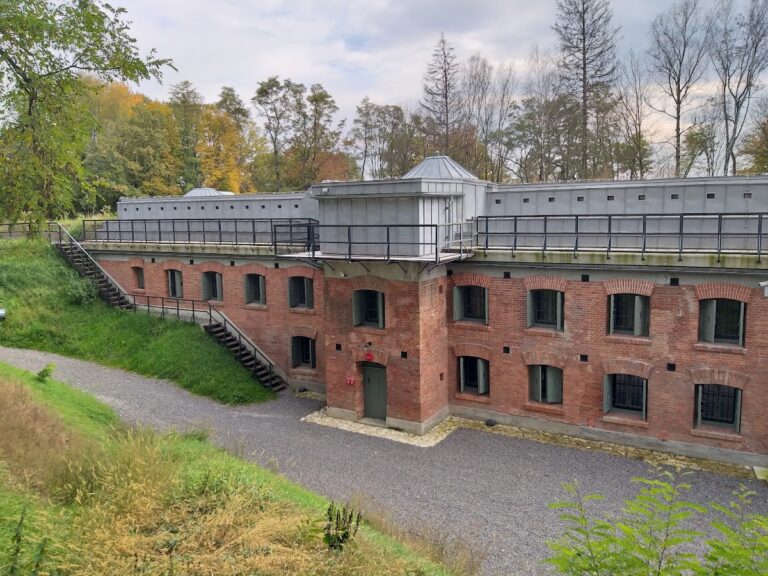
The barracks are a two-storey building of mixed construction. Along the facade, a firing gallery projects outward above the building. It continues into firing positions on the infantry parapet, a raised protective earthwork from which infantry could fire under cover.
Armored Turrets and Flanking Position
Fort 53a “Winnica” is among the few Kraków Fortress forts where armored turrets survive. An armored fort used protected defensive elements, including gun or observation turrets. The fort also includes a tradytor, a fortified firing position designed to direct flanking fire along a defensive obstacle such as the moat.
First World War Defensive Works
The underground caverns and trenches constructed in the fort’s foreground during the First World War form an additional layer of its defensive remains.
Nearby sites