Palace in Kryspinów: A Neo-Renaissance Residence in Poland


Site at a Glance
- Rating
- 3.3
- Popularity
- Very Low
- Country
- Poland
- Primary era
- Modern
- Eras represented
- Modern
- Civilizations
- Habsburg
- Site type
- Domestic
- Remains
- Elite Residence
On this page4 sections
History
Earlier Site and Nineteenth-Century Construction
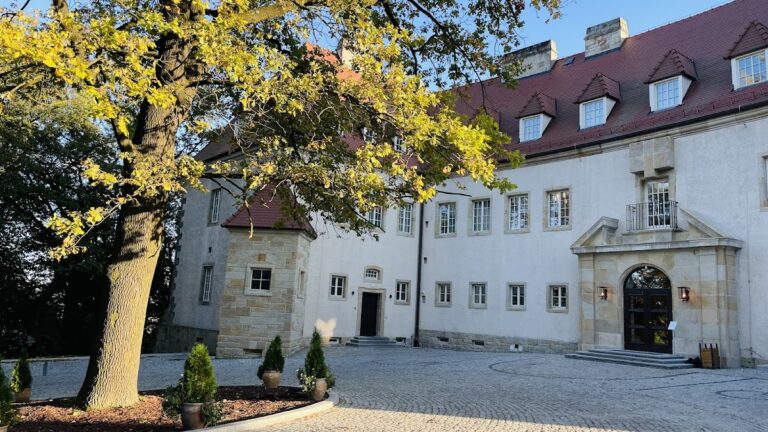
The Palace in Kryspinów is a historic residence in Poland, built in the late nineteenth century in the Neo-Renaissance style, which revived forms associated with Renaissance architecture. It stands in Kryspinów, a village in the Lesser Poland region, on a site occupied by a palace around the transition from the eighteenth to the nineteenth century.
The present building was commissioned by its first owner, Jan Skirliński, and designed by the architect Zygmunt Hendl. Its construction incorporated masonry walls from the earlier palace, linking the nineteenth-century residence physically with the building that had occupied the site in the preceding period.
Ownership and Changing Uses
After Skirliński died, his heirs sold the palace to the Suski family of Kraków. Ownership later passed through their heirs and members of the Jaworski, Madeyski, and Czechowicz families.
Following the Second World War, the palace was nationalized, meaning that it was brought into state ownership, and used as a state children’s home. During the 1950s, it first belonged to a communal machine centre and later to a state machine centre, both public institutions that provided agricultural-machinery services.
In the mid-1990s, the palace briefly came under the ownership of the commercial company PROMEROL. It then returned to the heirs of the Suski family before passing to private owners. The building is currently undergoing restoration. The palace and its surrounding park, including the ponds, were entered in the register of protected immovable monuments of the Lesser Poland region. The palace received registration on 14 March 1968 under number A-658/M.
Remains
The Palace in Kryspinów is a nineteenth-century Neo-Renaissance building set within a park containing ponds. Its form belongs to the revival of Renaissance architectural ideas during the nineteenth century, while its fabric also preserves masonry walls incorporated from the earlier palace on the site. The relationship between the residence, the park, and the ponds remains part of the property’s physical character. Restoration is in progress.