Drottningskär Citadel: A Seventeenth-Century Naval Fortification in Sweden


Site at a Glance
- Rating
- 4.5
- Popularity
- Low
- Country
- Sweden
- Primary era
- Early Modern
- Eras represented
- Early Modern
- Civilizations
- Swedish
- Site type
- Military
- Remains
- Citadel
On this page6 sections
History
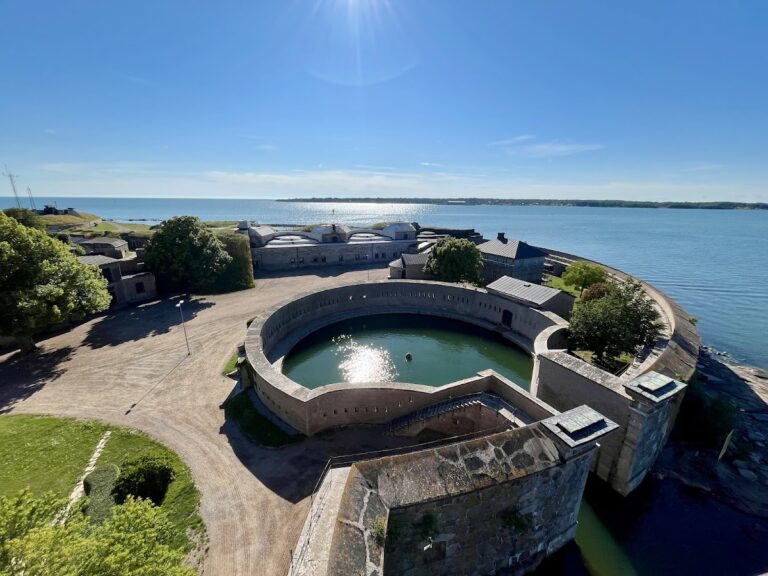
Drottningskär Citadel is a Swedish defensive fortification on Aspö, about 5 kilometres east of Karlskrona. Construction began in 1680 and was completed in the late seventeenth century to protect the 1,200-metre-wide sea route to Karlskrona’s new naval base. Designed and built by the military engineer Erik Dahlbergh, it formed part of a defensive system with the larger Kungsholm Fort on the opposite side of the passage, between Aspö and Tjurkö.
Defence of Karlskrona
Together, Drottningskär Citadel and Kungsholm Fort secured the maritime approach to Karlskrona. During its 300-year history, the citadel never fired a shot against an enemy and was never destroyed. Admiral Horatio Nelson, the British naval commander, reportedly described it as impregnable.
Protection and continued preservation
Drottningskär Citadel was designated a state monument on 25 January 1935. It is also included as a monument in the national antiquities register, while its status as a government building complex was recorded on 6 December 2007.
Remains
Stone fortification and defensive works
The main building rises three storeys and is built of grey natural stone. Four bastions, projecting parts of a fortification designed to provide defensive fire along adjoining walls, surround it. They are named Maria, Hedvig, Ulrica, and Christina after Swedish queens. The citadel also contained quarters for the personnel who operated the cannons and rooms for storing gunpowder.
An earthwork embankment, a raised defensive structure made mainly from packed earth, encloses the courtyard on the sea-facing side. Additional rooms for officers and soldiers were built into this embankment, integrating accommodation with the defensive structure.
Courtyard and surviving appearance
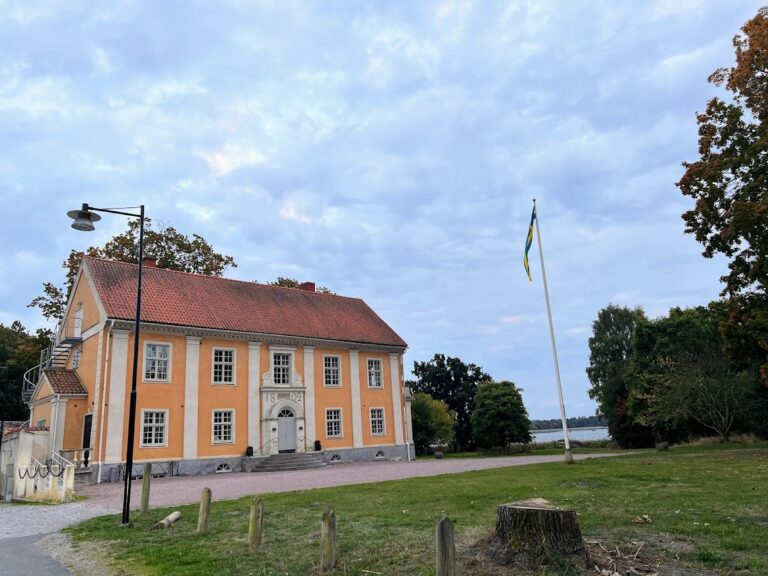
A wooden house for the commander was erected in the courtyard around 1720. The citadel is well preserved and retains the appearance of a seventeenth-century fortification.