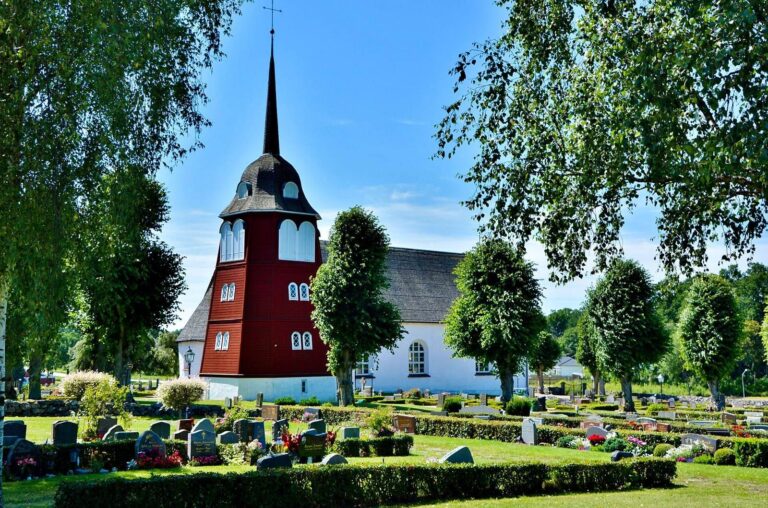
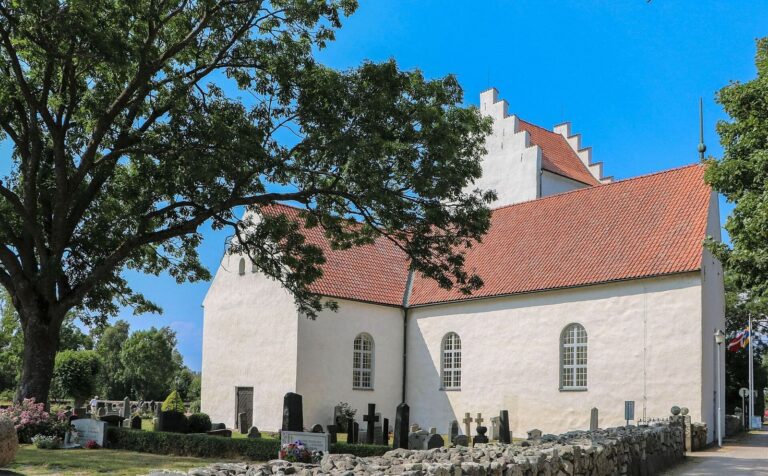
Ramdala Church: A Medieval Church in Sweden
Site at a Glance
- Country
- Sweden
- Primary era
- Medieval
- Eras represented
- Medieval, Early Modern
- Civilizations
- Danish, Swedish
- Site type
- Religious
- Remains
- Church
On this page13 sections
History
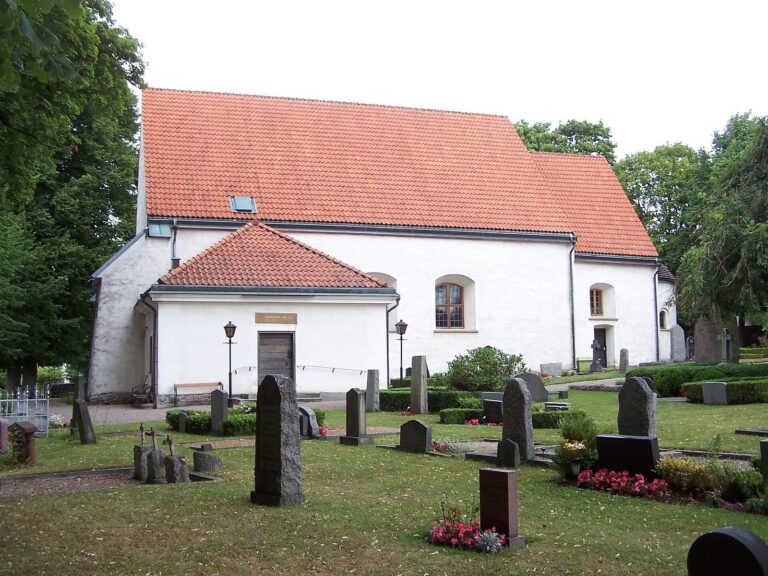
Ramdala Church is a medieval church in Ramdala, Sweden. Its consecration is dated to the 12th century, while the present building dates to the 13th century or somewhat earlier. The church belongs to Ramdala Parish in the Church of Sweden’s Diocese of Lund, an ecclesiastical district under a bishop. It was the most lavishly built medieval church in Östra Härad, a historical Swedish territorial and judicial district.
Medieval origins
The builder is unknown. The present church may have replaced an earlier 12th-century apse church, a church with a rounded projection at its end; the earlier building was either demolished or altered before the present one took its place. Ramdala Church stood apart from the village, which lay to the northeast across a swampy plain that often flooded. This separation has prompted the suggestion that the church was built for an estate’s elite rather than as a village church.
A possible connection is the Premonstratensian abbey at Vä, part of a 12th-century religious order whose clergy followed a shared rule. The abbey owned an estate in Ramdala Parish. In 1182, Bishop Valdemar of Schleswig, the brother of the Danish king, donated that estate to the abbey. The earliest indirect written evidence for a church at Ramdala comes from a papal letter issued at Avignon on 3 April 1320. It records that Engelbert Ennikini succeeded Provost Holmger as provost at Ramdala. A provost was a senior church official.
Later alterations
The western tower was probably demolished during the 16th century. The nave walls were lowered, its vaults removed, and a timber roof supported by wooden columns installed. A renovation in 1946 brought a wall painting to light.
Remains
Medieval layout and fabric
Plan and setting
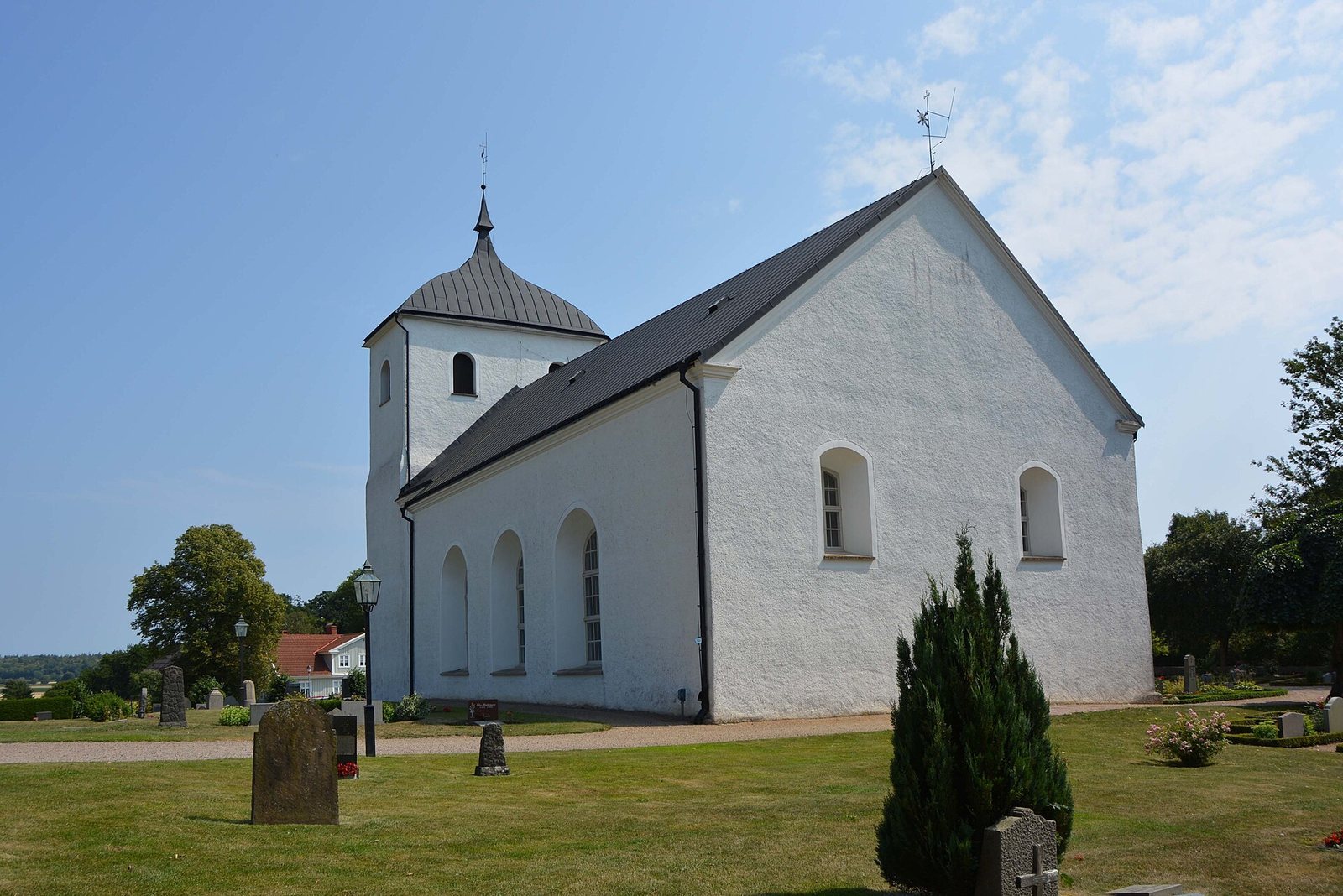
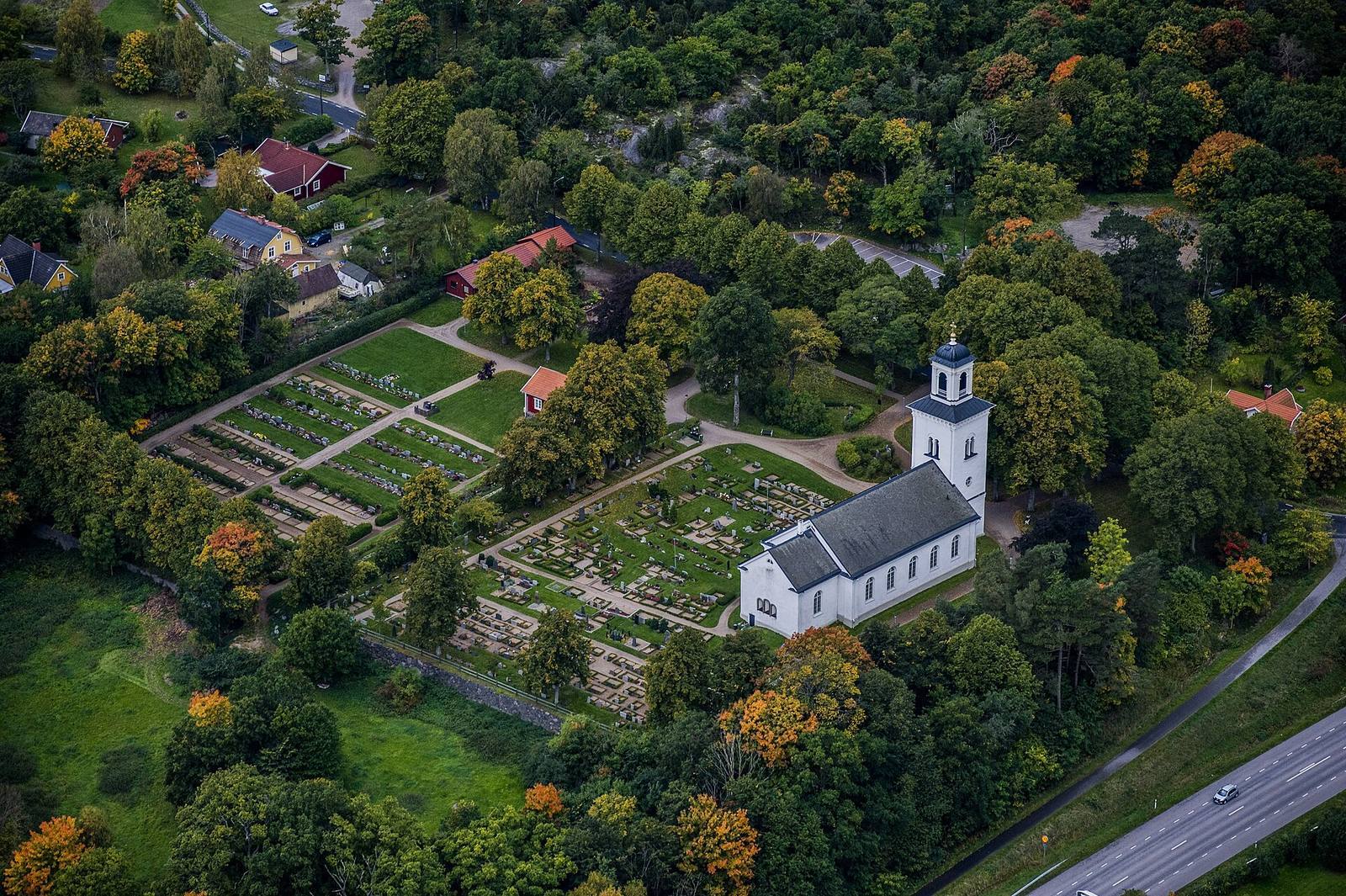
Built of natural stone, the church stands on a hill above the surrounding plain, east of Ramdala settlement. It comprises a nave (main worship area), a chancel (area around the altar) with a south portal, and an eastern tower incorporating an apse, a rounded projection at the church’s end. The arrangement is classed as a split-saddle church, a church with towers at both ends, although the western and eastern towers may never have stood at the same time.
Nave and chancel
The nave has a barrel vault, a continuous arched ceiling, and a timber roof carried by wooden columns. The chancel ends in an apse, with the sacristy, a room for clergy and church items, set behind a screen wall inside it. A crucifix hangs above the low arch between the nave and chancel. The two spaces may once have had an additional storey, and a small room in the church attic remains of unclear purpose. Some of the eastern tower’s base stones may come from the earlier apse church.
Interior decoration and furnishings
Wall painting
A well-preserved painting surrounds a window in the nave’s south wall. It depicts the sun, moon, a cross, and the name of Jesus, and is dated 1634.
Altar and pulpit
The altar’s retable, an ornamental structure behind the altar, dates to 1624 and is divided into architectural sections. The Last Supper forms its central image, while the side panels carry the words of institution for the Lord’s Supper in Danish. A smaller painting above depicts the baptism of Jesus. The pulpit, made in 1637 as a gift from Christian IV, king of Denmark and Norway from 1588 to 1648, is carved, painted, and gilded. Its six-sided body has five panels with reliefs drawn from the Book of Revelation, the final book of the Christian New Testament.
Seating and baptismal furnishings
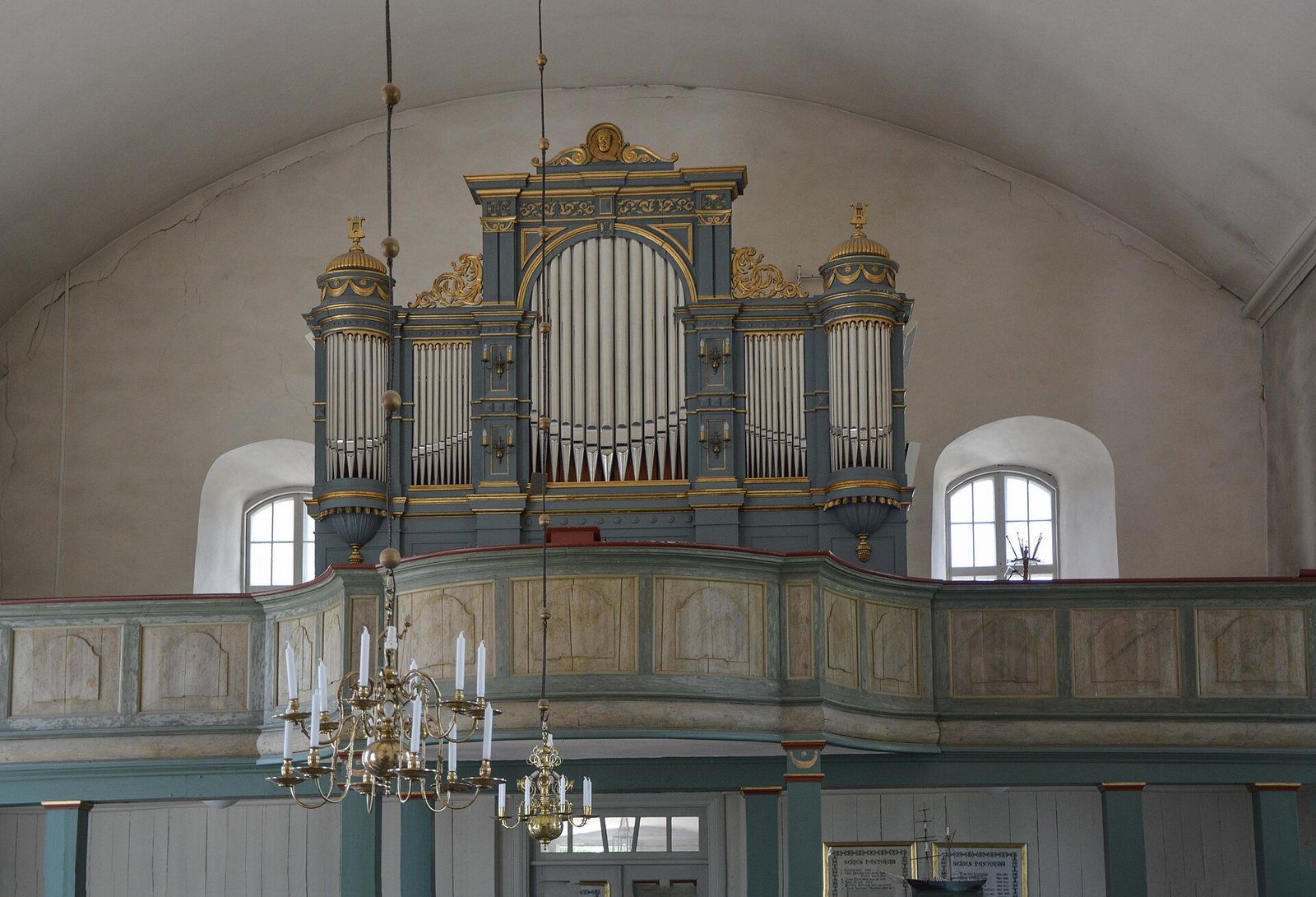
The enclosed pews and the gallery, a raised platform, at the west end date originally from the 17th century. The baptismal font, a basin used for baptism, and its canopy also date from that century.
Memorial inscription
An inscription on the chancel wall commemorates Johannes Petersson, an admiralty superintendent, a senior clerical official associated with naval administration, who died in 1717.
Organ
Andreas Åbergh built a 12-stop organ in 1860, and a Hammarberg organ arrived in 1867. Olof Hammarberg built a 16-stop instrument in 1924. The present mechanical organ, built by Olof Hammarberg of Gothenburg and installed in 1969, has 19 stops and retains the facade from Åbergh’s organ.