Château de Morainville: A Seventeenth-Century Estate in Normandy
Site at a Glance
- Rating
- 4.8
- Popularity
- Very Low
- Country
- France
- Primary era
- Early Modern
- Eras represented
- Early Modern
- Civilizations
- French
- Site type
- Domestic
- Remains
- Castle
On this page10 sections
History
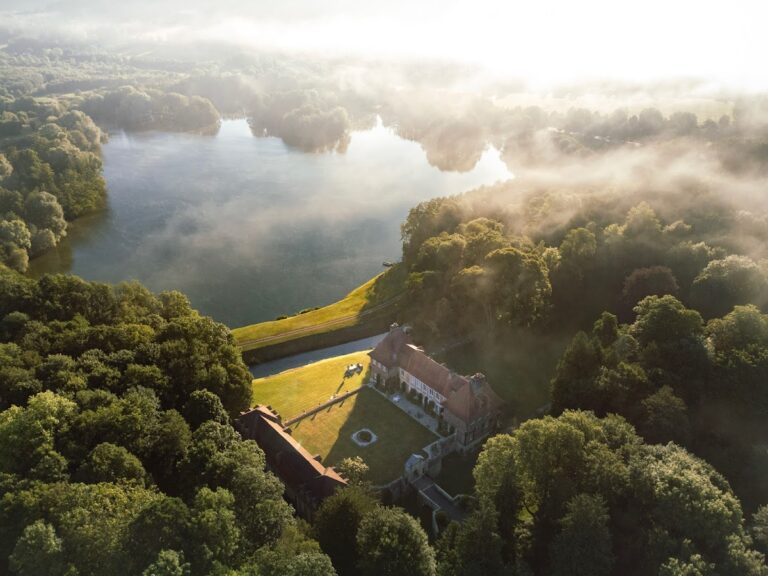
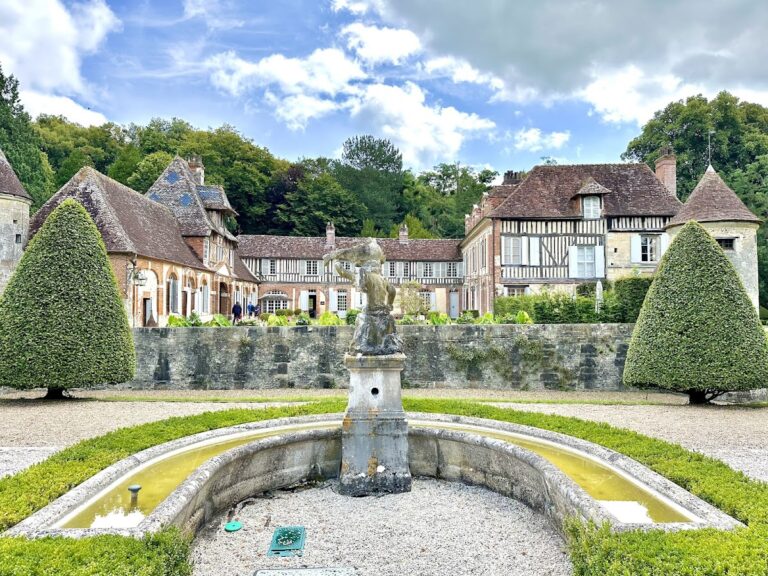
Château de Morainville is a historic estate in France, located in Mesnil-sur-Blangy in Normandy. Built in several stages, chiefly during the seventeenth century, it is primarily a brick-and-stone building in the Louis XIII style, a French architectural style associated mainly with the early 1600s. The estate developed through a succession of noble families and later became associated with the composer Charles Gounod.
The Dreux and Houel families
Morainville belonged to François de Dreux, lord of Morainville, who was living in 1530. When summoned before the elected officials of Lisieux in 1540 to prove his nobility, he declared that he descended from Robert I of Dreux, a son of Louis VI of France.
After Gilles de Dreux was killed during the siege of Rouen in 1502 and Jean de Dreux was wounded at the siege of Verneuil in 1590, the lordship passed into the Houel family through Yvonne de Dreux. She was François de Dreux’s daughter and the wife of Guillaume Houel. The Houel family of La Pommeraye and Morainville retained the estate until 1732, when the château was sold to Guillaume René de Franqueville.
Marriage alliances and inheritance
In 1738, Charlotte Julie de Franqueville married Joseph Laurent de Grieu, knight, lord of Fontenelle and Grandouet, a cavalry captain and a knight of the Order of Saint Louis. This royal order was awarded chiefly for military service. Their daughter, Marie Claude de Grieu, married Pierre Bruno Emmanuel Estièvre in 1771. Estièvre was lord of Gefosse, marquis of Trémauville, lord of Sahurs, commander of a cavalry regiment, and a knight of the same order.
In 1807, their son Claude Pierre Emmanuel Estièvre, marquis of Trémauville, major general, and knight of the Order of Saint Louis, married Aimée Antoinette Pauline Thelusson de Sorcy. Their daughter Emma Estièvre de Trémauville married Edmond du Fresne de Beaucourt in 1831. Their son, Gaston du Fresne de Beaucourt, later inherited Morainville. A major general was a senior French army rank broadly comparable to that of a modern major general, while a cavalry regiment commander led a mounted military regiment.
Gaston du Fresne de Beaucourt and Charles Gounod
Gaston du Fresne de Beaucourt was a historian. With his wife, Edith de Montigny, he received Charles Gounod at Morainville. Gounod was a nineteenth-century French composer known especially for the operas Faust and Roméo et Juliette, and he composed parts of both works at the estate.
Gaston du Fresne de Beaucourt died at Morainville in 1902, followed by Edith de Montigny in 1906. The estate passed to their son Louis du Fresne de Beaucourt, who died in 1920, and then to his daughter Jeanne de Beaucourt, who died childless in 1968. Morainville subsequently passed by inheritance to the d’Aigneaux family, whose descendants still own it. The château remains privately owned.
Protection as a historic monument
The château’s façades and roofs, two square pavilions, outbuildings, and interior grand staircase have been registered as French Historic Monuments since an order dated 9 September 1933. This status places buildings or sites under state heritage protection because of their historical or architectural importance.
Remains
The surviving complex is centered on a primarily seventeenth-century château built in brick and stone. Its Louis XIII-style architecture forms the principal character of the estate, while the protected group also includes two square pavilions, outbuildings, and the interior grand staircase.
The château and associated buildings
The main château
The main building was constructed in several stages, chiefly during the seventeenth century. Its brick-and-stone façades and roofs belong to the architectural character protected at Morainville. The entrance door carries a coat of arms attributed to the Houel family of La Pommeraye and Morainville, supporting the attribution of the Louis XIII section to that family.
Square pavilions and outbuildings
Two square pavilions form part of the protected complex, together with the château’s outbuildings. These structures are included with the main building among the physical elements preserved under the estate’s French Historic Monument registration.
Interior grand staircase
The interior grand staircase is another protected element of Château de Morainville. It belongs to the surviving interior fabric of the estate and is preserved alongside the exterior façades and roofs.
Nearby sites