Palazzo del Principe di Sannicandro: A Historic Aristocratic Palace in Naples


Site at a Glance
- Rating
- 5
- Popularity
- Very Low
- Country
- Italy
- Primary era
- Early Modern
- Eras represented
- Early Modern
- Civilizations
- Habsburg, Kingdom of Naples, Spanish
- Site type
- Domestic
- Remains
- Elite Residence
On this page14 sections
History
Palazzo del Principe di Sannicandro is a sixteenth-century aristocratic palace in Naples, Italy, built in the second half of the sixteenth century in the Stella district. Originally known as Palazzo Cattaneo Della Volta Paleologo di San Nicandro, it later became associated with the Princes of San Nicandro and with the artistic and intellectual life of eighteenth-century Naples.
The Carafa and Maddaloni period
The Carafa di Maddaloni family purchased the palace in 1585 and radically remodeled it. From 1606, Marzio Carafa, Duke of Maddaloni, lived there, followed by his eldest son Diomede. The palace was seized in 1647 during the revolt led by Masaniello, the popular leader of the Neapolitan uprising against Spanish rule. Its contents were taken to the market, including silk fabrics embroidered with gold and silver, Flemish tapestries, paintings, precious vessels, carriages, horses, large sums of money, and a celebrated carriage decorated with silver foil and gold ornament.
In 1656, the Marquis del Vasto sold the Duke of Maddaloni a palace near Via Toledo. The transaction involved cash, a credit covering charges on the building, and the exchange of the duke’s palace at Stella and an estate at Posillipo. Soon afterward, del Vasto sold the Stella palace to Gaspar Roomer, a Flemish banker who undertook further restoration.
Gaspar Roomer and the palace collection
After Roomer died in 1674, an inventory listed approximately 1,100 paintings from the palace. The collection included sacred subjects, still lifes, landscapes, portraits, and genre scenes. Among the artists represented were leading local painters such as Aniello Falcone, Andrea Vaccaro, Mattia Preti, and Luca Giordano, alongside foreign artists including Peter Paul Rubens and Simon Vouet.
The Cattaneo Della Volta Paleologo family
The building later passed to the monastery of Santa Maria Maddalena de’ Pazzi. In 1684, the nuns sold it to Carlo Caracciolo, Duke of Airola, who was married to Eugenia Cattaneo Della Volta. After Carlo died without heirs in 1709, the palace passed to Eugenia’s sister Antonia Caracciolo, the wife of Giovan Battista di Capua, Prince of Riccia. Antonia subsequently left it to her son Bartolomeo V di Capua, Count of Montuoro. In 1712, Bartolomeo married Anna, daughter of Baldassarre Cattaneo Della Volta Paleologo and Isabella Caetani, Duchess of Sermoneta.
From 1715, the palace was inhabited by the family of Baldassarre Cattaneo Della Volta Paleologo of Genoa, who lived from 1660 to 1739. Baldassarre was the godfather of Raimondo di Sangro, Prince of San Severo, the brother-in-law of Carlo Caracciolo, and the father of Domenico Cattaneo, who later became tutor to Ferdinand I of the Two Sicilies. Baldassarre also attained a prominent position in the intellectual and political life of the Austrian viceroyalty, the Habsburg administration governing Naples during part of the early eighteenth century. Giambattista Vico commemorated him in six Latin epitaphs.
Baroque transformation and intellectual life
The Princes of San Nicandro directed the most extensive restoration campaign in the palace’s history. Francesco Solimena and Luca Vecchione contributed to its remodeling and decoration. Solimena, a leading Neapolitan painter and designer of the late seventeenth and early eighteenth centuries, received his earliest documented commissions from the prince in 1715 and was allowed to select the subjects of the paintings.
In 1715, the young Pietro Metastasio improvised forty octaves in the palace of the lawyer Cattaneo on the theme “The magnificence of princes and its praises.” He dedicated the performance to Anna, Countess of Montuoro. The audience included the philosopher Giambattista Vico, the politician, economist, and mathematician Paolo Mattia Doria, the mathematician Agostino Ariani, the scholar and librarian Matteo Egizio, and Aurelia Gambacorta d’Este, a member of the Arcadian literary movement.
Solimena designed two framed screens for the small vestibule and the doors of the palace’s alcove chamber in 1730. An alcove chamber was a private room or recessed space associated with a bed or domestic use. His pupil Michelangelo Schilles assisted with the ceiling ornament of the room, which was later lost.
Solimena also painted the large work known as the “Galleria Solimena” inside the palace because its dimensions, 44 by 22 palmi, were too great for his own house. The painting remained there at least until the end of the nineteenth century before disappearing from view. It was later found in a Parisian private mansion associated with Marie-Laure de Noailles, now the Musée Baccarat. Arnauld Brejon de Lavergnée attributed it to Solimena in 1981, and scholars date it to after 1730. A payment made through the Genoese procurator Giuseppe Teodoro is dated 2 January 1733.
Later ownership and associations
Baldassarre’s direct descendants occupied the palace until the end of the nineteenth century. During the nineteenth century, the aristocratic Ridola family moved into the building from Matera. The palace’s name, Palazzo del Principe di Sannicandro, reflects its later connection with the Cattaneo Della Volta Paleologo family and the princely title of San Nicandro.
The building’s history is also linked to the nearby church of Santa Maria della Stella. Domenico Cattaneo’s son Francesco commissioned Giuseppe Sammartino in 1784 to create a funerary monument for Domenico. The monument was destroyed in the church fire of 1944. Sammartino, a prominent Neapolitan sculptor, also worked around 1759 to 1762 on an altar whose decorated front panel, or antependium, depicted the Madonna and Child.
Remains
Palace fabric
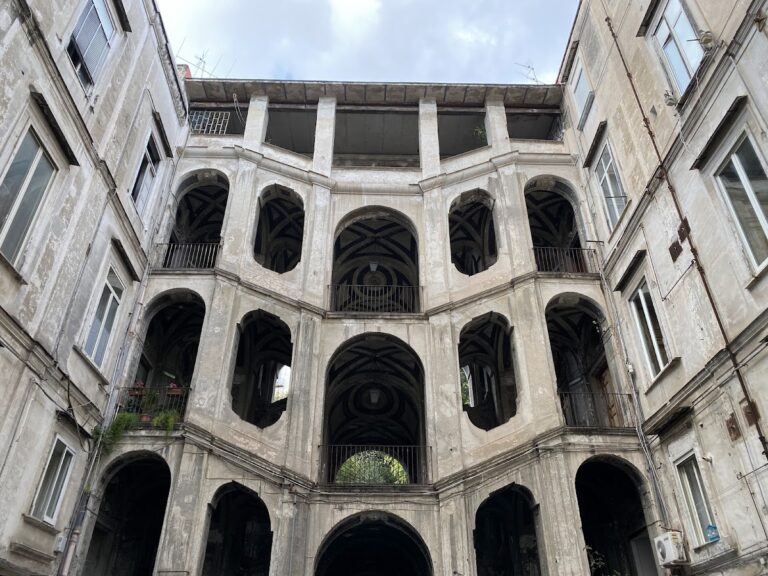
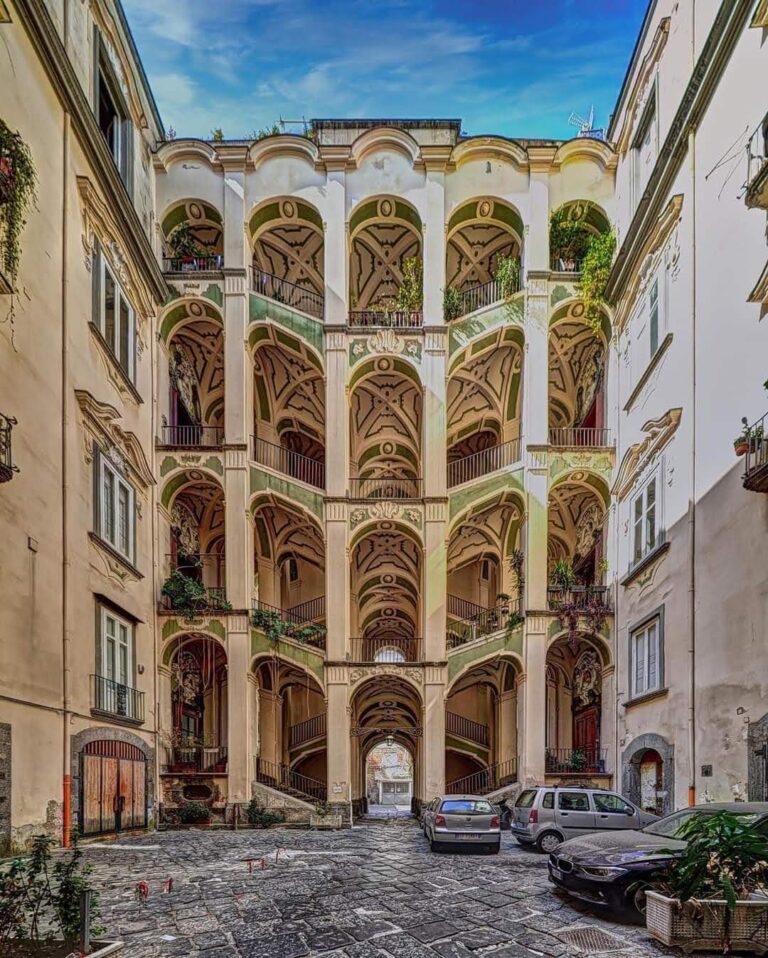
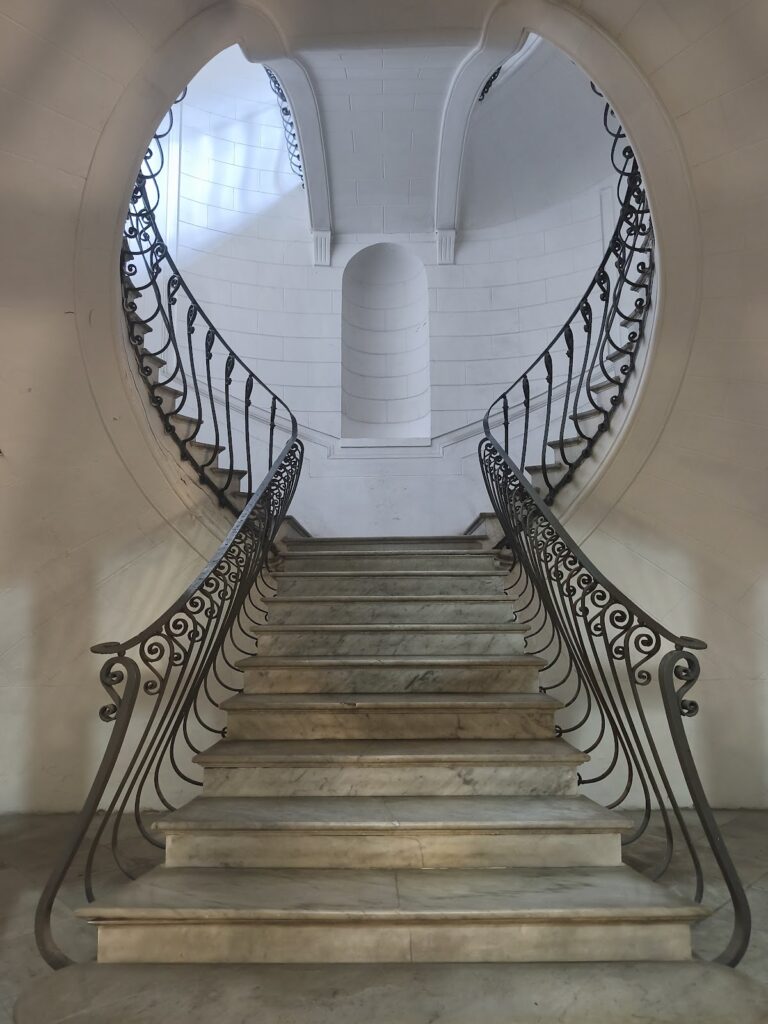
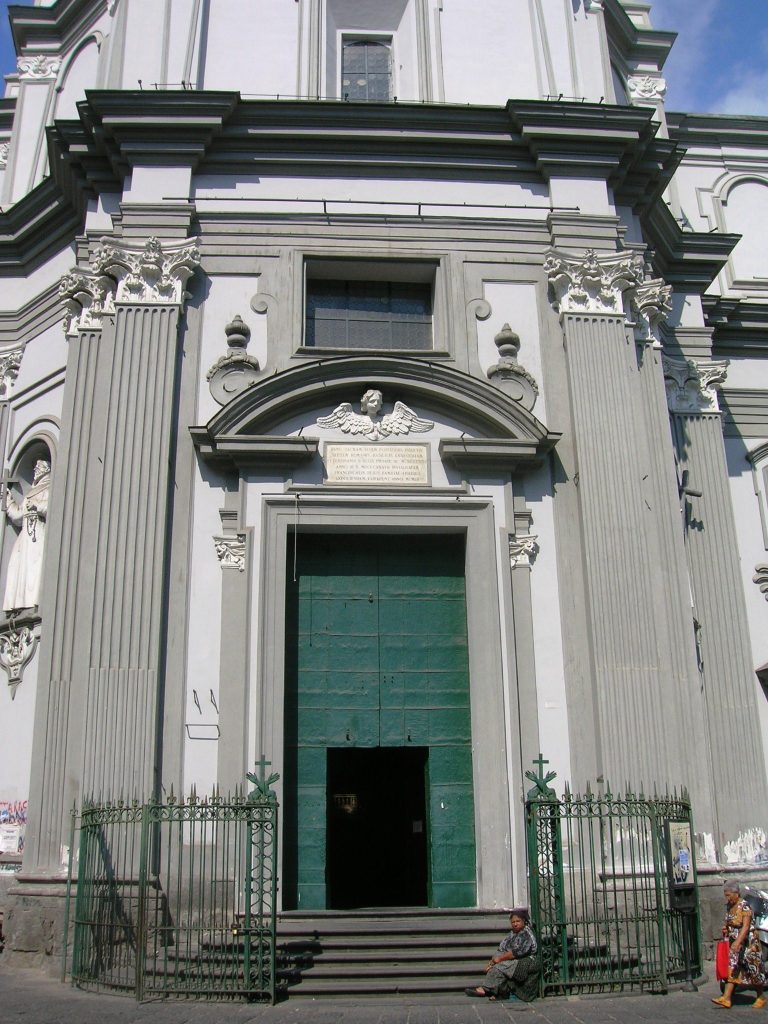
Palazzo del Principe di Sannicandro remains a sixteenth-century building on Via Stella, although its interior is now divided into multiple apartments in a condominium-like arrangement. Surviving elements of the former aristocratic residence include a piperno entrance portal, an internal courtyard, and carriage sheds. Piperno is a dark volcanic building stone characteristic of Naples and its surroundings. The entrance vestibule leading toward the courtyard preserves traces of fresco decoration.
The portal is made of piperno and is possibly the work of Luigi Vanvitelli and his son, eighteenth-century architects active in the Kingdom of Naples. Their authorship remains uncertain for this entrance. By contrast, Luigi Vanvitelli’s contribution to the portal of Villa Giulia at Barra, the princes’ country residence, is regarded as certain. That villa stood on land purchased by Domenico Cattaneo, identified as the first Prince of San Nicandro Garganico.
Interior decoration
Alcove chamber
The palace formerly contained an alcove chamber with doors designed by Solimena in 1730. He also designed two small framed screens for the vestibule. Michelangelo Schilles assisted with the room’s ceiling ornament, while Luca Vecchione contributed to the broader remodeling and decoration. The ceiling ornament has since been lost.
Galleria Solimena
The “Galleria Solimena” was an oil painting measuring 44 by 22 palmi. Its size led to its execution inside the palace rather than in Solimena’s own working room. After remaining in the building into at least the late nineteenth century, it was later located in Paris at a mansion that became the Musée Baccarat. The work is attributed to Solimena and dated to after 1730.
Connection with Santa Maria della Stella
Doorway and memorial plaque
A small doorway opposite the palace leads to the church of Santa Maria della Stella. Beside it, a small stone plaque on the stairway honors Baldassarre Cattaneo.
Funerary monument and altar
Sammartino’s funerary monument for Domenico Cattaneo consisted of a porphyry vase set within a broad niche. Two marble female figures stood before it: one held a plant stem and indicated a bas-relief portrait of the prince, while the other sat in mourning. The monument was lost in the 1944 church fire. Sammartino’s altar project of approximately 1759 to 1762 included an antependium depicting the Madonna and Child.