Château de Pont-Muzard: A Historic Estate in France
Site at a Glance
- Rating
- 3.8
- Popularity
- Very Low
- Country
- France
- Primary era
- Early Modern
- Eras represented
- Early Modern
- Civilizations
- French
- Site type
- Domestic
- Remains
- Castle
On this page8 sections
History
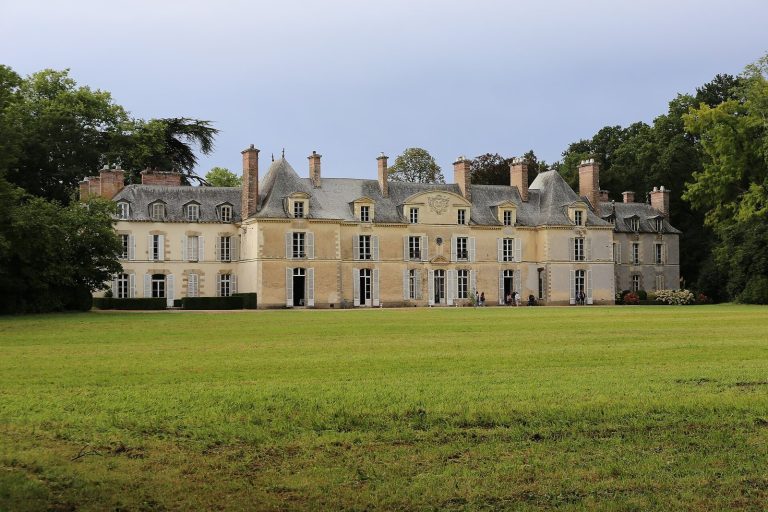
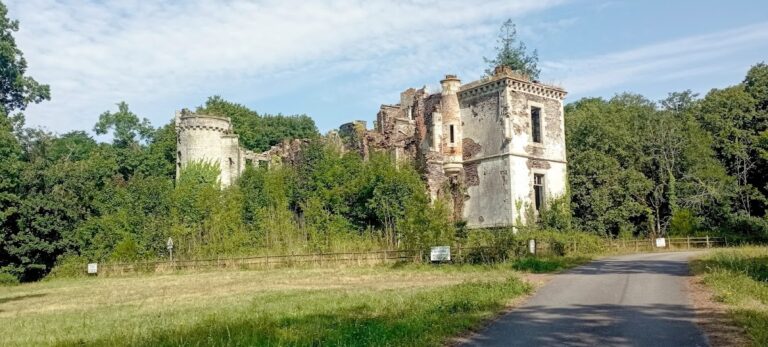
Château de Pont-Muzard is a historic building in Plélan-le-Grand, France, whose construction dates to the fifteenth century. The château is associated with the historic estate of Pont-Muzard, also written Pontmuzard, and retains buildings from the seventeenth century despite alterations made at the beginning of the twentieth century.
Fifteenth-century origins
The estate’s name is connected in part with Pont-Muzard, a place in the upper reaches of the Chèze stream in the Roca valley. The origin of “Muzard” or “Massard” remains uncertain. Suggested explanations include a shortened form of Thomas and a connection with the Old French verb musser, meaning “to hide” or “conceal.” Historical forms of the name include Pont-Mussart, Pontmussart, Pontmassart, Pont-Messart, Pont Mezard, Pont-Muzard, Pontmuzart, Pont Muzart, and Pontmazard.
The name appears in records from the fifteenth century. In 1403, Jean Pasquier du Rheu married Perrine du Pontmuzart. In 1480, Arthur de Pontmuzart, lord of La Chaussée-à-Bruc, married Marguerite du Bruc, and their daughter was Olive de Pontmuzard.
Families associated with the estate
The Touët family, also recorded as Thouet or Touet, was connected with Pont-Muzard from the fifteenth to the seventeenth century. In 1427, Geoffroi Touet and his wife’s mother were recorded as residing at the Pontmusart manor. Gilles Touaut was associated with the estate in 1543, while Jeanne Thouet was styled lady of Pontmuzart in 1624.
The La Motte du Portail family, also recorded as de Lamotte du Portal, held the estate during the seventeenth and eighteenth centuries. Its recorded holders were Guillaume de la Motte du Portail in 1685, Cyprien Lambert de la Motte du Portail in 1718, Cyprien Julien de la Motte du Portail in 1781, and Guillaume Louis de la Motte du Portail in 1790. The Guyet du Teil family was also associated with the château, although no date is attached to that connection.
Twentieth-century changes and ownership
Between the two world wars, the Porcaro family owned Château de Pont-Muzard. In 1937, Vicomtesse A. de Ferron was living at the château. The sculptor Maurice Bastide du Lude was another owner. The property is privately owned today.
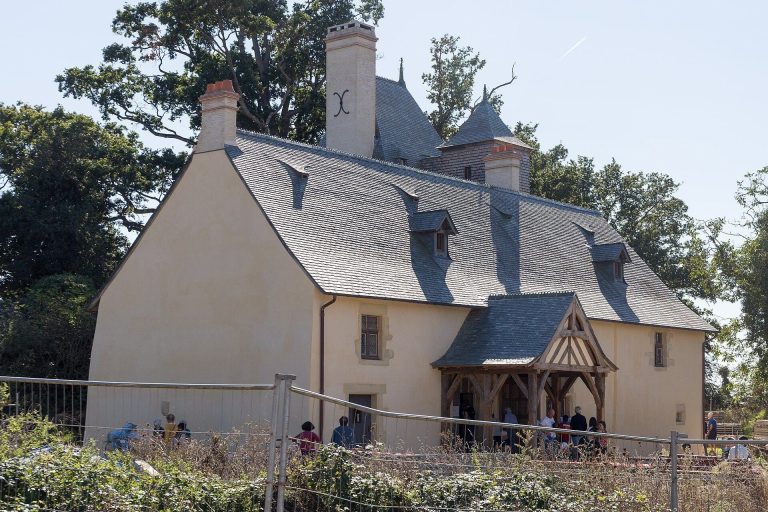
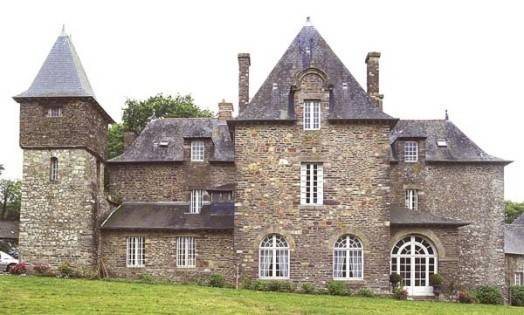
Alterations at the beginning of the twentieth century changed the building while leaving seventeenth-century structures and a corbelled stair tower in place. Corbelling is a building method in which successive courses project beyond those beneath them, allowing part of a structure to extend outward.
Remains
Surviving seventeenth-century fabric
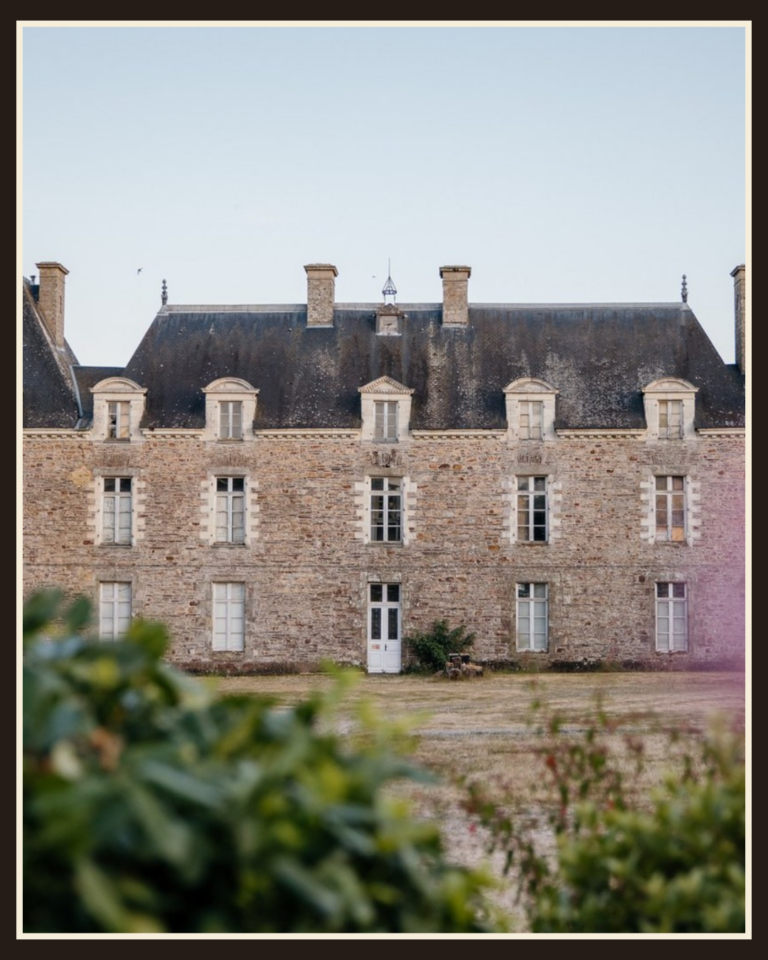
Château de Pont-Muzard retains buildings dating from the seventeenth century within a complex altered at the beginning of the twentieth century. The surviving construction combines schist, sandstone, and rubble masonry. Schist is a layered metamorphic stone that can split into slabs, sandstone is formed mainly from cemented sand grains, and rubble masonry uses irregular or roughly shaped stones. The roofs are covered with slate.
Corbelled stair tower
A stair tower occupies the southeast corner of the building. Its corbelled structure projects through successive courses of masonry rather than relying on a conventional arch or separate support, and it remains one of the retained elements of the château’s earlier fabric.
Mixed masonry and slate roofs
The walls use a mixed arrangement of schist, sandstone, and roughly shaped rubble, without dressed-stone quoins at the corners. Slate coverings complete the roofs and remain part of the building’s surviving material character.