Le Masgelier Castle: A Wartime Children’s Home in France


Site at a Glance
- Rating
- 4.5
- Popularity
- Very Low
- Country
- France
- Primary era
- Early Modern
- Eras represented
- Early Modern
- Civilizations
- French
- Site type
- Domestic
- Remains
- Castle
On this page8 sections
History
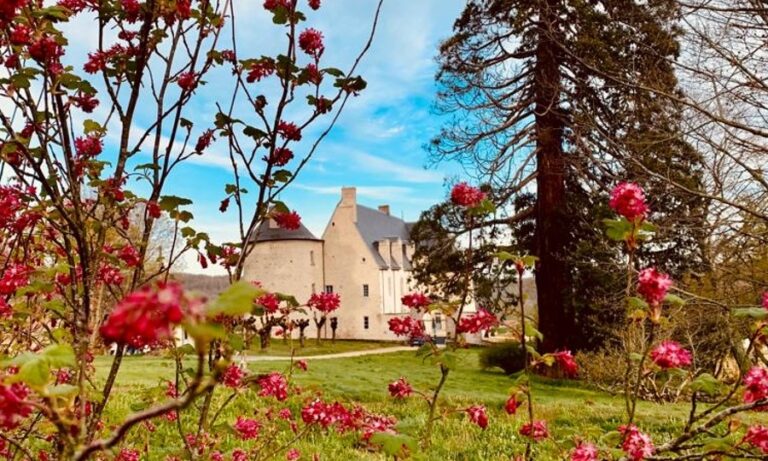
Le Masgelier Castle is a seventeenth-century Classical-style building in France, near Le Grand-Bourg, built for Louise de La Vallière, a favored mistress of King Louis XIV. The property later served as a farm before becoming a refuge for Jewish children during the Second World War.
From aristocratic residence to farm
Louise de La Vallière commissioned Le Masgelier in the seventeenth century. The building followed the Classical style, which emphasized symmetry, proportion, and forms derived from ancient Greek and Roman models. In later years, the property was used as a farm. By the time it was rented in late 1939, it had fallen into considerable disrepair.
The OSE children’s home
The Organisation for Children’s Aid, known as the OSE, was a Jewish relief organization that operated children’s homes and helped protect Jewish children during the German occupation of France. It rented Le Masgelier to establish a children’s camp, which began sheltering Jewish children in January 1940.
Jacques and Hélène Bloch directed the institution from early 1940 until March 1943, assisted by an international team of about thirty people. More than 100 children were living there by the summer of 1942. The center had a secular outlook, while Yiddish, a historical Jewish language with a mainly Germanic vocabulary and Hebrew, Aramaic, and Slavic influences, was taught. Jewish festivals also shaped communal life.
Le Masgelier faced growing danger under the Vichy regime, the collaborationist French government established during the Second World War. Gendarmes raided the center in the summers of 1942 and 1943 in attempts to arrest children. In late June 1942, the OSE held a meeting at the castle as arrests of its members increased and fears grew that the Vichy authorities would organize raids on children in OSE facilities.
On 12 December 1942, the General Commissariat for Jewish Questions, a Vichy body responsible for anti-Jewish policy, ordered the Union générale des israélites de France to dismiss all foreign Jews before February 1943. This organization had been created under Vichy authority to administer Jewish affairs and was subject to state coercion. Jacques and Hélène Bloch therefore left Le Masgelier in March 1943 and returned to the OSE headquarters in Chambéry. They fled to Switzerland in June.
Rosette Lederman-Markovitch then took responsibility for the children’s home, followed by André and Jeanne Klotz. During the war, 243 families had at least one child housed at Le Masgelier, representing more than 335 children. Serge Klarsfeld and Popeck were among those accommodated there.
Education and wartime care
The children initially attended school in the hamlet of Saint-Martin, but lessons were organized at Le Masgelier from September 1940. Active educational methods were widely used, and the institution became known as the “Republic of the Children.” Repairing and improving the neglected property also formed part of the educational work, with children and staff taking part.
Children sometimes received letters from their parents. Educators occasionally composed fictitious letters and gradually increased the intervals between them to protect younger children from the shock of a final farewell. Children whose parents had been deported continued to write letters that could never be sent.
Closure and postwar years
The center closed in October 1943 for security reasons. It reopened shortly after the war, around October 1944, under a director named Dreyfus, receiving children who had been dispersed. Dreyfus left for the United States with his children, Lise and David, around May 1945. Some orphaned children remained at Le Masgelier into the 1950s, and Popeck arrived there in May 1945. The institution later became a children’s holiday center.
Remains
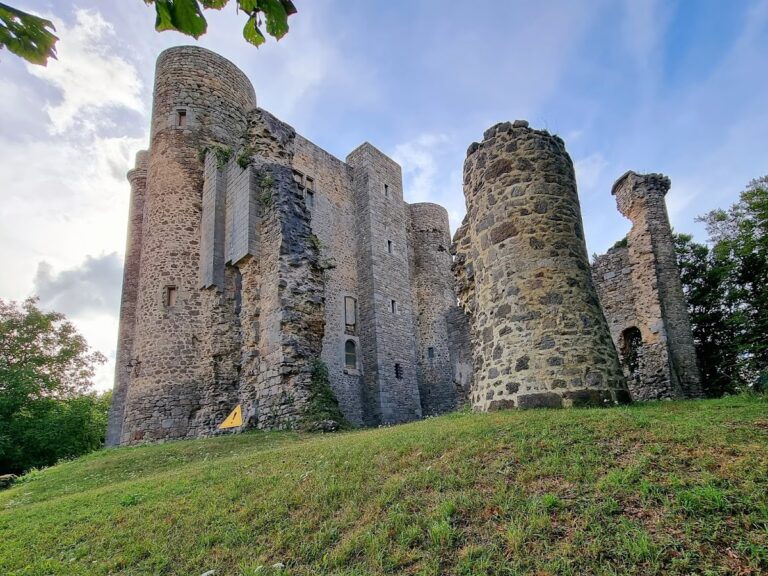
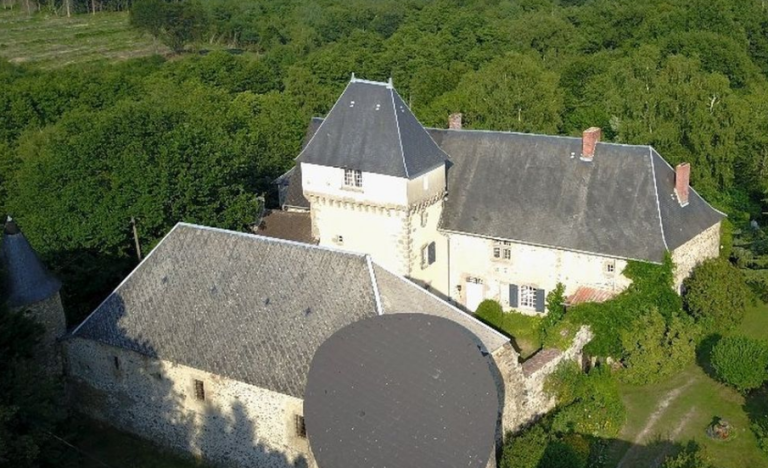
Le Masgelier stands in the Creuse department, approximately 10 kilometers from Grand-Bourg. The surviving site centers on a seventeenth-century Classical-style castle and its grounds. Its later use as a farm shaped the condition in which the OSE found it, while subsequent repairs connected the building’s physical improvement with the children’s education and daily life.
Castle and grounds
The castle is a seventeenth-century building in the Classical style. When the OSE rented the property, the building and farm were considerably dilapidated. Children and staff worked on repairs and improvements as part of the educational project. The grounds were later equipped with a vegetable garden and a poultry yard, extending the institution’s practical activities beyond the castle itself.
Educational setting
At the beginning of the wartime period, the children’s schooling took place in Saint-Martin. From September 1940, lessons were held directly at Le Masgelier, making the castle the setting for both education and communal life. The property’s gardens and poultry yard also supported the active educational methods practiced at the children’s home.
Nearby sites