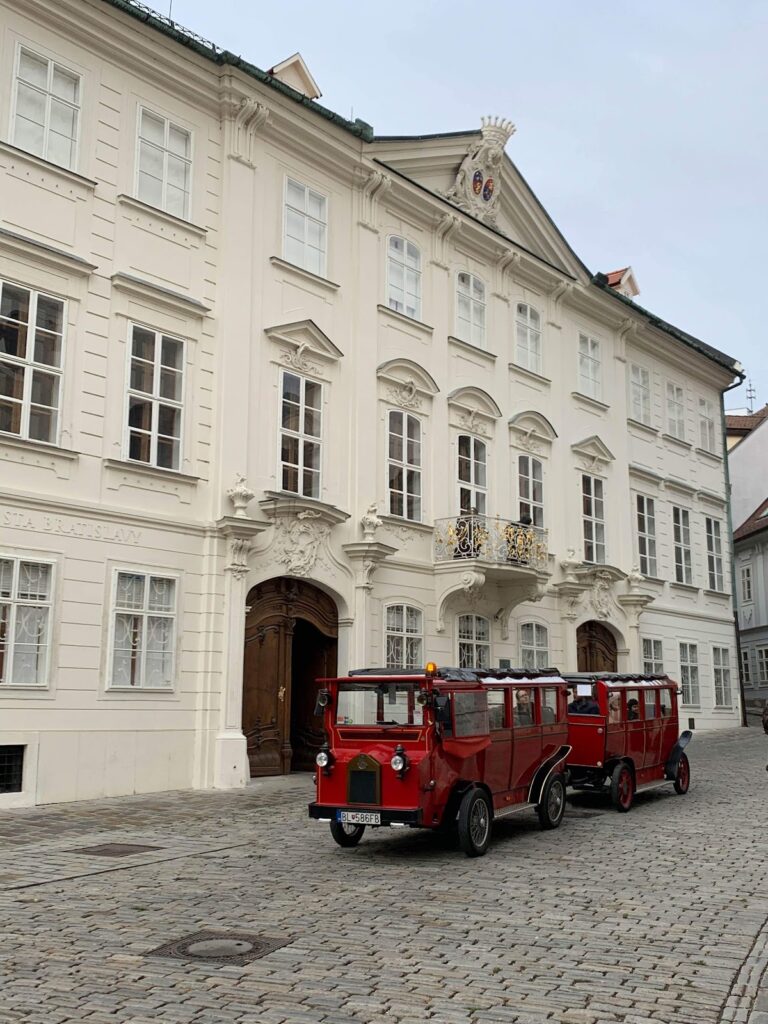
Aspremont Palace: A Late-Baroque Palace and Medical Faculty Seat in Bratislava


Site at a Glance
- Rating
- 4.7
- Popularity
- Very Low
- Country
- Slovakia
- Primary era
- Early Modern
- External website
- Open
- Eras represented
- Early Modern
- Civilizations
- Habsburg, Hungarian
- Site type
- Domestic
- Remains
- Elite Residence
On this page10 sections
History
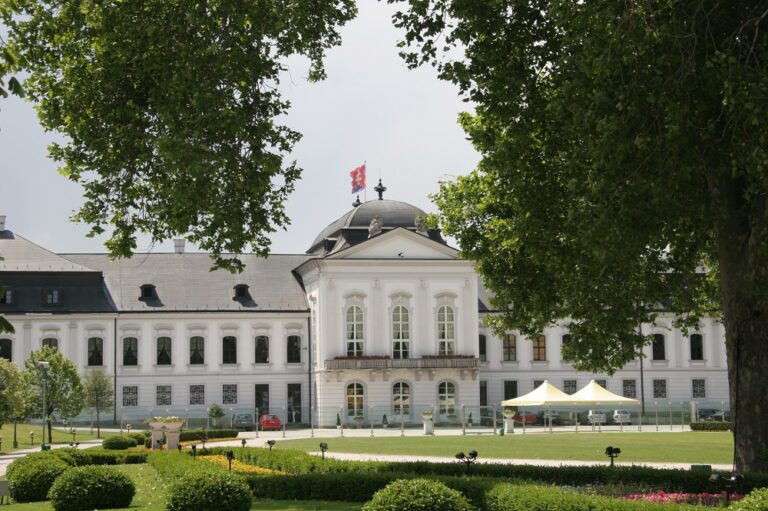
Aspremont Palace is a late-Baroque palace in Bratislava, Slovakia, built in 1770 for Count Johann Nepomuk Gobert d’Aspremont-Lynden. Designed by Johann Joseph Thalherr, it formed part of a garden estate in what was then a suburban area of Bratislava. The palace and its garden later became associated with the Faculty of Medicine of Comenius University.
From the Kutschersfelt Garden to Esterházy ownership
In 1769, d’Aspremont-Lynden purchased a garden estate with economic buildings for 44,000 Rhenish florins and 240 imperial gulden. The property was then called the Kutschersfelt Garden. D’Aspremont-Lynden descended from the Hungarian magnate families Rákóczi and Báthory, and commissioned the new palace the following year.
In 1781, the palace and garden passed to Count Esterházy. During Esterházy ownership, orchestras performed for guests in the garden, and the conductor and composer Joseph Haydn was invited on several occasions. In the second half of the nineteenth century, the estate came into the possession of the Jankovits family. Bratislava merchant Karol Schiffbeck purchased it in 1862 for 50,000 gulden.
Schiffbeck Palace and university plans
Under Schiffbeck, the interior was converted into apartments while the existing architecture was preserved as far as possible. The property became a profitable real-estate holding and was commonly known for much of its later history as Esterházy Palace or Schiffbeck Palace.
In the 1870s, Hungarian minister of education and religious affairs Ágoston von Trefort sought to acquire the palace and park for a medical faculty belonging to a planned university in Bratislava. The nearby state hospital made the site attractive for this purpose, but the proposed purchase failed when the price reached one million gulden.
Plans for the Hungarian Elisabeth University developed in the early twentieth century as university education expanded in the Hungarian-speaking provinces of Austria-Hungary. In 1911, Hungarian authorities announced plans for universities in Bratislava and Debrecen. Emperor Franz Joseph approved the name Elisabeth University in honor of his late wife, Elisabeth of Bavaria. In 1913, an agreement was announced for the university administration and its law and philosophy faculties to occupy the Schiffbeck family property.
The palace and Comenius University
The First World War changed these plans. Aspremont Palace instead became the seat of the medical faculty after the nearby Old Town Hospital was transferred to university administration. Following Bratislava’s incorporation into the newly established Czechoslovakia, Elisabeth University moved to Pécs in 1918, while a new university named after Jan Amos Comenius was established in Bratislava. Comenius was a seventeenth-century Czech educator, theologian, and philosopher.
In 1919, professors of medicine from Prague’s Charles University brought the first 138 students and five female students into Aspremont Palace. On 9 December 1919, the first academic year of Comenius University was ceremonially opened in the palace’s principal hall, which is now used for the faculty’s academic council. The ceremony was attended by the university’s first rector, Kristián Hynek; the minister and former professor of medicine Vavro Šrobár; Bratislava mayor Matej Metod Bella; and French colonel Jean Pierre Brau, then the city’s military commander.
In 1920, the Schiffbeck family donated the palace and park to the Faculty of Medicine of Comenius University. The faculty remains the institutional user of the complex, and the palace houses its dean’s offices. The former estate’s park is now called the Medical Garden.
Remains
Aspremont Palace stands at the northern end of Špitálska Street beside Americké Square. It was built as a unified complex with the present Medical Garden. The building combines a broad central pavilion with curved lateral wings, while its principal facade faces the garden. Substantial metal gates separate the palace and garden and are opened only on exceptional occasions.
Palace exterior and interior
Late-Baroque design
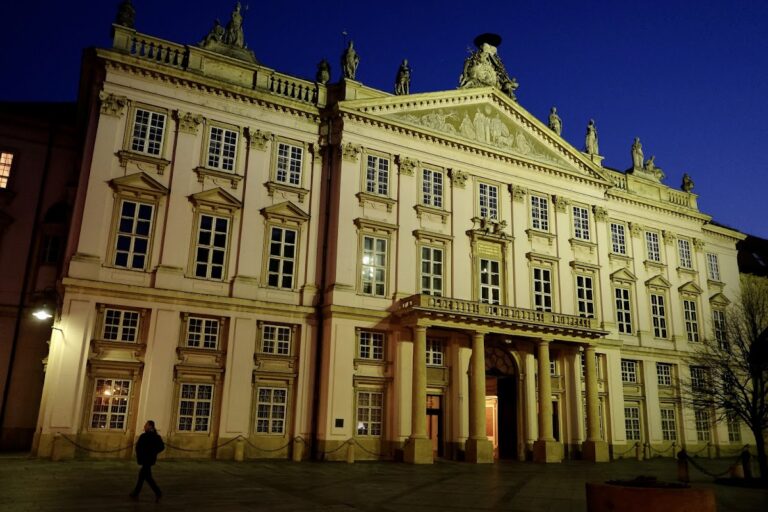
Thalherr’s composition and decoration belong to the late-Baroque style, an eighteenth-century manner known for curved forms, elaborate spatial arrangements, monumental interiors, and rich ornament. The palace also incorporates influences from the Louis XVI decorative manner, which used more restrained classical motifs such as garlands, wreaths, and medallions. The garden was laid out in the French style.
Chapel of the Holy Cross
The ground floor contains the late-Baroque Chapel of the Holy Cross. Its focal feature is an Altar of the Crucifixion made from red and white marble. A high dome above the altar carries frescoes by the Austrian artist Franz Anton Maulbertsch, including allegorical scenes from the Old and New Testaments. A fresco is a wall painting made on wet plaster, allowing the pigment to become integrated with the surface.
Ceremonial hall and salons
An asymmetrical staircase leads to the second floor, where the ceremonial hall was located beneath a broad dome. Laurel wreaths, ribbon garlands, and medallions decorate its walls, and these elements remain especially well preserved. Three doors connect the hall with small salons that now serve as offices of the medical faculty’s deanery.
Garden balcony
A fourth door from the ceremonial hall opens onto a balcony supported by Tuscan columns, plain classical columns with simple shafts and capitals. The balcony provided views across the garden and toward the Swan Fountain. The palace’s present institutional use is concentrated in the offices of the Faculty of Medicine of Comenius University, while the building remains physically associated with the Medical Garden.