Palazzo Betta Grillo: An Eighteenth-Century Palace in Rovereto

Site at a Glance
- Rating
- 4.8
- Popularity
- Very Low
- Country
- Italy
- Primary era
- Early Modern
- Eras represented
- Early Modern
- Civilizations
- Habsburg, Holy Roman Empire
- Site type
- Domestic
- Remains
- Elite Residence
On this page6 sections
History
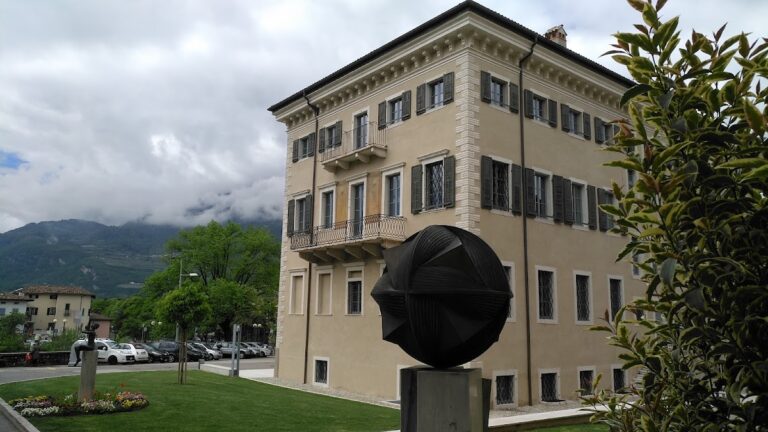
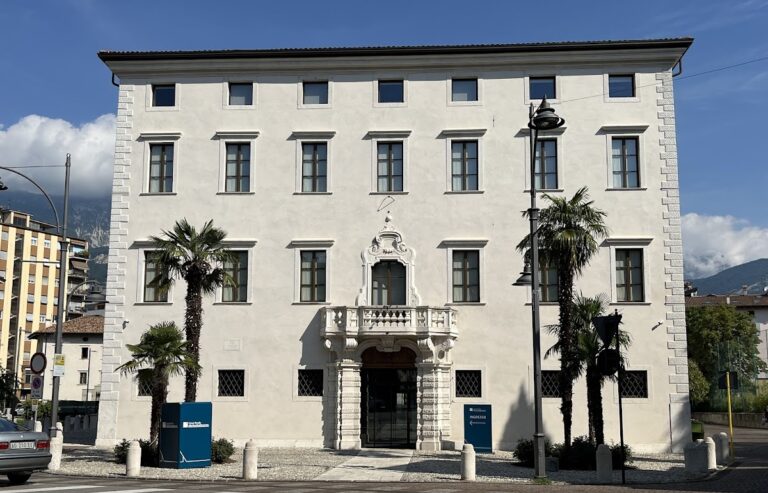
Palazzo Betta Grillo is an eighteenth-century palace in Rovereto, Italy, in the Santa Maria district, historically part of Borgo San Tommaso. The area was under the civil and religious jurisdiction of Lizzana, which is now a Rovereto neighborhood. The palace’s design is probably associated with the Tacchi family of architects and builders, who were active in Rovereto during this period.
A Lizzana civic project
The building originated in an initiative of the Lizzana community during the plague of 1630. It was intended as a residence and as the official seat of the Regola di Lizzana, a traditional Alpine communal institution responsible for shared local affairs and resources. The project did not reach completion for that purpose. During the first decades of the eighteenth century, the unfinished or repurposed building was auctioned and acquired by the Betta family.
Santa Maria, south of the Leno stream, was locally called the “Republic of Zinevra,” while Rovereto was known as the “city of the oak.” The local name referred to the spontaneous growth of juniper, called zinevro in the local dialect.
Betta and Grillo ownership
After purchasing the palace, the Betta family enlarged it and added stables. Near the end of the nineteenth century, ownership passed to the Grillo family. Maria Angelica Grillo, the last owner, transferred the palace to the Municipality of Rovereto in 2017, making it part of the city’s municipal heritage. A commemorative plaque at the entrance to the great hall on the first floor recognizes her benefaction.
Remains
Palace and service wing
Palazzo Betta Grillo remains in use as an expanded historic palace. Its original building was enlarged by a service wing set perpendicular to the eastern side. This addition enclosed the garden area and reflects the practical development of the residence after the Betta family acquired it. The palace’s architectural language has been linked provisionally to the Tacchi family through similarities with the nearly contemporary Palazzo Rosmini-Balista, whose design is securely attributed to them.
Interiors and paintings
The interiors, particularly those on the piano nobile, the principal residential floor of a historic palace, are refined and carefully decorated. They contain several works of art, including two large paintings by the Baroque-associated Italian painter Gaspare Antonio Baroni Cavalcabò. The portrait room contains a painting probably depicting Felice Giuseppe Betta, who lived from 1706 to 1765. He was a distinguished member of the Betta family, an archpriest of Rovereto, an erudite man admired by the Roveretan scholar and historian Girolamo Tartarotti, and a member of the Accademia Roveretana degli Agiati, an eighteenth-century learned academy associated with the city’s intellectual and cultural life.
Nearby sites