Palazzo Sichardt: A Civic Museum Headquarters in Rovereto


Site at a Glance
- Rating
- 4.8
- Popularity
- Very Low
- Country
- Italy
- Primary era
- Early Modern
- External website
- Open
- Eras represented
- Early Modern
- Civilizations
- Habsburg, Holy Roman Empire
- Site type
- Economic
- Remains
- Warehouse
On this page7 sections
History
Palazzo Sichardt is an eighteenth-century palace in Rovereto, Italy, built for silk-related storage and commercial activity. Located on Via Calcinari, it was commissioned by Nuremberg merchants, the first owners associated with the Sichardt name.
From silk commerce to municipal ownership
The building was later acquired by the Scopoli and Jacob families. As a result, it became known by several names, including Palazzo Jacob-Scopoli, Palazzo Scopoli-Jacob, and Palazzo Jacob, before reverting to the name Sichardt.
An associated silk mill had been established in 1709 beside the small artificial canal known as the roza piccola. From about 1738, the mill passed through the ownership of the Sichardt, Baroni, Scopoli, and Jacob families. Its machinery was powered by a waterwheel supplied by the Leno River through the canal. Twenty-five women and seven men worked there.
In 1910, Palazzo Sichardt became the property of the Municipality of Rovereto. In 1939, the municipal chief magistrate, podesta Sartori, assigned its management to the civic museum. The palace was intended to function as the museum’s administrative and exhibition headquarters while the institution remained housed in Palazzo Annona.
The civic museum headquarters
The museum’s new headquarters were inaugurated in 1942, during the Second World War, and inaugurated again in 1946. During a crisis in the first half of the 1950s, Mayor Veronesi proposed closing the museum and converting the palace into private housing. Umberto Tomazzoni opposed the plan in a strongly worded letter. The conversion was abandoned, and the museum later received more funding than before.
Palazzo Sichardt remained the civic museum’s principal headquarters almost until the end of the twentieth century. Its directors during this period included Gino Martini, Livio Tamanini, and Franco Finotti. Restoration and renovation began after the museum moved from its previous headquarters and were completed in 2019. The palace now serves as the headquarters of the City Museum.
Remains
Palace and industrial complex
Palazzo Sichardt
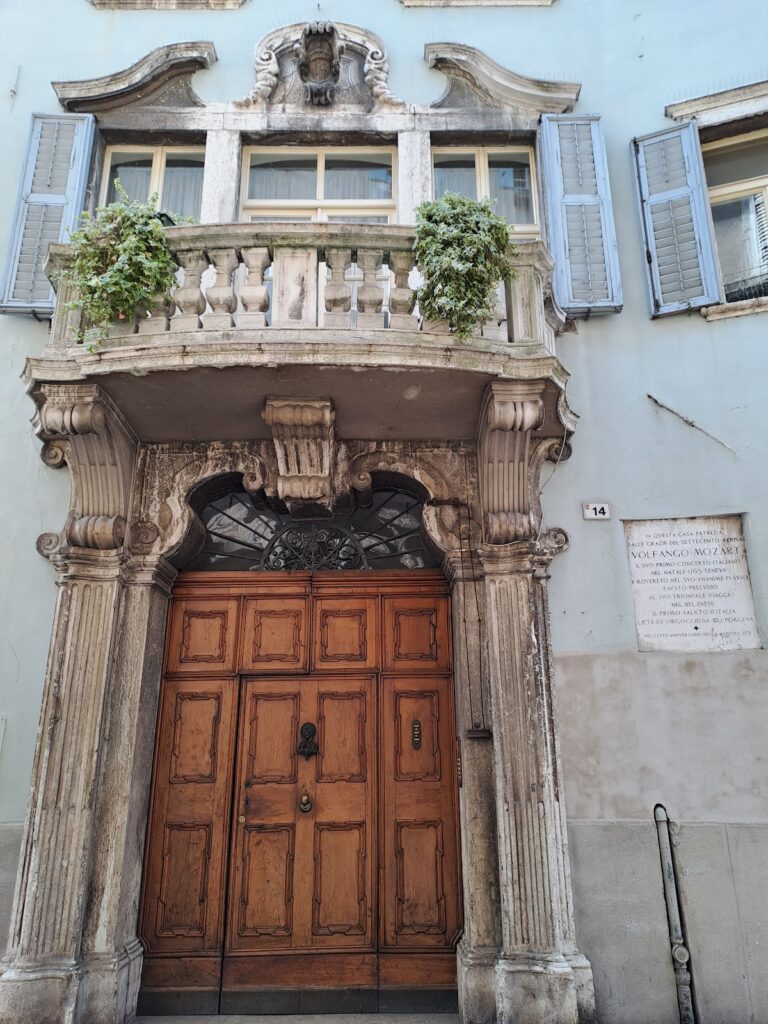
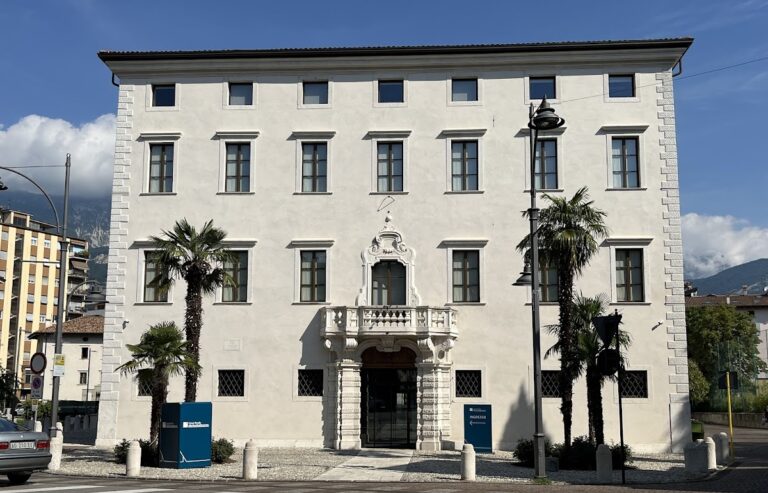
The palace has a solid structure arranged over four floors, with its main facade facing Via Calcinari. Its physical form reflects the eighteenth-century building associated with silk storage and commerce. Restoration and renovation works completed in 2019 prepared the building for its continuing use as the City Museum’s headquarters.
Former silk mill
The palace originally stood with an attached silk mill and waterwheel. The mill’s wheel was driven by water from the Leno River through the roza piccola, a small artificial canal used to power machinery. The canal was later covered, and the waterwheel was demolished. The former mill was subsequently adapted for other purposes and eventually became the location of municipal offices.
The Jacob family’s industrial activities in Rovereto also included taking over the former Fedrigoni paper mill and installing machinery for continuous-sheet paper production. This connection places the palace and its associated industrial buildings within the wider manufacturing activities linked to the families who owned the complex.
Nearby sites