Schloss Bronnen: A Medieval Castle and Hunting Lodge in Germany


Site at a Glance
- Rating
- 4
- Popularity
- Very Low
- Country
- Germany
- Primary era
- Early Modern
- Eras represented
- Medieval, Early Modern
- Civilizations
- Holy Roman Empire
- Site type
- Domestic
- Remains
- Elite Residence
On this page7 sections
History
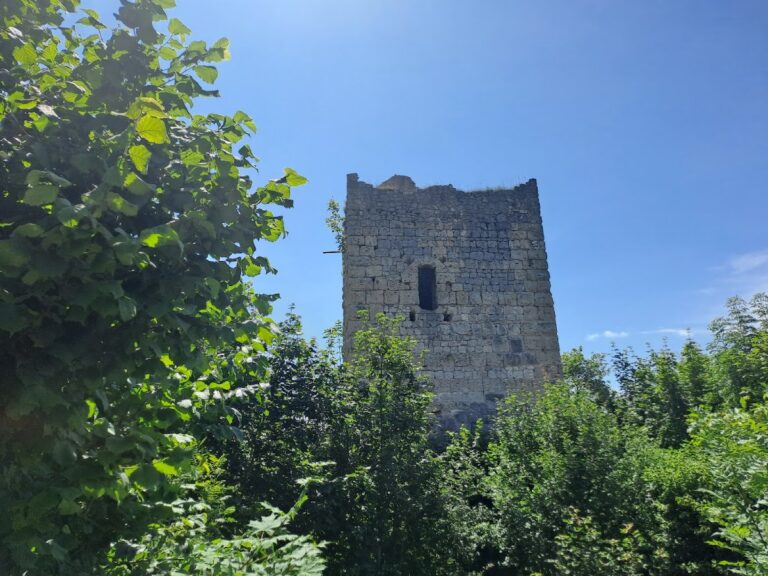
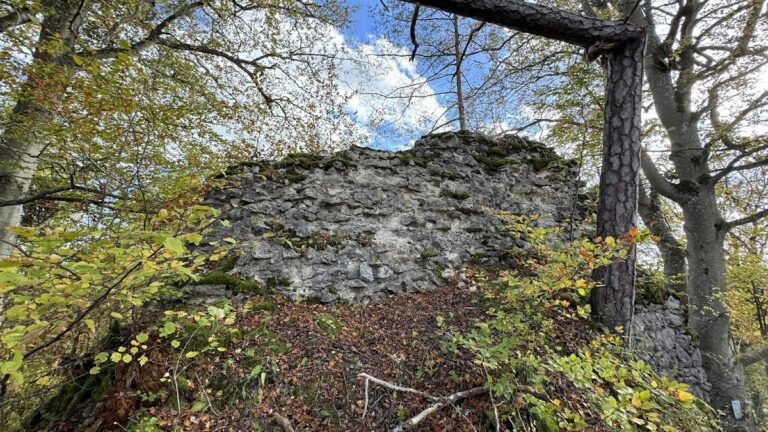
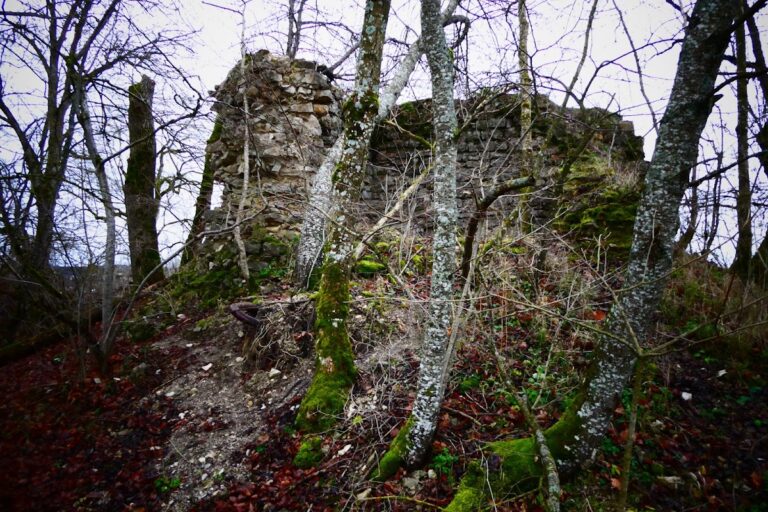
Schloss Bronnen is a medieval castle and later hunting lodge near Fridingen in Germany, built around 1100–1150 by an unidentified free noble family from the Fridingen area. The Lords of Bronnen were first mentioned around 1200. The complex occupies a steep rock outcrop above the Upper Danube Valley and reflects the long transformation of a medieval stronghold into an eighteenth-century residence.
Medieval Lords and Pledges
In 1241, Schloss Bronnen and the town of Mühlheim belonged to the Counts of Zollern, a medieval noble line of Swabia. Friedrich von Zollern pledged both possessions to the Bishop of Constance in 1303. In 1380, he pledged Bronnen, together with Buchheim, Worndorf, Beuron, and Irndorf, to Swigger von Gundelfingen. Swigger later admitted his nephew Hans von Zimmern to the pledge arrangement in 1389.
In 1391, Count Friedrich V of Hohenzollern-Schalksburg, known as Mülli, sold the lordship to the knight Konrad von Weitingen. Volz and Konrad von Weitingen then sold Bronnen Castle and Mühlheim to Friedrich and Engelhard von Enzberg in 1409. The Enzbergs, a regional noble family originally associated with the middle Enz valley, retained the property through later changes in its use and ownership.
Enzberg Rule and the Hunting Lodge
Friedrich von Enzberg pledged the castle to Johann Gättling, a citizen of Rottweil, for 300 guilders in 1516. From 1560 to 1580, Rudolf II von Enzberg and Beuron Monastery disputed the monastery’s protective and fiscal bailiwicks. A protective bailiwick involved secular guardianship of a religious institution, while a fiscal bailiwick concerned its temporal and financial administration. In 1615, Sigmund von Enzberg ended the dispute by renouncing these offices and all authority and rights over the monastery.
Between 1731 and 1755, Nikolaus Karl von Enzberg and, after his death, his widow Maria Ursula von Hallwil converted the dilapidated castle into a hunting lodge. A new castle chapel was built in 1755. In 1857, King Wilhelm I of Württemberg, who ruled from 1816 to 1864, declared Bronnen the free property of the Lords of Enzberg.
Expropriation, Fire, and Later Ownership
During the Nazi period, the regime expropriated the castle in favor of Gertrud Scholtz-Klink, the leading female official of Nazi Germany and head of its women’s organization. Through the German Women’s Work organization, she leased the property for 50 years and paid for its restoration. She called Schloss Bronnen her “beloved refuge,” although she rarely used it.
A later ghost legend places an alleged supernatural attack at the castle in 1935. According to the story, a woman living at Schloss Bronnen fled to the neighboring Gallushof, where monks refused her entry because of monastic enclosure. The legend says that she spent the night in a cowshed.
After the Second World War, French authorities confiscated the castle. On 23 December 1946, an overheated chimney caused a devastating fire in the roof structure. The property later returned to the Lords of Enzberg, who repaired the damage and commissioned a new roof structure between 1947 and 1949. The rented Schloss Bronnen was offered for sale in autumn 2025 and sold in spring 2026.
Remains
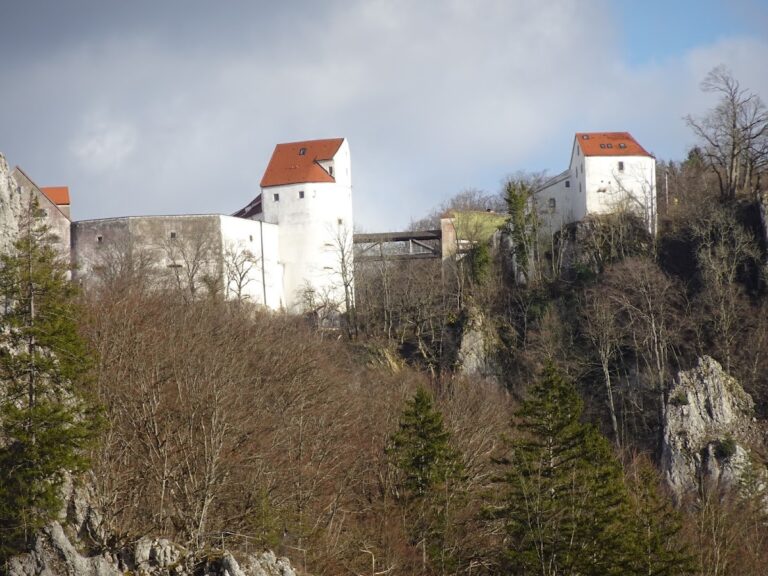
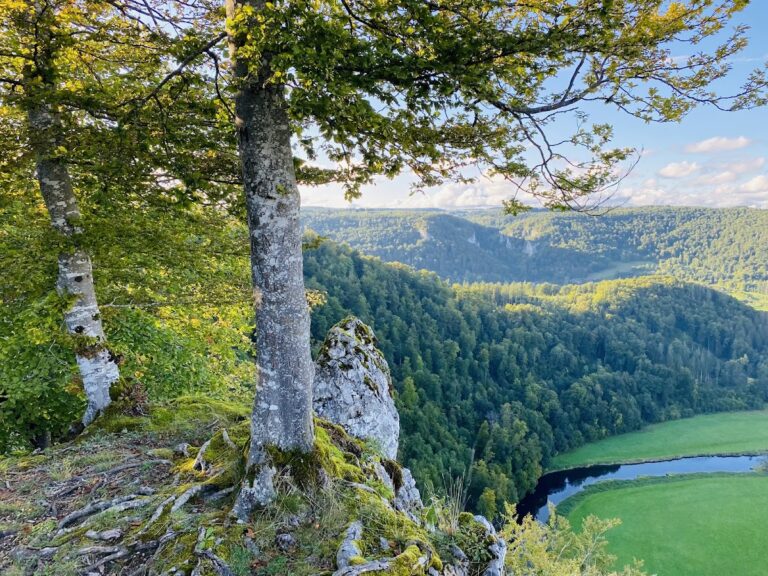
Schloss Bronnen stands on a steeply descending rocky outcrop in the Upper Danube Valley, with the Danube flowing below. The complex lies near Fridingen in Tuttlingen District, close to the boundary with Sigmaringen District. Its surviving form combines the remains of a medieval castle with the alterations that turned it into an eighteenth-century hunting lodge.
Castle and Lodge Complex
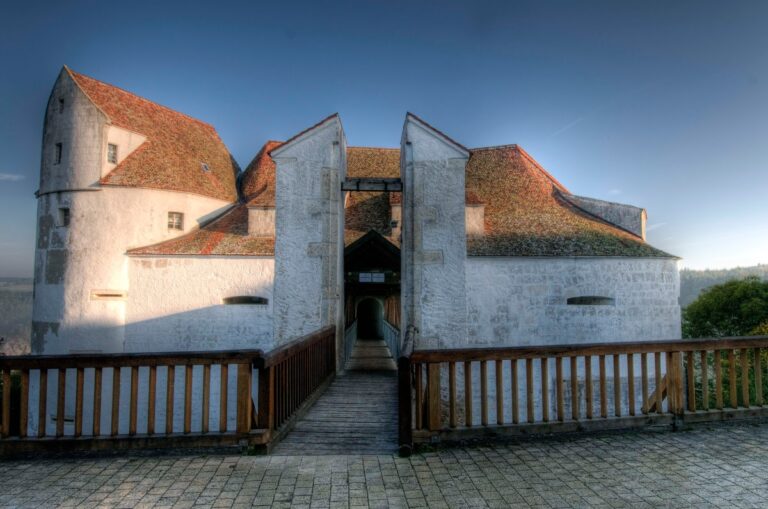
The physical complex preserves the character of a medieval stronghold reshaped for residential and hunting use. The castle chapel belongs to the eighteenth-century transformation and was newly built in 1755. The roof structure was rebuilt between 1947 and 1949 after the 1946 fire, forming part of the postwar repair of the property.
Interior and Upper Room
The luxurious interior created during the Nazi period included valuable tapestries. These covered the large room on the uppermost floor, making it resemble a medieval knights’ hall. This interior treatment formed part of the restoration carried out while Gertrud Scholtz-Klink held the lease.
Nearby sites