Château de la Noë Bel-Air: A Nineteenth-Century Château in France
Site at a Glance
- Rating
- 4.6
- Popularity
- Very Low
- Country
- France
- Primary era
- Modern
- External website
- Open
- Eras represented
- Modern
- Civilizations
- French
- Site type
- Domestic
- Remains
- Castle
On this page6 sections
History
Destruction and Revolutionary-era events
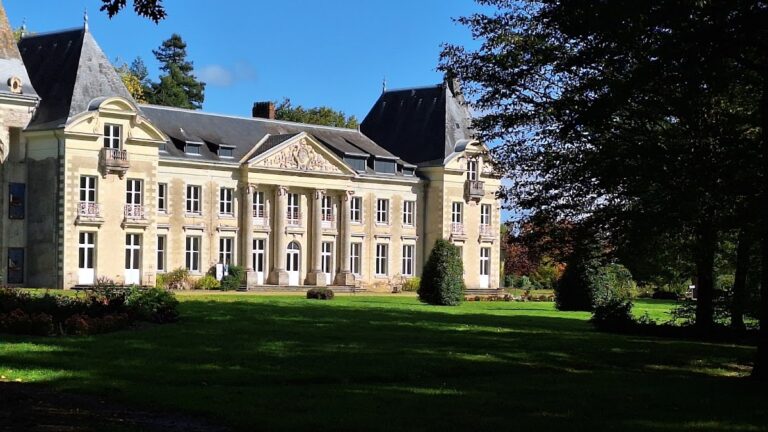
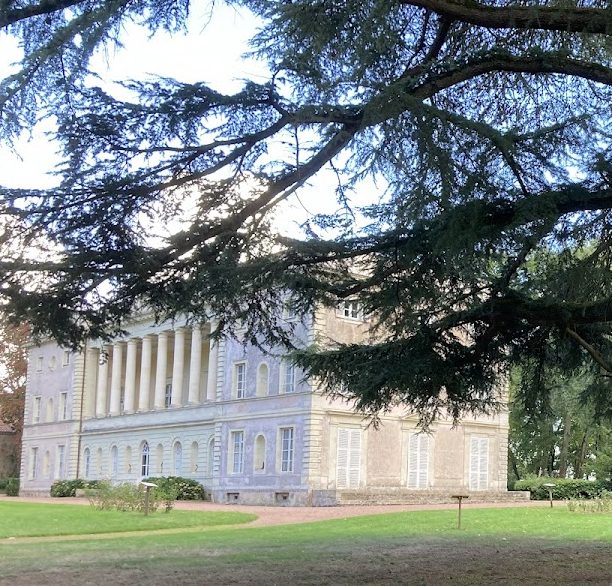
Château de la Noë Bel-Air is a château in France, rebuilt between 1835 and 1837 in an Italianate style with Empire-style elements. The present building replaced a noble house destroyed by fire during the Wars of the Vendée, a counter-revolutionary conflict in western France during the French Revolution that caused widespread destruction across the region.
In 1793, the park became a rallying point for the army of Kléber, a French Revolutionary general who commanded forces during the conflict. Royalists were shot that year, and a stele in the eastern part of the park commemorates them.
Nineteenth-century rebuilding
The new château was commissioned by Armand de Malestroit de Bruc de Montplaisir and designed by Louis-Joseph Chagneau, with Bourgeret serving as the second architect. Chagneau had been a pupil of François-Frédéric Lemot, a French neoclassical sculptor and architect whose work strongly influenced the design. The orangery and ancillary buildings were constructed earlier, between 1823 and 1826, before the château itself was rebuilt.
The estate remains privately owned and privately used. The château and associated features were listed as historic monuments in 1998 and classified in 1974 and 1999. The park was designated a classified natural site in 1980.
Remains
Château and estate buildings
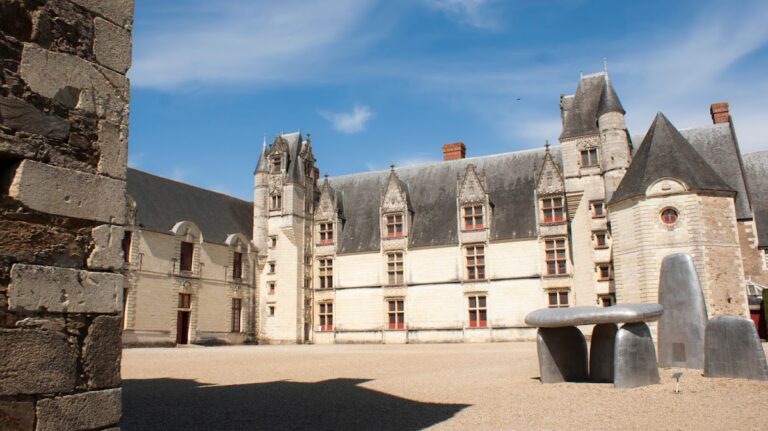
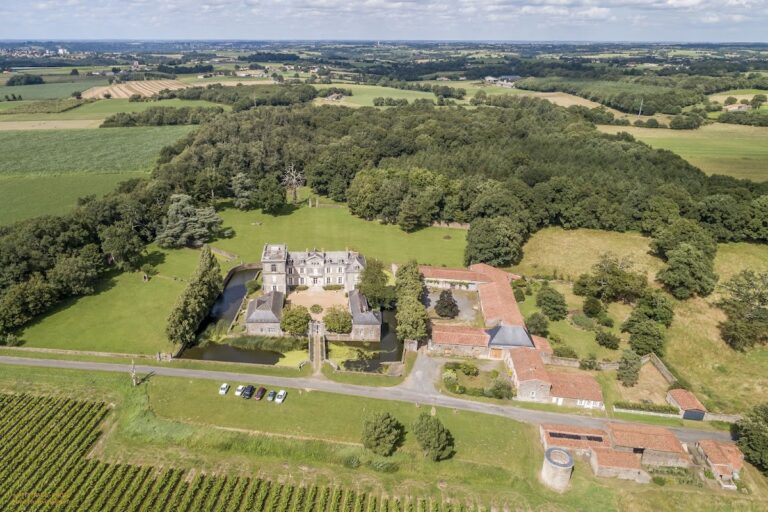
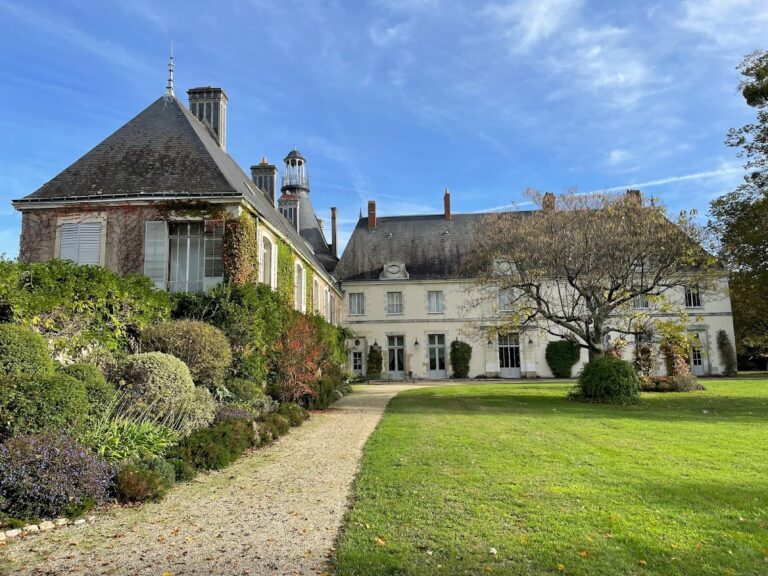
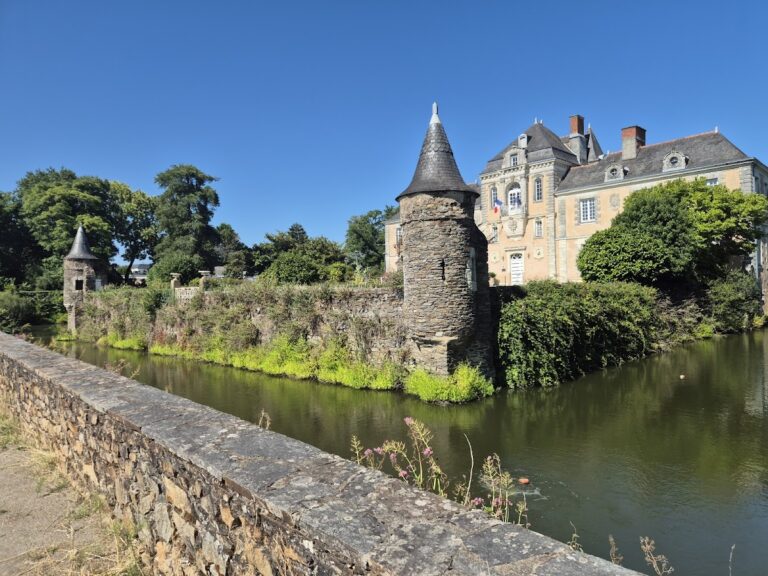
The château is a rectangular building whose principal façade faces north-northwest. Its most distinctive feature is a two-storey loggia supported by columns. The building occupies a landscaped park enclosed by a low perimeter wall, with small round towers at several corners. The estate also contains the orangery, western, eastern, and southern ancillary buildings, a henhouse, a dovecote, and the courtyard.
Water features and memorials
An engineered pond occupies the western part of the park. A small island within it is linked to the grounds by a wooden bridge with a scroll-patterned balustrade and a wrought-iron grille. A sculpture of the Virgin, made by Grootaërs in 1846, stands beside the pond. In the eastern part of the park, the stele to the royalists killed in 1793 preserves the memory of the Revolutionary-era violence associated with the estate. The grounds also include a landscaped river.
Nearby sites