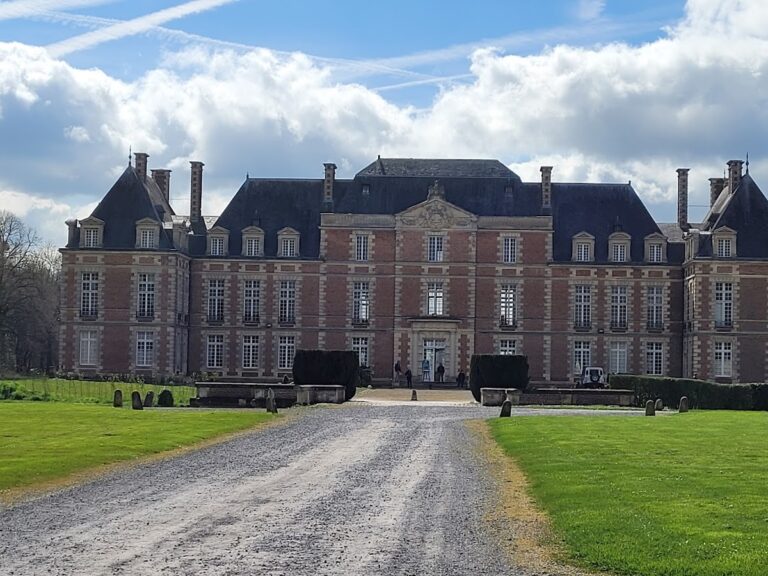
Château de Tartigny: A French Historic Estate


Site at a Glance
- Rating
- 4.6
- Popularity
- Very Low
- Country
- France
- Primary era
- Modern
- Eras represented
- Early Modern, Modern
- Civilizations
- French
- Site type
- Domestic
- Remains
- Castle
On this page7 sections
History
Château de Tartigny is a château in Tartigny, France, originating in the sixteenth century and completed in the nineteenth century, with classically ordered stone façades. Its construction is attributed to Hugues de Laval-Tartigny, the son of Marie de Bussu and René II de Laval La Faigne. Marie was the only child of Artus de Bussu, lord of Tartigny, and her marriage connected the estate to the Laval-Tartigny lineage.
The Laval-Tartigny and Trudaine Families
The estate remained with the descendants of Marie de Bussu and René II de Laval La Faigne for a little more than a century. Around 1674, Pierre Trudaine purchased Tartigny. He was treasurer of France in the généralité of Amiens, an administrative district of the French monarchy overseen by an official responsible for royal finances, and the son of Antoine II Trudaine, lord of Oissy.
The Trudaine family retained the estate for a little more than a century. After Pierre Trudaine died in 1718, Tartigny passed to his son, also named Pierre Trudaine. It then descended to his daughter Marguerite Trudaine, who had married Joseph Lamoureux, lord of La Javelière, in 1714.
From the Lamoureux Estate to the Cavé d’Haudicourt Family
Marguerite’s daughter, Marie Sébastienne Lamoureux, inherited Tartigny. She was married to Charles César de Lancry, lord of Bains, and died in 1781. After her death, her sister and heir sold the estate to Pierre Cavé d’Haudicourt, a councillor at the Court of Coins, a French institution concerned with the administration and adjudication of coinage.
Pierre Cavé d’Haudicourt’s son, Antoine Cavé d’Haudicourt, later served as a deputy of the Oise during the Bourbon Restoration, the period after Napoleon’s fall when the Bourbon monarchy returned to France, chiefly from 1814 to 1830. The estate continued through the descendants of the Cavé d’Haudicourt family and eventually passed to the de Baudus family, its current owners.
Protection and Later Conservation
Château de Tartigny has been listed as a French historic monument since 30 January 1998. The protection includes elements of the château and its grounds, including exterior decoration, a turret, a pavilion, a dovecote, and the kitchen garden. Restoration work was documented at the château in August 2013. The park and garden have also formed part of heritage-event and Jardins en scène openings.
Remains
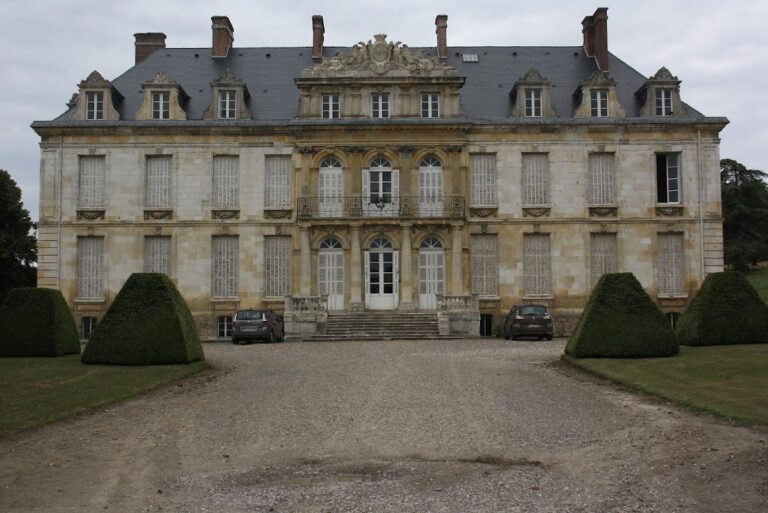
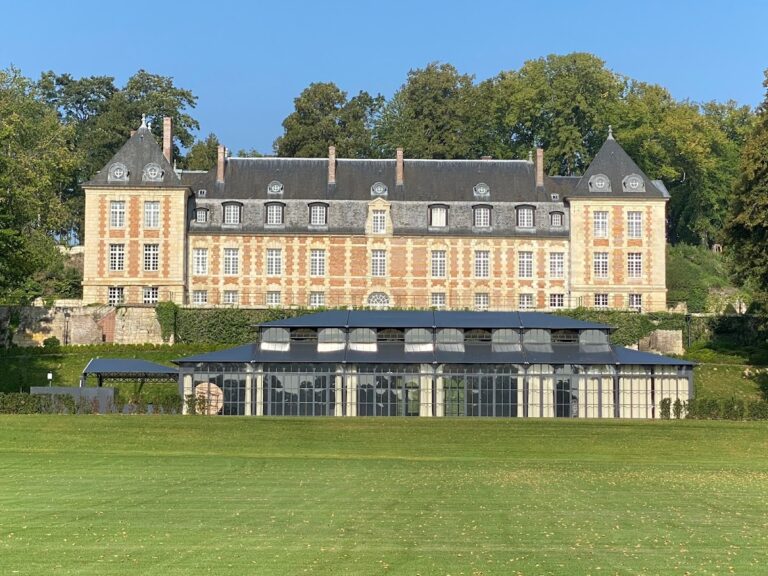
Château de Tartigny has an overall modern appearance, despite its origins in the sixteenth century. The façades are built entirely of stone and follow a classically ordered composition. Pilasters, which are flat wall-attached elements resembling columns, and detached columns mark the individual bays. The two principal façades originally had openings that were wider and lower than those visible today, and these openings were later modified.
The Château and West Façade
The sixteenth-century arrangement survives visibly on the west side façade, where a turret is attached to the building. This surviving arrangement provides the clearest architectural indication of the château’s early form, while the altered openings and modern overall appearance reflect later changes to the building.
Garden and Associated Grounds
The grounds include a distinctive circular kitchen garden, together with a pavilion, a dovecote, and a park. The garden and park belong to the château’s associated grounds and form part of the estate’s surviving physical composition.