Palazzi Barbaro: Adjoining Historic Palaces on Venice’s Grand Canal


Site at a Glance
- Rating
- 4.5
- Popularity
- Very Low
- Country
- Italy
- Primary era
- Medieval
- Eras represented
- Medieval, Early Modern
- Civilizations
- Venetian
- Site type
- Domestic
- Remains
- Elite Residence
On this page8 sections
History
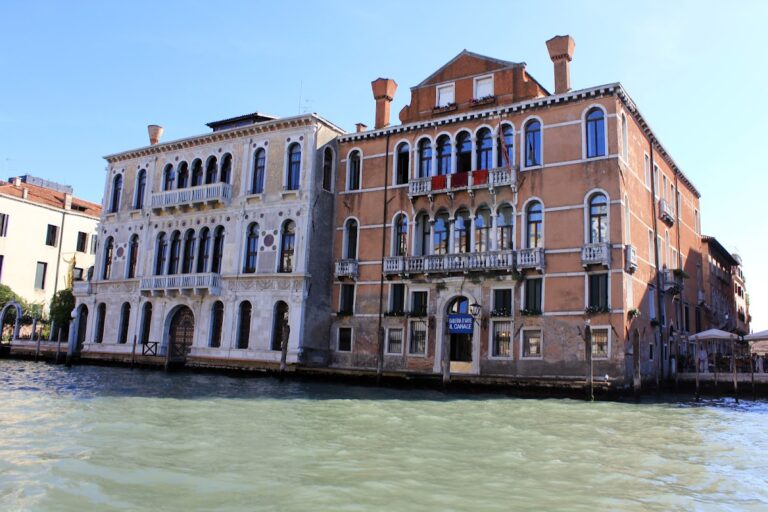
Palazzi Barbaro is a pair of adjoining historic palaces in Venice, Italy, standing in the San Marco district on the Grand Canal. The complex combines a Venetian Gothic palace dating from 1425 with a Baroque palace built and enlarged between 1694 and 1698. Formerly a residence of the patrician Barbaro family, it later became an important centre of international artistic and literary life in Venice.
The Gothic palace and the Barbaro family
The older palace was built in 1425 in the Venetian Gothic style by Giovanni Bon, one of Venice’s leading master stonemasons. It initially belonged to Piero Spiera and changed hands several times before Zaccaria Barbaro acquired it in 1465. Zaccaria was Procurator of St Mark’s, one of the highest offices in the Venetian Republic, ranking directly below the doge in prestige and administrative importance.
The Barbaro family was among Venice’s leading patrician houses. Its founder was a soldier who took part in the Crusades during the twelfth century. The palace served purposes beyond private domestic life. In 1499 it housed the French Embassy to the Republic of Venice, and in 1524 Isabella d’Este, the widow of Francesco II Gonzaga and sister of Alfonso I d’Este, lived there.
The Baroque enlargement
The later palace developed from a two-storey building that belonged to the Tagliapietra family. The family allowed the Barbaros to add further storeys in the sixteenth century. Antonio Gaspari, a leading Venetian architect of the late seventeenth century, subsequently transformed and enlarged the building between 1694 and 1698, giving it a richly ornamental Baroque character.
By 1797 the palaces belonged to Senator Zuanne Barbaro. The fall of the Venetian Republic that year was followed by the extinction of the Barbaro line in the mid-nineteenth century. The complex then passed to speculators, who sold or auctioned historic furniture, paintings, and other possessions associated with the family. The last Barbaro residents, Marcantonio and Matilde Barbaro, had no children and sold the palace in 1858. During the following period of ownership, much of its artwork was destroyed or dispersed. Giambattista Tiepolo’s large painting The Glorification of the Barbaro Family was among the works removed from the palace and is now held by the Metropolitan Museum of Art in New York.
The Curtises and artistic Venice
Daniel Sargent Curtis rented part of the palace in 1881 and purchased the representative and upper floors of the older palace in 1885 for $13,500. With his wife, Ariana Curtis, he undertook an extensive restoration and made the residence a gathering place for American and European artists, writers, collectors, and patrons. Their circle included John Singer Sargent, Henry James, James McNeill Whistler, Robert Browning, Claude Monet, Isabella Stewart Gardner, Bernard Berenson, William Merritt Chase, Edith Wharton, and Charles Eliot Norton. Their son Ralph Wormeley Curtis was a painter and a friend of John Singer Sargent.
Isabella Stewart Gardner repeatedly rented the palace from the Curtises after 1890, particularly when they were away. She hosted artists such as Harper Pennington, Joseph Lindon Smith, and Robert Frederick Blum, as well as Henry James. The museum Gardner later founded in Boston was designed with a form and style that recalled Palazzi Barbaro.
Henry James first visited Venice in 1869 and returned in 1872, 1880, and 1887. During the last of these visits he stayed with the Curtises and Gardner. Venice inspired several of his works, including The Aspern Papers and The Wings of the Dove. The fictional Palazzo Leprorelli in The Aspern Papers was strongly influenced by Palazzi Barbaro. In 1894, while staying in Venice, James witnessed the death of his friend Constance Fenimore Woolson, who either jumped or fell from another palace across the Grand Canal. The event deeply affected him.
The palace also became the setting for important works of portraiture. In 1894 Anders Zorn painted a portrait of Isabella Stewart Gardner there. In 1898 John Singer Sargent depicted the Curtis family and the palace interior in An Interior in Venice.
Monet’s stay and later conservation
In 1908 the English patron and hostess Mary Hunter rented the palace. Her friends Claude Monet and Alice Monet stayed with her during the final weeks of the rental. Monet’s approximately three-month stay in Venice produced 37 paintings, including views of the Grand Canal, the Doge’s Palace seen from San Giorgio Maggiore, and San Giorgio Maggiore at Dusk.
A conservation restoration of the façade took place from August 2000 to September 2001. A further restoration in the twenty-first century renewed the exterior appearance and structural elements. The palace remains in the ownership of the Curtis family, identified as Curtis Viganò.
Remains
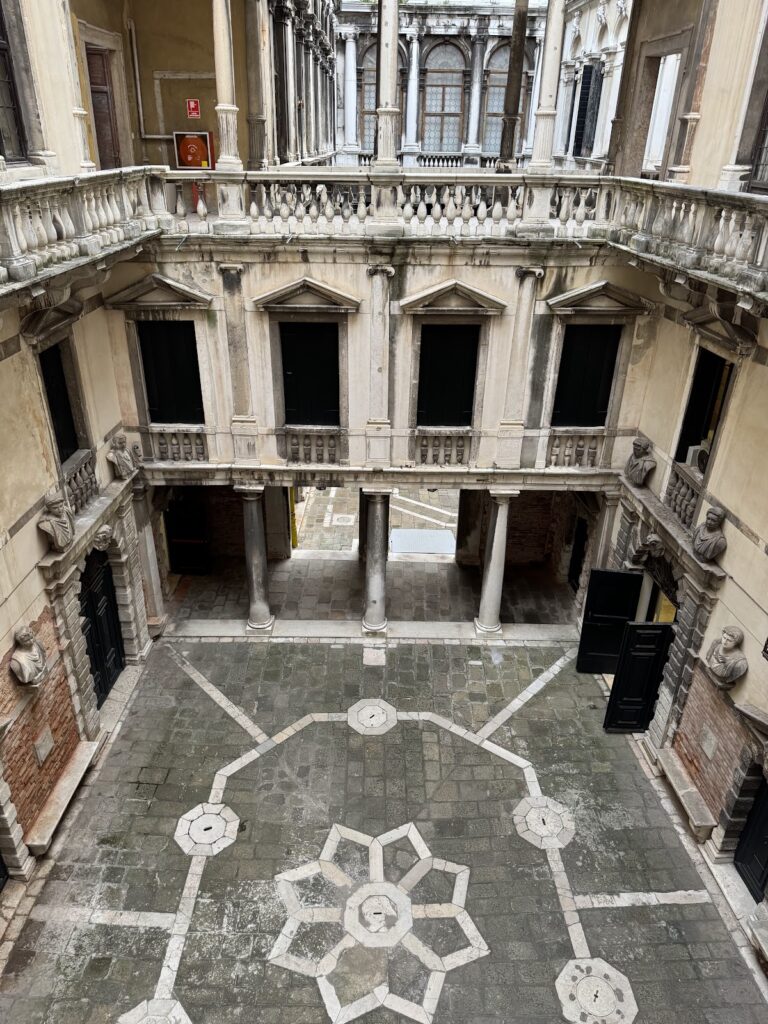
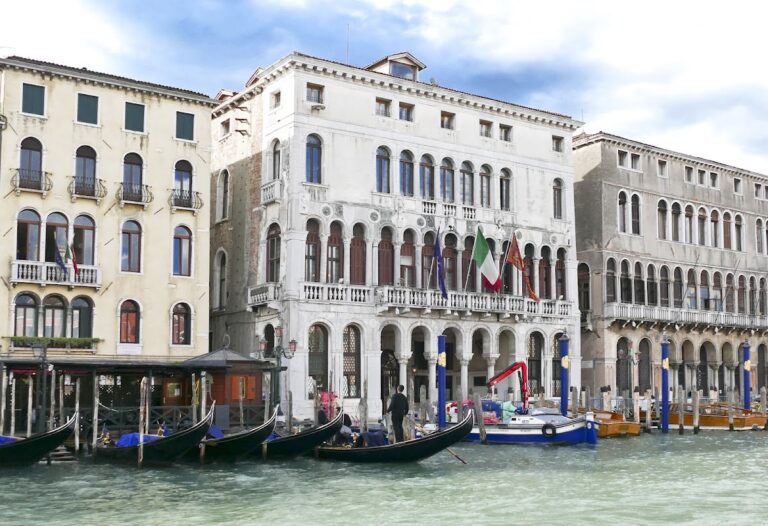
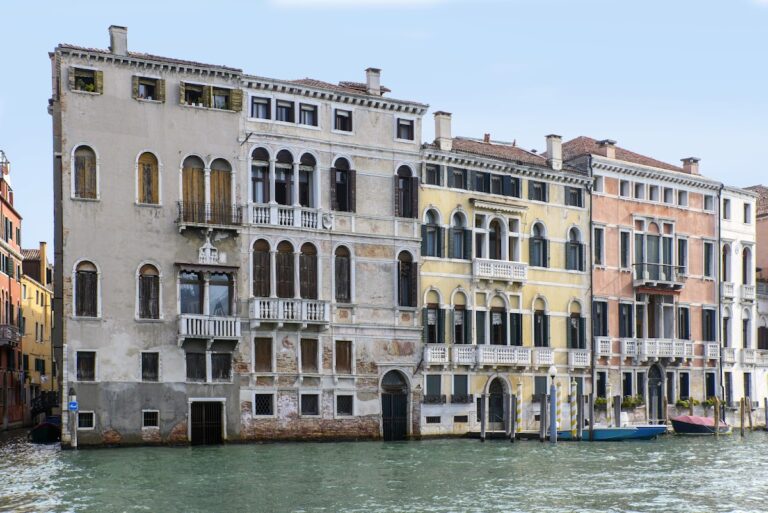
Palazzi Barbaro consists essentially of two adjoining four-storey palaces. Their façades and interiors preserve the contrast between the older Venetian Gothic residence and the later Baroque enlargement. The Gothic building retains the organization of a Venetian merchant house, while the Baroque section contains richly decorated representative rooms, a dining room, and an eighteenth-century library.
Venetian Gothic palace
The older palace is an example of the Venetian merchant-house type, which combined storage areas, accounting offices, and living quarters within one building. Its three-part façade brings together archaic details and distinctly fifteenth-century elements. On the two principal floors, the large quadrifora windows, meaning windows divided into four openings, are crowned by quatrefoil motifs and separated by tall columns with capitals covered in heavy foliage.
At water level, two portals open onto the canal. One is a pointed Gothic portal. The other has a Renaissance form and was repeatedly rebuilt over the centuries. Together with the upper windows and the three-part arrangement of the façade, these entrances express the building’s combination of commercial, residential, and ceremonial functions.
Baroque palace and interiors
The Baroque section was formed by transforming the existing building and adding Antonio Gaspari’s ornamental design. Its second piano nobile, the principal representative floor of a palace, contains the ballroom and a mezzanine, an intermediate floor between the main storeys. Lavish Baroque stucco and paintings with ancient Roman subjects decorate these rooms. Among the paintings are Sebastiano Ricci’s Rape of the Sabine Women and works by Giovanni Battista Piazzetta.
The dining room has a Venetian-style mosaic floor. On the third floor, an elegant library has an eighteenth-century ceiling decorated with polychrome stucco and putti, small usually winged child figures used in Renaissance and Baroque art. Open bookcases alternate with large windows along the walls.
The library ceiling formerly incorporated Tiepolo’s The Glorification of the Barbaro Family. Tiepolo’s original frescoes were removed from the palace, and the large painting is now in the Metropolitan Museum of Art in New York. The surviving interiors also retain associations with the palace’s later cultural history. Henry James completed The Aspern Papers at a desk that remains in the building, and he regarded the ballroom as one of the finest examples of Venetian Baroque interior design.
The palace’s interiors and the Curtis family appear in Sargent’s 1898 group portrait An Interior in Venice. Anders Zorn’s portrait of Isabella Stewart Gardner was also painted there, linking the surviving rooms to the artistic network that gathered around the Curtises in the late nineteenth and early twentieth centuries.
Nearby sites