Kasteel Boxmeer: Castle and Museum Complex in the Netherlands


Site at a Glance
- Rating
- 4.3
- Popularity
- Very Low
- Country
- Netherlands
- Primary era
- Early Modern
- External website
- Open
- Eras represented
- Early Modern, Modern
- Civilizations
- Unclassified
- Site type
- Domestic
- Remains
- Palace
On this page16 sections
History
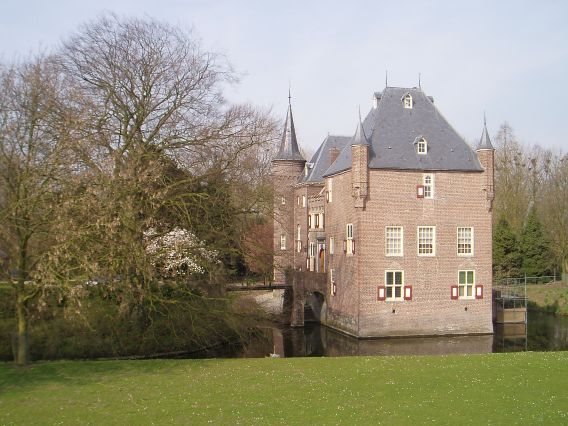
Kasteel Boxmeer is a historic castle in the Netherlands, in the town of Boxmeer. It originated in the thirteenth century as the seat of the Lords of Boxmeer and later developed through repeated destruction, rebuilding, political conflict, and conversion into an eighteenth-century Louis XV-style palace. Its changing uses continued into the modern period, when the complex became a hospital, nursing home, and museum site.
Medieval lordship and destruction
The castle stood within the Lordship of Boxmeer, a feudal territory governed by hereditary lords and ladies, on a former island in the Meuse. Its precise foundation date is unknown, but the castle was already established by the thirteenth century. In the late 1200s, Jan Boc I, Lord of Boxmeer, supported the Count of Guelders in his conflict with the County of Holland. Floris V, Count of Holland, responded by destroying Jan Boc I’s castle, known as Boc-Huys, in 1284 and 1285. Jan Boc I was later captured at the Battle of Worringen in 1288, a major medieval struggle for control of the Duchy of Limburg.
Peter van Culemborg acquired the lordship through his marriage to Johanna van Meer in 1361. He had fought for Guelders against Brabant during the Wars of the Loon Succession, a series of fourteenth-century conflicts over the inheritance of the County of Loon. In 1365, he sold Boxmeer to the Duke of Brabant, who demolished the castle. Peter recovered the lordship as a loan two years later, and the castle was rebuilt shortly afterward.
Control of Boxmeer continued through the Van Meer family. When the last male lord of that line died in 1472, his daughter Margriet van Meer succeeded him. Her daughter was Anna van Egmondt, who lived from 1480 to 1517. After a prolonged succession dispute, Anna’s son Oswald van den Bergh became Lord of Boxmeer in 1545. His death the following year led to a new contest between his sons, Willem IV van den Bergh and Frederik. Willem appears to have controlled the castle until 1568, when he fled the Netherlands at the beginning of the Eighty Years’ War, the long revolt of the Dutch provinces against Spanish Habsburg rule.
Conflict in the sixteenth century
Willem returned to military action in 1572, commanding one of the armies that invaded the Netherlands. The Duke of Alba, the Spanish Habsburg commander and governor, ordered Kasteel Boxmeer to be demolished and partly dismantled because the expense of maintaining a garrison there was considered too high. Frederik van den Bergh occupied the deserted remains in 1575 and had himself recognized as Lord of Boxmeer.
The Pacification of Ghent in 1576, an agreement among provinces of the Low Countries seeking cooperation against Spanish military power, enabled Willem to return. In September 1577, he seized the castle by force and placed it in the hands of the State forces, troops aligned with the Dutch revolt. The conflict between the brothers continued until Frederik died without children in 1597. The castle was besieged again in 1583, and Willem chose the Spanish side once more in 1584. After 1656, State troops were stationed in Boxmeer to drive out Spanish forces.
Princely ownership and palace conversion
In 1712, Frans Wilhelm van den Bergh-Hohenzollern-Sigmaringen became Lord of Boxmeer. He was the second son of Meinrad II, Prince of Hohenzollern-Sigmaringen, and added Van den Bergh to his name as a condition of the inheritance. His son Johan Baptist van Hohenzollern-Sigmaringen was imprisoned for murder in 1757. Authority over the family lands then passed to his elder sister, Joanna Josephina Antonia.
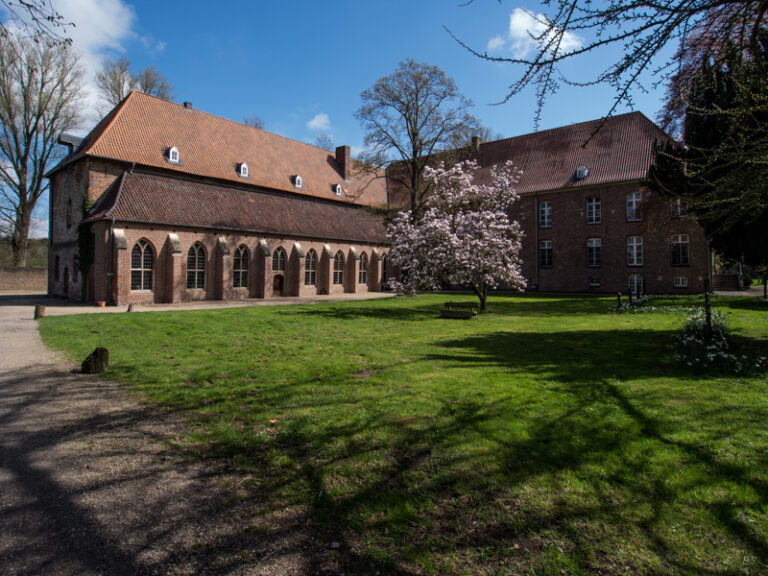
Joanna moved to Kasteel Boxmeer in 1782. By that time, much of the old castle had fallen into disrepair, and a decision had been made in 1780 to demolish most of it. The inner moat was filled in, and two new wings were added in 1782 as part of the conversion into a small Louis XV-style palace. Anton Aloys, Prince of Hohenzollern-Sigmaringen, became the last Lord of Boxmeer in 1787.
The lordship was annexed by France in 1797 and confiscated. In 1800, it became part of the Batavian Republic, the French-supported Dutch republic that existed from 1795 to 1806. The castle and its grounds, including the lord’s tribune in the parish church of Boxmeer, were sold in 1806 to Jonkheer Leopold van Sasse van Ysselt. Parts of the castle were later demolished, while the eighteenth-century buildings were retained. A western wing built over the former inner moat had begun to subside by 1802 and eventually disappeared.
Religious care and modern uses
The Sisters of Julie Postel purchased the castle in 1897 and established a hospital on its grounds. Modern additions were constructed in 1923, when underground passages were discovered. War damage from 1944 was repaired in 1948.
After Boxmeer obtained a state-funded hospital in 1968, the castle complex was used for the Madeleine nursing home. When Madeleine moved to a new complex on Beugenseweg, the Sisters’ complex became the Sint Anna residential care centre. Sisters and brothers from other congregations are also housed in the complex.
Today, Kasteel Boxmeer accommodates the municipal Museum of Boxmeer and the Castle Museum Julie Postel. The latter traces the history of the castle and the changing work of the Sisters of Julie Postel as a hospital and nursing home.
Remains
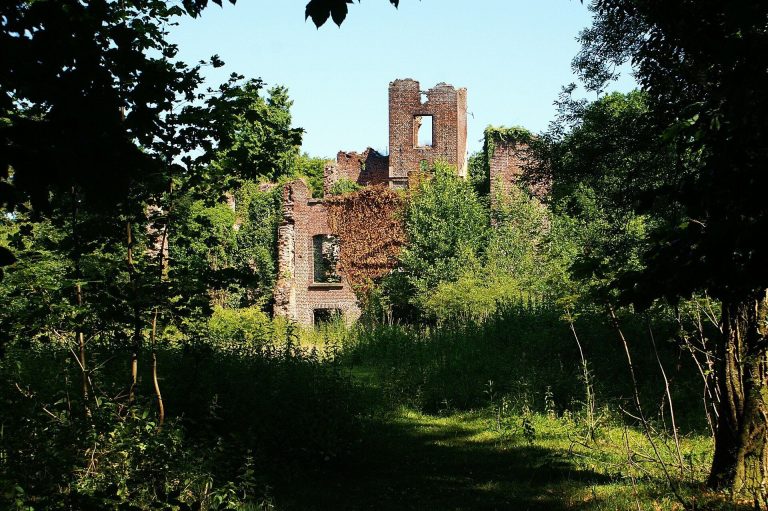
The surviving complex brings together remnants of the medieval water castle, seventeenth-century fabric, and the eighteenth-century palace conversion. The medieval castle was an irregular fortress surrounded by two moats. One moat enclosed the main castle, while the second surrounded the castle together with its outer bailey, the enclosed area outside the main defensive enclosure. The castle later developed into a fortress with five projecting bastions, defensive structures designed to allow fire along the faces of the walls. These are shown on a map dating from between 1803 and 1820 and also appear in historical images.
Older castle fabric and interiors
Seventeenth-century wing
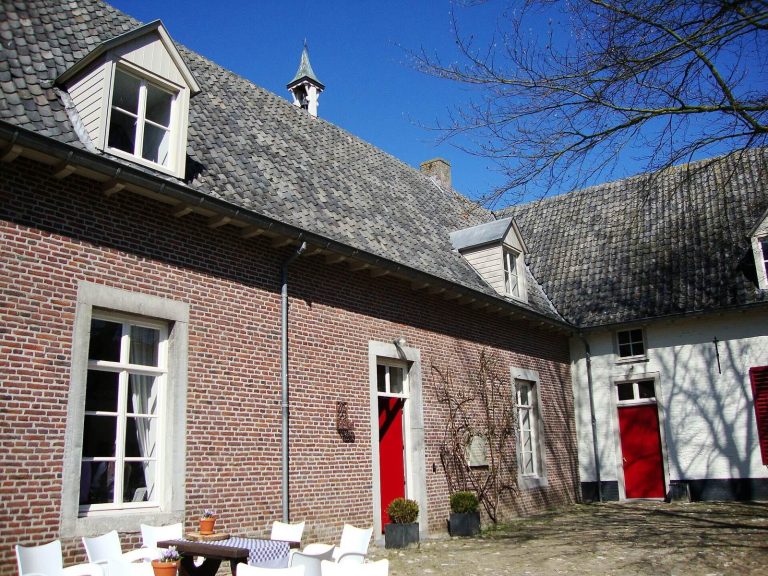
The section to the right of the eighteenth-century additions retains seventeenth-century fabric. On its first floor is a knight’s hall with a monumental stucco ceiling made in 1686. Stucco is a hard decorative plaster used on architectural surfaces. The ceiling carries the arms of Oswald van den Bergh and his wife, Maria Leopoldina of Oost-Friesland and Rittberg, who married in that year.
Former western wing
A western wing was built over the former inner moat. It began to subside in 1802 and later disappeared. Its history reflects the physical changes that followed the decision to fill the inner moat and retain only parts of the older castle alongside the eighteenth-century buildings.
Eighteenth-century palace additions
Mansard-roof wing
The 1782 conversion added a projecting wing with a mansard roof, which has two slopes on each side, the lower one steeper than the upper. The entrance section was raised, and the older exterior was plastered so that the complex presented a more uniform appearance. Rooms in this wing contain extensively restored stucco decoration in the Louis XVI style, the more classically ordered of the two successive French eighteenth-century styles represented at Kasteel Boxmeer.
Staircases and decorative work
The central staircase is richly decorated in the Louis XVI style. The complex also contains a carved staircase, adding another surviving element to the interior arrangement created or reshaped during the palace period.
Chapel and museum collections
Nepomuk Chapel
The Nepomuk Chapel stands beside the approach road to the castle, opposite the Protestant church. It is dedicated to John of Nepomuk, a fourteenth-century Bohemian saint associated particularly with the protection of bridges and waterways.
Museum of Boxmeer
The basement houses the municipal Museum of Boxmeer. Its archaeological collection covers the period from prehistory through the medieval era, while pictures, paintings, and photographs present later local history.
Castle Museum Julie Postel
The basement of the old castle contains the Castle Museum Julie Postel. Drawings and models explain the castle and its inhabitants. Other parts of the complex present its later hospital and nursing-home functions through a nineteenth-century hospital room and objects including clothing, religious habits, relics, writings, and pictures.