Reinsberg Castle: A Noble Estate and Historic Fortification in Germany


Site at a Glance
- Rating
- 4
- Popularity
- Very Low
- Country
- Germany
- Primary era
- Medieval
- External website
- Open
- Eras represented
- Medieval
- Civilizations
- Holy Roman Empire
- Site type
- Military
- Remains
- Castle
On this page7 sections
History
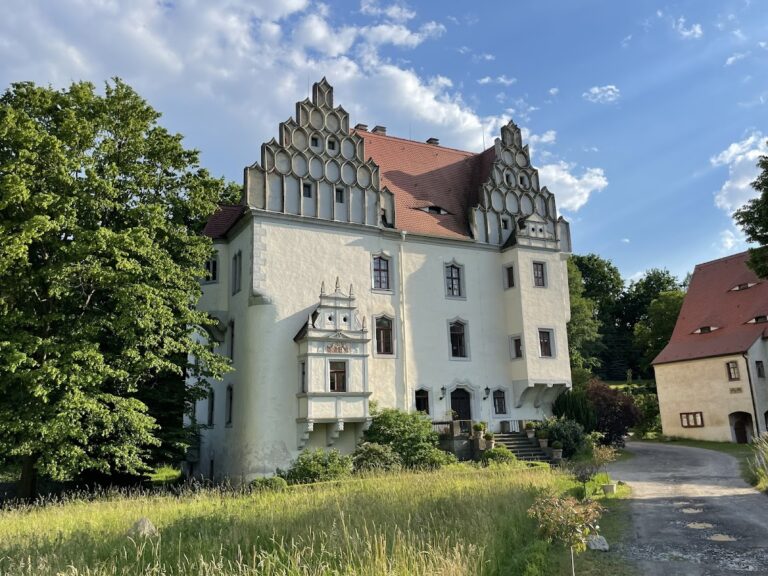
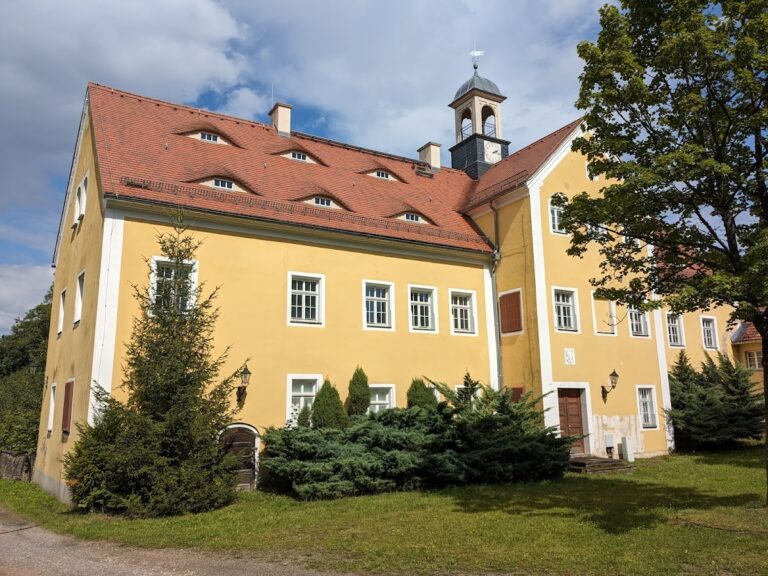
Reinsberg Castle is a historic fortified estate in Reinsberg, Germany, whose origins are associated with a German nobleman named Reinhardt and the settlement of agricultural communities. A noble family was established at the site by 1197, when Reinhardus de Reginsberg appeared as a witness in a document, although the date and founder of the castle itself remain uncertain. Older literature calls the site Oberreinsberg because it stood within the former village subdivision of that name.
The Reinsberg and Schönberg lordships
The castle probably emerged as a defensive center for settlers in the area. During the fourteenth century, the Reinsberg family lost much of its ancestral estate. The Schönberg family acquired major portions of the remaining holdings in 1404 and obtained the rest in 1411. The Schönbergs then occupied Reinsberg Castle and held the associated estate for more than five centuries.
In 1572, the estate was divided into Oberreinsberg and Niederreinsberg. Reinsberg Castle became the center of Oberreinsberg, while Niederreinsberg Manor served as the center of the other division. The lordship included Ober- and Niederreinsberg, Dittmannsdorf, Drehfeld, and, from about 1780, the settlement of Wolfsgrün. It also contained the more distant exclaves of Wüsthetzdorf and Obercunnersdorf, together with a separate manor farm at Krummenhennersdorf. Such a farm, known as a folwark, was operated as part of a landed estate under noble control.
State use and changing ownership
During the period of the German Democratic Republic, the East German state that existed from 1949 to 1990, the castle became a holiday facility for employees of the Schwarze Pumpe combine. Substantial investment in 1988 modernized the kitchen and swimming pool.
After German reunification, the property was initially operated as a hotel using former Treuhand assets. The Treuhand administered and privatized state-owned property after reunification. The castle was sold several times, and fixtures such as the kitchen were removed. Around 1995, a Spanish investor acquired the property. Plans to restore it for hotel and events use did not succeed, and it later served for several years as the owners’ private holiday residence.
Municipal intervention after 2009
The castle was offered for sale again from about 2009. In October 2019, the municipality of Reinsberg exercised its right of pre-emption to prevent a sale to the Identitarian Movement, a far-right political movement associated with ethnonationalist and anti-immigration views, and to stop the creation of a center for the far-right scene. The municipality secured that right through the courts in 2021 and paid about 500,000 euros, placing a heavy financial burden on the small community.
On 29 June 2021, the municipal council approved the sale to Mathilda Martina Huss, who had announced plans for an international scientific meeting center. In January 2024, Huss attracted media attention because her Potsdam country house, Landhaus Adlon, hosted a meeting of far-right groups and because she attended a Donald Trump campaign event in New York City with AfD politician Maximilian Krah. The Alternative for Germany, or AfD, is a political party founded in 2013 that has included strong right-wing and far-right currents. Reinsberg’s non-party mayor, Markus Buschkühl, announced opposition to any possible extremist use of the castle.
By February 2024, a building application had been submitted and various safeguarding works had been completed. No further construction work or other activity had been observed afterward. The municipality had no legal means to prevent constitutionally permitted use of the building.
Remains
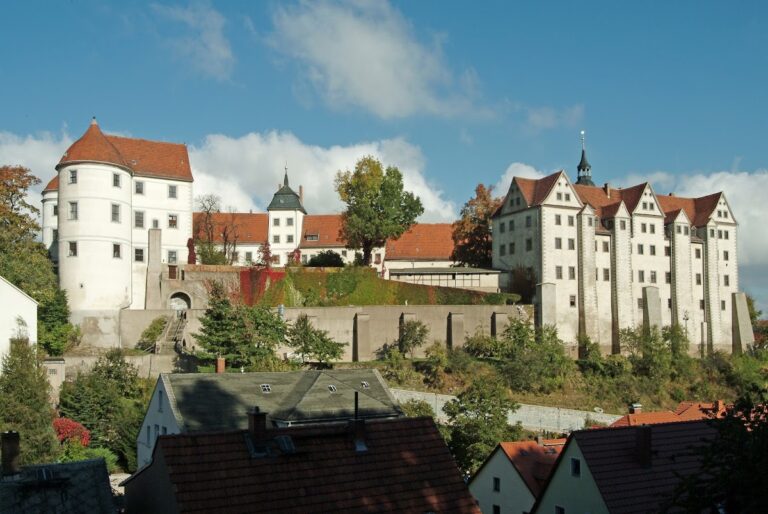
Reinsberg Castle occupies a steep, difficult-to-access slope above the Bobritzsch River. The terrain probably helped determine the establishment of a castle-like fortification. The present complex overlies the area of an earlier medieval hilltop or spur castle, and the castle area at Oberreinsberg is protected as an archaeological monument.
Fortifications and castle complex
The eastern side of the site lacked natural protection and was secured by a moat. Access across it could be restricted by a drawbridge, a bridge that could be raised or withdrawn. A substantial tower rose above the castle complex, forming a major vertical element of the fortified site. Together, the steep slope, moat, drawbridge, and tower express the defensive conditions that shaped the castle’s position and form.
Park and adjacent landscape
The castle is accompanied by a park. Beside it, BadePark has served as Reinsberg’s open-air swimming pool since 1978. The property also lies beside the Grabentour landscape-protection area, while the Grabentour hiking trail passes close to the castle grounds.
Nearby sites