Château de Canteleu: A Seventeenth-Century Residence in France


Site at a Glance
- Rating
- 4.5
- Popularity
- Very Low
- Country
- France
- Primary era
- Early Modern
- External website
- Open
- Eras represented
- Early Modern
- Civilizations
- French
- Site type
- Domestic
- Remains
- Castle
On this page8 sections
History
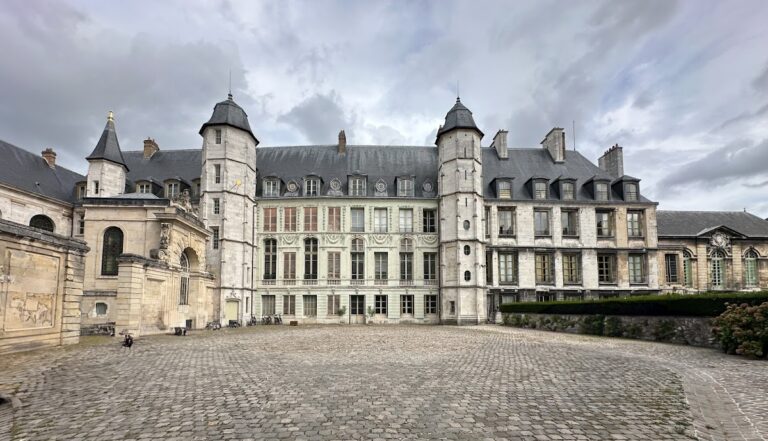
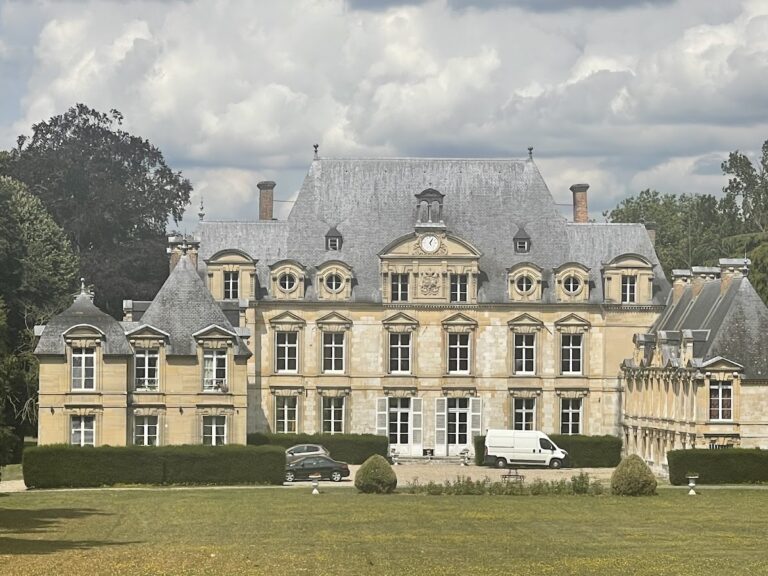
Château de Canteleu, now known as Château des Deux Lions, is a French château built around 1635 for Nicolas Langlois de Motteville, councillor and president of the Chamber of Accounts of Normandy. This institution audited and administered the finances of the French monarchy. The plans are attributed to the architect Le Mercier, and the residence was regarded as one of the finest seigneurial houses in Upper Normandy.
Seventeenth- and eighteenth-century owners
Françoise Bertaut briefly owned the château but scarcely occupied it. The property then passed to Jean-Baptiste Langlois de Colmoulins, a member of the Grand Council, a major royal council of the ancien régime, and son-in-law of President de Maupeou.
In 1748, François-Nicolas Quillebeuf, lord of Béthencourt, acquired the Canteleu estate. He was a Rouen merchant who gained noble status through purchasing a royal secretary’s office, a position whose acquisition could confer or confirm nobility. After his death in 1751, his son Jean-François Quillebeuf inherited the domain. His bankruptcy in 1776 led to the separate sale of the seigneurial rights and manors in the parish of Canteleu.
Charles-Antoine Élie-Lefebvre bought the château on 18 December 1779 and found it completely dilapidated. He therefore had much of the building demolished and remodelled the surviving structure in the neoclassical taste, which revived and adapted forms associated with classical antiquity.
The Élie-Lefebvre family and later restoration
The Élie-Lefebvre family still possessed the château in 1998. Charles Louis Élie Lefebvre, mayor of Rouen, died there in 1861. His son Victor Alfred Élie Lefebvre, who lived from 1818 to 1897, later became mayor of Canteleu.
The château has been protected as a French historic monument since an order issued on 28 April 1948. Its present owner, the Rouen entrepreneur Michel Mallet, restored the residence for receptions, seminars, and accommodation.
Remains
Terrace and approach
The château stands on a terrace overlooking a broad panorama of Rouen and a loop of the Seine. At the entrance, two reclining stone lions rest on the pillars that open onto a perspective avenue aligned with the residence. These sculptural guardians give the present château its name, Château des Deux Lions.
Surviving building
Reduced central structure
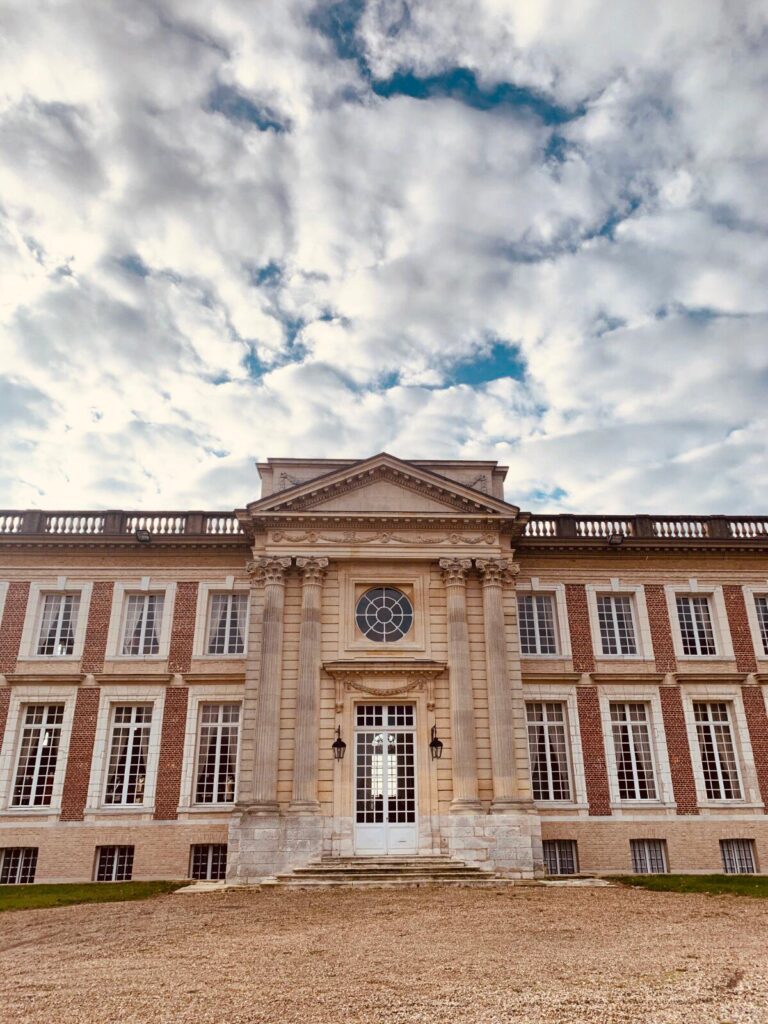
The late-eighteenth-century remodelling substantially reduced the original building. Both wings, the dome, the upper storey of the central pavilion, the tall roof, its dormer windows, and the stone balustrades were demolished. The surviving portion received a roof in the neoclassical taste of the period, giving the reduced château its present architectural character.
Reception rooms
The reception rooms were redecorated in the Empire style, the monumental decorative language associated with the Napoleonic period, and were complete by 1820, when the Duke of Angoulême visited the château. The grand salon contains eight Empire-style armchairs made from painted and gilded white wood and upholstered in cherry-coloured damask. The chairs were acquired in 2010.
Nearby sites