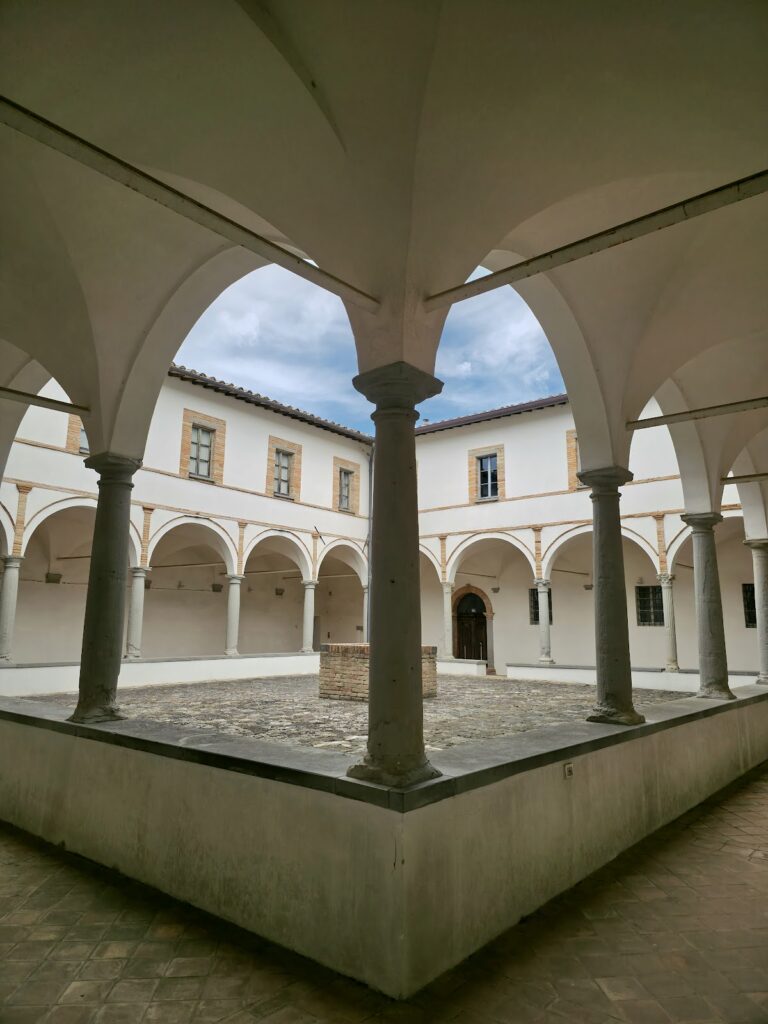
Castello Bourbon: The Marquisal Palace of Monte Santa Maria


Site at a Glance
- Rating
- 4.6
- Popularity
- Very Low
- Country
- Italy
- Primary era
- Early Modern
- Eras represented
- Medieval, Early Modern
- Civilizations
- Holy Roman Empire
- Site type
- Domestic
- Remains
- Palace
On this page12 sections
History
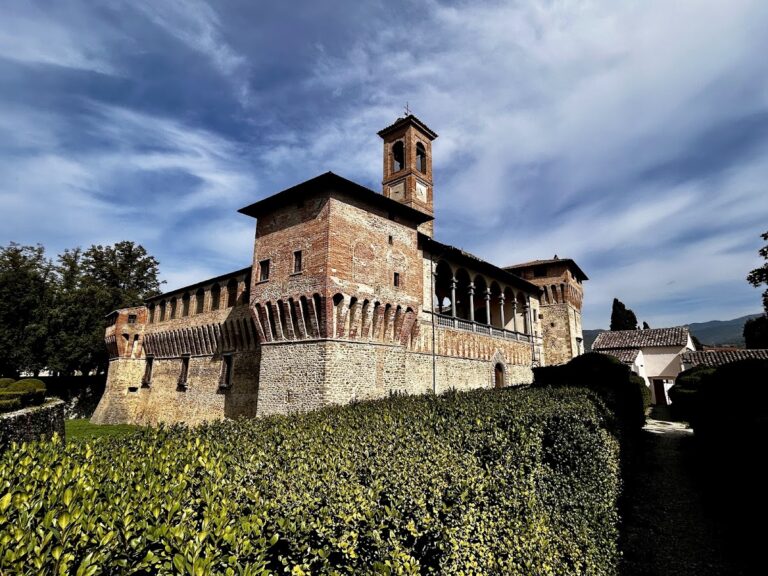
Castello Bourbon, also known as Palazzo Bourbon del Monte Santa Maria, is a historic palace in Italy, in Monte Santa Maria Tiberina. Built in 1250 in the medieval architectural style of the period by Guido I, regent of Monte Santa Maria, it became the official residence of the regents of the imperial fief and Marquisate of Monte Santa Maria. An imperial fief was a territory held directly from the Holy Roman Emperor rather than from a regional lord.
The Bourbon del Monte marquisate
From 1250 to 1815, the palace served as the seat of the ruling dynasty and its administration. The Bourbon del Monte family was an aristocratic dynasty whose different branches governed the small marquisate. Monte Santa Maria occupied a strategic position on a commercial and military route between the Papal States, the territories governed by the pope, and the Grand Duchy of Tuscany, the neighboring Tuscan state.
The marquisate possessed unusual privileges. It could mint its own currency, the montesca, and was one of three European places authorized to host duels. It could also grant political asylum. That privilege encouraged the movement of contraband and the arrival of other criminals, adding a difficult dimension to the territory’s independent status.
Renaissance rebuilding and court life
Castello Bourbon was almost completely renovated between 1574 and 1614 by Marquis Bartolomeo I and his son Gian Battista I. The later marquis was a general of the Republic of Venice, and the rebuilding gave the palace its combination of medieval and Renaissance forms. The building continued to function as both a princely residence and an administrative center.
Cardinal Francesco Maria Bourbon del Monte Santa Maria lived in the palace for several years. A cardinal is a senior Catholic Church official who assists in governing the Church and helps elect the pope. During his residence, he hosted and patronized Caravaggio, the influential Italian painter of the late sixteenth and early seventeenth centuries.
End of the marquisate and later history
The Bourbon del Monte domain lost its legal foundation when Francis II of Habsburg-Lorraine dissolved the Holy Roman Empire on 6 August 1806. The dissolution ended the imperial framework that supported Monte Santa Maria’s fief status. The Congress of Vienna confirmed the extinction of the marquisate in 1815, after which the territory was incorporated into the Grand Duchy of Tuscany under Ferdinand III, grand duke of Tuscany.
The final regents, Gianbattista Domenico and Pietro II, were chosen from among the oldest members of the dynasty’s various branches. Heavily indebted, they sold the complex. In 1894 the palace belonged to the Capranica de Grillo family, during whose ownership it fell into decline. Bombardment damaged the building in 1944.
The Municipality of Monte Santa Maria acquired Castello Bourbon in 1990. It restored the palace and converted it into a museum devoted to Bourbon del Monte history and a venue for cultural events.
Remains
Medieval tower and Renaissance facade
The medieval tower
The principal surviving element of the medieval building is an imposing tower approximately 40 metres high. It originally served as a lookout post and includes a bell. Soldiers assigned to guard duty used light signals to exchange messages with other military positions in the territory, including those at Marzano, Elci, Lippiano, and Gioiello.
The palace facade
The facade extends along Via del Castello, reached through a medieval arch. Its Renaissance elevation has two tiers of large windows, with the lower windows surmounted by pediments, triangular or shaped elements above openings, and closed by grilles. A further tier of windows rises above them.
The central entrance has a sixteenth-century portal flanked by two sandstone columns carved with superimposed bands. Above the entrance is a seventeenth-century wrought-iron balcony, made from forged iron, from which the town crier announced new government decrees to the inhabitants. At the lower left of the facade, a small walled door preserves the opening once used for anonymous denunciations by residents of Monte Santa Maria.
Interior spaces and associated residences
Halls and administrative rooms
Inside, large frescoed halls served the marquisal family as living quarters and also housed administrative offices. A fresco is a wall painting made on fresh plaster. The palace therefore combined domestic, governmental, and ceremonial functions within the same complex.
Basement prisons
Feudal prisons occupied the basement. Air ducts connected the cells to the courtroom, allowing conversations among prisoners to be heard from above. Some spiral staircases served as traps, with blades projecting from their walls to impale condemned prisoners thrown down them.
Residences along Via del Castello
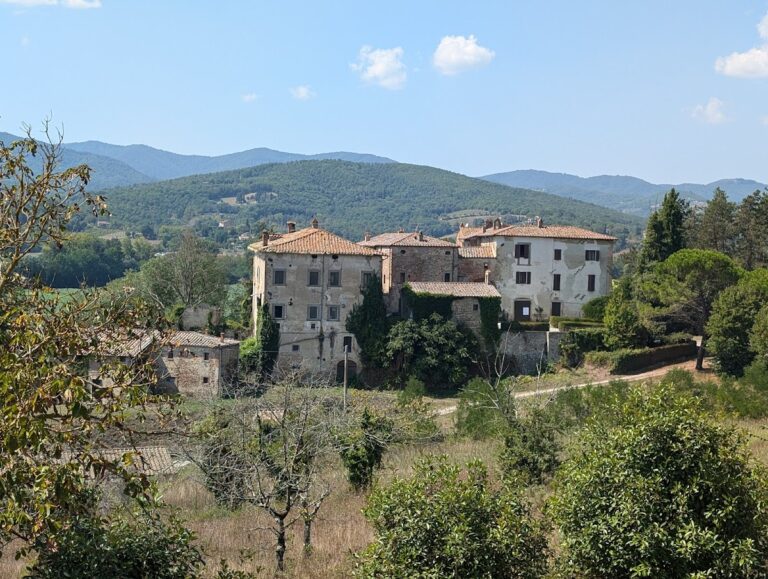
Other Bourbon del Monte residences belonging to junior branches of the dynasty remain visible along Via del Castello. The Lippiano branch owned the castle in the village of Lippiano near the Tuscan border. The residence opposite Castello Bourbon belonged to the Boncompagni-Ludovisi family, formerly princes of Piombino.
Nearby sites